Non coniferous wood poles for coal tar treatment
CN → US| HS Code | Tariff Rate | Origin | Destination | Doc |
|---|---|---|---|---|
| 4407990295 | 35.0% | CN | US | Official Doc |
| 4421917040 | 35.0% | CN | US | Official Doc |
| 4406920000 | 35.0% | CN | US | Official Doc |
| 4406120000 | 35.0% | CN | US | Official Doc |
| 4407290296 | 35.0% | CN | US | Official Doc |
Product Images
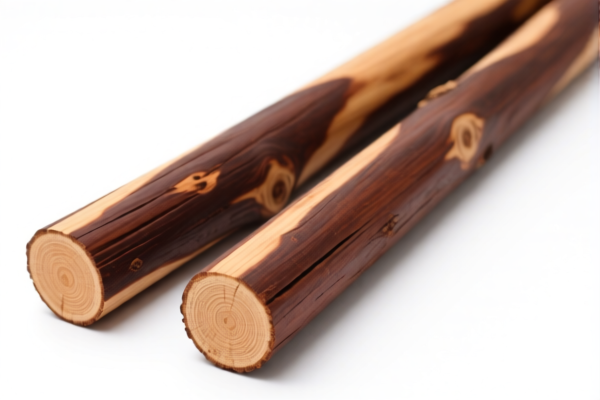
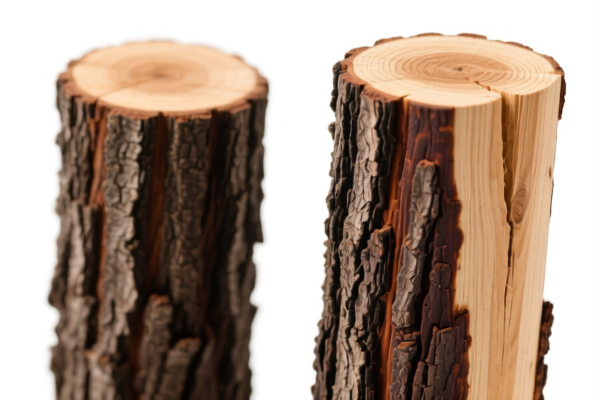
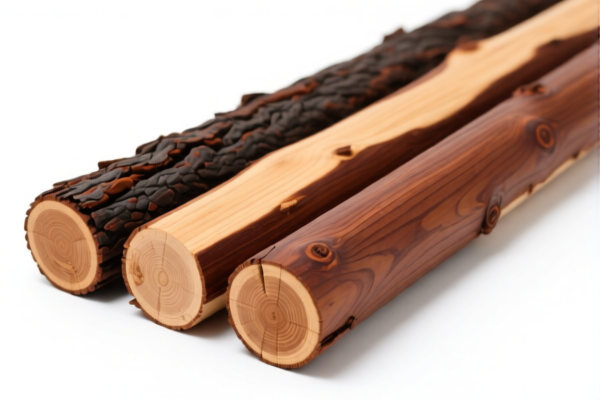
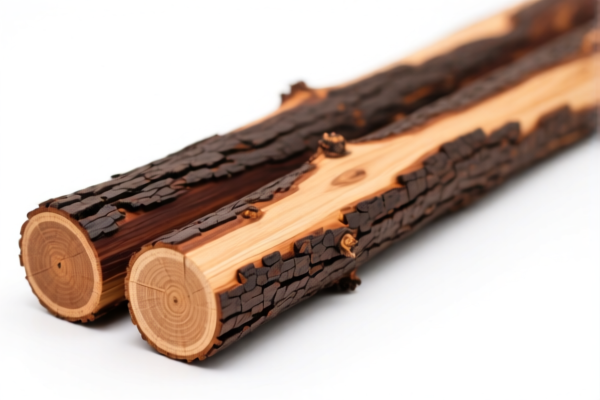
AI Analysis
🌲 Non-Coniferous Wood Poles for Coal Tar Treatment
🌐 HS Code Reference & Customs Clearance Guide | 2026 Latest Tariff Analysis | Professional Clearance Strategy
📌 I. Product Definition & Classification: What Exactly Are These Poles?
Non-coniferous wood poles treated with coal tar are heavy-duty structural timber components, primarily used for power transmission, telecommunications, and infrastructure support. In international trade, they are not simply "wood"; they are processed industrial materials. The classification depends heavily on the specific shape, dimension, and intended use defined by the Harmonized System (HS).
⚠️ Key Distinction Points:
- If the wood is sawn longitudinally and prepared specifically as a pole (tapered, specific diameter), it often falls under Heading 4406 (Railway Sleepers and Other Sleepers; Poles).
- If the wood is sawn longitudinally but is a general timber/plank form (even if intended for poles), it may fall under Heading 4407.
- If the wood is processed into non-specific shapes (like generic posts or stakes) not strictly defined as "poles" or "sleepers," it may fall under Heading 4421.
- Coal Tar Treatment: This is a preservative. While it prevents decay, it does not change the fundamental nature of the wood from Heading 44.06/44.07 to a chemical product. It remains a wood product.
📦 II. HS Code Classification Matrix (2026 Authoritative Cross-Reference)
Based on the provided data, here are the four specific classifications for non-coniferous wood poles/treated timber:
| HS Code | Product Description | Applicable Scenario | Key Identification Feature |
|---|---|---|---|
4406.92.00.00 |
Non-coniferous wood poles, classified as wooden structural members. | Dedicated utility poles (power/telecom), tapered, specific length/diameter. | Shape: Tapered pole form. Use: Structural support. |
4406.12.00.00 |
Non-coniferous treated wood, usage similar to railway sleepers. | Heavy-duty timber blocks or poles used as foundational supports or sleepers. | Usage: Similar to sleepers (heavy load-bearing). |
4407.99.02.95 |
Non-coniferous wood poles, preservative-treated, classified as other non-coniferous wood. | Sawn timber/planks intended for pole construction, or poles not strictly meeting 4406 definitions. | Process: Treated with preservatives (e.g., coal tar). Form: Sawed longitudinally. |
4421.91.70.40 |
Non-coniferous wood column-like articles, classified as other wood articles. | Generic wooden posts, stakes, or columns not fitting poles or sleepers. | Form: Column-like but not a "pole" or "sleeper." |
4407.29.02.96 |
Non-coniferous (tropical wood) longitudinally processed wood, for poles. | Tropical hardwoods sawn longitudinally, specifically prepared for pole use. | Material: Tropical hardwood. Process: Longitudinal processing. |
🔍 Critical Reminder:
- Heading 4406 is specific for poles and sleepers. If the item is clearly a utility pole,4406.92.00.00is the most accurate classification.
- Heading 4407 covers general sawn wood. If the product is sold as "treated timber" rather than a finished "pole,"4407.99.02.95or4407.29.02.96may apply.
- Heading 4421 is a "basket" category for wood articles not elsewhere specified. Use only if the item is a generic post/colunm and not a standard utility pole.
💰 III. 2026 Latest Tariff Rate Breakdown (Including Surcharges & Policy Add-ons)
✅ Applicable Country: United States (US)
✅ Origin: China (CN)
✅ Effective Date: From November 10, 2025 (and subsequent imports)
🎯 1. Universal Tariff Structure for All Listed HS Codes
All five HS codes provided in the data share the same tariff structure. This is common for wood products from China entering the US under current trade policies.
| Item | Content |
|---|---|
| Base Duty Rate | 0.0% (ad valorem) |
| Section 301 Duty (Additional) | +25.0% (USITC Footnote for Chinese imports) |
| Section 122 Duty (Additional) | +10.0% (Specific statutory addition for certain wood/wood products) |
| Total Duty Rate | 35.0% |
| Tax Calculation Basis | CIF Value (Cost + Insurance + Freight) × 35% |
| De Minimis Eligibility | ❌ Not Eligible (deny_de_minimis applies due to Section 301/122 surcharges) |
| Legal Authority Path | USITC:4406/4407/4421 → Section 301: 25% → Section 122: 10% → Total: 35% |
📌 Explanation:
- Base Rate (0%): Under normal MFN (Most Favored Nation) treatment, many wood products have low or zero base duties.
- Section 301 (25%): This is the major trade war tariff applied to a wide range of Chinese goods, including wood and wood articles.
- Section 122 (10%): This is a specific additional duty applicable to certain imports, often targeted at sectors like textiles or specific agricultural/wood products, depending on the precise HS code footnote.
- Total 35%: This is a high tariff burden. Importers must factor this into landed cost calculations.
🛠️ IV. Customs Clearance Practical Advice (Pitfall Avoidance Guide)
✅ 1. Required Documentation Checklist (Mandatory)
| Document | Required? | Explanation |
|---|---|---|
| ✅ Commercial Invoice | ✔️ | Must explicitly state: "Non-coniferous wood poles, coal tar treated." |
| ✅ Packing List | ✔️ | Detail weight, dimensions, and number of poles. |
| ✅ Phytosanitary Certificate | ✔️ | CRITICAL: Wood products often require ISPM 15 compliance to prevent pest introduction. |
| ✅ Bill of Lading / Air Waybill | ✔️ | Standard shipping documents. |
| ✅ Treatement Certificate | ✔️ | Proof of coal tar treatment (chemical composition, concentration). |
| ✅ Country of Origin Certificate | ✔️ | To confirm Chinese origin for tariff calculation. |
✅ 2. Declaration Strategy (Key Mantras)
🔥 “Be Specific on Wood Type, Be Clear on Treatment, Avoid ‘General Wood’!”
| Scenario | Correct Declaration | Incorrect Practice |
|---|---|---|
| Utility Poles | 4406.92.00.00 - "Non-coniferous wooden poles" |
"Wooden sticks" or "Timber" → Risk of misclassification. |
| Treated Timber Planks | 4407.99.02.95 - "Other sawn wood, treated" |
"Poles" (if not pole-shaped) → Risk of penalty. |
| Tropical Hardwood Poles | 4407.29.02.96 - "Tropical wood, longitudinally processed" |
"Non-coniferous wood" (too vague) → Customs may reject. |
| Generic Posts/Stakes | 4421.91.70.40 - "Other wood articles, column-like" |
"Poles" (if not for structural/utility use) → Risk of penalty. |
✅ 3. Special Handling for Coal Tar Treated Wood
| Issue | Handling Advice |
|---|---|
| Hazardous Material (Hazmat) | Coal tar can be considered hazardous. Declare accurately. May require additional safety data sheets (SDS). |
| Phytosanitary Inspection | Expect rigorous inspection for pests. Ensure the treatment process is documented and the wood is properly sealed/preserved. |
| Environmental Regulations | Coal tar contains polycyclic aromatic hydrocarbons (PAHs). Ensure compliance with US environmental standards for treated wood. |
| Duty Calculation | Do not exclude the value of the treatment process from the CIF value. The entire cost is subject to the 35% duty. |
🌍 V. Global Market Comparison (2026 Latest)
| Country/Region | Recommended HS Code | Duty Rate | Certification Requirements | Notes |
|---|---|---|---|---|
| 🇺🇸 USA | 4406.92.00.00 (or others) |
35% (301 + 122) | Phytosanitary, SDS | High barrier due to tariffs. |
| 🇨🇳 China | 4406.92.00.00 |
0-5% | N/A | Low duty for imports into China. |
| 🇪🇺 EU | 4406.90.90 |
~2.5% | FSC/PEFC, REACH | Lower tariffs, but strict environmental rules. |
| 🇯🇵 Japan | 4406.90.00 |
~5.5% | IPPC ISPM 15 | Moderate duty, strict phytosanitary checks. |
| 🇬🇧 UK | 4406.90.90 |
~2.5% | FSC/PEFC | Post-Brexit rules apply. |
📌 Conclusion:
- The US market is the most expensive for Chinese non-coniferous wood poles due to the 35% cumulative duty.
- Phytosanitary compliance is as important as tariff compliance. Failure to provide a valid Phytosanitary Certificate will result in shipment rejection or destruction.
📌 VI. Common Mistakes & Pitfalls (Blood & Tears Lessons)
❌ Mistake 1: Classifying "wooden poles" as "general wood products" to avoid higher scrutiny.
👉 Consequence: Customs may reclassify to a higher duty rate or penalize for misdeclaration.
👉 Correct: Use 4406.92.00.00 for poles.
❌ Mistake 2: Ignoring the "Coal Tar" aspect and declaring as "untreated wood."
👉 Consequence: Failure to provide proper chemical safety documentation (SDS) → Shipment held or destroyed.
👉 Correct: Declare "Coal Tar Treated" and provide SDS.
❌ Mistake 3: Assuming "De Minimis" (Section 321) applies.
👉 Consequence: 35% duty will be charged regardless of value. Wood products from China are excluded from de minimis thresholds.
👉 Correct: Prepare for full duty payment on all shipments.
❌ Mistake 4: Using vague descriptions like "Wooden Sticks" in commercial invoices.
👉 Consequence: Customs delays, requests for information, potential fines.
👉 Correct: Use precise terms: "Non-coniferous wood poles, coal tar treated, HS Code 4406.92.00.00."
✅ Best Practice:
"Precise HS Code, Detailed Product Description, Complete Phytosanitary Docs, and Full Duty Calculation."
🎯 VII. Conclusion: Professional Classification, Cost Control, and Efficient Clearance
🎯 Remember the Key Points:
🔹 "Poles go to 4406, Treated Timber to 4407, Generic Posts to 4421."
🔹 "35% Duty is Mandatory (301 + 122). No De Minimis Exemption."
🔹 "Coal Tar Requires SDS and Phytosanitary Certificates."
📌 Pro Tip:
- Pre-Ruling: Consider applying for a Binding Tariff Information (BTI) or Advance Ruling from US Customs and Border Protection (CBP) to confirm the HS code and duty rate before shipping.
- Supplier Communication: Ensure your supplier provides ISPM 15 certified packaging and Phytosanitary Certificates for the treated wood.
📣 Immediate Action:
📞 Consult a licensed customs broker.
📄 Prepare all documentation (Invoice, Packing List, Phytosanitary Cert, SDS).
💰 Calculate landed cost including the 35% duty.
✨ Professional clearance starts with accurate classification!
💼 Every percent of duty saved is pure profit gained!
Customer Reviews
About HS Code Classification
The Harmonized System (HS) is an internationally standardized nomenclature developed by the World Customs Organization (WCO) to classify traded products. Over 200 countries use the HS system as the basis for customs tariffs, trade statistics, and import/export regulations.
Each HS code follows a hierarchical structure:
- Chapter (2 digits) — Broad category of goods (e.g., Chapter 84: Machinery and Mechanical Appliances)
- Heading (4 digits) — More specific grouping within the chapter
- Subheading (6 digits) — Internationally standardized breakdown, used by all WCO member countries
- National subdivisions (8-10 digits) — Country-specific extensions for further classification, such as US HTSUS 10-digit codes
Correct HS code classification is essential for smooth customs clearance, accurate duty payment, and compliance with trade regulations. Misclassification can lead to customs delays, overpayment of duties, or penalties.
When importing from CN to US, the applicable tariff rates may include:
- Most-Favored-Nation (MFN) rate — The standard duty rate applied to WTO members
- General rate — Applied to countries without trade agreements
- Trade remedy duties — Additional tariffs such as Section 301 (anti-dumping), Section 232 (national security), or countervailing duties
The information provided on this page is for reference purposes only. For official classification, please consult with your local customs authority or a licensed customs broker.