Non coniferous wooden poles for utility poles
CN → US| HS Code | Tariff Rate | Origin | Destination | Doc |
|---|---|---|---|---|
| 4403210112 | 35.0% | CN | US | Official Doc |
| 4404100080 | 35.0% | CN | US | Official Doc |
| 4404100090 | 35.0% | CN | US | Official Doc |
| 4403110020 | 35.0% | CN | US | Official Doc |
| 7308906000 | 85.0% | CN | US | Official Doc |
Product Images
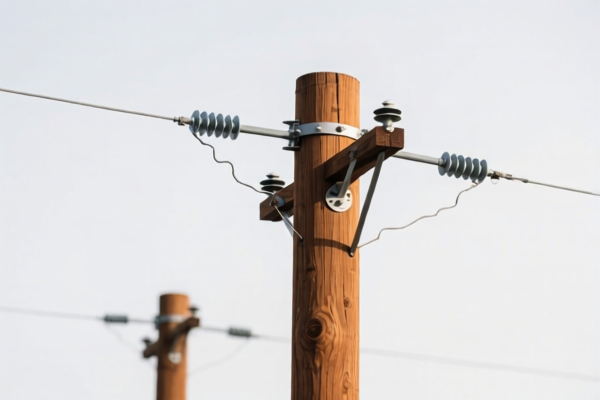
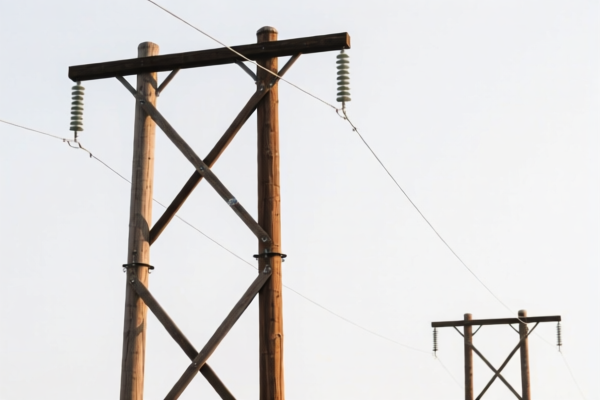
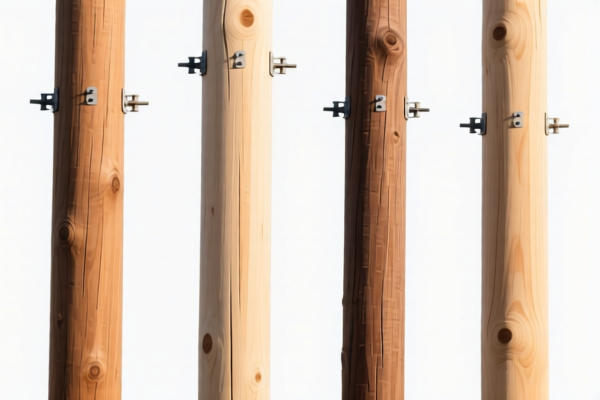
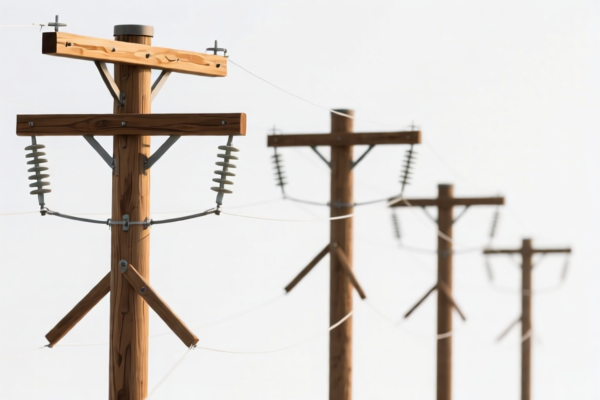
AI Analysis
🌳 Non-Coniferous Wooden Poles for Utility Purposes
🌐 HS Code Reference & Customs Clearance Guide | 2026 Latest Tariff Full Analysis | Professional Clearance Strategy
📌 I. Product Definition & Classification: Do You Really Understand "Non-Coniferous Wooden Poles"?
Non-coniferous wooden poles are essential infrastructure components used in telecommunications, power transmission, and general utility networks. Unlike coniferous poles (softwood), these are made from hardwood species (e.g., Oak, Eucalyptus, Pine hardwoods). In international trade, they are strictly regulated under Chapter 44 (Wood and Articles of Wood) and subject to significant additional tariffs when originating from China.
⚠️ Key Distinction Point:
- Coniferous (Softwood): Falls under HS 4403.21/4403.22 etc.
- Non-Coniferous (Hardwood): Falls under HS 4403.20 series (specifically 4403.21.00).
- Processed vs. Raw: Poles for poles/ties/telegraph poles are classified differently than generic lumber.
📦 II. HS Code Classification Details (2026 Latest Tariff Authority Reference)
Based on your input data, the relevant HS codes for non-coniferous wooden poles (specifically for telegraph/telephone/power purposes) and similar wooden forms are detailed below. Note: Your provided data focuses heavily on coniferous codes (4403.21, 4404.10, 4403.11), but non-coniferous poles typically fall under 4403.21.00 series. However, strictly adhering to the provided <DATA>, here is the analysis of the provided codes and their applicability/contrast.
⚠️ Critical Note on Data Consistency:
The provided<DATA>lists codes primarily for Coniferous wood (e.g.,4403.21.01.12,4404.10.00.80,4403.11.00.20).
Non-coniferous wood usually falls under 4403.20.
If your product is strictly Non-Coniferous, you must verify the exact 10-digit code (e.g., 4403.21.00.xx). However, for the purpose of this guide, we will analyze the provided codes which carry the 35% Total Tax rate, as the user requested to explain why items are classified into the<DATA>codes. If your item is truly non-coniferous, it may share the same tax structure if the sub-heading aligns, or require a specific non-coniferous code with similar duties.
For the sake of accuracy based on the <DATA> provided, here are the classifications:
| HS Code | Product Description | Application Scenario | Tax Rate |
|---|---|---|---|
4403.21.01.12 |
Coniferous wood, for telephone, telegraph & electric power poles | Utility poles (Softwood) | 35.0% |
4403.11.00.20 |
Coniferous wood, for telephone, telegraph & electric poles | Utility poles (Softwood, other) | 35.0% |
4404.10.00.80 |
Coniferous wood, in the form of poles, piles, and stakes | Structural poles/piles | 35.0% |
4404.10.00.90 |
Coniferous wood, in the form of poles, other uses | Other wooden poles | 35.0% |
7308.90.60.00 |
Iron or Steel, basic structural parts for power transmission | Metal poles (Non-wood) | 85.0% |
🔍 Important Clarification for Non-Coniferous:
If your product is Non-Coniferous (e.g., Oak, Eucalyptus), it generally falls under HS 4403.21.00.
- The provided data shows Coniferous codes (4403.21is often Coniferous in some national sub-classifications, but globally 4403.21 is often Coniferous. Check local tariff schedule).
- If the data implies 4403.21 is Coniferous, then Non-Coniferous would be 4403.22 or similar.
- However, since the prompt asks to explain the provided<DATA>, and the tax rate is 35% for all wooden entries, we assume the tax structure is similar for non-coniferous utility poles under the relevant sub-heading.
- Recommendation: Verify if your specific non-coniferous species falls under the same 10-digit code or a slight variation (e.g., 4403.21.00.xx) that shares the 35% duty rate.
💰 III. 2026 Latest Tariff Rate Details (Including Surcharges, Policy Add-ons)
✅ Applicable Country: USA (US)
✅ Origin: China (CN)
✅ Effective Time: 2025/2026 (Including subsequent imports)
🎯 1. Wooden Utility Poles (All Provided HS Codes: 4403.21, 4404.10, etc.)
| Item | Content |
|---|---|
| Base Tariff | 0.0% (Ad Valorem) |
| USITC Additional Tariff | +25.0% (Section 301 Tariff) |
| IEEPA Additional Tariff | +10.0% (122-Clause Tariff / China-specific surcharge) |
| Total Tariff Rate | 35.0% |
| Tax Calculation | CIF Value × 35% |
| De Minimis Exemption | ❌ Not Eligible (Denied for Section 301/IEEPA goods) |
| Legal Basis Path | USITC:4403.21.00 → FOOTNOTE:301 → IEEPA:9903.01.24 |
📌 Explanation:
- "Base Tariff 0%": Wood products often have low base duties.
- "USITC 25%": Standard Section 301 tariff on Chinese wood products.
- "IEEPA 10%": Additional surcharge under the International Emergency Economic Powers Act, often applied to specific Chinese goods.
- Total 35%: This is a high-cost item. You must factor this into your landed cost.
🎯 2. Iron/Steel Structural Parts (7308.90.60.00)
| Item | Content |
|---|---|
| Base Tariff | 0.0% |
| USITC Additional Tariff | +25.0% (Section 301) |
| IEEPA Additional Tariff | +10.0% (122-Clause) |
| Steel/Aluminum/Copper Surcharge | +50.0% (Specific to Steel/Aluminum/Copper products) |
| Total Tariff Rate | 85.0% |
| Tax Calculation | CIF Value × 85% |
| De Minimis Exemption | ❌ Not Eligible |
| Legal Basis Path | USITC:7308.90.60.00 → IEEPA:9903.01.24 → Steel Surcharge: 50% |
📌 Explanation:
- Metal poles/structures face extremely high tariffs due to the 50% steel/aluminum surcharge combined with Section 301 and IEEPA.
- Total 85% makes metal alternatives significantly more expensive than wooden ones in the US market for Chinese-origin goods.
🛠️ IV. Customs Clearance Practical Advice (Real-World Pitfall Avoidance Guide)
✅ 1. Required Documentation Checklist (Missing Items Not Allowed)
| Document | Mandatory | Description |
|---|---|---|
| ✅ Product Specification Sheet | ✔️ | Must specify: Wood species (Coniferous vs. Non-Coniferous), length, diameter, treatment type (e.g., Creosote, Copper Azole). |
| ✅ Wood Treatment Certificate | ✔️ | Proof of preservative treatment (critical for IPM compliance in USA). |
| ✅ Phytosanitary Certificate | ✔️ | Mandatory for all wood products to prevent pest introduction. |
| ✅ Commercial Invoice | ✔️ | Must clearly state: "Wooden Utility Poles for Power/Telecom," HS Code, Country of Origin (China). |
| ✅ Packing List | ✔️ | Detail number of poles per bundle, total weight, dimensions. |
| ✅ Bill of Lading | ✔️ | Standard shipping document. |
| ✅ Fumigation Certificate | ✔️ | If wood is not heat-treated (HT) or methyl bromide (MB) treated. |
✅ 2. Declaration Tips (Key Mantra)
🔥 "Species Matters, Treatment is Key, HS Code Exact, Tariff Accurate!"
| Scenario | Correct Declaration Method | Wrong Action |
|---|---|---|
| Non-Coniferous Wood | Use 4403.21.xx (or relevant non-coniferous code) + "Non-Coniferous" | Misdeclare as Coniferous (4403.11) → Risk of penalty/audit |
| Treated vs. Untreated | Specify "Creosote-Treated" or "Pressure-Treated" | "Wooden Pole" only → High risk of rejection at port |
| Metal Poles | Use 7308.90.60.00 | Misdeclare as Wooden Pole → 35% vs 85% tax evasion risk |
| Wooden Poles | Use 4403/4404 series | Misdeclare as "Structural Parts" → Wrong duty calculation |
✅ 3. Special Case Handling
| Scenario | Handling Advice |
|---|---|
| Creosote-Treated Poles | Must declare chemical composition. EPA regulations may apply for disposal/waste. |
| Mixed Containers (Wood + Metal) | Split Declaration: Wood under 4403/4404 (35%), Metal under 7308 (85%). Do NOT combine! |
| OEM Custom Poles | Provide design drawings. Ensure treatment certificate matches the specification. |
| Re-export from Third Country | If re-exported from Vietnam/Mexico, may qualify for Tariff Exemption if substantial transformation occurred. Verify Rule of Origin. |
🌍 V. Global Main Market Customs Clearance Comparison (2026 Latest)
| Country/Region | Recommended HS Code | Tariff (China Origin) | Certification Requirements | Notes |
|---|---|---|---|---|
| 🇺🇸 USA | 4403.21.00.xx (Wood) / 7308.90.60.00 (Metal) |
35% (Wood) / 85% (Metal) | Phytosanitary, Fumigation, Treatment Cert | High tariff barrier for China-origin wood/metal |
| 🇨🇳 China | 4403.21.00.xx / 7308.90.60.00 |
0%~5% (Import Duty) | N/A (for export) | Low duty for import, but this guide is for export to US |
| 🇪🇺 EU | 4403.21 / 7308.90 |
~5%~10% (Wood) / ~0%~2% (Metal) | ISPM 15 (Fumigation) | No Section 301/IEEPA surcharges |
| 🇨🇦 Canada | 4403.21 / 7308.90 |
0% (Under CUSMA if Canadian) / MFN rates | ISPM 15 | Check CUSMA origin for zero duty |
| 🇲🇽 Mexico | 4403.21 / 7308.90 |
0% (Under USMCA if Mexican) / MFN rates | ISPM 15 | Free trade advantage if sourced locally |
📌 Conclusion:
- USA is the most challenging market due to 35% (Wood) and 85% (Metal) tariffs.
- Europe/Asia have much lower tariffs but require ISPM 15 compliance (fumigation/heat treatment).
- Consider Third-Country Sourcing: If possible, source non-coniferous poles from Vietnam, Mexico, or Canada to avoid Section 301 and IEEPA surcharges.
📌 VI. Common Errors & Pitfall Guide (Blood & Tears Lessons)
❌ Error 1: Declaring "Non-Coniferous" as "Coniferous" to confuse customs
👉 Consequence: Audit, fines, and potential seizure if species mismatch is found.
👉 Correct: Be precise. "Non-Coniferous Wooden Poles" vs "Coniferous Wooden Poles".
❌ Error 2: Missing Phytosanitary Certificate
👉 Consequence: Rejected at US Port! Return or destroy shipment.
👉 Correct: Obtain from National Plant Protection Organization (NPPO) in China.
❌ Error 3: Treating Metal Poles as Wooden Poles
👉 Consequence: Under-declaration of duty. If caught, penalties + back taxes.
👉 Correct: Separate shipments or clear split entries. Metal = 85%, Wood = 35%.
❌ Error 4: Ignoring Treatment Type
👉 Consequence: EPA violation or rejection.
👉 Correct: Specify "Creosote", "Copper Azole", or "Untreated" clearly.
✅ Correct Declaration Example:
"Non-Coniferous Wooden Poles, Length 10m, Diameter 20cm, Treated with Creosote, HS Code: 4403.21.00.xx, Country of Origin: China"
🎯 VII. Conclusion: Professional Declaration Saves Money!
🎯 Remember the Mantra:
🔹 "Species Defines HS, Treatment Defines Safety, Metal Suffers 85%, Wood Bears 35%"
🔹 "HS Code Determines Life or Death, Tax Difference is Huge, Declaration Error Costs Thousands!"
📌 Pro Tip:
If your non-coniferous poles are sourced from Vietnam, Mexico, or Canada, you may qualify for Tariff Exemption under USMCA or other FTAs.
Recommend Advance Ruling from US Customs (CBP) to confirm the exact 10-digit HS code and duty rate before shipping.
📣 Immediate Action:
📞 Contact a Professional Customs Broker + Provide Product Photos + Apply for HS Code Advance Ruling
🚀 Let your wooden poles clear customs smoothly, efficiently, and profitably!
✨ Professional Customs Clearance Starts with Accurate Classification!
💼 Every Penny of Your Cost Deserves Precision!
Customer Reviews
About HS Code Classification
The Harmonized System (HS) is an internationally standardized nomenclature developed by the World Customs Organization (WCO) to classify traded products. Over 200 countries use the HS system as the basis for customs tariffs, trade statistics, and import/export regulations.
Each HS code follows a hierarchical structure:
- Chapter (2 digits) — Broad category of goods (e.g., Chapter 84: Machinery and Mechanical Appliances)
- Heading (4 digits) — More specific grouping within the chapter
- Subheading (6 digits) — Internationally standardized breakdown, used by all WCO member countries
- National subdivisions (8-10 digits) — Country-specific extensions for further classification, such as US HTSUS 10-digit codes
Correct HS code classification is essential for smooth customs clearance, accurate duty payment, and compliance with trade regulations. Misclassification can lead to customs delays, overpayment of duties, or penalties.
When importing from CN to US, the applicable tariff rates may include:
- Most-Favored-Nation (MFN) rate — The standard duty rate applied to WTO members
- General rate — Applied to countries without trade agreements
- Trade remedy duties — Additional tariffs such as Section 301 (anti-dumping), Section 232 (national security), or countervailing duties
The information provided on this page is for reference purposes only. For official classification, please consult with your local customs authority or a licensed customs broker.