Non decorative Industrial Grade Snake Skin Leather
CN → USProduct Images
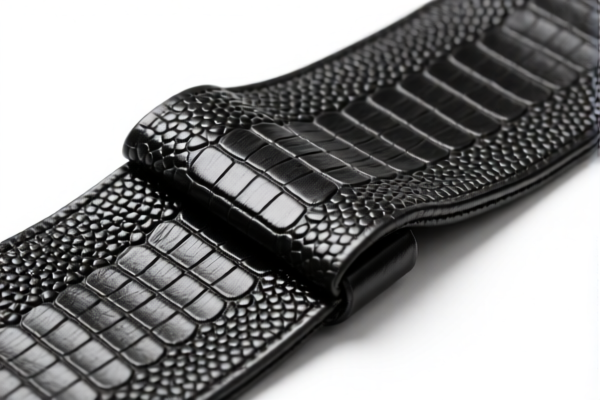
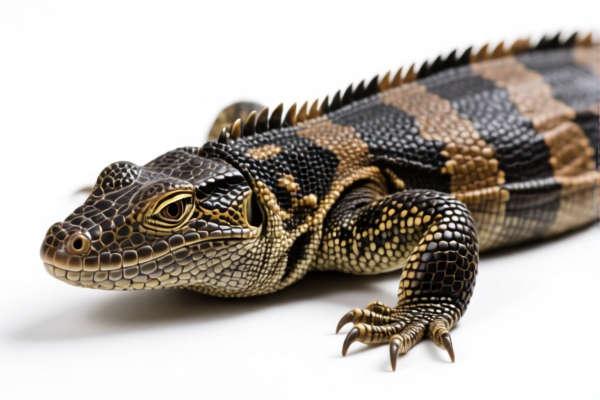
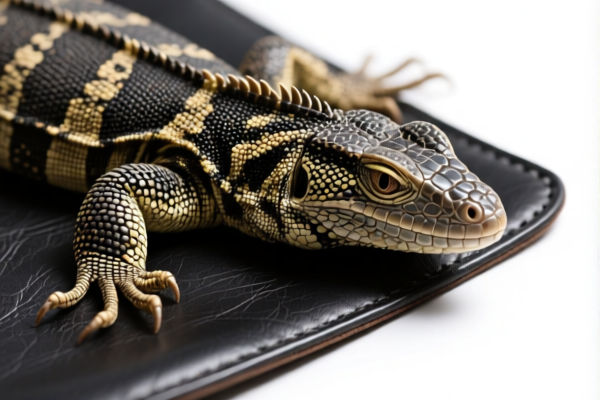
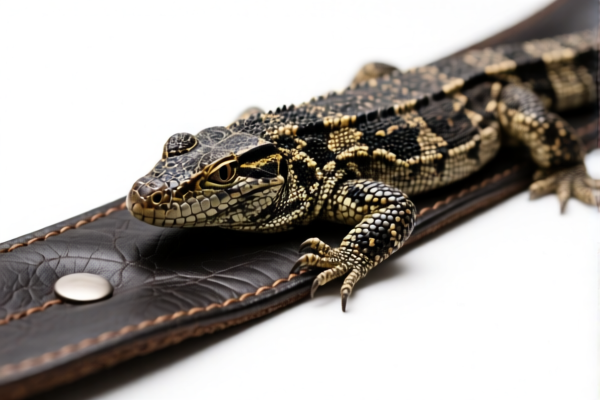
AI Analysis
🐍 Non-Decorative Industrial Grade Snake Skin Leather
🌐 HS Code Reference & Customs Clearance Guide | 2026 Latest Tariff Analysis | Professional-Grade Compliance Strategy
📌 I. Product Definition & Classification: What Exactly is "Industrial Grade Snake Skin"?
In international trade, "Snake Skin Leather" is strictly regulated due to CITES (Convention on International Trade in Endangered Species) restrictions and specific material definitions. The key distinction lies in whether the product is "Decorative" (finished fashion/accessory materials) or "Industrial/Technical" (raw hides, crust leather, or semi-processed skins intended for further manufacturing, such as automotive interiors, industrial belts, or composite materials).
Key Distinction Points: * "Non-Decorative": Implies the leather is not finished for direct consumer aesthetic use. It may be crust leather (dyed/finished but unembellished), raw skins, or split leather intended for industrial processing. * "Industrial Grade": Suggests high durability, specific tensile strength, or chemical resistance, often used in machinery covers, automotive upholstery, or heavy-duty goods. * "Snake Skin": As a reptile product, it requires CITES permits regardless of decoration status, unless the species is specifically exempted (e.g., certain farmed species with documentation).
⚠️ Critical Clarification:
- If the leather is finished for direct consumer use (e.g., watch straps, wallets, shoe uppers), it is classified as Decorative.
- If the leather is raw, crust, or split (semi-processed), it falls under Chapter 41 (Raw Hides and Skins) or Chapter 4107/4108 (Tanned Leather).
- If it is composite material (leather + synthetic backing), it may fall under Chapter 39 or 42.
📦 II. HS Code Classification Details (2026 Latest Tariff Authority Cross-Reference)
| HS Code | Product Description | Application Scenario | Decorative vs. Industrial |
|---|---|---|---|
4107.21.00 |
Crocodile/Alligator Leather, Tanned, < 0.5 sq.m, non-embellished | Raw/semi-finished reptile skins for industrial use | ❌ Non-Decorative |
4107.29.00 |
Other Crocodile/Alligator Leather, Tanned, > 0.5 sq.m, non-embellished | Large hides for automotive/industrial interiors | ❌ Non-Decorative |
4107.91.00 |
Other Reptile Skins (e.g., Snake), Tanned, < 0.5 sq.m, non-embellished | Snake skins, raw/crust, for industrial processing | ❌ Non-Decorative |
4107.99.00 |
Other Reptile Skins (e.g., Snake), Tanned, > 0.5 sq.m, non-embellished | Large snake hides, industrial grade | ❌ Non-Decorative |
4202.31.00 |
Goods of leather or composition leather, with outer surface of leather (e.g., wallets, belts) | Finished decorative goods | ✅ Decorative |
5903.10.00 |
Textile fabrics impregnated, coated, covered or laminated with plastics (if composite) | Composite industrial materials | ⚠️ Mixed |
🔍 Key Reminder:
- Reptile skins (including snake) are primarily classified under 4107 if tanned and non-embellished.
- "Non-embellished" means no gold, silver, precious stones, or complex surface designs.
- If the snake skin is composite (e.g., backed with polyurethane), it may fall under Chapter 39 or 40, but 4107 is preferred for pure leather.
- CITES Documentation is mandatory for all snake skin imports, regardless of HS Code.
💰 III. 2026 Latest Tariff Rate Details (Including Additional Duties, Policy Add-ons)
✅ Applicable Country: United States (US)
✅ Country of Origin: China (CN)
✅ Effective Date: November 10, 2025 (and subsequent imports)
🎯 1. 4107.91.00 – Other Reptile Skins (Snake), Tanned, < 0.5 sq.m, Non-Embellished
| Item | Content |
|---|---|
| Base Rate | 0% (ad valorem) |
| USITC Additional Duty | +25% (from USITC Footnote 9903.88.01) |
| IEEPA Additional Duty | +10% (for China/Hong Kong products, from Nov 10, 2025) |
| Total Rate | 35% |
| Tax Calculation | CIF Value × 35% |
| De Minimis Eligibility | ❌ No (deny_de_minimis) |
| Legal Basis Path | IEEPA:9903.01.25 → IEEPA:9903.01.24 → USITC:4107.91.00 → FOOTNOTE:9903.88.01 |
📌 Explanation:
- "USITC 25%" comes from Section 301 tariffs under the US Trade Act;
- "IEEPA 10%" is the additional tariff under the International Emergency Economic Powers Act for Chinese products;
- Total 35%, which is a high tariff, must be anticipated in advance!
🎯 2. 4107.99.00 – Other Reptile Skins (Snake), Tanned, > 0.5 sq.m, Non-Embellished
| Item | Content |
|---|---|
| Base Rate | 0% |
| USITC Additional Duty | +25% |
| IEEPA Additional Duty | +10% |
| Total Rate | 35% |
| Tax Calculation | CIF × 35% |
| De Minimis Eligibility | ❌ No |
| Legal Basis Path | IEEPA:9901.25 → IEEPA:9903.01.24 → USITC:4107.99.00 → FOOTNOTE:9903.88.01 |
📌 Note:
- Same as above, both fall under the same tariff rate;
- Whether it is "Python," "Cobra," or "Boa" snake skin, as long as it is tanned and non-embellished, it applies this tariff.
- If it is embellished (decorative), it may fall under 4202.31.00 with different rates.
🛠️ IV. Customs Clearance Practical Advice (Practical Pitfall Avoidance Guide)
✅ 1. Required Documents Checklist (All are Mandatory)
| Document | Must Provide | Description |
|---|---|---|
| ✅ CITES Permit | ✔️ | Crucial! Valid CITES export permit from country of origin and import permit for US |
| ✅ Product Specification | ✔️ | Includes dimensions, thickness, weight, tanning method (vegetal/chrome), dye type |
| ✅ Technical Data Sheet | ✔️ | For "Industrial Grade," provide tensile strength, abrasion resistance, chemical resistance |
| ✅ Product Photos | ✔️ | Clear photos of skins, showing size, texture, and any markings |
| ✅ Commercial Invoice | ✔️ | Clearly state "Snake Skin Leather, Non-Decorative, Industrial Grade" |
| ✅ Certificate of Origin (CO) | ✔️ | If not from China, may qualify for preferential rates |
| ✅ Packing List | ✔️ | Detail gross/net weight, number of skins, packaging type |
✅ 2. Declaration Tips (Key Mantra)
🔥 "Raw/Semi = 4107, Finished = 4202, CITES Always, No Excuse!"
| Scenario | Correct Declaration | Wrong Practice |
|---|---|---|
| Non-decorative, industrial snake skin | 4107.91.00 or 4107.99.00 |
Misdeclared as "decorative leather" → 20%+ |
| Finished snake skin for fashion | 4202.31.00 |
Misdeclared as "industrial raw skin" → 35% |
| Composite snake skin material | 5903.10.00 or 3921.90.00 |
Misdeclared as pure leather → Classification error |
| CITES Exempt Species (e.g., farmed) | Provide CITES exemption certificate | Assume no permit needed → Shipment Held/Destroyed |
✅ 3. Special Case Handling
| Scenario | Handling Advice |
|---|---|
| OEM Custom Industrial Leather | Provide customer order + design specs, avoid being deemed "non-standard" |
| Snake Skin for Automotive Interiors | Still classified under 4107 if raw/crust; if finished, 4202 |
| Snake Skin for Medical Devices | If for specific medical use, apply for "non-commercial" exemption, but CITES still applies |
| Snake Skin for Military/Aerospace | Apply for "special purpose" declaration; rate may be lower, but CITES mandatory |
🌍 V. Global Major Market Customs Clearance Comparison (2026 Latest)
| Country/Region | Recommended HS Code | Tariff | Certification Requirements | Notes |
|---|---|---|---|---|
| 🇺🇸 USA | 4107.91.00 / 4107.99.00 |
35% (China origin) | CITES + FCC/RoHS (if composite) | 35% for non-decorative |
| 🇨🇳 China | 4107.91.00 / 4107.99.00 |
5% | CITES + RoHS | No additional tariffs |
| 🇪🇺 EU | 4107.91.00 / 4107.99.00 |
0% (if CITES compliant) | CITES + REACH | No additional tariffs |
| 🇦🇺 Australia | 4107.91.00 / 4107.99.00 |
5% | CITES + RCM | No additional tariffs |
| 🇯🇵 Japan | 4107.91.00 / 4107.99.00 |
0% | CITES + PSE | No additional tariffs |
📌 Conclusion:
- USA is the only market adding high additional tariffs to reptile leather imports;
- Chinese-origin snake skin incurs high clearance costs in the US, suggest evaluating supply chain adjustments or pre-clearance rulings.
📌 VI. Common Errors & Pitfall Avoidance Guide (Lessons Learned)
❌ Error 1: Declaring "decorative" snake skin as "industrial raw skin"
👉 Consequence: Tariff drops from 35% to 20% → Back taxes + fines!
❌ Error 2: Missing CITES Permit
👉 Consequence: Shipment confiscated, destroyed, or returned → Total loss!
❌ Error 3: Not specifying "Non-Embellished"
👉 Consequence: Customs cannot verify classification → Delay or re-classification
❌ Error 4: Using "Snake Skin" as generic term
👉 Consequence: Must specify species (e.g., Python, Cobra) for CITES → Clearance delay
✅ Correct Practice:
"Snake Skin Leather, Non-Decorative, Industrial Grade, Tanned, CITES Permit Attached, Species: Python, HS Code: 4107.91.00"
🎯 VII. Conclusion: Professional Declaration, Save Time & Cost!
🎯 Remember the Mantra:
🔹 "Raw/Semi = 4107, Finished = 4202, CITES Always, No Excuse!"
🔹 "HS Code defines life, tariff difference 15%, one step wrong, thousands lost!"
📌 Tips:
If your snake skin leather is originating from Vietnam, Thailand, Malaysia, or other CITES-compliant countries with lower tariffs, apply for CITES exemption or preferential tariffs, rate could be 0%~5%;
Suggest applying for an Advance Ruling before shipment to avoid clearance risks.
📣 Immediate Action:
📞 Contact professional customs broker + Provide product photos + Apply for HS Code Advance Ruling + Ensure CITES Permit
🚀 Let your snake skin leather clear customs smoothly, efficient export, profit double!
✨ Professional clearance starts with accurate classification!
💼 Every cent of your cost deserves precise calculation!
Customer Reviews
About HS Code Classification
The Harmonized System (HS) is an internationally standardized nomenclature developed by the World Customs Organization (WCO) to classify traded products. Over 200 countries use the HS system as the basis for customs tariffs, trade statistics, and import/export regulations.
Each HS code follows a hierarchical structure:
- Chapter (2 digits) — Broad category of goods (e.g., Chapter 84: Machinery and Mechanical Appliances)
- Heading (4 digits) — More specific grouping within the chapter
- Subheading (6 digits) — Internationally standardized breakdown, used by all WCO member countries
- National subdivisions (8-10 digits) — Country-specific extensions for further classification, such as US HTSUS 10-digit codes
Correct HS code classification is essential for smooth customs clearance, accurate duty payment, and compliance with trade regulations. Misclassification can lead to customs delays, overpayment of duties, or penalties.
When importing from CN to US, the applicable tariff rates may include:
- Most-Favored-Nation (MFN) rate — The standard duty rate applied to WTO members
- General rate — Applied to countries without trade agreements
- Trade remedy duties — Additional tariffs such as Section 301 (anti-dumping), Section 232 (national security), or countervailing duties
The information provided on this page is for reference purposes only. For official classification, please consult with your local customs authority or a licensed customs broker.