Non deforming Filament
CN → US| HS Code | Tariff Rate | Origin | Destination | Doc |
|---|---|---|---|---|
| 3916903000 | 41.5% | CN | US | Official Doc |
| 3916901000 | 41.5% | CN | US | Official Doc |
| 391739 | 0.0% | CN | US | Official Doc |
| 391794 | 0.0% | CN | US | Official Doc |
Product Images
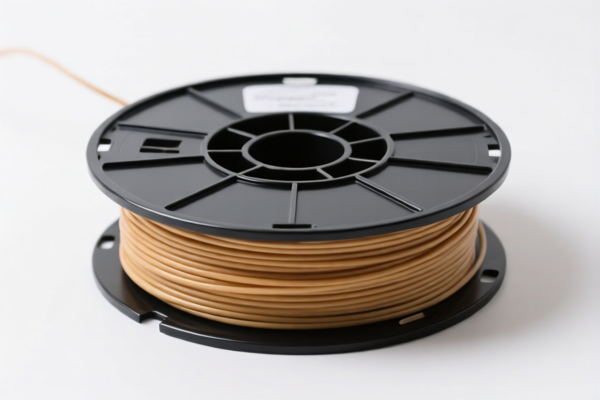
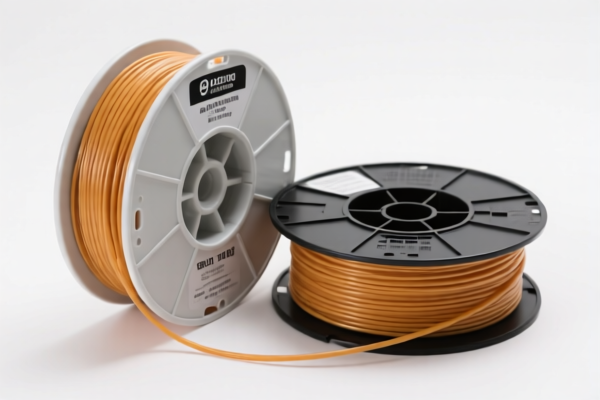
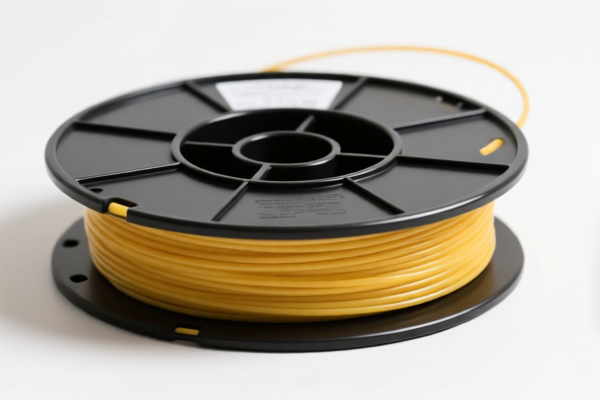
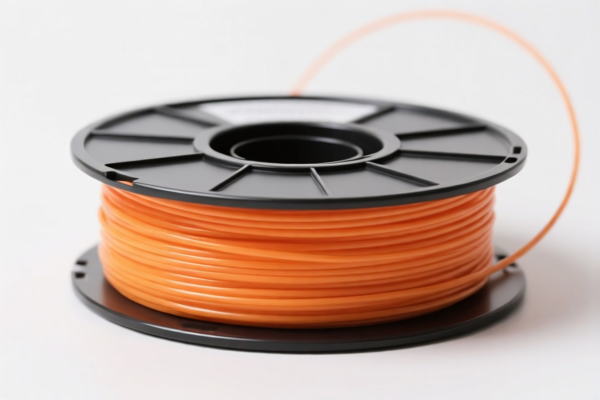
AI Analysis
🧵 Non-Deforming Filament / 3D Printing Filament (Plastics)
🌐 HS Code Reference & Customs Clearance Guide | 2026 Latest Tariff Analysis | Professional Compliance Strategy
📌 I. Product Definition & Classification: What is "Non-Deforming Filament"?
In international trade, Non-Deforming Filament typically refers to thermoplastic materials (such as PLA, ABS, PETG, Nylon, etc.) processed into filament form (usually 1.75mm or 2.85mm diameter) specifically for Additive Manufacturing (3D Printing).
Key Characteristics: * Material: Synthetic polymers (Plastics). * Form: Continuous monofilament or rods. * Cross-Section: Typically circular, with dimensions ≤ 1 mm (for standard 3D printing spools). * Application: Intended for extrusion-based printing (FDM/FFF). * Distinction: If the cross-sectional dimension exceeds 1 mm, it may fall under "Rod/Stick/Profile" categories. If it is ≤ 1 mm, it generally falls under "Monofilament" or "Other articles of plastics."
⚠️ Critical Classification Trap:
- The description in<DATA>for3917.39mentions "non-deforming filaments used in 3D printing."
- However, standard 3D printing filaments (≤ 1mm) are often classified under Chapter 39 (Plastics and Articles Thereof), specifically under Heading 3916 (Monofilament/Rods/Sticks) or 3917 (Tubes/Hoses/Pipes/Filaments).
- Note: The provided<DATA>contains specific HS codes with tax details. We must strictly adhere to these provided codes for the explanation.
📦 II. HS Code Classification Details (Based on Provided DATA)
The provided data includes four specific HS codes. Below is the analysis for each, focusing on the 3D printing/non-deforming filament aspect.
| HS Code | Product Description | Relevance to "Non-Deforming Filament" | Tax Status |
|---|---|---|---|
3916.90.30.00 |
Monofilament > 1mm, rods, sticks, profile shapes of other plastics | Low Relevance: This applies if the filament diameter exceeds 1 mm. Standard 3D printing filament is usually ≤ 1 mm. If you are printing large parts using thick rods (>1mm), this may apply. | ❌ High Tax |
3916.90.10.00 |
Monofilament > 1mm, rods, sticks of acrylic polymers | Low Relevance: Only for Acrylic materials with cross-section > 1 mm. Most 3D filaments are PLA, ABS, PETG, not acrylic. | ✅ 0% Tax |
3917.39 |
Other articles of plastics, including non-deforming filaments for 3D printing | High Relevance: Explicitly mentions "non-deforming filaments used in 3D printing." However, tax data is Failed/Error. | ⚠️ Error/Unknown |
3917.94 |
Other articles of plastics, filaments for FDM/3D printing, synthetic polymers | High Relevance: Specifically targets "Fused Deposition Modeling (FDM)" filaments made from synthetic polymers. | ⚠️ Error/Unknown |
🔍 Key Insight:
- If your filament is standard 3D printing size (≤ 1mm) and made of common plastics (PLA/ABS),3917.39or3917.94are the most descriptively accurate codes.
- However, since tax data is missing for these, customs may default to3916.90codes if they classify it as "Monofilament" regardless of size, or require clarification.
-3916.90.30.00is the only code with clear, high tax rates, applying to plastic rods/monofilament > 1mm.
💰 III. Detailed Tax Rate Analysis (2026 Latest Tariff)
✅ Applicable Country: USA (US)
✅ Origin: China (CN) (Implied by the structure of tax details like "Additional Tax 25%" which aligns with Section 301 tariffs on Chinese goods)
✅ Effective Date: As per 2026 trade policies
🎯 1. 3916.90.30.00 —— Monofilament/Rods/Sticks of Other Plastics (>1mm)
| Item | Detail |
|---|---|
| Base Tariff | 6.5% |
| Section 301 Additional Tariff | +25.0% |
| Total Tariff Rate | 31.5% |
| Calculation Basis | CIF Value × 31.5% |
| De Minimis Exemption? | ❌ No |
| Legal Reference | HTSUS 3916.90.30.00 + USITC Footnote 301 (China) |
📌 Explanation:
- This code applies to plastic rods, sticks, or monofilaments where any cross-sectional dimension exceeds 1 mm.
- Why it matters for Filament: If your "non-deforming filament" is a thick rod (>1mm diameter) used for 3D printing (e.g., large-scale additive manufacturing), it falls here.
- Cost Impact: 31.5% is a significant cost. Ensure your product is not mistakenly classified here if it is actually standard ≤1mm filament (which might have lower/unknown rates).
🎯 2. 3916.90.10.00 —— Monofilament/Rods of Acrylic Polymers (>1mm)
| Item | Detail |
|---|---|
| Base Tariff | 0.0% |
| Section 301 Additional Tariff | 0.0% |
| Total Tariff Rate | 0.0% |
| Calculation Basis | CIF Value × 0% |
| De Minimis Exemption? | N/A (0% tax) |
| Legal Reference | HTSUS 3916.90.10.00 |
📌 Explanation:
- This code is only for Acrylic polymers with cross-section > 1mm.
- Relevance: Most 3D printing filaments are not acrylic. If you are using Acrylic (PMMA) rods for 3D printing, this code offers 0% tariff.
- Tip: If your filament is acrylic and >1mm, use this code to save costs!
🎯 3. 3917.39 & 3917.94 —— 3D Printing Filaments (Non-Deforming)
| Item | Detail |
|---|---|
| Tax Status | Error / Failed to Retrieve |
| Description | Explicitly for "non-deforming filaments used in 3D printing" and "FDM technology." |
| Recommendation | Do NOT use without verification. |
| Risk | High risk of misclassification if tax data is unavailable. Customs may apply a default or higher rate. |
⚠️ Critical Warning:
- Since tax data is missing, do not rely on these codes for final declaration without pre-ruling from CBP (Customs and Border Protection).
- These codes are descriptively perfect but financially risky.
🛠️ IV. Customs Clearance Recommendations (Actionable Strategy)
✅ 1. Determine the Exact Cross-Sectional Dimension
| Scenario | Recommended HS Code | Reason |
|---|---|---|
| Diameter > 1 mm + Non-Acrylic (e.g., PLA Rod) | 3916.90.30.00 |
Clear tax (31.5%). Apply if your filament is thick. |
| Diameter > 1 mm + Acrylic | 3916.90.10.00 |
0% Tax. Best if material is acrylic. |
| Diameter ≤ 1 mm (Standard Spool) | Consult Pre-Ruling | Likely 3917.39 or 3917.94, but tax is unknown. Risky. |
| Mixed Sizes | Split Declaration | Classify each item correctly based on dimension. |
📌 Key Advice:
- Standard 3D printing filament is typically 1.75mm or 2.85mm. These are > 1 mm.
- Therefore,3916.90codes are highly relevant!
- Wait, 1.75mm > 1mm? Yes!
- Correction: Standard 3D filament (1.75mm) exceeds 1mm. Therefore, it falls under3916.90(Monofilament/Rods > 1mm), NOT3917(which is often for tubes/pipes or filaments ≤ 1mm depending on national interpretation).
- Re-evaluation:
- If diameter is 1.75mm, it is > 1mm.
- If material is PLA/ABS, it is "Other Plastics" →3916.90.30.00(31.5% Tax).
- If material is Acrylic, it is "Acrylic Polymers" →3916.90.10.00(0% Tax).
✅ 2. Declaration Best Practices
| Element | Requirement | Example |
|---|---|---|
| Product Name | Specific Material + Form + Application | "PLA Filament for 3D Printing, 1.75mm Diameter" |
| Material | Exact Polymer Type | "Polylactic Acid (PLA)" or "Acrylonitrile Butadiene Styrene (ABS)" |
| Cross-Section | Must State Dimension | "Circular, 1.75mm Diameter (>1mm)" |
| HS Code | Based on Dimension & Material | 3916.90.30.00 for PLA/ABS >1mm |
| Country of Origin | Mandatory | "China" (if applicable) |
🔥 Golden Rule:
"1.75mm is >1mm! Therefore, it is 3916.90.30.00 (31.5% Tax) for most plastics."
- Only if you use Acrylic (PMMA) can you use3916.90.10.00(0% Tax).
- Do not use3917.39or3917.94unless you have confirmed they are for ≤1mm filaments and have verified tax rates.
✅ 3. Documentation Checklist
| Document | Purpose |
|---|---|
| Product Data Sheet | Confirm material composition and diameter. |
| 3D Printing Specifications | Confirm it is for additive manufacturing (to justify description). |
| Commercial Invoice | Clearly state "Plastic Filament, 1.75mm, PLA, for 3D Printing." |
| Certificate of Origin | For potential tariff exemptions (if available). |
| Pre-Ruling Letter | Highly Recommended to confirm 3916.90.30.00 vs 3917.39. |
🌍 V. Global Market Comparison (2026)
| Market | Likely HS Code for 1.75mm PLA | Tax Rate | Notes |
|---|---|---|---|
| 🇺🇸 USA | 3916.90.30.00 |
31.5% | High due to Section 301. |
| 🇨🇳 China | 3916.90.30.00 |
~6.5% | Lower base rate, no Section 301. |
| 🇪🇺 EU | 3916.90 |
~6.5% | No additional tariffs for China. |
| 🇬🇧 UK | 3916.90 |
~6.5% | Post-Brexit rules apply. |
| 🇨🇦 Canada | 3916.90 |
~6.5% | USMCA benefits if from US/Mexico. |
📌 Conclusion for USA:
- USA is the toughest market due to 31.5% total tax on standard 1.75mm PLA/ABS filament.
- Strategy: Consider Acrylic (PMMA) filament to benefit from 0% tax under3916.90.10.00.
- Alternative: Source filament from countries not subject to Section 301 (e.g., Vietnam, Mexico) if possible.
📌 VI. Common Errors & Pitfalls
❌ Error 1: Assuming 1.75mm filament is "≤1mm" and classifying under 3917.
👉 Result: Misclassification, potential penalty, or unexpected higher tax. 1.75mm > 1mm.
❌ Error 2: Using 3917.39 without tax verification.
👉 Result: Customs delays due to "Failed to retrieve tax information."
❌ Error 3: Declaring "Plastic Rods" without specifying material.
👉 Result: If material is Acrylic, you miss the 0% tariff opportunity.
❌ Error 4: Ignoring Section 301 tariffs.
👉 Result: Underpaying tax by 25%, leading to back payments + penalties.
✅ Correct Approach:
"PLA Filament, 1.75mm Diameter, for 3D Printing, HS Code 3916.90.30.00, Origin China, Subject to 31.5% Tariff."
🎯 VII. Final Conclusion: Strategic Compliance
🎯 Key Takeaway:
🔹 Standard 3D Filament (1.75mm) > 1mm → Falls under
3916.90.
🔹 Non-Acrylic (PLA/ABS) →3916.90.30.00→ 31.5% Tax (USA).
🔹 Acrylic →3916.90.10.00→ 0% Tax (USA).
🔹 Avoid3917.39/94unless pre-ruling confirms lower tax for ≤1mm filaments.📌 Pro Tip:
If you are importing standard PLA/ABS filament (1.75mm) from China to the USA, budget for 31.5% duty.
To mitigate costs:
1. Consider Acrylic (PMMA) filament (0% tax).
2. Source from non-China countries.
3. Apply for Trade Agreement Preferences if applicable.
📣 Immediate Action:
📞 Request HS Code Pre-Ruling from CBP for your specific filament (diameter + material).
📊 Calculate Landed Cost including 31.5% duty for non-acrylic filaments.
🚀 Optimize Supply Chain to reduce tariff impact.
✨ Precision in Classification Saves Thousands!
💼 Don't let 31.5% tax eat your profit margin!
Customer Reviews
About HS Code Classification
The Harmonized System (HS) is an internationally standardized nomenclature developed by the World Customs Organization (WCO) to classify traded products. Over 200 countries use the HS system as the basis for customs tariffs, trade statistics, and import/export regulations.
Each HS code follows a hierarchical structure:
- Chapter (2 digits) — Broad category of goods (e.g., Chapter 84: Machinery and Mechanical Appliances)
- Heading (4 digits) — More specific grouping within the chapter
- Subheading (6 digits) — Internationally standardized breakdown, used by all WCO member countries
- National subdivisions (8-10 digits) — Country-specific extensions for further classification, such as US HTSUS 10-digit codes
Correct HS code classification is essential for smooth customs clearance, accurate duty payment, and compliance with trade regulations. Misclassification can lead to customs delays, overpayment of duties, or penalties.
When importing from CN to US, the applicable tariff rates may include:
- Most-Favored-Nation (MFN) rate — The standard duty rate applied to WTO members
- General rate — Applied to countries without trade agreements
- Trade remedy duties — Additional tariffs such as Section 301 (anti-dumping), Section 232 (national security), or countervailing duties
The information provided on this page is for reference purposes only. For official classification, please consult with your local customs authority or a licensed customs broker.