Non electric Manual Tools
CN → US| HS Code | Tariff Rate | Origin | Destination | Doc |
|---|---|---|---|---|
| 8205100000 | 41.2% | CN | US | Official Doc |
| 8203202000 | 39.0% | CN | US | Official Doc |
| 8201300080 | 35.0% | CN | US | Official Doc |
| 8205517500 | 38.7% | CN | US | Official Doc |
| 8203206030 | 0.0% | CN | US | Official Doc |
Product Images
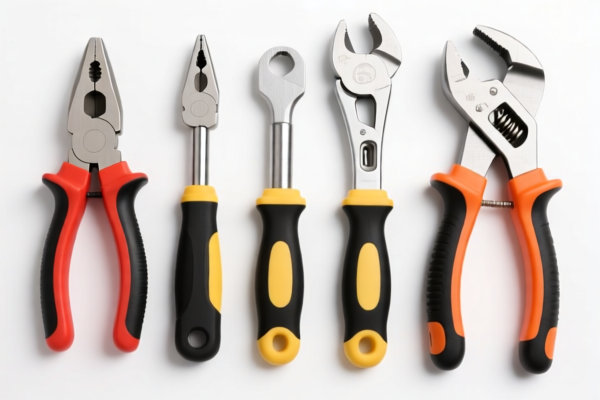
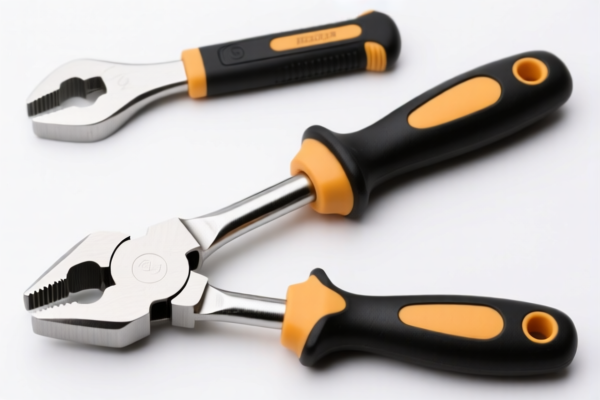
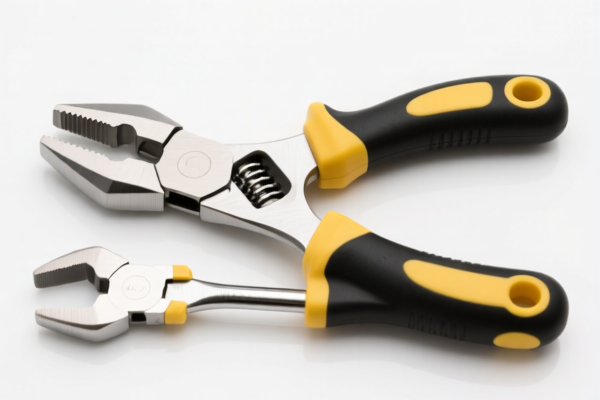
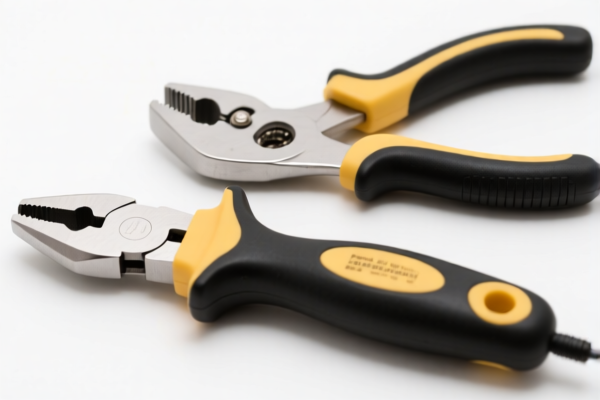
AI Analysis
🛠️ Non-Electric Manual Tools: The Ultimate HS Code & Tax Guide (USA/China Trade)
🌐 HS Code Reference & Customs Clearance Guide | 2026 Latest Tariff Analysis | Professional Clearance Strategy
📌 Part 1: Product Definition & Classification: What Exactly Are "Non-Electric Manual Tools"?
Non-electric manual tools are hand-operated instruments used for gripping, cutting, hammering, or assembling materials, relying solely on human muscle power rather than electricity, batteries, or compressed air. In international trade, these tools are categorized primarily under Chapter 82 (Base Metal Tools, Implements, Spoons, and Forks) and Chapter 85 (if they contain simple non-electric mechanisms like springs or gears, though rare for "purely manual").
Key Distinctions: * Hand Tools (General): Pliers, screwdrivers, wrenches, hammers → Typically HS 8203. * Household/Kitchen Tools: Can openers, nutcrackers, kitchen shears → Typically HS 8205. * Agricultural/Forestry Tools: Pruning shears, hand saws for trees → Typically HS 8201. * Specialty Tools: Glass cutters, marking tools → Typically HS 8205.
⚠️ Critical Distinction:
- If the tool is powered (electric, pneumatic, battery), it moves to Chapter 82 (parts) or Chapter 84/85.
- If the tool is non-metal (e.g., plastic handle only, but metal blade), it still falls under Chapter 82 if the working part is metal.
- "Hand Tools" vs. "Household Tools": Kitchen tools often fall under 8205, while industrial/workshop tools fall under 8203 or 8201. Misclassification here leads to significant tax differences due to Section 301 and IEEPA duties.
📦 Part 2: HS Code Classification Matrix (2026 Latest Tariff Authority Comparison)
Based on the provided data for Non-electric Manual Tools imported from China to the USA, here is the precise classification matrix:
| HS Code | Product Description | Usage Scenario | Material/Type Characteristics |
|---|---|---|---|
8205.10.00.00 |
Hand Tools, including Glass Cutters | General purpose tools, marking, cutting glass, DIY | Consistent with general hand tool definition |
8203.20.20.00 |
Manual Tools (Other Hand Tools) | Industrial/workshop use, pliers, wrenches, screwdrivers | No material/form conflict; general metal hand tools |
8201.30.00.80 |
Agricultural/Forestry Hand Tools | Gardening, pruning, forestry work | Bottom-line category for other agricultural hand tools |
8205.51.75.00 |
Other Household Tools | Kitchenware, nutcrackers, can openers | Infers metal material based on common sense |
8203.20.60.30 |
Other Hand Tools (Specific) | Specialized metal tools without material conflict | Specific subtype of general hand tools |
🔍 Key Takeaway:
- 8203 is the "catch-all" for industrial/workshop hand tools.
- 8205 covers household and specialty items (like glass cutters).
- 8201 is strictly for agricultural/forestry applications.
- Classification matters: The base tariff varies from 0% to 6.2%, but all are subject to heavy US additional tariffs.
💰 Part 3: 2026 Latest Tariff Rate Breakdown (Including Additional Taxes & Policy Surcharges)
✅ Applicable Country: United States (US)
✅ Origin: China (CN)
✅ Effective Time: 2025-11-10 onwards (including subsequent imports)
🎯 1. 8205.10.00.00 — Hand Tools, Including Glass Cutters
| Item | Details |
|---|---|
| Base Tariff | 6.2% |
| Section 301 Surcharge | +25.0% (USITC Footnote for Chapter 82) |
| Section 122 / IEEPA Surcharge | +10.0% (China-specific emergency duty) |
| Total Tax Rate | 41.2% |
| Tax Calculation | CIF Value × 41.2% |
| De Minimis Eligibility | ❌ Not Eligible (Deny de minimis for Section 301/122 goods) |
| Legal Path | Base Tariff → USITC: 8205.10.00.00 → Section 301: +25% → IEEPA/Sec 122: +10% |
📌 Explanation:
- The 6.2% base rate is the standard Most Favored Nation (MFN) rate.
- The 25% Section 301 tariff is a major cost driver for Chinese-made hand tools.
- The 10% IEEPA/Section 122 tariff is an additional layer for Chinese products.
- Total 41.2% is extremely high for simple metal tools. Cost control is critical.
🎯 2. 8203.20.20.00 — Manual Tools (General Hand Tools)
| Item | Details |
|---|---|
| Base Tariff | 4.0% |
| Section 301 Surcharge | +25.0% |
| Section 122 / IEEPA Surcharge | +10.0% |
| Total Tax Rate | 39.0% |
| Tax Calculation | CIF Value × 39.0% |
| De Minimis Eligibility | ❌ Not Eligible |
| Legal Path | Base Tariff → USITC: 8203.20.20.00 → Section 301: +25% → IEEPA/Sec 122: +10% |
📌 Note:
- This is a very common HS code for pliers, wrenches, and screwdrivers.
- Slightly lower base rate (4.0% vs 6.2%) saves 2.2%, but the 39% total remains punitive.
🎯 3. 8201.30.00.80 — Agricultural/Forestry Hand Tools
| Item | Details |
|---|---|
| Base Tariff | 0.0% |
| Section 301 Surcharge | +25.0% |
| Section 122 / IEEPA Surcharge | +10.0% |
| Total Tax Rate | 35.0% |
| Tax Calculation | CIF Value × 35.0% |
| De Minimis Eligibility | ❌ Not Eligible |
| Legal Path | Base Tariff → USITC: 8201.30.00.80 → Section 301: +25% → IEEPA/Sec 122: +10% |
📌 Optimization Tip:
- This category has the lowest total tax (35%) because the base rate is 0%.
- If your tool is used in gardening, pruning, or forestry, try to classify it under 8201 rather than 8203 or 8205.
- Example: Pruning shears, hand sickles, forest forks.
🎯 4. 8205.51.75.00 — Other Household Tools
| Item | Details |
|---|---|
| Base Tariff | 3.7% |
| Section 301 Surcharge | +25.0% |
| Section 122 / IEEPA Surcharge | +10.0% |
| Total Tax Rate | 38.7% |
| Tax Calculation | CIF Value × 38.7% |
| De Minimis Eligibility | ❌ Not Eligible |
| Legal Path | Base Tariff → USITC: 8205.51.75.00 → Section 301: +25% → IEEPA/Sec 122: +10% |
📌 Note:
- Applies to kitchen tools (nutcrackers, can openers) or household hardware.
- Base rate is 3.7%, leading to a 38.7% total. Slightly cheaper than8205.10.00.00.
🎯 5. 8203.20.60.30 — Other Hand Tools (Specific Subtype)
| Item | Details |
|---|---|
| Base Tariff | 12¢/doz + 5.5% |
| Section 301 Surcharge | +25.0% |
| Section 122 / IEEPA Surcharge | +10.0% |
| Total Tax Structure | Specific + Ad Valorem + 35% Surcharges |
| De Minimis Eligibility | ❌ Not Eligible |
| Legal Path | Base Tariff → USITC: 8203.20.60.30 → Section 301: +25% → IEEPA/Sec 122: +10% |
📌 Complexity Alert:
- This code uses a compound duty: 12 cents per dozen + 5.5% ad valorem.
- Then add 25% and 10% surcharges.
- Warning: Compound duties are harder to calculate on e-commerce shipments. Ensure your broker understands how to apply % surcharges to the specific duty base.
🛠️ Part 4: Customs Clearance Practical Advice (Avoid Pitfalls)
✅ 1. Required Documentation Checklist (Non-Negotiable)
| Document | Must Provide? | Notes |
|---|---|---|
| ✅ Product Specification Sheet | ✔️ | Detail material (steel type), dimensions, weight, packaging. |
| ✅ Product Photos (Clear) | ✔️ | Show the entire tool, handle, and working end. |
| ✅ Commercial Invoice | ✔️ | Must specify "Hand Tools" and HS Code. Avoid vague terms like "Hardware". |
| ✅ Packing List | ✔️ | Weight and dimensions are crucial for calculating specific duties (e.g., 12¢/doz). |
| ✅ Certificate of Origin (CO) | ✔️ | Required to prove Chinese origin for surcharge calculation. |
| ✅ Customs Bond | ✔️ | Required for formal entry (value > $2,500). |
🚫 Common Mistake:
- Using generic terms like "Hardware" or "Metal Parts" → Leads to customs delay or reclassification.
- Correct Term: "Manual Hand Tool, Steel, Non-Electric".
✅ 2. Strategic Classification Advice
| Scenario | Recommended HS Code | Total Tax Rate | Strategy |
|---|---|---|---|
| Industrial Pliers/Wrenches | 8203.20.20.00 |
39.0% | Standard classification. |
| Gardening Pruners/Sickles | 8201.30.00.80 |
35.0% | ✅ Best Option (Lowest tax). |
| Kitchen Nutcrackers | 8205.51.75.00 |
38.7% | Household category. |
| Glass Cutters | 8205.10.00.00 |
41.2% | Highest tax. Avoid if possible. |
| High-Volume Small Tools | 8203.20.60.30 |
Variable | ⚠️ Check if specific duty (12¢/doz) is lower than ad valorem for cheap items. |
🔥 Pro Tip:
- If your product can be reasonably argued as an agricultural tool (e.g., a multi-purpose gardener's knife), use HS 8201.30.00.80 to save 4-6% in total tariffs.
- Always provide usage descriptions that support agricultural/gardening purposes in the invoice.
✅ 3. Special Cases & Handling
| Situation | Handling Advice |
|---|---|
| Mixed Shipments | Classify each item correctly. Do not lump kitchen tools with industrial wrenches. |
| Tools with Plastic Handles | Still classified under Chapter 82 if the working part is metal. Declare as "Steel Hand Tool, Plastic Handle". |
| De Minimis (Section 321) | ❌ Not Available. Section 301 and IEEPA tariffs do not qualify for the $800 de minimis exemption. Every shipment is subject to tax. |
| Low-Value Shipments | Even for samples, if value > $0, tax applies. Budget for ~35-41% tax cost. |
🌍 Part 5: Global Market Comparison (2026)
| Country/Region | Recommended HS Code | Approx. Total Tax (China Origin) | Notes |
|---|---|---|---|
| 🇺🇸 USA | 8201.30.00.80 |
35.0% | High due to 301 + IEEPA. Use 8201 for lowest rate. |
| 🇨🇳 China | 8201.30.00.80 |
0% - 10% | Import duties vary; no 301/IEEPA surcharges. |
| 🇪🇺 EU | 8201.30.00.80 |
0% - 5% | No Section 301 equivalent. CE marking required. |
| 🇬🇧 UK | 8201.30.00.80 |
0% - 5% | Post-Brexit tariffs generally favorable for hand tools. |
| 🇨🇦 Canada | 8201.30.00.80 |
0% - 5% | CUSMA agreement may apply if non-Chinese origin. |
📌 Conclusion:
- USA is the most expensive market for Chinese hand tools due to Section 301 (25%) and IEEPA (10%).
- EU/UK/Canada offer significantly lower tariffs (0-5%).
- Strategy: Consider supply chain diversification (e.g., assemble in Vietnam/Mexico) to avoid US surcharges.
📌 Part 6: Common Errors & Pitfalls (Lessons Learned)
❌ Error 1: Classifying kitchen nutcrackers as industrial pliers (8203)
👉 Consequence: Overpaying tax or customs rejection due to incorrect usage description.
❌ Error 2: Using Section 321 De Minimis for Chinese hand tools
👉 Consequence: Seizure or forced release with back taxes + penalties. IEEPA/301 goods are explicitly excluded.
❌ Error 3: Vague invoice description: "Hardware"
👉 Consequence: Customs audit, delay, and potential reclassification to the highest tax bracket.
✅ Correct Practice:
"Manual Pruning Shears, Steel Blade, Plastic Handle, HS 8201.30.00.80, Made in China"
🎯 Part 7: Conclusion: Smart Classification Saves Money!
🎯 Remember the Rule:
🔹 "Agricultural = 35%, Household = 38.7%, Industrial = 39%, Glass Cutters = 41.2%"
🔹 "No De Minimis for China. Every Dollar is Taxed."
🔹 "Specify Usage: Gardening? Industrial? Kitchen?"
📌 Pro Tip:
If your hand tools are originating from Vietnam, Mexico, or Thailand, you may qualify for IEEPA Exemption or lower Section 301 rates.
✅ Recommendation: Apply for Advance Ruling (US CBP) if your product falls into a gray area (e.g., 8203.20.60.30 vs 8203.20.20.00).
📣 Immediate Action:
📞 Contact your customs broker with product photos and usage description.
🚀 Optimize HS Code to8201.30.00.80if possible to save 4-6% in total taxes.
💼 Budget for 35-41% tax cost in your pricing model.
✨ Professional Clearance Starts with Precise Classification!
💼 Every Percent Matters in the USA Market!
Customer Reviews
About HS Code Classification
The Harmonized System (HS) is an internationally standardized nomenclature developed by the World Customs Organization (WCO) to classify traded products. Over 200 countries use the HS system as the basis for customs tariffs, trade statistics, and import/export regulations.
Each HS code follows a hierarchical structure:
- Chapter (2 digits) — Broad category of goods (e.g., Chapter 84: Machinery and Mechanical Appliances)
- Heading (4 digits) — More specific grouping within the chapter
- Subheading (6 digits) — Internationally standardized breakdown, used by all WCO member countries
- National subdivisions (8-10 digits) — Country-specific extensions for further classification, such as US HTSUS 10-digit codes
Correct HS code classification is essential for smooth customs clearance, accurate duty payment, and compliance with trade regulations. Misclassification can lead to customs delays, overpayment of duties, or penalties.
When importing from CN to US, the applicable tariff rates may include:
- Most-Favored-Nation (MFN) rate — The standard duty rate applied to WTO members
- General rate — Applied to countries without trade agreements
- Trade remedy duties — Additional tariffs such as Section 301 (anti-dumping), Section 232 (national security), or countervailing duties
The information provided on this page is for reference purposes only. For official classification, please consult with your local customs authority or a licensed customs broker.