Non foamed PVC Plastic Sheet
CN → US| HS Code | Tariff Rate | Origin | Destination | Doc |
|---|---|---|---|---|
| 3920435000 | 39.2% | CN | US | Official Doc |
| 3921125000 | 41.5% | CN | US | Official Doc |
| 3919905040 | 40.8% | CN | US | Official Doc |
| 3919905060 | 40.8% | CN | US | Official Doc |
| 3920490000 | 40.8% | CN | US | Official Doc |
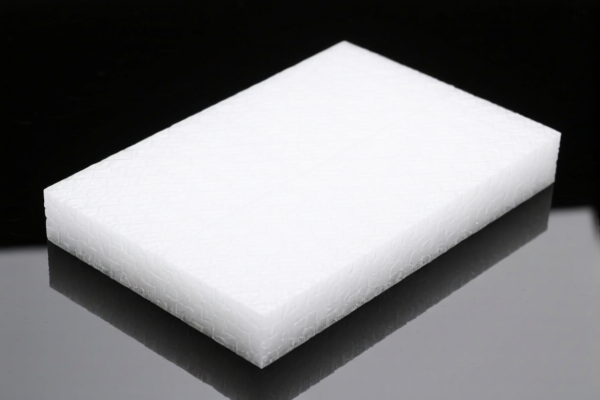
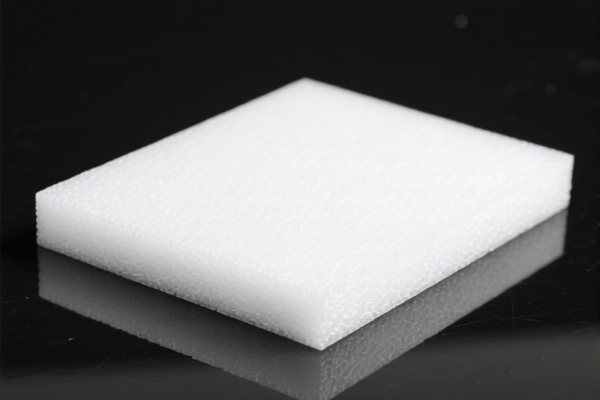
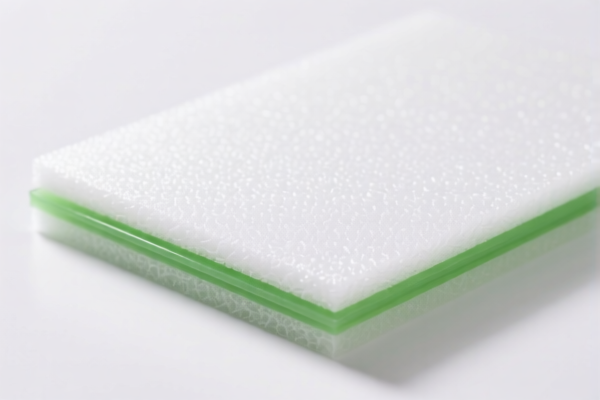
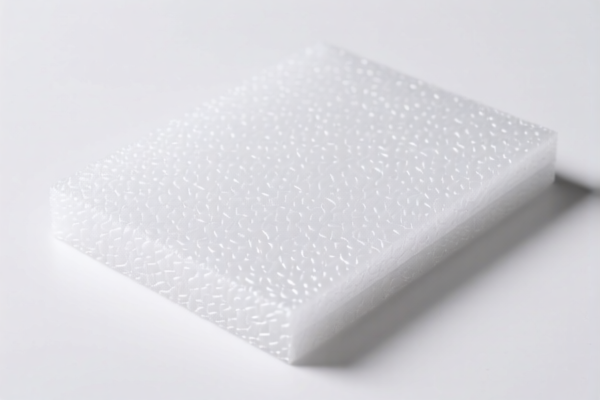
Product Images
AI Analysis
🧱 Non-Foamed PVC Plastic Sheet
🌐 HS Code Reference & Customs Clearance Guide | 2026 Latest Tariff Analysis | Professional Clearance Strategy
📌 I. Product Definition & Classification: Do You Really Understand "Non-Foamed PVC Plastic Sheet"?
Non-foamed Polyvinyl Chloride (PVC) sheets are rigid, dense plastic plates widely used in construction, signage, medical devices, and industrial flooring. In international trade, classification depends on the specific form, processing method, and physical structure of the sheet.
⚠️ Key Distinction Points:
- Foamed vs. Non-Foamed: Foamed sheets are lighter, porous, and often classified differently (e.g., under 3921 or specific 3919 subheadings depending on backing). Non-foamed sheets are solid, dense, and heavier. - Sheet vs. Plate: "Sheet" usually implies thinner gauges, while "Plate" might imply thicker, more rigid forms, though HS codes often group them unless specific thickness/weight criteria apply. - Self-Adhesive vs. Non-Adhesive: If the PVC sheet is self-adhesive (with a backing), it falls under Chapter 3919. If it is not self-adhesive, it falls under Chapter 3920 or 3921.
📦 II. HS Code Classification Details (2026 Latest Tariff Authority Comparison)
Based on the provided data, here are the five potential HS Codes for Non-Foamed PVC Plastic Sheets, ranked by logical fit and tax implications.
| HS Code | Product Description | Application Scenario | Tax Rate (China Origin) | Confidence Level |
|---|---|---|---|---|
3920.43.50.00 |
Non-foamed PVC Plastic Sheet | The most precise fit. Explicitly states "non-foamed PVC." | 39.2% | ⭐⭐⭐⭐⭐ (Best Fit) |
3921.12.50.00 |
Non-foamed PVC Plastic Plate | Used if the product is considered a "plate" (thicker/rigid) or if Chapter 3921 (other plates/sheets/laminates) is preferred over 3920 (non-cellular). | 41.5% | ⭐⭐⭐ (Alternative) |
3919.90.50.40 |
Non-foamed PVC Sheet (General) | Falls under self-adhesive or general plastic sheets/plates/film. "No material conflict." | 40.8% | ⭐⭐ (Use if Adhesive) |
3919.90.50.60 |
Non-foamed PVC Plate (General) | Similar to above, but specified as "plate-shaped." | 40.8% | ⭐⭐ (Use if Adhesive/Plate) |
3920.49.00.00 |
Non-foamed PVC Board/Sheet | General non-cellular PVC board, not elsewhere specified. | 40.8% | ⭐⭐⭐ (Fallback) |
🔍 Critical Note:
-3920.43.50.00is the most accurate description for "Non-foamed PVC Plastic Sheet" because it directly matches the material (PVC) and form (non-foamed sheet) without ambiguity. - Codes under3919typically apply to self-adhesive products. If your PVC sheet is not self-adhesive, using3919codes may lead to customs rejection or reclassification. - Codes under3921are often for "other" plastic plates/sheets that don't fit neatly into 3920. Use only if3920is explicitly excluded by technical specifications.
💰 III. 2026 Latest Tariff Rate Breakdown (Including Surcharges & Policy Add-ons)
✅ Applicable Country: USA (US)
✅ Origin: China (CN)
✅ Effective Date: Post-November 2025 (Current Trade Policy)
🎯 1. 3920.43.50.00 —— Non-Foamed PVC Plastic Sheet (Best Fit)
| Item | Content |
|---|---|
| Base Tariff | 4.2% |
| Section 301 Tariff (Additional) | +25.0% |
| Section 122 Tariff (Additional) | +10.0% |
| Total Tariff | 39.2% |
| Tax Calculation | CIF Value × 39.2% |
| De Minimis Exemption | ❌ Not Eligible (Section 301 & 122 surcharges apply to all shipments) |
| Legal Basis Path | HTSUS:3920.43.50.00 → USITC Footnote 301 → IEEPA:9903.01.25 |
📌 Explanation:
- This is the lowest total tax rate among all valid options. - The 4.2% base tariff is standard for non-cellular PVC sheets. - The 35% surcharge (25% + 10%) is mandatory for Chinese-origin PVC sheets. - Total Cost Impact: For a $10,000 shipment, you pay $3,920 in duties.
🎯 2. 3921.12.50.00 —— Non-Foamed PVC Plastic Plate (Alternative)
| Item | Content |
|---|---|
| Base Tariff | 6.5% |
| Section 301 Tariff (Additional) | +25.0% |
| Section 122 Tariff (Additional) | +10.0% |
| Total Tariff | 41.5% |
| Tax Calculation | CIF Value × 41.5% |
| De Minimis Exemption | ❌ Not Eligible |
| Legal Basis Path | HTSUS:3921.12.50.00 → USITC Footnote 301 → IEEPA:9903.01.25 |
📌 Explanation:
- Higher base tariff (6.5% vs 4.2%) due to classification under "Other Plates/Sheets." - Total Cost Impact: For a $10,000 shipment, you pay $4,150 in duties.
- Savings Warning: Misclassifying as3921could cost you $230 more per $10k shipment compared to3920.43.50.00.
🎯 3. 3919.90.50.40 / 3919.90.50.60 —— General PVC Sheets/Plates
| Item | Content |
|---|---|
| Base Tariff | 5.8% |
| Section 301 Tariff (Additional) | +25.0% |
| Section 122 Tariff (Additional) | +10.0% |
| Total Tariff | 40.8% |
| Tax Calculation | CIF Value × 40.8% |
| De Minimis Exemption | ❌ Not Eligible |
📌 Explanation:
- These codes are often used for self-adhesive PVC sheets. If your product is not self-adhesive, using these codes is risky. - If customs determines the product is not self-adhesive, they may reclassify it to3920.43.50.00(39.2%) or3921.12.50.00(41.5%). - Risk: If misclassified, you may face penalties for incorrect declaration.
🎯 4. 3920.49.00.00 —— Non-Cellular PVC Board (Fallback)
| Item | Content |
|---|---|
| Base Tariff | 5.8% |
| Section 301 Tariff (Additional) | +25.0% |
| Section 122 Tariff (Additional) | +10.0% |
| Total Tariff | 40.8% |
| Tax Calculation | CIF Value × 40.8% |
📌 Explanation:
- This code is for "Other" non-cellular PVC boards not specified elsewhere. - Since3920.43.50.00specifically covers "Non-foamed PVC sheets," using3920.49.00.00is a less precise classification and may invite customs scrutiny.
🛠️ IV. Customs Clearance Practical Advice (Battle-Tested Pitfall Avoidance)
✅ 1. Document Preparation Checklist (Essential)
| Document | Required | Purpose |
|---|---|---|
| ✅ Product Specification Sheet | ✔️ | Must clearly state "Non-Foamed" (density, thickness, lack of cellular structure). |
| ✅ Material Composition Certificate | ✔️ | Proof that material is 100% PVC, no additives that change classification. |
| ✅ Product Photos | ✔️ | Show cross-section (solid, no bubbles) to prove "non-foamed." |
| ✅ Commercial Invoice | ✔️ | Clearly describe as "Non-Foamed PVC Plastic Sheet," NOT "PVC Foamed Board" or "Adhesive Tape." |
| ✅ HS Code Pre-Ruling (Optional) | ✔️ | Highly recommended for large shipments to lock in 3920.43.50.00. |
✅ 2. Declaration Tips (Key Mantra)
🔥 "Non-Foamed is Key, Adhesive is Trap, Base 4.2% Saves!"
| Scenario | Correct Declaration | Wrong Practice |
|---|---|---|
| Solid PVC Sheet (No Adhesive) | 3920.43.50.00 (39.2%) |
Declare as 3919... (Adhesive) → High risk of rejection |
| Self-Adhesive PVC Sheet | 3919.90.50.40/60 (40.8%) |
Declare as 3920... → May be accepted, but check adhesive backing |
| Foamed PVC Sheet | Different HS Code (e.g., 3921/3919) | Declare as "Non-Foamed" → Customs Seizure/Fine |
| PVC Pipe/Profile | 3917 or 3918 |
Declare as "Sheet" → Wrong Classification |
✅ 3. Special Case Handling
| Situation | Handling Advice |
|---|---|
| Mixed Shipment (Foamed + Non-Foamed) | Split Declaration. Foamed and non-foamed have different HS codes. Do not mix. |
| Colored PVC Sheets | Still 3920.43.50.00. Color does not change classification. |
| Printed PVC Sheets | If printing is surface-level, still 3920.43.50.00. If heavily modified, consult expert. |
| Samples | Even for samples, duties apply if over $800 (de minimis waived for China). |
🌍 V. Global Market Clearance Comparison (2026 Latest)
| Country/Region | Recommended HS Code | Tariff Rate (China Origin) | Certification Required | Notes |
|---|---|---|---|---|
| 🇺🇸 USA | 3920.43.50.00 |
39.2% (4.2% + 25% + 10%) | None specific, but accurate description | Highest duty burden for PVC sheets |
| 🇨🇳 China | 3920.43.50.00 |
5.0% (Import Duty) | CCC (if applicable) | No Section 301/122 surcharges |
| 🇪🇺 EU | 3920.43.50.00 |
6.5% (Standard MFN) | CE (if electrical), REACH | No additional tariffs |
| 🇯🇵 Japan | 3920.43.50.00 |
6.0% | PSE (if applicable) | Low tariff base |
| 🇮🇳 India | 3920.43.50.00 |
7.5% + SWS | BIS (if applicable) | High non-tariff barriers |
📌 Conclusion:
- USA is the most expensive market due to Section 301 and 122 tariffs. - Accurate classification as3920.43.50.00is critical to minimize costs (39.2% vs 41.5%). - Never misdeclare "Non-Foamed" as "Foamed" to avoid lower tariffs; penalties are severe.
📌 VI. Common Mistakes & Pitfall Guide (Lessons from the Field)
❌ Mistake 1: Declaring "PVC Sheet" without specifying "Non-Foamed"
👉 Consequence: Customs may reject or apply a higher default rate.
✅ Fix: Always specify "Non-Foamed, Rigid PVC Sheet."
❌ Mistake 2: Using 3919 codes for non-adhesive sheets
👉 Consequence: Customs may demand proof of adhesive backing. If none exists, reclassification occurs.
✅ Fix: Use 3920 for non-adhesive sheets.
❌ Mistake 3: Confusing "Non-Foamed" with "Expanded PVC"
👉 Consequence: Expanded PVC is lightweight and porous. Non-foamed is dense. Different HS codes.
✅ Fix: Provide density data. Non-foamed PVC density ~1.4 g/cm³.
❌ Mistake 4: Ignoring Section 122 Tariffs
👉 Consequence: Calculating tax as 4.2% + 25% = 29.2% instead of 39.2%.
✅ Fix: Always include 10% Section 122 surcharge for Chinese PVC products.
🎯 VII. Conclusion: Precision Classification Saves Money!
🎯 Remember the Mantra:
🔹 "Non-Foamed is Solid, Adhesive is Different, 3920.43 is King!"
🔹 "39.2% is the Goal, 41.5% is the Penalty, 40.8% is the Risk!"
📌 Pro Tip:
If your shipment is large value, consider applying for an HS Code Advance Ruling from CBP (U.S. Customs) to lock in 3920.43.50.00. This prevents disputes and ensures smooth clearance.
📣 Immediate Action:
📞 Contact Your Customs Broker + Provide Product Photos + Confirm Non-Foamed Status
🚀 Classify Correctly, Clear Faster, Profit Higher!
✨ Professional Clearance Starts with Accurate Classification!
💼 Every Percent of Duty Matters!
Customer Reviews
About HS Code Classification
The Harmonized System (HS) is an internationally standardized nomenclature developed by the World Customs Organization (WCO) to classify traded products. Over 200 countries use the HS system as the basis for customs tariffs, trade statistics, and import/export regulations.
Each HS code follows a hierarchical structure:
- Chapter (2 digits) — Broad category of goods (e.g., Chapter 84: Machinery and Mechanical Appliances)
- Heading (4 digits) — More specific grouping within the chapter
- Subheading (6 digits) — Internationally standardized breakdown, used by all WCO member countries
- National subdivisions (8-10 digits) — Country-specific extensions for further classification, such as US HTSUS 10-digit codes
Correct HS code classification is essential for smooth customs clearance, accurate duty payment, and compliance with trade regulations. Misclassification can lead to customs delays, overpayment of duties, or penalties.
When importing from CN to US, the applicable tariff rates may include:
- Most-Favored-Nation (MFN) rate — The standard duty rate applied to WTO members
- General rate — Applied to countries without trade agreements
- Trade remedy duties — Additional tariffs such as Section 301 (anti-dumping), Section 232 (national security), or countervailing duties
The information provided on this page is for reference purposes only. For official classification, please consult with your local customs authority or a licensed customs broker.