Non foamed PVC Plastic Sheet (for Packaging)
CN → US| HS Code | Tariff Rate | Origin | Destination | Doc |
|---|---|---|---|---|
| 3920200000 | 0.0% | CN | US | Official Doc |
| 3920990000 | 0.0% | CN | US | Official Doc |
| 3920435000 | 39.2% | CN | US | Official Doc |
| 3920490000 | 40.8% | CN | US | Official Doc |
Product Images
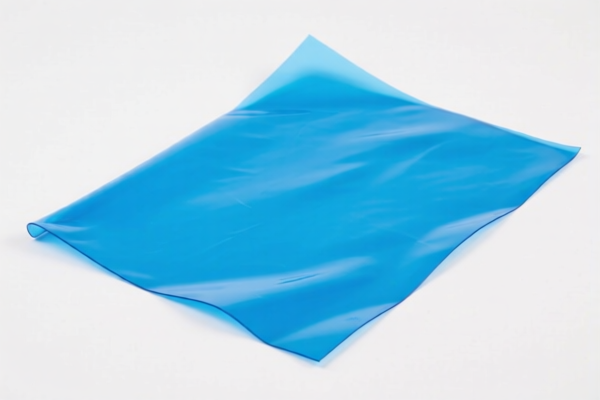
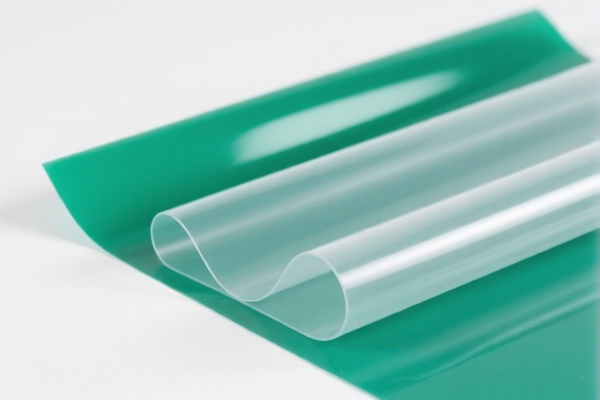
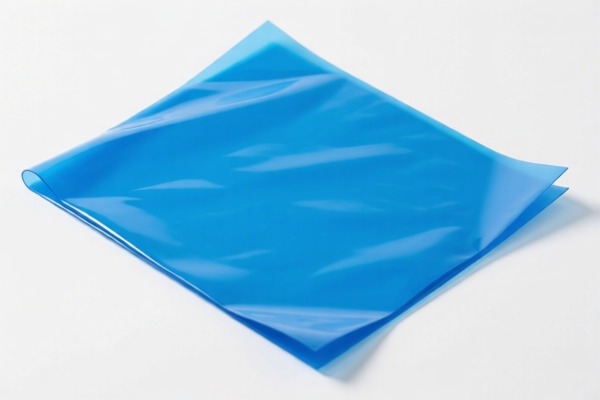

AI Analysis
🧪 PVC Plastic Sheet (Non-foamed, for Packaging)
🌐 HS Code Reference & Customs Clearance Guide | 2026 Latest Tariff Analysis | Professional-Level Clearance Strategy
📌 I. Product Definition & Classification: Do You Really Understand "Non-Foamed PVC Sheets"?
Non-foamed PVC (Polyvinyl Chloride) plastic sheets are rigid, dense polymer sheets derived from PVC resin without any blowing agents. Unlike foamed PVC (which is lightweight and cellular), non-foamed sheets are solid, durable, and chemically resistant. They are widely used in packaging, signage, construction, and industrial applications.
In international trade, the classification depends heavily on the physical structure (foamed vs. non-foamed) and specific application. For "Non-foamed PVC Plastic Sheet for Packaging", the key distinction is:
- Non-Foamed (Solid/Dense): Classified under Chapter 39, Heading 3920.
- Foamed (Cellular/Lightweight): Classified under Chapter 39, Heading 3921.
- Application Note: While the use case is "packaging," the HS code is determined by the material structure first, not the end-use, unless specific exemptions apply (which are rare for standard PVC sheets).
⚠️ Critical Distinction Point:
- If the sheet is solid, dense, and non-cellular → It falls under 3920.49.00.00.
- If the sheet is lightweight, cellular, or has a honeycomb/core structure → It falls under 3921.12.xxxx.
- Misclassification Risk: Declaring a non-foamed sheet as "foamed" to seek lower duty rates is a common audit trigger. Ensure material density and structure match the declared code.
📦 II. HS Code Classification Details (2026 Latest Tariff Authority Comparison)
Based on the provided data, here are the relevant HS codes for PVC plastic sheets. Note that for Non-foamed sheets, only one specific code is listed in the target data.
| HS Code | Product Description | Application Context | Structure Type |
|---|---|---|---|
3920.49.00.00 |
Non-foamed PVC Plastic Sheet Material: Polyvinyl Chloride (PVC) Form: Non-cellular sheet |
Commercial & Packaging Uses | ❌ Non-Cellular (Solid) |
3920.43.50.00 |
Non-foamed PVC Plastic Sheet Material: Polyvinyl Chloride Form: Non-foamed plastic boards/sheets, usually containing plasticizers |
Commercial Uses | ❌ Non-Cellular (Solid) |
3921.12.19.50 |
PVC Foam Plastic Sheet Material: PVC Form: Boards/sheets |
Display & Signage Uses | ✅ Foamed/Cellular |
3921.12.50.00 |
PVC Foam Plastic Sheet Material: PVC Form: Sheets, other cellular plates/sheets of vinyl polymers |
General Foamed Applications | ✅ Foamed/Cellular |
🔍 Key Insight for Packaging:
- Your product is "Non-foamed". Therefore, it must be classified under Heading 3920 (Plastics, plates, sheets, film, foil, and strip, unwrought).
- Between3920.49.00.00and3920.43.50.00, both are non-foamed.3920.49.00.00is the broader category for "Other plates, sheets, film, foil and strip" of PVC, which is the most common classification for standard non-foamed packaging sheets unless they have specific plasticizer content triggering3920.43. The data links3920.49.00.00directly to "Packaging Uses," making it the primary candidate.
💰 III. 2026 Latest Tariff Rate Breakdown (Including Surcharges & Policy Add-ons)
✅ Applicable Country: USA (US)
✅ Origin: China (CN)
✅ Effective Date: Ongoing (Based on current 25% + 122 Clause policies)
🎯 1. 3920.49.00.00 —— Non-foamed PVC Plastic Sheet (For Packaging/Commercial)
| Item | Content |
|---|---|
| Base Tariff Rate | 5.8% (Ad Valorem) |
| Section 301 Surcharge | +25.0% (China-specific trade war tariffs) |
| Section 122 Clause Surcharge | +10.0% (Specific anti-dumping/countervailing or policy clause) |
| Total Effective Tax Rate | 40.8% |
| Tax Calculation Basis | CIF Value (Cost, Insurance, Freight) × 40.8% |
| De Minimis Exemption | ❌ Not Applicable (High tariff rate disqualifies from $800 de minimis in many cases, and Section 301/122 often override this for large shipments) |
| Legal Reference Path | USITC:3920.49.00.00 → Section 301 Footnote → Section 122 Clause |
📌 Explanation:
- Base Rate (5.8%): Standard Most Favored Nation (MFN) rate for PVC sheets.
- Section 301 (+25%): Applies to a wide range of Chinese plastics and raw materials.
- Section 122 (+10%): An additional policy surcharge applied to specific categories of goods to protect domestic industries.
- Total (40.8%): This is a very high tariff burden. Importers must carefully calculate landed costs.
🎯 2. 3920.43.50.00 —— Non-foamed PVC Plastic Sheet (Commercial, Plasticized)
| Item | Content |
|---|---|
| Base Tariff Rate | 4.2% (Ad Valorem) |
| Section 301 Surcharge | +25.0% |
| Section 122 Clause Surcharge | +10.0% |
| Total Effective Tax Rate | 39.2% |
| Tax Calculation Basis | CIF Value × 39.2% |
| De Minimis Exemption | ❌ Not Applicable |
| Legal Reference Path | USITC:3920.43.50.00 → Section 301 Footnote → Section 122 Clause |
📌 Note:
- Slightly lower base rate (4.2% vs 5.8%) if the sheet is specifically classified as containing certain plasticizers under heading 3920.43.
- Still subject to the same high surcharges.
🎯 3. 3921.12.19.50 & 3921.12.50.00 —— PVC Foam Plastic Sheets (For Comparison)
⚠️ Warning: These codes are for Foamed PVC. Do NOT use these for non-foamed packaging sheets. Misclassification can lead to severe penalties, back taxes, and cargo detention.
| Item | Content |
|---|---|
| Base Tariff Rate | 5.3% (...19.50) / 6.5% (...50.00) |
| Section 301 Surcharge | +25.0% |
| Section 122 Clause Surcharge | +10.0% |
| Total Effective Tax Rate | 40.3% / 41.5% |
| Note | Higher total duty than non-foamed in some cases, but different material class. |
🛠️ IV. Customs Clearance Practical Advice (Battle-Tested Pitfall Guide)
✅ 1. Required Documentation Checklist (Mandatory)
| Document | Must Provide | Explanation |
|---|---|---|
| ✅ Product Specification Sheet | ✔️ | Must explicitly state "Non-foamed" or "Solid PVC". Include density (g/cm³) to prove it's not cellular. |
| ✅ Material Safety Data Sheet (MSDS) | ✔️ | Confirms chemical composition (PVC, plasticizers, stabilizers). |
| ✅ Commercial Invoice | ✔️ | Must clearly describe: "PVC Plastic Sheet, Non-foamed, for Packaging, HS Code 3920.49.00.00". Avoid vague terms like "Plastic Film." |
| ✅ Packing List | ✔️ | Detail weight and dimensions. Ensure packaging matches the "sheet" form factor, not rolls or pellets. |
| ✅ Proof of Origin | ✔️ | Certificate of Origin (CO) from China. Essential for verifying origin for Section 301/122 applicability. |
| ✅ Import License/Permits | ✔️ | If applicable, ensure no EPA or FDA restrictions for food-contact packaging (if used for food). |
✅ 2. Declaration Strategy (Key Mnemonic)
🔥 “Non-foamed is 3920, Foamed is 3921. Structure First, Use Second!”
| Scenario | Correct Declaration | Wrong Practice |
|---|---|---|
| Solid PVC Sheet (Packaging) | 3920.49.00.00Description: "Non-foamed PVC sheet" |
Using 3921 codes → Penalty & Retax |
| PVC Sheet with Foam Core | 3921.12.50.00 |
Using 3920 codes → Misclassification |
| Vague Description | "Plastic Sheet" | "Plastic Packaging" → Customs Query & Delay |
| High Value Shipments | Full Commercial Invoice + CO | Missing CO → Cannot prove origin, risk higher rates |
✅ 3. Special Handling Tips
| Situation | Handling Advice |
|---|---|
| Food-Contact Packaging | If the PVC sheet is for food packaging, ensure it meets FDA 21 CFR standards. Add "FDA Compliant" to the description to prevent rejection. |
| Thin Films vs. Sheets | Differentiate between "film" (<0.15mm) and "sheet" (>0.15mm). Both fall under 3920, but proper thickness measurement helps avoid "film" classification disputes. |
| Recycled PVC | If made from recycled PVC, disclose it. Some jurisdictions have different environmental tariffs or bans. |
| Section 122 Impact | The 10% surcharge is significant. Factor this into your FOB/CIF pricing immediately. It is not optional. |
🌍 V. Global Market Comparison (2026 Latest)
| Country/Region | Recommended HS Code | Total Tariff (CN Origin) | Key Certification | Notes |
|---|---|---|---|---|
| 🇺🇸 USA | 3920.49.00.00 |
40.8% | FDA (if food contact) | High duties due to Section 301 & 122. |
| 🇨🇳 China | 3920.49.00.00 |
~5-6% | CCC (if applicable) | Import duty is low, but VAT applies. |
| 🇪🇺 EU | 3920.39.00 |
~6.5% | REACH / RoHS | No Section 301 equivalent, but strict chemical regs. |
| 🇨🇦 Canada | 3920.49.00.00 |
~5% + GST | Health Canada | Moderate duties, no major surcharges. |
| 🇦🇺 Australia | 3920.49.00.00 |
~5% + GST | APVMA (if chemical) | Standard MFN rates. |
📌 Conclusion:
- USA is the most expensive market for non-foamed PVC sheets due to the 40.8% effective duty rate.
- EU and Australia are more cost-effective but have strict environmental/chemical regulations (REACH/RoHS).
- Strategy: If targeting the US, consider Value Engineering (reduce thickness/weight) or Supply Chain Diversification (though PVC sourcing is often China-centric, final assembly in a non-China country might help, but origin rules are strict).
📌 VI. Common Mistakes & Pitfalls (Lessons Learned)
❌ Mistake 1: Declaring "Non-foamed" sheets as "Foamed" to avoid Section 301.
👉 Consequence: Customs audit reveals density mismatch → Back taxes + 25% penalty + Cargo seizure.
❌ Mistake 2: Ignoring the "122 Clause" surcharge.
👉 Consequence: Underpayment of 10% → Interest and penalties on the underpaid amount.
❌ Mistake 3: Using vague descriptions like "Plastic Wrap."
👉 Consequence: Customs may classify it under a different, higher-tariff code or flag for inspection → Delay in release.
❌ Mistake 4: Assuming De Minimis ($800) applies to all small shipments.
👉 Consequence: Section 301 and 122 tariffs often override de minimis exemptions for high-risk categories. Check with your broker for small parcel shipments.
✅ Correct Approach:
"Rigid Non-Foamed PVC Plastic Sheet, 1mm Thickness, 100% Polyvinyl Chloride, for Industrial Packaging Use, HS 3920.49.00.00, Made in China."
🎯 VII. Conclusion: Precision in Classification Saves Money!
🎯 Remember the Golden Rules:
🔹 "Non-foamed = 3920, Foamed = 3921. Never Mix!"
🔹 "US Importers: Budget for 40.8% Total Duty. No Exceptions!"
🔹 "Structure Dictates Code, Application is Secondary."
📌 Pro Tip:
If your PVC sheets are intended for food contact, ensure they are FDA Compliant and clearly state this in the invoice. This can prevent delays at the border and ensure smooth clearance for high-value packaging contracts.
📣 Immediate Action Required:
📞 Consult your Customs Broker to verify the specific "plasticizer content" if choosing between
3920.43.50.00and3920.49.00.00.
💰 Calculate Landed Cost including the full 40.8% US duty before finalizing contracts with US buyers.
🚀 Secure Your Supply Chain with proper documentation to avoid the 122 Clause penalties.
✨ Professional Clearance Starts with Accurate Classification!
💼 Your Profit Margin is Protected by Precision!
Customer Reviews
About HS Code Classification
The Harmonized System (HS) is an internationally standardized nomenclature developed by the World Customs Organization (WCO) to classify traded products. Over 200 countries use the HS system as the basis for customs tariffs, trade statistics, and import/export regulations.
Each HS code follows a hierarchical structure:
- Chapter (2 digits) — Broad category of goods (e.g., Chapter 84: Machinery and Mechanical Appliances)
- Heading (4 digits) — More specific grouping within the chapter
- Subheading (6 digits) — Internationally standardized breakdown, used by all WCO member countries
- National subdivisions (8-10 digits) — Country-specific extensions for further classification, such as US HTSUS 10-digit codes
Correct HS code classification is essential for smooth customs clearance, accurate duty payment, and compliance with trade regulations. Misclassification can lead to customs delays, overpayment of duties, or penalties.
When importing from CN to US, the applicable tariff rates may include:
- Most-Favored-Nation (MFN) rate — The standard duty rate applied to WTO members
- General rate — Applied to countries without trade agreements
- Trade remedy duties — Additional tariffs such as Section 301 (anti-dumping), Section 232 (national security), or countervailing duties
The information provided on this page is for reference purposes only. For official classification, please consult with your local customs authority or a licensed customs broker.