Non foamed Polyamide Plastic Sheet
CN → US| HS Code | Tariff Rate | Origin | Destination | Doc |
|---|---|---|---|---|
| 3921905050 | 39.8% | CN | US | Official Doc |
| 3921190090 | 41.5% | CN | US | Official Doc |
Product Images
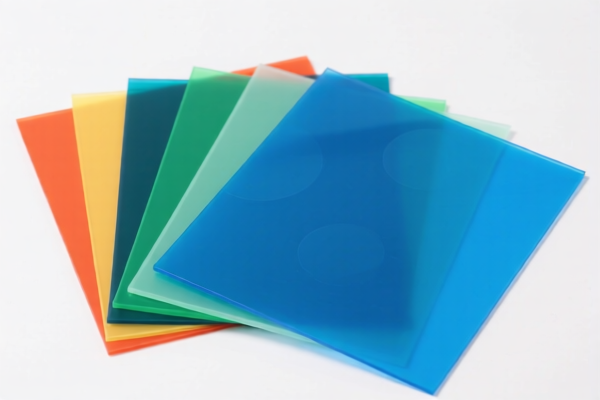
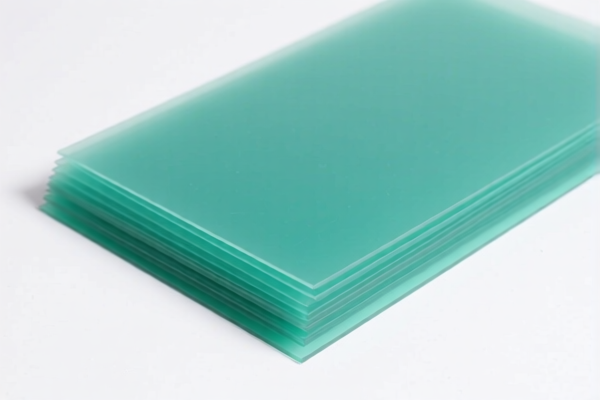
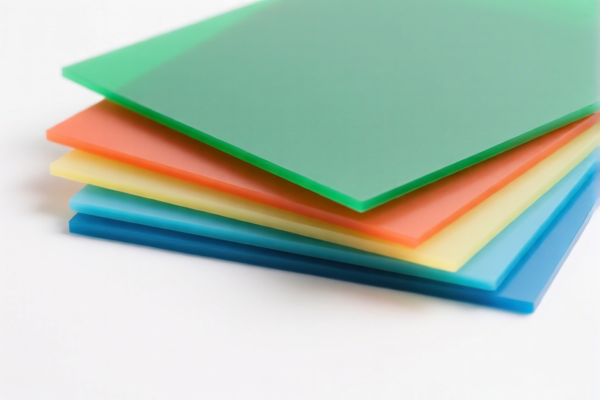
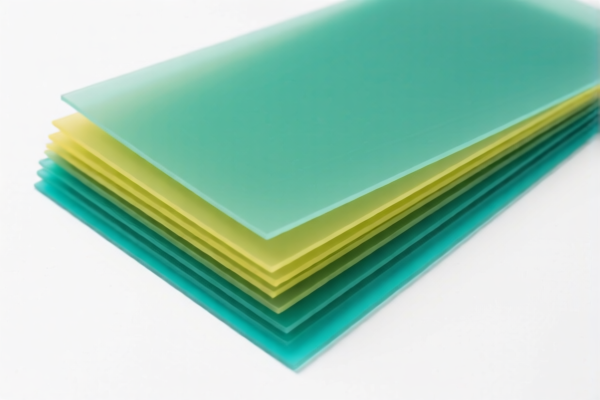
AI Analysis
🧱 Non-Foamed Polyamide Plastic Sheet
🌐 HS Code Reference & Clearance Guide | 2026 Latest Tariff Analysis | Professional Clearance Strategy
📌 I. Product Definition & Classification: Do You Really Understand "Plastic Sheets"?
Non-foamed Polyamide Plastic Sheet refers to flat, rigid, or semi-rigid sheets made from polyamide (commonly known as Nylon) that are not cellular (i.e., they are solid, not foamed/aerated). In international trade, these products are typically classified under Chapter 39 (Plastics and Articles Thereof). The critical distinction lies in whether the product is cellular (foamed) or non-cellular (solid).
⚠️ Key Distinction:
- If the plastic is cellular/foamed → Classified under 3921.19 (Cellular plastics)
- If the plastic is non-cellular/solid (like your product) → Classified under 3921.90 (Other plastics, not cellular)
📦 II. HS Code Classification Details (2026 Latest Tariff Authority Comparison)
| HS Code | Product Description | Applicable Scenario | Cellular? |
|---|---|---|---|
3921.90.50.50 |
Other plates, sheets, film, foil and strip, of plastics: Other: Other | Solid/Non-foamed Polyamide Sheets, Nylon sheets, rigid plastic plates | ❌ No (Solid) |
3921.19.00.90 |
Other plates, sheets, film, foil and strip, of plastics: Cellular: Of other plastics Other | Foamed Nylon sheets, Expanded Polyamide panels, lightweight insulating plastic boards | ✅ Yes (Foamed) |
🔍 Critical Reminder:
- Your product is Non-foamed (solid), so it MUST NOT be classified under3921.19.00.90even if the chemical composition (Polyamide) is similar.
- The classification depends on the physical structure (cellular vs. non-cellular), not just the material type.
💰 III. 2026 Latest Tariff Rate Details (Including Surtaxes & Policy Add-ons)
✅ Applicable Country: United States (US)
✅ Origin: China (CN)
✅ Effective Date: 2025 November 10 onwards (for subsequent imports)
🎯 1. 3921.90.50.50 —— Solid Non-Cellular Polyamide Sheets
| Item | Content |
|---|---|
| Base Tariff Rate | 4.8% (ad valorem) |
| Section 301 Surtax (USITC) | +25.0% (Applied to Chinese-origin plastics under specific subheadings) |
| IEEPA Surtax | 0.0% (Not applicable for this specific HS code under current IEEPA directives) |
| Total Tax Rate | 29.8% |
| Tax Calculation | CIF Value × 29.8% |
| De Minimis Eligibility | ❌ Not Eligible (deny_de_minimis) |
| Legal Basis Path | USITC:3921.90.50.50 → FOOTNOTE:301.88.01 (if applicable) |
📌 Explanation:
- The 4.8% is the standard MFN (Most Favored Nation) duty for other plastic plates/sheets.
- The 25.0% is the "Section 301" additional duty imposed by the US Trade Representative on certain Chinese goods.
- Total: 29.8%. This is a significant cost factor that must be calculated into your landed cost.
🎯 2. 3921.19.00.90 —— Cellular (Foamed) Polyamide Sheets
| Item | Content |
|---|---|
| Base Tariff Rate | 0.0% |
| Section 301 Surtax (USITC) | 0.0% |
| IEEPA Surtax | 0.0% |
| Total Tax Rate | 0.0% |
| Tax Calculation | CIF Value × 0.0% |
| De Minimis Eligibility | ✅ Eligible (may qualify for de minimis if value < $800) |
| Legal Basis Path | USITC:3921.19.00.90 |
📌 Note:
- While this code has 0% tax, it does not apply to your product because it is non-foamed.
- Misclassifying a solid sheet as cellular foam to avoid tariffs is a high-risk customs violation and can lead to severe penalties, seizure, and blacklisting.
🛠️ IV. Clearance Practical Advice (实战避坑指南)
✅ 1. Required Documentation List (No Exceptions)
| Document | Required | Explanation |
|---|---|---|
| ✅ Product Specification Sheet | ✔️ | Must explicitly state: "Non-foamed", "Solid", Material: Polyamide (Nylon), Thickness, Dimensions. |
| ✅ Material Safety Data Sheet (MSDS) | ✔️ | Confirms chemical composition and physical properties. |
| ✅ Product Photos | ✔️ | Clear images showing the solid cross-section (no pores/bubbles) to prove it is not foamed. |
| ✅ Commercial Invoice | ✔️ | Description must match HS Code: "Non-foamed Polyamide Plastic Sheet". |
| ✅ Packing List | ✔️ | Details net/gross weight, packaging type. |
| ✅ Certificate of Origin (CO) | ✔️ | To prove Chinese origin (triggers the 25% surtax). |
✅ 2. Declaration Tips (Key Mantra)
🔥 "Solid means 29.8%, Foam means 0%, But False Decl = Huge Penalties!"
| Scenario | Correct Declaration | Wrong Practice |
|---|---|---|
| Solid Nylon Sheet | 3921.90.50.50 |
Misdeclare as 3921.19.00.90 to save tax → Audit Risk + Penalties |
| Foamed Nylon Board | 3921.19.00.90 |
Over-declare as solid → Unnecessary 29.8% Tax |
| Mixed Shipment | Split Declaration | Combine into one line item → Confusion & Delay |
📌 Actionable Advice:
- Include a "Structure Declaration" in your commercial invoice: "Item is non-cellular, solid polymer sheet, not foamed or expanded."
- Provide cross-section photos if requested by CBP (Customs and Border Protection).
✅ 3. Special Cases & Handling
| Scenario | Handling Advice |
|---|---|
| Polyamide Blend | If the sheet is 100% Polyamide, use 3921.90.50.50. If mixed with other plastics, still generally 3921.90.xxxxxx unless primary use changes classification. |
| Reinforced Nylon | If fiberglass-reinforced, still likely 3921.90 unless it meets the definition of a "composite article" elsewhere. Consult a broker. |
| Thin Film vs. Sheet | If thickness < 1mm, it might be considered "film" (3920.xxxx). Clarify thickness in specs. |
🌍 V. Global Market Clearance Comparison (2026 Latest)
| Country/Region | Recommended HS Code | Tariff (China Origin) | Certification | Note |
|---|---|---|---|---|
| 🇺🇸 USA | 3921.90.50.50 |
29.8% (4.8% base + 25% surtax) | None Specific | High tariff due to Section 301. |
| 🇨🇳 China | 3921.90.90.00 |
~5-10% (varies) | None | Domestic trade applies. |
| 🇪🇺 EU | 3921.90.99 |
~0-6.5% | REACH Compliance | No Section 301 equivalent. |
| 🇬🇧 UK | 3921.90.90 |
~0-6.5% | UK REACH | Post-Brexit rules apply. |
| 🇯🇵 Japan | 3921.90.00 |
~0-5% | None | Low tariff environment. |
📌 Conclusion:
- USA is the most expensive market due to 25% Section 301 surtax.
- If targeting the US market, optimize logistics and landed cost to absorb the 29.8% total duty.
- Consider third-country assembly (if rules of origin allow) to mitigate surtax, but this is complex for plastic sheets.
📌 VI. Common Mistakes & Pitfalls (Lessons Learned)
❌ Mistake 1: Claiming "Polyamide Sheet" is automatically 0% tariff
👉 Consequence: CBP rejects declaration, demands 29.8% + penalties.
❌ Mistake 2: Using "Foamed" in description for solid sheets to get 0% tax
👉 Consequence: Customs inspection finds solid structure → Fraud Penalty + Seizure.
❌ Mistake 3: Ignoring thickness definition
👉 Consequence: If too thin, it might be "film" (3920), which has different duty rates. Clarify thickness!
✅ Correct Declaration Example:
"NON-FOAMED POLYAMIDE (NYLON) PLASTIC SHEET, SOLID STRUCTURE, THICKNESS: 3MM, SIZE: 1200x2400MM, FOR INDUSTRIAL USE"
🎯 VII. Conclusion: Precision Classification Saves Money & Prevents Risks!
🎯 Remember the Mantra:
🔹 "Solid Nylon = 29.8% (US), Foamed Nylon = 0% (US), But Fake Decl = Disaster!"
🔹 "Check Structure, Not Just Material! Thickness Matters Too!"
📌 Pro Tip:
If your polyamide sheets are thin (<1mm), check if they qualify as "film" (3920.xxxx), which may have different duty rates.
Always provide cross-section photos and material specs to CBP to avoid delays.
📣 Immediate Action:
📞 Engage a licensed customs broker for pre-classification ruling if unsure.
🚀 Calculate Landed Cost including 29.8% US tariff to ensure profitability.
✨ Professional Clearance Starts with Accurate Classification!
💼 Your Bottom Line Depends on Every Digit!
Customer Reviews
About HS Code Classification
The Harmonized System (HS) is an internationally standardized nomenclature developed by the World Customs Organization (WCO) to classify traded products. Over 200 countries use the HS system as the basis for customs tariffs, trade statistics, and import/export regulations.
Each HS code follows a hierarchical structure:
- Chapter (2 digits) — Broad category of goods (e.g., Chapter 84: Machinery and Mechanical Appliances)
- Heading (4 digits) — More specific grouping within the chapter
- Subheading (6 digits) — Internationally standardized breakdown, used by all WCO member countries
- National subdivisions (8-10 digits) — Country-specific extensions for further classification, such as US HTSUS 10-digit codes
Correct HS code classification is essential for smooth customs clearance, accurate duty payment, and compliance with trade regulations. Misclassification can lead to customs delays, overpayment of duties, or penalties.
When importing from CN to US, the applicable tariff rates may include:
- Most-Favored-Nation (MFN) rate — The standard duty rate applied to WTO members
- General rate — Applied to countries without trade agreements
- Trade remedy duties — Additional tariffs such as Section 301 (anti-dumping), Section 232 (national security), or countervailing duties
The information provided on this page is for reference purposes only. For official classification, please consult with your local customs authority or a licensed customs broker.