Non foamed Polyamide Plastic Strip
CN → US| HS Code | Tariff Rate | Origin | Destination | Doc |
|---|---|---|---|---|
| 3926906090 | 39.2% | CN | US | Official Doc |
| 3926906010 | 39.2% | CN | US | Official Doc |
| 3920435000 | 39.2% | CN | US | Official Doc |
| 3921125000 | 41.5% | CN | US | Official Doc |
| 3919905040 | 40.8% | CN | US | Official Doc |
Product Images

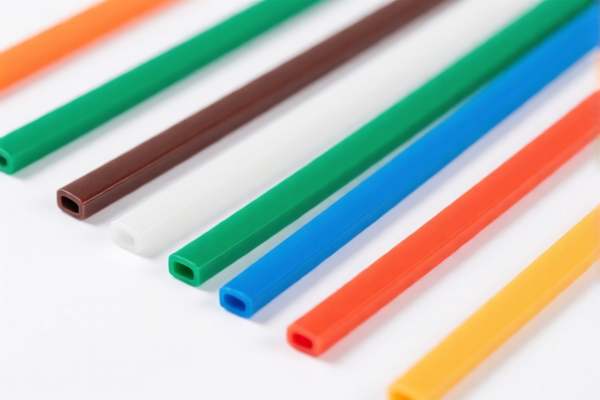
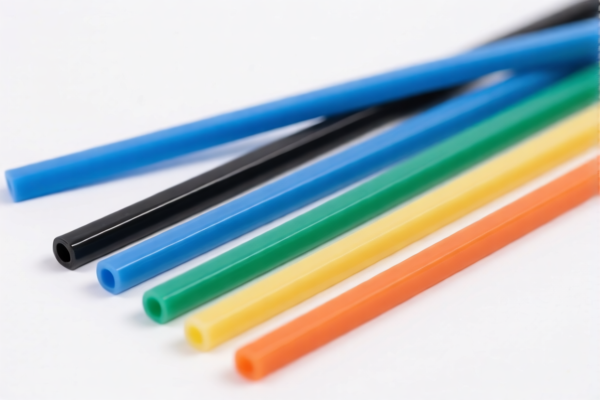

AI Analysis
🧪 Non-foamed Polyamide Plastic Strip (Nylon Strip)
🌐 HS Code Reference & Customs Clearance Guide | 2026 Latest Tariff Analysis | Strategic Clearance Strategy
📌 I. Product Definition & Classification: Do You Really Understand "Polyamide Strip"?
Non-foamed Polyamide Plastic Strip (commonly known as Nylon Strip) is a rigid, linear polymer product widely used in mechanical fasteners, wear-resistant parts, and electrical insulation. In international trade, its classification depends heavily on its shape (strip vs. plate) and material composition (Polyamide vs. PVC).
⚠️ Key Distinction Point:
- If the material is Polyamide (PA/Nylon) and shaped as strips/bars → Classify under 3926.90.60 (Articles of plastic);
- If the material is PVC and shaped as plates/sheets → Classify under 3920.43 or 3921.12;
- Crucial Note: Misclassification between Polyamide (3926) and PVC (3920/3921) or between "Strip" and "Plate" can lead to significant tariff discrepancies or customs delays.
📦 II. HS Code Classification Details (2026 Latest Tariff Authority Comparison)
| HS Code | Product Description | Applicable Scenario | Key Feature |
|---|---|---|---|
3926.90.60.10 |
Non-foamed Polyamide Plastic Strip | Industrial nylon bars, gears, spacers, linear guides | Material: Polyamide; Shape: Strip/Bar |
3926.90.60.90 |
Non-foamed Polyamide Plastic Strip (Other) | Generic nylon strips, belts, or other plastic articles | Material: Polyamide; Shape: Strip/Belt; Falls under "Other" |
3920.43.50.00 |
Non-foamed PVC Plastic Plate | PVC sheets, rigid panels, chemical-resistant liners | Material: PVC; Shape: Plate/Sheet; Non-foamed |
3921.12.50.00 |
Non-foamed PVC Plastic Plate (Other) | Miscellaneous PVC panels, non-slip mats, specialized sheets | Material: PVC; Shape: Plate; "Other" category catch-all |
3919.90.50.40 |
Non-foamed PVC Plastic Plate (Rolled/Coiled) | PVC films or plates in rolls, adhesive tapes, backing materials | Material: PVC; Shape: Plate/Film; Self-adhesive or non-adhesive |
🔍 Critical Reminder:
- Polyamide (Nylon) products are primarily classified under Chapter 39, Heading 3926 ("Other articles of plastics").
- PVC products are classified under Chapter 39, Headings 3920 ("Plates, sheets...") or 3921 ("Other plates, sheets...").
- Do not confuse "Strip" (linear, cross-section < plate) with "Plate" (flat, wider area). Misclassification leads to errors in HS Code selection.
💰 III. 2026 Latest Tariff Rate Breakdown (Including Surtaxes & Policy Add-ons)
✅ Applicable Country: United States (US)
✅ Country of Origin: China (CN)
✅ Effective Time: 2025 Nov 10 onwards (for subsequent imports)
🎯 1. 3926.90.60.10 & 3926.90.60.90 —— Non-foamed Polyamide Plastic Strip
| Item | Content |
|---|---|
| Base Tariff | 4.2% (ad valorem) |
| Section 301 Surtax | +25.0% (Under USITC Footnote 9903.88.01) |
| Section 122 Tariff | +10.0% (Specific to certain plastic articles from China) |
| Total Tariff | 39.2% |
| Tax Calculation | CIF Value × 39.2% |
| De Minimis Eligibility | ❌ No (Not eligible for de minimis exemption) |
| Legal Basis Path | Section 301:9903.88.01 → Section 122 → USITC:3926.90.60.10/90 |
📌 Explanation:
- "Base Tariff 4.2%": Standard Most-Favored-Nation (MFN) rate for plastic articles.
- "Section 301 Surtax 25%": Additional tariff imposed on Chinese goods under Trade Act Section 301.
- "Section 122 Tariff 10%": Additional tariff under Section 122 of the Trade Expansion Act (national security grounds).
- Total 39.2%: This is a high-cost classification. Accurate description is vital to avoid misclassification penalties.
🎯 2. 3920.43.50.00 —— Non-foamed PVC Plastic Plate
| Item | Content |
|---|---|
| Base Tariff | 4.2% |
| Section 301 Surtax | +25.0% |
| Section 122 Tariff | +10.0% |
| Total Tariff | 39.2% |
| Tax Calculation | CIF Value × 39.2% |
| De Minimis Eligibility | ❌ No |
| Legal Basis Path | Section 301:9903.88.01 → Section 122 → USITC:3920.43.50.00 |
📌 Note:
- PVC plates/sheets face the same high tariff structure as Polyamide strips when imported from China.
- Ensure the product is indeed Non-foamed. Foamed PVC may have different classification (e.g., 3920.43.00 vs. 3921.12).
🎯 3. 3921.12.50.00 —— Non-foamed PVC Plastic Plate (Other)
| Item | Content |
|---|---|
| Base Tariff | 6.5% |
| Section 301 Surtax | +25.0% |
| Section 122 Tariff | +10.0% |
| Total Tariff | 41.5% |
| Tax Calculation | CIF Value × 41.5% |
| De Minimis Eligibility | ❌ No |
| Legal Basis Path | Section 301:9903.88.01 → Section 122 → USITC:3921.12.50.00 |
📌 Warning:
- This HS Code has a higher base rate (6.5%) than3920.43.50.00 (4.2%).
- Misclassifying a standard PVC plate as "Other" (3921) increases the total tariff from 39.2% to 41.5%.
- Use3920.43.50.00if the product fits the specific description of PVC plates/sheets; use3921.12.50.00only if it does not fit 3920.
🎯 4. 3919.90.50.40 —— Non-foamed PVC Plastic Plate (Self-adhesive/Rolled)
| Item | Content |
|---|---|
| Base Tariff | 5.8% |
| Section 301 Surtax | +25.0% |
| Section 122 Tariff | +10.0% |
| Total Tariff | 40.8% |
| Tax Calculation | CIF Value × 40.8% |
| De Minimis Eligibility | ❌ No |
| Legal Basis Path | Section 301:9903.88.01 → Section 122 → USITC:3919.90.50.40 |
📌 Note:
- This code is for Rolled/Coiled PVC products (e.g., films, tapes, backing materials).
- If you are importing rigid plates, do not use this code. It is for flexible or self-adhesive PVC articles.
- Total tariff is 40.8%, slightly lower than3921but higher than3920.43.
🛠️ IV. Customs Clearance Practical Advice (Real-World Pitfall Guide)
✅ 1. Preparation Checklist (All Required)
| Document | Mandatory | Notes |
|---|---|---|
| ✅ Product Specification Sheet | ✔️ | Must specify: Material (Polyamide/PVC), Shape (Strip/Plate), Dimensions, Non-foamed status |
| ✅ Product Photos (Clear) | ✔️ | Show cross-section, surface texture, and labels. Must clearly distinguish "Strip" vs. "Plate" |
| ✅ Commercial Invoice | ✔️ | Describe as "Non-foamed Polyamide Plastic Strip" or "PVC Plastic Plate" precisely |
| ✅ Packing List | ✔️ | List quantities, weights, and dimensions. Ensure no mixed packaging of different HS Codes |
| ✅ Origin Certificate (CO) | ✔️ | Required to verify China origin for surtax application |
| ✅ Third-Party Test Report | ✔️ | Confirm material composition (e.g., ASTM D4060 for plastics) |
✅ 2. Declaration Tips (Key Mantra)
🔥 “Material First, Shape Second, Non-foamed Explicit, Tariff Correct!”
| Scenario | Correct Declaration | Wrong Practice |
|---|---|---|
| Polyamide Strip | 3926.90.60.10 |
Misclassify as PVC → 39.2% vs. 39.2% (same rate, but wrong HS leads to detention) |
| PVC Plate | 3920.43.50.00 |
Use 3921.12.50.00 → Increases tax from 39.2% to 41.5% |
| PVC Strip/Roll | 3919.90.50.40 |
Use 3920 → Wrong heading, potential penalty |
| Mixed Package | Split Declaration | Mixed declaration → Customs may reject entire batch |
✅ 3. Special Cases Handling
| Situation | Handling Advice |
|---|---|
| OEM Custom Polyamide Strips | Provide customer drawings + material specs. Ensure "Non-foamed" is stated |
| PVC Plate with Surface Treatment | If it’s still a plate, use 3920.43.50.00 or 3921.12.50.00. Don’t use 3926 unless it’s an article |
| Polyamide Bar vs. Strip | If the cross-section is round/oval, it may still be 3926.90.60. If flat and wide, ensure it’s not classified as "Plate" |
| Foamed vs. Non-foamed | Crucial: Foamed products may have different HS codes (e.g., 3921.12 for foamed PVC). Ensure "Non-foamed" is explicit in description |
🌍 V. Global Market Clearance Comparison (2026 Latest)
| Country/Region | Recommended HS Code | Tariff | Certification | Notes |
|---|---|---|---|---|
| 🇺🇸 US | 3926.90.60.10 (PA Strip) |
39.2% | No special certs | High due to Section 301 & 122 |
| 🇺🇸 US | 3920.43.50.00 (PVC Plate) |
39.2% | No special certs | Same high rate for PVC |
| 🇨🇳 China | 3926.90.60.10 |
6.5% | None | Base rate only, no surtax |
| 🇪🇺 EU | 3926.90.60.10 |
0-6.5% | REACH, RoHS | No Section 301 surtax |
| 🇬🇧 UK | 3926.90.60.10 |
0-6.5% | UKCA, RoHS | Post-Brexit rules apply |
📌 Conclusion:
- US is the highest cost market due to Section 301 (25%) + Section 122 (10%) surcharges.
- EU/UK/China do not apply these punitive surtaxes, making them more cost-effective for plastic imports.
- Strategy: Consider supply chain diversification if targeting the US market.
📌 VI. Common Mistakes & Pitfall Guide (Lessons from Experience)
❌ Mistake 1: Describing "Polyamide Strip" as "Plastic Part"
👉 Consequence: Customs may assign a higher general rate or reject the declaration.
✅ Correct: Use specific HS Code 3926.90.60.10.
❌ Mistake 2: Confusing "Strip" with "Plate" for PVC
👉 Consequence: Using 3920 for a plate is correct, but using 3919 (rolls) for a rigid plate is wrong → Penalty.
✅ Correct: Use 3920.43.50.00 for rigid PVC plates.
❌ Mistake 3: Omitting "Non-foamed" in Description
👉 Consequence: Customs may suspect foamed product (different tax/quality standards) → Delay.
✅ Correct: Explicitly state "Non-foamed" in commercial invoice.
❌ Mistake 4: Using 3921.12.50.00 for Standard PVC Plates
👉 Consequence: Increases tariff from 39.2% to 41.5% unnecessarily.
✅ Correct: Use 3920.43.50.00 if it fits the specific description.
🎯 VII. Conclusion: Precise Declaration Saves Money & Time!
🎯 Remember the Mantra:
🔹 "Polyamide = 3926, PVC Plate = 3920, Non-foamed = Explicit, Surtax = 39.2%!"
🔹 "HS Code Determines Cost, Tariff Difference is Critical, Declaration Must Be Accurate!"
📌 Pro Tip:
If your products are originating from Vietnam, Malaysia, or Thailand, you may be exempt from Section 301 and Section 122 surtaxes, reducing the total tariff to just the base rate (4.2%–6.5%).
✅ Recommendation: Apply for Advance Ruling or Certificate of Origin to verify eligibility for lower tariffs.
📣 Call to Action:
📞 Contact a professional customs broker + Provide product photos + Apply for HS Code Advance Ruling
🚀 Let your plastic strips clear customs smoothly, reduce costs, and maximize profits!
✨ Professional Clearance Starts with Accurate Classification!
💼 Every cent of your cost deserves precise calculation!
Customer Reviews
About HS Code Classification
The Harmonized System (HS) is an internationally standardized nomenclature developed by the World Customs Organization (WCO) to classify traded products. Over 200 countries use the HS system as the basis for customs tariffs, trade statistics, and import/export regulations.
Each HS code follows a hierarchical structure:
- Chapter (2 digits) — Broad category of goods (e.g., Chapter 84: Machinery and Mechanical Appliances)
- Heading (4 digits) — More specific grouping within the chapter
- Subheading (6 digits) — Internationally standardized breakdown, used by all WCO member countries
- National subdivisions (8-10 digits) — Country-specific extensions for further classification, such as US HTSUS 10-digit codes
Correct HS code classification is essential for smooth customs clearance, accurate duty payment, and compliance with trade regulations. Misclassification can lead to customs delays, overpayment of duties, or penalties.
When importing from CN to US, the applicable tariff rates may include:
- Most-Favored-Nation (MFN) rate — The standard duty rate applied to WTO members
- General rate — Applied to countries without trade agreements
- Trade remedy duties — Additional tariffs such as Section 301 (anti-dumping), Section 232 (national security), or countervailing duties
The information provided on this page is for reference purposes only. For official classification, please consult with your local customs authority or a licensed customs broker.