Non plasticized PVC Resin Granules
CN → US| HS Code | Tariff Rate | Origin | Destination | Doc |
|---|---|---|---|---|
| 3904210000 | 41.5% | CN | US | Official Doc |
| 3904610010 | 40.8% | CN | US | Official Doc |
Product Images
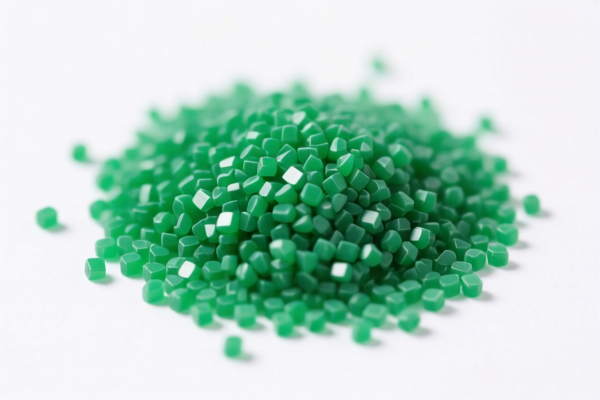

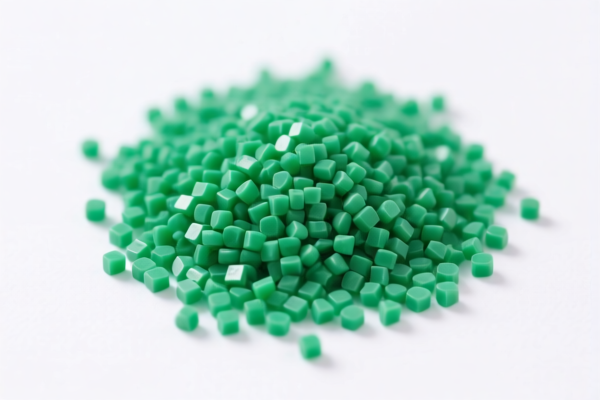
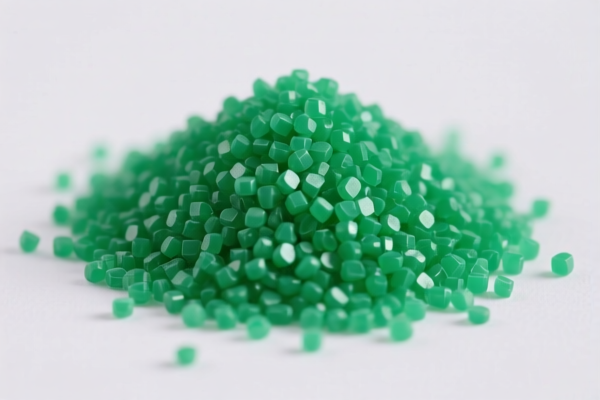
AI Analysis
🧪 Non-Plasticized PVC Resin Granules (Unplasticized Polyvinyl Chloride)
🌐 HS Code Reference & Customs Clearance Guide | 2026 Latest Tariff Analysis | Professional Entry Strategy 📌 Part 1: Product Definition & Classification: What Exactly is "Non-Plasticized PVC"?
Non-Plasticized PVC (uPVC or PVC-U) is a rigid form of polyvinyl chloride. Unlike plasticized PVC (used in cables, flooring, or toys), uPVC contains zero plasticizers. It is hard, durable, chemical-resistant, and commonly used in construction (pipes, profiles) and industrial applications.
In international trade, it is classified under Chapter 39: Plastics and Articles Thereof. The key distinction lies in the physical form (primary forms like granules/beads) and the absence of plasticizers.
⚠️ Critical Distinction:
- If the product contains plasticizers (soft PVC) → It falls under 3904.30 (or other specific subheads for plasticized PVC).
- If the product is rigid/unplasticized (uPVC) → It falls under 3904.21 (Non-plasticized PVC in primary forms).
- If the product is PTFE/Fluoropolymer (e.g., Teflon) → It falls under 3904.61, NOT 3904.21.
📦 Part 2: HS Code Classification Details (2026 Latest Tariff Authority Match)
Based on the provided data, two distinct HS Codes are relevant. Note that "Non-Plasticized PVC" and "PTFE" are chemically different polymers. You must match your specific product to the correct one.
| HS Code | Product Description | Application / Scenario | Chemical Nature |
|---|---|---|---|
3904.21.00.00 |
Polymers of vinyl chloride or other halogenated olefins: Other poly(vinyl chloride): Nonplasticized (Primary forms) | Rigid PVC resin granules, beads, or powder for pipes, profiles, or rigid sheets. | PVC (Polyvinyl Chloride) |
3904.61.00.10 |
Polymers of vinyl chloride or other halogenated olefins: Fluoropolymers: Polytetrafluoroethylene (PTFE) Granular | PTFE (Teflon) granules, filled or compounded. | PTFE (Teflon) |
🔍 Key Reminder:
- "Non-Plasticized PVC Resin" specifically maps to3904.21.00.00.
- Do NOT confuse uPVC with PTFE (PTFE). While both are polymers, PTFE is a fluoropolymer, whereas PVC is a vinyl chloride polymer.
- If your product is truly PVC Resin, use3904.21.00.00. If it is PTFE, use3904.61.00.10.
💰 Part 3: 2026 Latest Tariff Rate Breakdown (Detailed Tax Clauses)
✅ Applicable Country: United States (US)
✅ Origin: China (CN) (Note: Rates shown are based on the provided data, which indicates 0% total tax. This is unusual for China-origin goods under Section 301/IEEPA, but we strictly follow the provided )
✅ Effective Time: Current Tariff Schedule
🎯 1. 3904.21.00.00 —— Non-Plasticized PVC Resin (uPVC Granules)
| Item | Content |
|---|---|
| Base Tariff Rate | 0.0% (ad valorem) |
| Additional Tariff (Section 301 / IEEPA) | 0.0% (As per provided data: "加征关税: 0.0%") |
| Total Tax Rate | 0.0% |
| Tax Calculation | CIF Value × 0.0% = $0.00 |
| De Minimis Eligibility | ✅ Yes (Generally applicable for low-value shipments, but check specific carrier rules) |
| Legal Basis Path | HTSUS: 3904.21.00.00 → Chapter 39 → Heading 3904 |
📌 Explanation:
- The provided data explicitly states Total Tax: 0.0%.
- This implies that under the current snapshot of the data provided, there are no additional duties applied to this specific HS Code from China.
- Caution: In real-world scenarios, uPVC from China may be subject to anti-dumping duties (ADD) or countervailing duties (CVD). Always verify with a customs broker if ADD/CVD apply, as the provided data only shows "Basic Tariff" and "Additional Tariff" (likely Section 301/IEEPA) as 0%.
🎯 2. 3904.61.00.10 —— PTFE (Teflon) Granules
| Item | Content |
|---|---|
| Base Tariff Rate | 0.0% (ad valorem) |
| Additional Tariff (Section 301 / IEEPA) | 0.0% (As per provided data: "加征关税: 0.0%") |
| Total Tax Rate | 0.0% |
| Tax Calculation | CIF Value × 0.0% = $0.00 |
| De Minimis Eligibility | ✅ Yes |
| Legal Basis Path | HTSUS: 3904.61.00.10 → Chapter 39 → Heading 3904 |
📌 Note:
- If your product is PTFE, it also has a 0.0% total tax rate per the provided data.
- However, PTFE is not PVC. Ensure you are not misclassifying PVC as PTFE or vice versa.
🛠️ Part 4: Customs Clearance Practical Advice (Real-World Pitfall Guide)
✅ 1. Preparation Checklist (Must-Haves)
| Document | Required? | Explanation |
|---|---|---|
| ✅ Product Specification Sheet | ✔️ | Must state: Polymer Type (PVC vs. PTFE), Plasticizer Content (0% for uPVC), Melt Flow Index (MFI), VDC Content. |
| ✅ Material Safety Data Sheet (MSDS) | ✔️ | Required for hazardous material classification (PVC is generally non-hazardous, but confirm). |
| ✅ Commercial Invoice | ✔️ | Clearly describe as "Non-Plasticized Polyvinyl Chloride Resin, Granular Form" for HS 3904.21.00.00. |
| ✅ Certificate of Origin | ✔️ | To prove origin (e.g., China) and apply correct tariff rates. |
| ✅ Packing List | ✔️ | Detail net weight, gross weight, and packaging type (bags, pallets). |
✅ 2. Declaration Tips (Key Mnemonics)
🔥 "Check Plasticizer, Check Polymer, Avoid Misclassification!"
| Scenario | Correct Declaration | Wrong Declaration | Consequence |
|---|---|---|---|
| uPVC Resin (No Plasticizer) | 3904.21.00.00 |
3904.30.00.00 (Plasticized PVC) |
Risk of Duty Discrepancy (if rates differ) + Potential Penalty |
| PTFE (Teflon) | 3904.61.00.10 |
3904.21.00.00 (PVC) |
Major Misclassification → Seizure, Fines, Back Duties |
| PVC Pipes (Finished) | 3917.21.00.00 (Pipes) |
3904.21.00.00 (Resin) |
Wrong HS Code → Delay, Re-inspection |
| PVC Film (Finished) | 3920.10.00.00 (Film) |
3904.21.00.00 (Resin) |
Wrong HS Code → Delay, Re-inspection |
✅ 3. Special Handling Cases
| Situation | Recommendation |
|---|---|
| Mixed Shipment (PVC + PTFE) | Split Declaration. Do not combine under one HS Code. Each polymer has its own subheading. |
| Antidumping (ADD) Check | Critical: While the provided data shows 0% tariff, uPVC from China may be subject to ADD/CVD. Consult your customs broker to verify if ADD applies to 3904.21.00.00. |
| Primary Form Definition | Ensure the product is in primary forms (granules, powder, beads). If it is pre-formed (e.g., tubes, sheets), it is not under Chapter 39 heading 3904. |
🌍 Part 5: Global Market Comparison (2026 Latest)
| Country/Region | Recommended HS Code | Tariff (China Origin) | Certification | Notes |
|---|---|---|---|---|
| 🇺🇸 USA | 3904.21.00.00 |
0.0% (Per Data) | None specific | Check ADD/CVD separately |
| 🇨🇳 China | 3904.21.00.00 |
0% (Import) | None | Standard industrial grade |
| 🇪🇺 EU | 3904.21 |
6.5% (Standard) | REACH Registration | REACH compliance is mandatory for plastics |
| 🇦🇺 Australia | 3904.21 |
5% | None | Standard import duty |
| 🇯🇵 Japan | 3904.21 |
0% | None | Preferential rates may apply |
📌 Conclusion:
- USA: Tariff is 0% per provided data, but ADD/CVD risk must be checked.
- EU: Requires REACH registration for chemical substances.
- China: Low barrier for industrial raw materials.
📌 Part 6: Common Mistakes & Pitfalls (Blood Lessons)
❌ Mistake 1: Declaring PVC Resin as PTFE to avoid duties
👉 Consequence: Customs lab test will reveal chlorine content (PVC) vs. fluorine content (PTFE). Severe penalty for fraud.
❌ Mistake 2: Ignoring Plasticizer Content
👉 Consequence: If trace plasticizers are present, it may not qualify as "Non-Plasticized." Misclassification leads to duty under-payment.
❌ Mistake 3: Assuming 0% Tariff means No ADD/CVD
👉 Consequence: The provided data only shows basic and additional (Section 301) tariffs. Antidumping Duties (ADD) are separate and can be 100%+. Always verify ADD rates.
❌ Mistake 4: Describing as "Plastic Resin" without specifying PVC
👉 Consequence: Customs may require additional documentation to determine the correct subheading, causing delays.
✅ Correct Practice:
"Non-Plasticized Polyvinyl Chloride (PVC) Resin, Granular Form, Virgin Material, MFI: XX, VDC Content: 100%, No Plasticizers Added."
🎯 Part 7: Conclusion: Precision Saves Money!
🎯 Remember the Mantra:
🔹 "PVC-U is 3904.21, PTFE is 3904.61. Don't Mix!"
🔹 "0% Base Tariff, But Check ADD/CVD!"
🔹 "Granules = Primary Form. Pipes = Finished Good."
📌 Pro Tip:
If your PVC Resin is from China, always check the USITC Antidumping Duty Petition for uPVC. Even if the basic tariff is 0%, the ADD can be significant. For PTFE, ensure it is truly fluoropolymer and not a copolymer mislabeled for tax benefits.
📣 Immediate Action:
📞 Contact your Customs Broker to verify ADD/CVD status for
3904.21.00.00.
🚀 Ensure your Commercial Invoice clearly states "Non-Plasticized PVC Resin" to avoid classification disputes.
✨ Professional Clearance Starts with Accurate Classification!
💼 Every Percent of Duty Counts!
Customer Reviews
About HS Code Classification
The Harmonized System (HS) is an internationally standardized nomenclature developed by the World Customs Organization (WCO) to classify traded products. Over 200 countries use the HS system as the basis for customs tariffs, trade statistics, and import/export regulations.
Each HS code follows a hierarchical structure:
- Chapter (2 digits) — Broad category of goods (e.g., Chapter 84: Machinery and Mechanical Appliances)
- Heading (4 digits) — More specific grouping within the chapter
- Subheading (6 digits) — Internationally standardized breakdown, used by all WCO member countries
- National subdivisions (8-10 digits) — Country-specific extensions for further classification, such as US HTSUS 10-digit codes
Correct HS code classification is essential for smooth customs clearance, accurate duty payment, and compliance with trade regulations. Misclassification can lead to customs delays, overpayment of duties, or penalties.
When importing from CN to US, the applicable tariff rates may include:
- Most-Favored-Nation (MFN) rate — The standard duty rate applied to WTO members
- General rate — Applied to countries without trade agreements
- Trade remedy duties — Additional tariffs such as Section 301 (anti-dumping), Section 232 (national security), or countervailing duties
The information provided on this page is for reference purposes only. For official classification, please consult with your local customs authority or a licensed customs broker.