Non prescription sunglass lens
CN → US| HS Code | Tariff Rate | Origin | Destination | Doc |
|---|---|---|---|---|
| 9004100000 | 19.5% | CN | US | Official Doc |
| 9004900090 | 20.0% | CN | US | Official Doc |
| 3926909989 | 22.8% | CN | US | Official Doc |
| 3926909910 | 22.8% | CN | US | Official Doc |
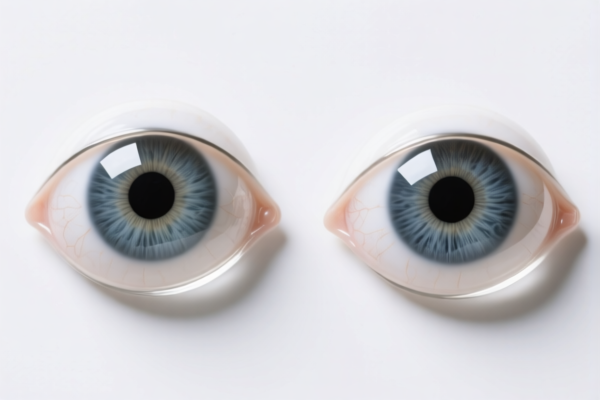
Product Images



AI Analysis
🕶️ Non-Prescription Sunglass Lenses
🌐 HS Code Reference & Customs Clearance Guide | 2026 Latest Tariff Breakdown | Professional Clearance Strategy
📌 I. Product Definition & Classification: What Exactly Are You Importing?
Non-prescription sunglass lenses are optical components designed to filter visible light, not to correct vision. In international trade, they are categorized based on material composition and whether they are part of a complete eyewear assembly.
Key Distinction:
Optical Glass/Plastic Lenses: If the lens is the primary optical element, it falls under Chapter 90 (Optical, Photographic, Cinematographic, Measuring, Checking, Medical, or Surgical Instruments and Apparatus).
Plastic Parts: If the lens is deemed a "part/accessory" made primarily of plastic and not a distinct optical instrument, it may fall under Chapter 39 (Plastics and articles thereof).
⚠️ Critical Classification Point:
- If the lens is optical glass or high-index plastic intended for eyewear → Likely 9004.x.x (Eyewear).
- If the lens is a generic plastic sheet/blank for grinding or simple protection → Likely 3926.90 (Other plastic articles).
- Material Inference: The provided data suggests a mix of Plastic and Glass possibilities.
📦 II. HS Code Classification Details (2026 Latest Tariff Alignment)
| HS Code | Product Description | Material Inference | Classification Logic |
|---|---|---|---|
9004.10.00.00 |
Sunglasses (including sun-glasses, protective glasses, and the like) | Plastic or Glass | Direct Match: Lenses are core components of sunglasses. If imported as "sunglass components," customs may classify them under the parent category if they are distinct optical items. |
9004.90.00.90 |
Other spectacles, goggle and the like; parts thereof | Plastic or Glass | Alternative Optical: If the lens is considered a "part" of other eyewear (not sunglasses) or falls under a residual category for optical goods. |
3926.90.99.89 |
Other articles of plastics | Plastic | Material-Based: If the lens is viewed as a "plastic article" rather than an optical instrument. This is a common fallback for generic plastic lens blanks or non-specialized plastic eye-wear parts. |
3926.90.99.10 |
Other articles of plastics | Plastic (Resin) | Resin-Based: Specifically for plastic/resin articles not elsewhere specified. Fits if the lens is a molded plastic component without complex optical coating classification. |
🔍 Key Insight:
- 9004 Series is generally preferred for true optical lenses because they are functional optical instruments.
- 3926 Series is used when the item is deemed a generic plastic product (e.g., a blank sheet, a simple protective cover, or a non-medical/plastic accessory).
- No Material Conflict: The data confirms plastic is a valid material for both 9004 and 3926 classifications, depending on intent and construction.
💰 III. 2026 Latest Tariff Rate Breakdown (Including Surcharges)
✅ Applicable Country: United States (US)
✅ Origin: China (CN)
✅ Effective Date: 2025/2026 Period
🎯 1. 9004.10.00.00 – Sunglasses (Components Included)
| Item | Details |
|---|---|
| Base Duty Rate | 2.0% |
| Section 301 Surcharge | 7.5% |
| Section 122 Surcharge | 10.0% |
| Total Tax Rate | 19.5% |
| Tax Calculation | CIF Value × 19.5% |
| De Minimis Exemption | ❌ Not Applicable (De minimis does not apply to goods subject to Section 301/122 surcharges) |
| Legal Basis Path | USITC:9004.10.00.00 → Section 301: 7.5% → Section 122: 10% |
📌 Explanation:
- Sunglasses and their components are subject to multiple layers of tariffs.
- The Section 122 tariff (often related to specific trade enforcement or retaliatory measures) adds a significant 10% on top.
- Total 19.5% is the landed cost factor for this classification.
🎯 2. 9004.90.00.90 – Other Eyewear Parts
| Item | Details |
|---|---|
| Base Duty Rate | 2.5% |
| Section 301 Surcharge | 7.5% |
| Section 122 Surcharge | 10.0% |
| Total Tax Rate | 20.0% |
| Tax Calculation | CIF Value × 20.0% |
| De Minimis Exemption | ❌ Not Applicable |
| Legal Basis Path | USITC:9004.90.00.90 → Section 301: 7.5% → Section 122: 10% |
📌 Note:
- Slightly higher base rate (2.5% vs 2.0%) leads to a 20.0% total rate.
- Applies if the lens is considered a "part" of non-sunglass eyewear or falls under the residual category.
🎯 3. 3926.90.99.89 – Other Plastic Articles
| Item | Details |
|---|---|
| Base Duty Rate | 5.3% |
| Section 301 Surcharge | 7.5% |
| Section 122 Surcharge | 10.0% |
| Total Tax Rate | 22.8% |
| Tax Calculation | CIF Value × 22.8% |
| De Minimis Exemption | ❌ Not Applicable |
| Legal Basis Path | USITC:3926.90.99.89 → Section 301: 7.5% → Section 122: 10% |
📌 Warning:
- Although it’s a "plastic" classification, the base duty is higher (5.3%), resulting in the highest total tax rate (22.8%).
- Only use this if the lens cannot be classified as an optical instrument (9004).
🎯 4. 3926.90.99.10 – Other Plastic Articles (Resin)
| Item | Details |
|---|---|
| Base Duty Rate | 5.3% |
| Section 301 Surcharge | 7.5% |
| Section 122 Surcharge | 10.0% |
| Total Tax Rate | 22.8% |
| Tax Calculation | CIF Value × 22.8% |
| De Minimis Exemption | ❌ Not Applicable |
| Legal Basis Path | USITC:3926.90.99.10 → Section 301: 7.5% → Section 122: 10% |
📌 Note:
- Identical tax structure to3926.90.99.89.
- Used for resin-based plastic articles not elsewhere specified.
🛠️ IV. Customs Clearance Practical Advice (Avoiding Pitfalls)
✅ 1. Documentation Checklist (Essential)
| Document | Required | Purpose |
|---|---|---|
| ✅ Product Specifications | ✔️ | Must specify material (Glass vs. Plastic), optical power (0D for non-prescription), and coating (UV, anti-reflective). |
| ✅ Material Composition Certificate | ✔️ | Proves whether the item is optical glass/plastic (9004) or generic plastic (3926). |
| ✅ Commercial Invoice | ✔️ | Clearly state "Non-Prescription Sunglass Lenses" or "Sunglass Components." Avoid vague terms like "Plastic Sheets." |
| ✅ Photos of Product | ✔️ | Show lens curvature, coating, and any packaging that indicates it’s for eyewear. |
| ✅ Statement of Non-Prescription | ✔️ | Explicitly declare "Zero Diopter" or "Non-Prescription" to distinguish from corrective eyewear. |
| ✅ Packing List | ✔️ | Detail quantity and packaging to ensure no hidden components are missed. |
✅ 2. Classification Strategy (Key Tips)
🔥 "Optical Intent Wins: If it’s for eyes, choose 9004. If it’s just plastic, choose 3926."
| Scenario | Recommended HS Code | Reason |
|---|---|---|
| Curved, Coated, Eyewear-Specific Lenses | 9004.10.00.00 |
Best fit for sunglasses components. Lowest tax (19.5%). |
| Flat, Uncoated, Generic Plastic Lenses | 3926.90.99.89/10 |
Only if no optical function can be proven. Higher tax (22.8%). |
| Parts of Other Eyewear (e.g., Safety Goggles) | 9004.90.00.90 |
If not strictly "sunglasses." Slightly higher tax (20.0%). |
⚠️ Risk Warning:
- Misclassifying optical lenses as "plastic articles" (3926) to avoid higher scrutiny is risky if the product has optical properties.
- Misclassifying plastic blanks as "sunglasses" (9004) is generally safer for tax purposes (19.5% vs 22.8%) but must be justified by product description.
✅ 3. Special Circumstances
| Situation | Handling Advice |
|---|---|
| Lenses with UV/Blue Light Coating | Still classified under 9004 if the coating is integral to the optical function. Do not split into "plastic + coating." |
| Bulk Unmounted Lenses | Clearly state "Unmounted" in description. If they are ready for mounting in frames, 9004 is appropriate. |
| Plastic Lens Blanks for Custom Grinding | If sold as raw material, 3926 may apply. If sold as "sunglass lenses," 9004 is preferred. |
| OEM Custom Lenses | Provide customer agreement and design specs. Proves intent for sunglasses/eyewear. |
🌍 V. Global Market Comparison (2026 Latest)
| Country/Region | Recommended HS Code | Estimated Total Tax (China Origin) | Notes |
|---|---|---|---|
| 🇺🇸 USA | 9004.10.00.00 |
19.5% | Includes Section 301 (7.5%) + Section 122 (10%). |
| 🇨🇳 China | 9004.10.00.00 |
~2% | Import duty only, no surcharges. |
| 🇪🇺 EU | 9004.90.00.00 |
~4% | No Section 301/122 equivalents. |
| 🇬🇧 UK | 9004.90.00.00 |
~4% | Post-Brexit tariff structure. |
📌 Conclusion:
- USA is the most costly market due to multiple surcharges.
- Optical classification (9004) is still cheaper than plastic classification (3926) due to lower base rates.
- Do not assume plastic classification saves money in the US market.
📌 VI. Common Errors & Pitfalls (Lessons Learned)
❌ Error 1: Labeling as "Plastic Eyewear Parts" to get 3926, but product is optical.
👉 Result: Customs may reclassify to 9004, causing delays and potential penalties for misdeclaration.
❌ Error 2: Not declaring "Non-Prescription."
👉 Result: Customs may suspect corrective eyewear, triggering stricter medical/optical regulations.
❌ Error 3: Ignoring Section 122 Surcharge.
👉 Result: Underpaying taxes by 10%, leading to post-clearance audits and back taxes.
✅ Correct Approach:
"Non-Prescription Sunglass Lenses, Curved, UV400 Coated, Material: Polycarbonate, Unmounted, Model: XYZ"
🎯 VII. Conclusion: Professional Declaration, Cost Optimization!
🎯 Remember This Rule:
🔹 "Optical Function = 9004 (19.5%)
🔹 "Generic Plastic = 3926 (22.8%)"
🔹 "Always Declare Non-Prescription"
📌 Pro Tip:
- If your lenses are high-index plastic or glass, they are clearly optical instruments.
- If they are thin, uncoated plastic blanks, consider 3926, but be prepared to justify why they aren’t optical.
- Pre-clearance Ruling: For large shipments, consider applying for an Advance Ruling to confirm the HS Code and avoid customs disputes.
📣 Immediate Action:
📞 Provide Product Photos + Spec Sheet + Material Certificate to Your Customs Broker
🚀 Ensure "Section 122" is accounted for in your landed cost calculation
✨ Precise Classification Saves Money!
💼 Every 0.5% of tax difference adds up to thousands of dollars!
Customer Reviews
About HS Code Classification
The Harmonized System (HS) is an internationally standardized nomenclature developed by the World Customs Organization (WCO) to classify traded products. Over 200 countries use the HS system as the basis for customs tariffs, trade statistics, and import/export regulations.
Each HS code follows a hierarchical structure:
- Chapter (2 digits) — Broad category of goods (e.g., Chapter 84: Machinery and Mechanical Appliances)
- Heading (4 digits) — More specific grouping within the chapter
- Subheading (6 digits) — Internationally standardized breakdown, used by all WCO member countries
- National subdivisions (8-10 digits) — Country-specific extensions for further classification, such as US HTSUS 10-digit codes
Correct HS code classification is essential for smooth customs clearance, accurate duty payment, and compliance with trade regulations. Misclassification can lead to customs delays, overpayment of duties, or penalties.
When importing from CN to US, the applicable tariff rates may include:
- Most-Favored-Nation (MFN) rate — The standard duty rate applied to WTO members
- General rate — Applied to countries without trade agreements
- Trade remedy duties — Additional tariffs such as Section 301 (anti-dumping), Section 232 (national security), or countervailing duties
The information provided on this page is for reference purposes only. For official classification, please consult with your local customs authority or a licensed customs broker.