Non pressure ABS Plastic Parts
CN → US| HS Code | Tariff Rate | Origin | Destination | Doc |
|---|---|---|---|---|
| 8473309100 | 35.0% | CN | US | Official Doc |
| 8473509000 | 35.0% | CN | US | Official Doc |
| 3926909989 | 22.8% | CN | US | Official Doc |
| 8517790000 | 67.5% | CN | US | Official Doc |
| 8708998180 | 37.5% | CN | US | Official Doc |
Product Images

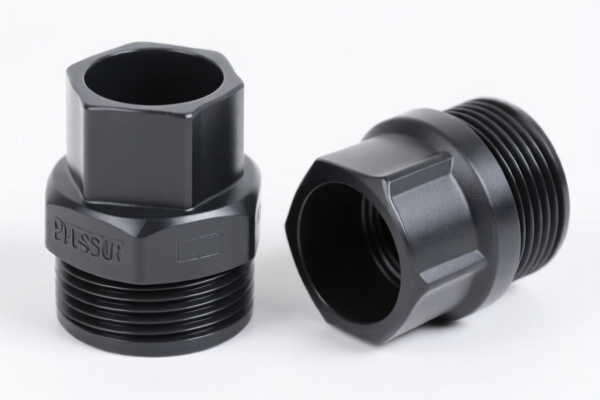
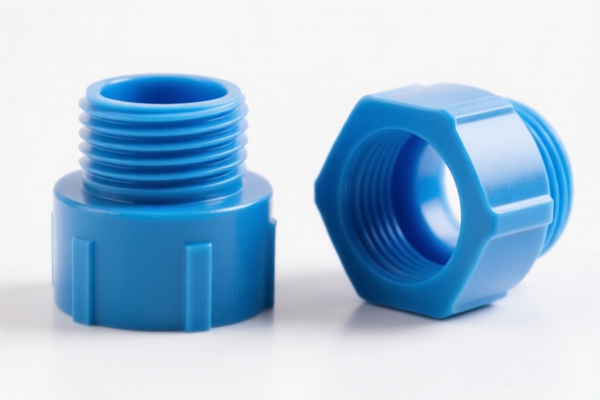

AI Analysis
🛠️ Non-Pressure ABS Plastic Parts (ABS Plastic Components)
🌐 HS Code Reference & Customs Clearance Guide | 2026 Latest Tariff Analysis | Professional Clearance Strategy
📌 I. Product Definition & Classification: What are "Non-Pressure ABS Plastic Parts"?
Non-Pressure ABS Plastic Parts refer to components made of Acrylonitrile Butadiene Styrene (ABS) resin that are not designed to withstand internal pressure. In international trade, these parts are versatile and can fall into different HS Codes depending on their final application, form, and integration.
The core material is ABS Plastic. The key distinction lies in where these parts are used: - Machinery Parts: Components for specific mechanical equipment. - Communication Equipment Parts: Components for telecom hardware. - Automotive Parts: Components for vehicles. - General Plastic Products: Standalone plastic items not tied to a specific machine category.
⚠️ Critical Classification Point:
- If the part is integral to a specific machine (e.g., a printer or industrial robot), it may be classified under the machine’s chapter (Chapter 84).
- If it is a general plastic product not specific to one machine type, it may fall under Chapter 39.
- If it is for automotive or communication equipment, specific chapters apply (Chapter 85, 87).
- Misclassification can lead to massive tariff differences (from 22.8% to 67.5%)!
📦 II. HS Code Classification Details (2026 Latest Tariff Authority Reference)
Based on the provided data, here are the 5 possible HS Codes for "Non-Pressure ABS Plastic Parts":
| HS Code | Product Description | Application Scenario | Key Classification Logic |
|---|---|---|---|
8473.30.91.00 |
Parts of non-pressure grade, Material: ABS Plastic, Form: Parts, Belongs to: Non-specific machine accessories | Components for office machinery, computing equipment, or general mechanical devices | Classified as "Parts of machines" (Chapter 84) |
8473.50.90.00 |
Parts of non-pressure grade, Material: ABS Plastic, Form: Parts, Belongs to: Other accessories | General mechanical parts not specifically listed elsewhere in Chapter 84 | Classified as "Other parts of machines" (Chapter 84) |
3926.90.99.89 |
Non-pressure grade ABS Plastic Parts, Material: ABS Plastic, Form: Parts, Belongs to: Other plastic articles | General plastic components, fittings, or items not tied to a specific machine function | Classified as "Other plastic articles" (Chapter 39) |
8517.79.00.00 |
Non-pressure grade ABS Plastic Parts, Material: ABS Plastic, Form: Parts, Belongs to: Communication equipment parts | Parts for phones, routers, base stations, or telecom infrastructure | Classified as "Parts of telephone/communication apparatus" (Chapter 85) |
8708.99.81.80 |
Non-pressure grade ABS Plastic Parts, Material: ABS Plastic, Form: Parts, Belongs to: Automotive parts/accessories | Bumper clips, dashboard components, interior trim, or exterior trim for vehicles | Classified as "Parts and accessories of vehicles" (Chapter 87) |
🔍 Key Reminder:
- Chapter 84 vs. Chapter 39: If the ABS part is specifically designed for a machine in Chapter 84 (e.g., a printer), it usually goes to 8473. If it is a generic plastic part (e.g., a generic knob or connector) with no specific machine association, it may go to 3926.
- Chapter 85 & 87: If the part is exclusively for communication gear or cars, those chapters take precedence over general plastic chapters.
💰 III. 2026 Latest Tariff Rate Breakdown (Including Additional Duties)
✅ Applicable Country: United States (US)
✅ Origin: China (CN)
✅ Effective Date: 2025/2026 (Current Enforcement)
🎯 1. 8473.30.91.00 – Parts of Non-Specific Machines
| Item | Content |
|---|---|
| Base Tariff | 0.0% (ad valorem) |
| Section 301 Tariff | +25.0% (Additional Duty) |
| Section 122 Tariff | +10.0% (Targeted Duty) |
| Total Tariff Rate | 35.0% |
| Tax Calculation | CIF Value × 35% |
| De Minimis Exemption | ❌ Not Available |
| Legal Path | Base: 8473.30.91.00 → Sec 301: 25% → Sec 122: 10% |
📌 Explanation:
- Base Rate: 0% for certain machine parts.
- Sec 301 (25%): Standard additional tariff on Chinese goods.
- Sec 122 (10%): Additional duty for specific categories.
- Total: 35%. High cost for machinery-related plastic parts.
🎯 2. 8473.50.90.00 – Other Machine Accessories
| Item | Content |
|---|---|
| Base Tariff | 0.0% |
| Section 301 Tariff | +25.0% |
| Section 122 Tariff | +10.0% |
| Total Tariff Rate | 35.0% |
| Tax Calculation | CIF Value × 35% |
| De Minimis Exemption | ❌ Not Available |
| Legal Path | Base: 8473.50.90.00 → Sec 301: 25% → Sec 122: 10% |
📌 Note:
- Same tariff structure as8473.30.91.00.
- Applies if the part is considered a "general accessory" rather than a "specific machine part."
🎯 3. 3926.90.99.89 – Other Plastic Articles (Lowest Tariff Option)
| Item | Content |
|---|---|
| Base Tariff | 5.3% |
| Section 301 Tariff | +7.5% (Reduced Sec 301 Rate) |
| Section 122 Tariff | +10.0% |
| Total Tariff Rate | 22.8% |
| Tax Calculation | CIF Value × 22.8% |
| De Minimis Exemption | ❌ Not Available |
| Legal Path | Base: 3926.90.99.89 → Sec 301: 7.5% → Sec 122: 10% |
📌 Critical Insight:
- Lowest Tax Option: If your ABS part is not specifically identified for a machine in Chapter 84, but is a general plastic component, classify it here!
- Savings: Compared to Chapter 84 codes (35%), this saves 12.2% in total duty.
- Condition: Must be a "general plastic article" not specifically for machinery, communication, or autos.
🎯 4. 8517.79.00.00 – Communication Equipment Parts (Highest Tariff!)
| Item | Content |
|---|---|
| Base Tariff | 0.0% |
| Section 301 Tariff | +7.5% (Reduced Sec 301 Rate) |
| Section 122 Tariff | +10.0% |
| Steel/Aluminum/Copper Surcharge | +50.0% (If applicable) |
| Total Tariff Rate | 67.5% (Without Metal Surcharge) / 117.5% (With Metal Surcharge) |
| Tax Calculation | CIF Value × 67.5% (or higher) |
| De Minimis Exemption | ❌ Not Available |
| Legal Path | Base: 8517.79.00.00 → Sec 301: 7.5% → Sec 122: 10% → Metal Surcharge: 50% |
📌 WARNING:
- Extremely High Tariff: 67.5% is the highest among the options.
- Metal Surcharge: If the ABS part contains steel, aluminum, or copper components (e.g., reinforced ABS), an additional 50% may apply!
- Avoid This Code unless strictly necessary for communication equipment.
🎯 5. 8708.99.81.80 – Automotive Parts
| Item | Content |
|---|---|
| Base Tariff | 2.5% |
| Section 301 Tariff | +25.0% |
| Section 122 Tariff | +10.0% |
| Total Tariff Rate | 37.5% |
| Tax Calculation | CIF Value × 37.5% |
| De Minimis Exemption | ❌ Not Available |
| Legal Path | Base: 8708.99.81.80 → Sec 301: 25% → Sec 122: 10% |
📌 Note:
- Slightly higher than Chapter 84 due to the 2.5% base tariff.
- Only applicable if the part is specifically for automotive use.
🛠️ IV. Customs Clearance Practical Advice (Avoiding Pitfalls)
✅ 1. Preparation Checklist (Non-Negotiable)
| Document | Required | Notes |
|---|---|---|
| ✅ Product Specifications | ✔️ | Must state: Material (ABS), Pressure Rating (Non-Pressure), Form (Part/Component) |
| ✅ Function Description | ✔️ | Clearly define the end-use. Is it for a machine, car, or telecom? |
| ✅ Product Photos | ✔️ | Show the part in context (e.g., installed in a machine, or standalone). |
| ✅ Bill of Materials | ✔️ | Confirm no steel/aluminum/copper reinforcements (to avoid 50% surcharge on 8517). |
| ✅ Commercial Invoice | ✔️ | Describe as "ABS Plastic Parts for [Application]" – be specific. |
| ✅ Organic Material Certificate | ✔️ | If claiming 3926 (plastic), prove it’s not a "machine part" under Chapter 84. |
✅ 2. Classification Strategy (The "Golden Rule")
🔥 "Function Defines Code, Not Just Material!"
| Scenario | Recommended HS Code | Why? |
|---|---|---|
| Part for a Printer/Computer | 8473.30.91.00 or 8473.50.90.00 |
Specific to machinery (Chapter 84). |
| Generic ABS Knob/Cover | 3926.90.99.89 |
General plastic article. Lowest tax (22.8%). |
| Part for a 5G Router/Phone | 8517.79.00.00 |
Specific to communication. Highest tax (67.5%). |
| Part for a Car Dashboard | 8708.99.81.80 |
Specific to automotive. Medium-High tax (37.5%). |
📌 Strategic Tip:
- If your ABS part can be argued as a "general plastic component" (not specific to one machine), use3926.90.99.89.
- This saves 12.2% compared to Chapter 84 codes.
- However, if the part is unique to a machine (e.g., a specialized gear or housing), you must use Chapter 84. Misclassification can lead to penalties.
✅ 3. Special Case Handling
| Situation | Advice |
|---|---|
| ABS Part with Metal Inserts | If using 8517, be aware of the 50% steel/aluminum/copper surcharge. Avoid if possible. |
| Mixed Shipments | If shipping both automotive and generic plastic parts, separate them in documentation. Do not mix. |
| OEM Parts | Provide a letter from the customer stating the part’s end-use to justify the HS Code. |
| New Product Formulation | If ABS is blended with other materials, declare the main material or consult customs for hybrid rules. |
🌍 V. Global Market Comparison (2026)
| Market | Recommended HS Code | Approx. Tariff (China Origin) | Notes |
|---|---|---|---|
| 🇺🇸 USA | 3926.90.99.89 |
22.8% | Best option for general parts. |
| 🇺🇸 USA | 8473.30.91.00 |
35.0% | For machine parts. |
| 🇺🇸 USA | 8517.79.00.00 |
67.5% | For telecom parts. Avoid if possible. |
| 🇨🇳 China | 3926.90.99.89 |
~5-10% | Lower import duties in China. |
| 🇪🇺 EU | 3926.90.99 |
~4-6% | No Section 301/122 equivalents. |
| 🇬🇧 UK | 3926.90.99 |
~4-6% | Post-Brexit tariffs apply. |
📌 Conclusion:
- USA has complex additional tariffs (Sec 301 & 122).
- Classify as "General Plastic" (3926) whenever possible to minimize costs.
- Avoid8517unless strictly required for telecom, due to the 67.5%+ rate.
📌 VI. Common Errors & Pitfalls (Lessons Learned)
❌ Error 1: Classifying a generic ABS bracket as a Machine Part (8473)
👉 Consequence: You pay 35% instead of 22.8%. Overpayment of 12.2% on every shipment.
❌ Error 2: Classifying a telecom part as a General Plastic Part (3926)
👉 Consequence: Customs may reclassify it to 8517 and apply 67.5% + penalties for misdeclaration.
❌ Error 3: Ignoring the Metal Surcharge on 8517
👉 Consequence: If the ABS part has steel screws/reinforcement, the duty jumps to 117.5%.
❌ Error 4: Vague Description: "Plastic Parts"
👉 Consequence: Customs will scrutinize, delay shipment, or assign the highest possible code.
✅ Correct Practice:
"ABS Plastic Non-Pressure Mounting Bracket, General Purpose, Not Specific to Any Single Machine, Material: Acrylonitrile Butadiene Styrene (ABS)"
🎯 VII. Conclusion: Smart Classification Saves Money!
🎯 Remember This Rule:
🔹 "General Use = 3926 (22.8%) | Machine Specific = 8473 (35%) | Telecom = 8517 (67.5%) | Auto = 8708 (37.5%)"
🔹 "If it’s not specific to a machine, it’s a plastic part! Save 12.2%!"
📌 Pro Tip:
- File an Advance Ruling with US Customs (CBP) if your product is unique. This provides legal certainty.
- Document the End-Use clearly in your commercial invoice and packing list.
- Avoid Metal Components in ABS parts destined for 8517 to avoid the 50% surcharge.
📣 Immediate Action:
📞 Consult a Customs Broker to review your product’s design.
📄 Provide Clear Functional Descriptions to justify the lowest possible HS Code.
🚀 Optimize Your HS Code to save thousands in tariffs!
✨ Precision in Classification = Profit in Your Pocket!
💼 Don’t Let Tariffs Eat Your Margins!
Customer Reviews
About HS Code Classification
The Harmonized System (HS) is an internationally standardized nomenclature developed by the World Customs Organization (WCO) to classify traded products. Over 200 countries use the HS system as the basis for customs tariffs, trade statistics, and import/export regulations.
Each HS code follows a hierarchical structure:
- Chapter (2 digits) — Broad category of goods (e.g., Chapter 84: Machinery and Mechanical Appliances)
- Heading (4 digits) — More specific grouping within the chapter
- Subheading (6 digits) — Internationally standardized breakdown, used by all WCO member countries
- National subdivisions (8-10 digits) — Country-specific extensions for further classification, such as US HTSUS 10-digit codes
Correct HS code classification is essential for smooth customs clearance, accurate duty payment, and compliance with trade regulations. Misclassification can lead to customs delays, overpayment of duties, or penalties.
When importing from CN to US, the applicable tariff rates may include:
- Most-Favored-Nation (MFN) rate — The standard duty rate applied to WTO members
- General rate — Applied to countries without trade agreements
- Trade remedy duties — Additional tariffs such as Section 301 (anti-dumping), Section 232 (national security), or countervailing duties
The information provided on this page is for reference purposes only. For official classification, please consult with your local customs authority or a licensed customs broker.