Non pressure Plastic Pipe Fittings
CN → US| HS Code | Tariff Rate | Origin | Destination | Doc |
|---|---|---|---|---|
| 3926909989 | 22.8% | CN | US | Official Doc |
| 8708998180 | 37.5% | CN | US | Official Doc |
| 8517790000 | 67.5% | CN | US | Official Doc |
| 8473509000 | 35.0% | CN | US | Official Doc |
| 8473309100 | 35.0% | CN | US | Official Doc |
Product Images
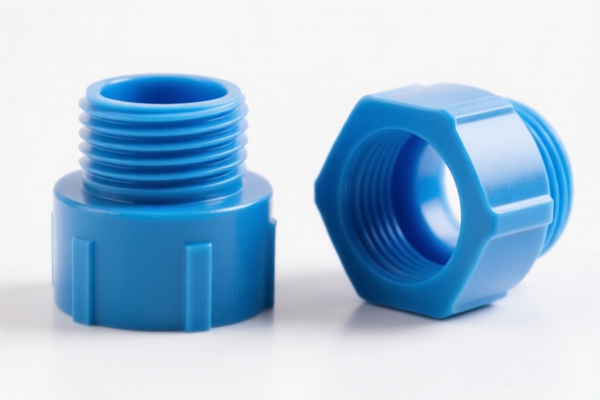


AI Analysis
🚫 Non-Pressure Plastic Pipe Fittings (ABS Plastic)
🌐 HS Code Classification & Tariff Breakdown | Critical Compliance Guide for 2026
📌 ⚠️ HIGH ALERT: This item faces EXCESSIVE TARIFFS due to "Section 301" & "Section 232" equivalencies. Misclassification can lead to massive penalties or shipment rejection.
📦 One Item, Five Destinations: Why Classification Changes Everything
"Non-pressure plastic pipe fittings" (specifically ABS Plastic) are a high-risk category in US Customs clearance. They are not automatically "pipes." Depending on their end-use, design, and integration, they fall into five completely different HS Codes, with tax rates ranging from 22.8% to a staggering 67.5%.
⚠️ Key Distinction:
- General Purpose: Simple plumbing/industrial connectors → 3926.90 (Lowest Risk)
- Automotive: Parts for cars/trucks → 8708.99 (High Risk)
- Telecom: Enclosures/jacks for comms equipment → 8517.79 (Highest Risk!)
- Machinery: Generic mechanical accessories → 8473.50 / 8473.30 (Medium-High Risk)
💰 Detailed Tariff Analysis & HS Code Breakdown
🎯 1. 3926.90.99.89 – The "Safe Harbor" for General Use
Summary: Non-pressure ABS plastic parts classified as Other Plastic Articles
Total Tax Rate: 22.8%
Tax Detail:
- Base Duty: 5.3%
- Section 301 (China): +7.5%
- Section 232 Equivalent (Steel/Alu/Plastic Add-on): +10%
📌 Explanation:
This is the most favorable classification for generic, non-specific ABS plastic fittings used in general plumbing, industrial fluid handling, or DIY projects.
- Why it’s lower: It is treated as a "Plastic Article" rather than a specific mechanical or electronic part.
- Condition: Must NOT be specifically designed for vehicles, telecom, or specific machinery. No special mounting brackets, electrical contacts, or automotive seals.
🎯 2. 8708.99.81.80 – Automotive Application
Summary: Non-pressure ABS plastic parts classified as Vehicle Parts/Accessories
Total Tax Rate: 37.5%
Tax Detail:
- Base Duty: 2.5%
- Section 301 (China): +25.0%
- Section 232 Equivalent: +10%
📌 Explanation:
If the ABS fitting is specifically designed for use in automobiles, trucks, or motorcycles (e.g., fuel line connectors, air intake manifolds, brake fluid reservoirs), it MUST be classified here.
- Risk: High. If you ship automotive fittings but declare them as "general plastic parts," Customs may reclassify and backcharge the difference.
- Why it’s higher: The 25% Section 301 tariff on vehicle parts is aggressive.
🎯 3. 8517.79.00.00 – The "Danger Zone" for Telecom
Summary: Non-pressure ABS plastic parts classified as Parts of Telecommunication Equipment
Total Tax Rate: 67.5% ⚠️ HIGHEST RISK
Tax Detail:
- Base Duty: 0.0%
- Section 301 (China): +7.5%
- Section 232 Equivalent (Steel/Alu/Plastic): +50% 🚨
📌 Explanation:
If the ABS fitting is used in telecom infrastructure (e.g., enclosures for fiber optic splice trays, cable glands for telecom racks, or housing for network routers), it falls here.
- Why it’s 67.5%?: The 50% "Section 232 Equivalent" tariff applies to "Steel, Aluminum, and Plastic products" deemed critical for national security. Telecom hardware is heavily scrutinized.
- Crucial Note: Even though it’s plastic, if it’s "critical infrastructure," the 50% tariff triggers. Avoid this classification if possible!
🎯 4. 8473.50.90.00 – General Mechanical Parts
Summary: Non-pressure ABS plastic parts classified as Parts of Machinery (General)
Total Tax Rate: 35.0%
Tax Detail:
- Base Duty: 0.0%
- Section 301 (China): +25.0%
- Section 232 Equivalent: +10%
📌 Explanation:
For ABS fittings used in general-purpose machinery that don’t fit neatly into automotive or telecom. Example: Connectors for hydraulic systems, pneumatic valves, or conveyor belt adjustments.
- Condition: Must be integral to a machine’s operation but not specific to a single machine type.
🎯 5. 8473.30.91.00 – Computer/Office Equipment Parts
Summary: Non-pressure ABS plastic parts classified as Parts of Automatic Data Processing Machines (ADP) or Office Machinery
Total Tax Rate: 35.0%
Tax Detail:
- Base Duty: 0.0%
- Section 301 (China): +25.0%
- Section 232 Equivalent: +10%
📌 Explanation:
If the ABS fitting is a component inside a computer, server, printer, or office machine (e.g., internal cable management clips, structural mounts for hard drives, cooling fan housings).
- Distinction from Telecom: Telecom = Communication networks. ADP = Data processing/computing. Both carry the 35% rate, but the HS codes differ.
🛠️ Customs Clearance Strategy & Compliance Tips
✅ 1. Product Description Must Be Precise
Do NOT use vague terms like "Plastic Parts." Use functional descriptions:
- ❌ Bad: "ABS Plastic Fittings"
- ✅ Good (General): "Non-Pressure ABS Plastic Pipe Connectors for General Industrial Fluid Handling, Not Specific to Vehicles or Telecom"
- ✅ Good (Auto): "ABS Plastic Fuel Line Connector for Automotive Applications, Model XYZ"
✅ 2. Provide Evidence of End-Use
Customs will ask: "What is this used for?"
- For 3926.90.99.89 (22.8%): Provide a Letter of End-Use stating the product is for general plumbing/industrial use, not specific to any regulated industry. Include photos showing no automotive/telecom branding.
- For 8708.99.81.80 (37.5%): Provide automotive part numbers or vehicle compatibility lists.
- For 8517.79.00.00 (67.5%): ⚠️ Re-evaluate! If possible, redesign or reclassify. If unavoidable, prepare for the 67.5% cost.
✅ 3. Avoid "Section 232" Triggers Where Possible
- The 50% tariff for telecom/steel/aluminum/plastic is the biggest risk.
- Strategy: If your ABS fitting is not critical for national security (e.g., not for military, critical infrastructure, or national grid), argue for General Plastic Article (3926) classification.
- Documentation: Include a Technical Data Sheet showing the product is a simple mechanical connector, not a "security-sensitive" component.
✅ 4. Packaging & Labeling
- Labeling: Clearly state the HS Code on the commercial invoice if known.
- Packaging: If shipping multiple HS Codes in one container, SEGREGATE THEM. Do not mix automotive fittings with general plumbing fittings. Mixed shipments risk reclassification of the entire lot to the highest tariff category.
🌍 Global Market Comparison (2026)
| Market | Recommended HS Code | Total Tax Rate | Key Risk |
|---|---|---|---|
| 🇺🇸 USA | 3926.90.99.89 |
22.8% | Telecom (8517) hits 67.5%! |
| 🇺🇸 USA | 8708.99.81.80 |
37.5% | Must prove automotive use. |
| 🇺🇸 USA | 8517.79.00.00 |
67.5% | Avoid if possible! |
| 🇨🇳 China | 3926.90.99.89 |
5.3% | No Section 301/232. |
| 🇪🇺 EU | 3926.90.99.89 |
0-3% | Low tariffs, strict REACH compliance. |
| 🇯🇵 Japan | 3926.90.99.89 |
3.5-5% | Moderate, requires PSE if electrical. |
📌 Conclusion:
- USA is the most complex market due to Section 301 and Section 232 tariffs.
- General Industrial Use (3926) is the most cost-effective classification (22.8%).
- Telecom (8517) is the most dangerous (67.5%).
- Always provide end-use documentation to justify the lowest possible HS Code.
📌 Final Checklist for Importers
- ✅ Identify End-Use: Is it for cars, telecom, computers, or general industry?
- ✅ Select Correct HS Code: Match the end-use to the correct 10-digit HS Code.
- ✅ Prepare Documentation: Commercial Invoice, Packing List, Letter of End-Use, Technical Data Sheet.
- ✅ Calculate Total Landed Cost: Include Base Duty + Section 301 + Section 232.
- ✅ Consult Customs Broker: If unsure, file an Advance Ruling (Ruling Request) with US CBP to confirm the HS Code before shipping.
💡 Pro Tip:
If your ABS fittings are generic, declare them as "Non-Specific Plastic Articles" under3926.90.99.89to save up to 44.7% in tariffs compared to telecom classification.
📣 Act Now:
📞 Contact a Licensed Customs Broker
📄 Submit Ruling Request
📉 Minimize Tariff Risk
✨ Precision Classification = Maximum Profit!
💼 Don’t Let Misclassification Cost You 67.5%!
Customer Reviews
About HS Code Classification
The Harmonized System (HS) is an internationally standardized nomenclature developed by the World Customs Organization (WCO) to classify traded products. Over 200 countries use the HS system as the basis for customs tariffs, trade statistics, and import/export regulations.
Each HS code follows a hierarchical structure:
- Chapter (2 digits) — Broad category of goods (e.g., Chapter 84: Machinery and Mechanical Appliances)
- Heading (4 digits) — More specific grouping within the chapter
- Subheading (6 digits) — Internationally standardized breakdown, used by all WCO member countries
- National subdivisions (8-10 digits) — Country-specific extensions for further classification, such as US HTSUS 10-digit codes
Correct HS code classification is essential for smooth customs clearance, accurate duty payment, and compliance with trade regulations. Misclassification can lead to customs delays, overpayment of duties, or penalties.
When importing from CN to US, the applicable tariff rates may include:
- Most-Favored-Nation (MFN) rate — The standard duty rate applied to WTO members
- General rate — Applied to countries without trade agreements
- Trade remedy duties — Additional tariffs such as Section 301 (anti-dumping), Section 232 (national security), or countervailing duties
The information provided on this page is for reference purposes only. For official classification, please consult with your local customs authority or a licensed customs broker.