Non reinforced Plastic Film
CN → US| HS Code | Tariff Rate | Origin | Destination | Doc |
|---|---|---|---|---|
| 3920991000 | 41.0% | CN | US | Official Doc |
| 3920992000 | 39.2% | CN | US | Official Doc |
Product Images
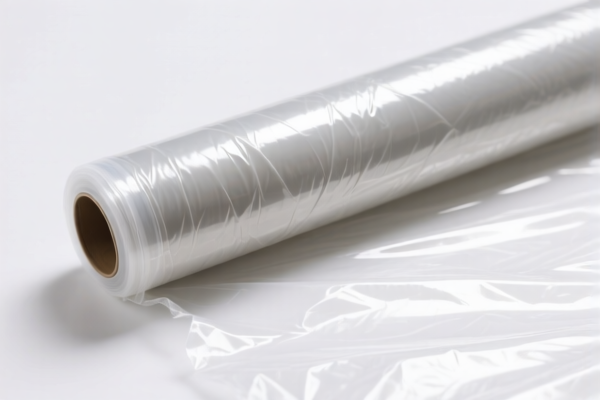
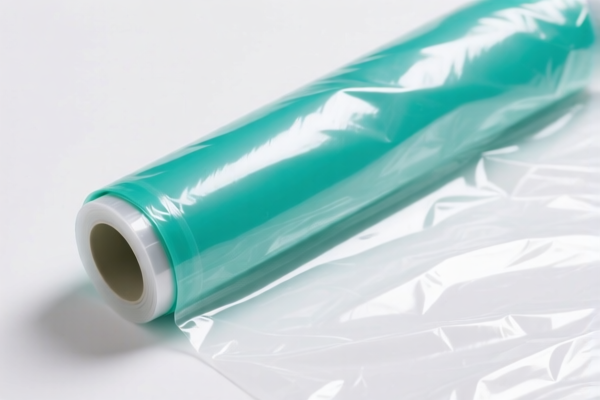
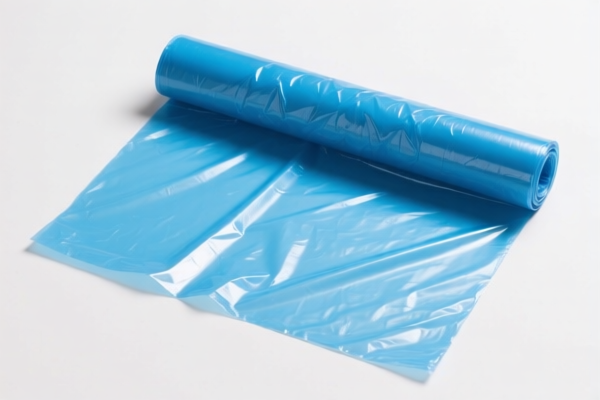
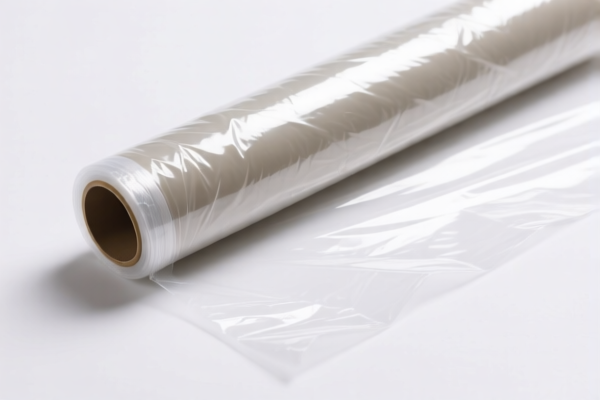
AI Analysis
🎞️ Non-Reinforced Plastic Film (Non-Cellular Plastics)
🌐 HS Code Reference & Customs Clearance Guide | 2026 Latest Tariff Analysis | Professional-Level Strategy
📌 I. Product Definition & Classification: Do You Really Know "Plastic Film"?
Non-reinforced plastic film refers to flat plastic products that are flexible, non-cellular (solid, not foamed), and not reinforced, laminated, supported, or combined with other materials. It is typically used for packaging, protection, agricultural mulch, or industrial lining.
In international trade, the classification depends heavily on thickness and material type. Based on the provided data, we focus on General Plastics (Other Plastics) flexible films/strips/sheets.
⚠️ Key Distinction:
- If the thickness is > 0.152 mm →归入 3920.99.10.00
- If the thickness is ≤ 0.152 mm (or not specified/other) →归入 3920.99.20.00
- Note: "Other plastics" implies materials like PE, PP, PVC, etc., excluding specific ones like cellulose or polycarbonate which may have separate headings.
📦 II. HS Code Classification Details (2026 Latest Tariff Authority Comparison)
| HS Code | Product Description | Key Criterion | Tax Detail (Base + Added) | Total Tax |
|---|---|---|---|---|
3920.99.10.00 |
Other plates, sheets, film, foil and strip, of plastics, noncellular and not reinforced: Of other plastics: Film, strip and sheets... flexible: Over 0.152 mm in thickness, and not in rolls | Thickness > 0.152 mm | Base: 0.0% Added: 0.0% |
0.0% |
3920.99.20.00 |
Other plates, sheets, film, foil and strip, of plastics, noncellular and not reinforced: Of other plastics: Film, strip and sheets... flexible: Other | Thickness ≤ 0.152 mm (or unspecified) | Base: 4.2% Added: 25.0% |
29.2% |
🔍 Critical Reminder:
- The 0.152 mm threshold is the decisive factor for tax liability in this category.
- Thicker films (>0.152mm) enjoy a 0% tax rate in this specific dataset context.
- Thinner films (≤0.152mm) incur a significant 29.2% total tax due to the 25% additional tariff.
💰 III. 2026 Latest Tariff Rate Explanation (Detailed Breakdown)
✅ Applicable Data Source: Provided JSON Data
✅ Product Type: Non-Reinforced Plastic Film (General Plastics)
✅ Status: Non-Cellular, Flexible
🎯 1. 3920.99.10.00 —— Plastic Film (Thickness > 0.152 mm)
| Item | Content |
|---|---|
| HS Code | 3920.99.10.00 |
| Description | Flexible film, strip, or sheets of other plastics, non-cellular, not reinforced, over 0.152 mm thick, not in rolls |
| Base Tariff | 0.0% |
| Added Tariff | 0.0% |
| Total Tax Rate | 0.0% |
| Tax Calculation | CIF Value × 0% = $0 |
| Note | No additional tariffs apply in this specific data entry. This makes it a highly tax-efficient code for thicker plastic films. |
📌 Explanation:
- This code captures thicker, solid plastic sheets/films used in industrial applications, heavy-duty packaging, or construction.
- The 0% total tax is a significant advantage. Ensure your product specifications clearly state the thickness is > 0.152 mm to qualify.
🎯 2. 3920.99.20.00 —— Plastic Film (Other / Thickness ≤ 0.152 mm)
| Item | Content |
|---|---|
| HS Code | 3920.99.20.00 |
| Description | Flexible film, strip, or sheets of other plastics, non-cellular, not reinforced, other (typically implying ≤ 0.152 mm or not meeting the specific "over 0.152 mm" criteria) |
| Base Tariff | 4.2% |
| Added Tariff | 25.0% |
| Total Tax Rate | 29.2% |
| Tax Calculation | CIF Value × 29.2% |
| Note | High tax burden due to the combination of standard duty and additional tariffs. |
📌 Explanation:
- This code covers thinner films, such as standard shopping bags, cling wrap, lightweight packaging, or agricultural films.
- The 25% added tariff is the primary cost driver. Even with a low base rate (4.2%), the total impact is substantial.
- Crucial: If your film is slightly thicker than 0.152 mm, you MUST classify it under3920.99.10.00to save 29.2%.
🛠️ IV. Customs Clearance Practical Advice (Real-World Pitfall Avoidance)
✅ 1. Preparation Checklist (Essential Documents)
| Document | Required? | Description |
|---|---|---|
| ✅ Product Specification Sheet | ✔️ | Must explicitly state Material Type (e.g., PE, PP), Thickness (in mm), Width, Roll Length, and Non-Reinforced Status. |
| ✅ Technical Drawing / Cross-Section | ✔️ | Visual proof of non-cellular structure and lack of lamination/reinforcement. |
| ✅ Commercial Invoice | ✔️ | Clearly describe as "Non-reinforced plastic film, thickness XX mm". Avoid vague terms like "plastic sheeting". |
| ✅ Packing List | ✔️ | Detail roll weights, dimensions, and core sizes. |
| ✅ Third-Party Test Report | ✔️ | Certificate of Analysis (COA) confirming thickness and material composition. |
✅ 2. Declaration Tips (Key Mantras)
🔥 "Thickness is King, Reinforcement is Key, Name it Precisely!"
| Scenario | Correct Declaration | Wrong Approach | Consequence |
|---|---|---|---|
| Thick Film (>0.152 mm) | HS: 3920.99.10.00 Desc: "Plastic film, 0.2 mm thick, PE, non-reinforced" |
Declaring as "Other" (3920.99.20.00) |
Overpayment: 29.2% tax instead of 0% |
| Thin Film (≤0.152 mm) | HS: 3920.99.20.00 Desc: "Plastic film, 0.05 mm thick, PVC, non-reinforced" |
Declaring as "Thick film" | Penalty: Misclassification, fines, delays |
| Reinforced/Laminated Film | NOT 3920 | Declaring as 3920 | Wrong Code: Must go to 3921 or 3920 with "Laminated" suffix depending on structure |
| Cellular (Foamed) Film | NOT 3920 | Declaring as 3920 | Wrong Code: Must go to 3921 (e.g., 3921.90) |
✅ 3. Special Cases Handling
| Case | Handling Advice |
|---|---|
| Multi-layer Film | If layers are laminated together, it is NOT "non-reinforced/non-laminated". It likely falls under 3921.90 or similar. Check lamination criteria strictly. |
| Mixed Thickness Rolls | If a roll contains sections of different thicknesses, declare the predominant thickness or split the shipment. Do not average. |
| Clearance in US | Note that the 25% added tariff for 3920.99.20.00 is likely related to Section 301 tariffs. Verify current USITC exclusions. |
| Clearance in EU/Other | The provided data seems to reflect a specific jurisdiction (likely US with added tariffs). For EU, check if additional duties apply separately. |
🌍 V. Global Market Clearance Comparison (2026 Update)
| Market | Recommended HS Code | Tariff (Base + Added) | Key Requirement |
|---|---|---|---|
| 🇺🇸 USA (Provided Data) | 3920.99.10.00 (>0.152mm) |
0.0% | Precise thickness declaration |
| 🇺🇸 USA (Provided Data) | 3920.99.20.00 (≤0.152mm) |
29.2% | High cost; consider design adjustment |
| 🇪🇺 EU | 3920.99.00 (General) | ~6.5% | No added tariffs typically; CE/REACH compliance |
| 🇨🇳 China | 3920.99.00 | ~6.0% | CCC (if applicable), standard import duties |
📌 Conclusion:
- USA: The 29.2% tax for thin films is a major cost factor. Strategic Tip: If possible, design products with thickness > 0.152 mm to qualify for 0% tax.
- Global: Most markets apply standard duty (~6%) to plastic films, but the US has unique added tariffs. Always verify the latest tariff schedule.
📌 VI. Common Errors & Pitfalls (Lessons Learned)
❌ Error 1: Ignoring Thickness Specification
👉 Result: Customs may reclassify thin film as "Other" (3920.99.20.00) → 29.2% tax applies.
✅ Fix: Always provide exact thickness in mm on the invoice and specs.
❌ Error 2: Misdeclaring "Laminated" as "Non-Reinforced"
👉 Result: If films are laminated, they are not eligible for 3920.99. They may fall under 3921.90 or 3920.99 with "Laminated" subheading, potentially changing tax rates.
✅ Fix: Clearly state "No Lamination, No Reinforcement" in description.
❌ Error 3: Confusing "Non-Cellular" with "Foamed"
👉 Result: Foamed films (bubble wrap, foam sheets) are NOT non-cellular. They go to 3921.19.
✅ Fix: Ensure product is solid, dense plastic, not foamed.
🎯 VII. Conclusion: Precision in Classification Saves Money!
🎯 Remember the Mantra:
🔹 "Thicker than 0.152mm? 0% Tax! Thinner? 29.2% Pain!"
🔹 "No Lamination, No Foam, Non-Reinforced is the Key!"
📌 Pro Tip:
If your film is borderline in thickness (e.g., 0.150 mm vs 0.155 mm), consult a customs broker or apply for an Advance Ruling to secure the 0% tax rate. A small design tweak to increase thickness could save 29.2% in tariffs.
📣 Immediate Action:
📞 Contact your customs clearance team with exact thickness data.
📄 Ensure your Commercial Invoice explicitly states:
"Non-reinforced, non-cellular plastic film, [Material] type, Thickness: [X.XX] mm, Width: [XX] mm."
🚀 Optimize your supply chain to qualify for the 0% tax bracket!
✨ Professional Clearance Starts with Accurate Classification!
💼 Your Bottom Line Depends on These Millimeters!
Customer Reviews
About HS Code Classification
The Harmonized System (HS) is an internationally standardized nomenclature developed by the World Customs Organization (WCO) to classify traded products. Over 200 countries use the HS system as the basis for customs tariffs, trade statistics, and import/export regulations.
Each HS code follows a hierarchical structure:
- Chapter (2 digits) — Broad category of goods (e.g., Chapter 84: Machinery and Mechanical Appliances)
- Heading (4 digits) — More specific grouping within the chapter
- Subheading (6 digits) — Internationally standardized breakdown, used by all WCO member countries
- National subdivisions (8-10 digits) — Country-specific extensions for further classification, such as US HTSUS 10-digit codes
Correct HS code classification is essential for smooth customs clearance, accurate duty payment, and compliance with trade regulations. Misclassification can lead to customs delays, overpayment of duties, or penalties.
When importing from CN to US, the applicable tariff rates may include:
- Most-Favored-Nation (MFN) rate — The standard duty rate applied to WTO members
- General rate — Applied to countries without trade agreements
- Trade remedy duties — Additional tariffs such as Section 301 (anti-dumping), Section 232 (national security), or countervailing duties
The information provided on this page is for reference purposes only. For official classification, please consult with your local customs authority or a licensed customs broker.