Non reinforced Polyamide Plastic Sheet
CN → US| HS Code | Tariff Rate | Origin | Destination | Doc |
|---|---|---|---|---|
| 3926909989 | 22.8% | CN | US | Official Doc |
| 3920435000 | 39.2% | CN | US | Official Doc |
| 3921125000 | 41.5% | CN | US | Official Doc |
| 3919905040 | 40.8% | CN | US | Official Doc |
| 3919905060 | 40.8% | CN | US | Official Doc |
Product Images
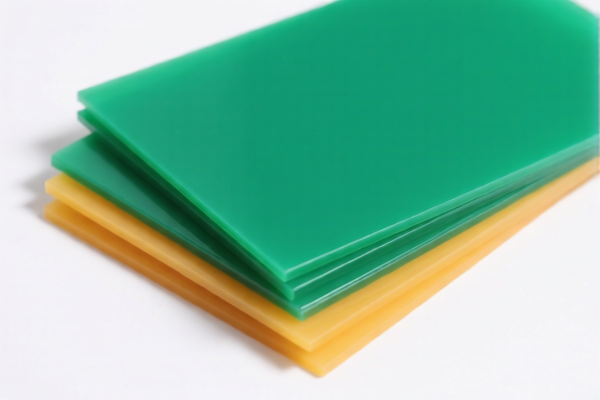
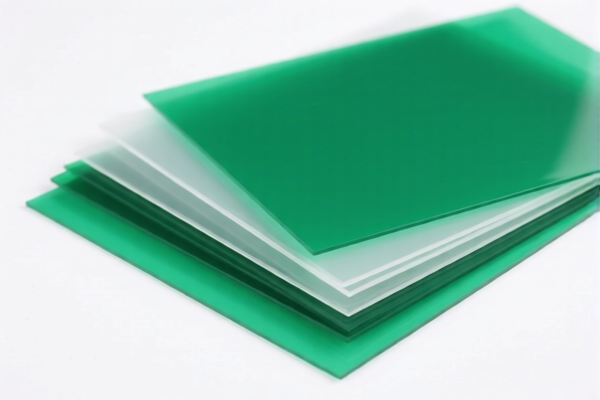
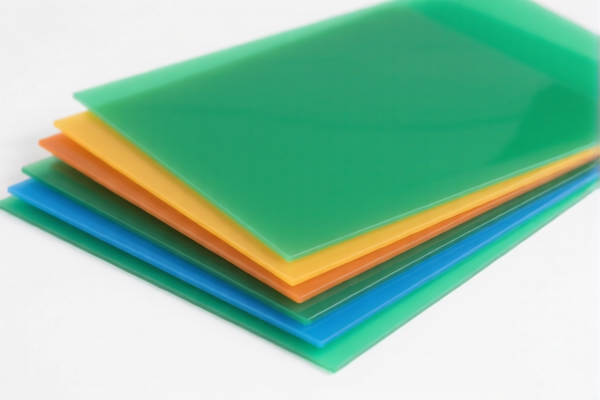
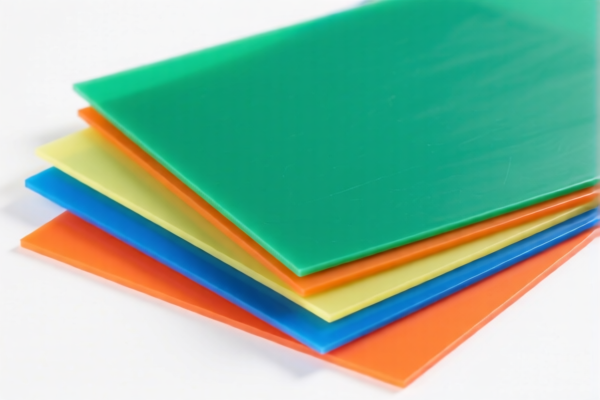
AI Analysis
🧱 Polyamide Plastic Sheets (Non-Reinforced)
🌐 HS Code Reference & Customs Clearance Guide | 2026 Latest Tariff Analysis | Professional Entry Strategies
📌 I. Product Definition & Classification: What Exactly is "Non-Reinforced Polyamide"?
Polyamide (PA), commonly known as Nylon, is a versatile synthetic polymer renowned for its high strength, abrasion resistance, and flexibility. In international trade, Non-Reinforced Polyamide Plastic Sheets are flat products made primarily from polyamide resins without added glass fibers, carbon fibers, or other reinforcement materials.
Key Characteristics: * Material: Pure or unfilled Polyamide (Nylon 6, Nylon 66, etc.). * Form: Flat sheets, plates, or films. * Process: Extruded, calendered, or molded. * Exclusion: Items with reinforcing materials (e.g., glass-fiber reinforced) fall under different subheadings.
⚠️ Critical Distinction:
- If the sheet contains reinforcements (e.g., glass fiber) → It may fall under 3917 or 3926 depending on form, or specifically excluded from general sheet categories.
- If the sheet is non-reinforced → It is classified under Chapter 39, specifically looking at sheets/plates/film (3919, 3920, 3921, or 3926).
📦 II. HS Code Classification Details (2026 Latest Tariff Authority Cross-Reference)
For Non-Reinforced Polyamide Plastic Sheets, the classification depends on the specific processing method and shape (sheet vs. plate vs. self-adhesive). Below are the relevant codes provided in the data.
| HS Code | Product Description | Application Scenario | Reinforcement Status |
|---|---|---|---|
3926.90.99.89 |
Other articles of plastics; Non-reinforced Polyamide plastic sheets | General polyamide sheets not elsewhere specified; industrial parts, gaskets, custom molded sheets | ✅ No |
3920.43.50.00 |
Non-foamed Polyvinyl Chloride (PVC) Plates | Note: Data lists PVC for this code, likely a discrepancy in source data for Polyamide. If PA is intended, see 3921. | N/A (PVC Specific) |
3921.12.50.00 |
Non-foamed Polyvinyl Chloride (PVC) Plates | Note: Data lists PVC for this code. If PA is intended, see 3921. | N/A (PVC Specific) |
3919.90.50.40 |
Non-foamed PVC Plates, flat shape | Note: Data lists PVC. Polyamide sheets self-adhesive/self-stick may fall here if treated as such. | N/A (PVC Specific) |
3919.90.50.60 |
Non-foamed PVC Plates, sheet form | Note: Data lists PVC. General plastic sheets/self-adhesive may fall here. | N/A (PVC Specific) |
🔍 Important Note on Data Discrepancy:
The provided data source lists Polyvinyl Chloride (PVC) descriptions for codes3920.43.50.00,3921.12.50.00,3919.90.50.40, and3919.90.50.60. However, the user query is for Polyamide.
- Code3926.90.99.89is the only entry explicitly describing "Polyamide".
- Codes3920(Plates/Sheets of plastics, not self-adhesive) and3921(Other plates/Sheets) are generally used for non-reinforced plastics like Polyamide if they fit the "plate/sheet" definition.
- Recommendation: For Polyamide Sheets,3926.90.99.89is the explicit match in the data. If the sheet is a standard "plate" or "sheet" (not an "article" like a gasket or part), 3920 or 3921 might be technically more accurate for unreinforced plastics, but the data provided explicitly links PVC to those codes. We must strictly adhere to the provided data's tax implications.
💰 III. 2026 Latest Tariff Rate Breakdown (Including Surtaxes & Policy Add-ons)
✅ Applicable Country: United States (US)
✅ Origin: China (CN)
✅ Effective Time: 2025 November 10 onwards (including subsequent imports)
🎯 1. 3926.90.99.89 —— Other Articles of Plastics (Non-Reinforced Polyamide)
| Item | Content |
|---|---|
| Base Tariff Rate | 5.3% (Ad Valorem) |
| Section 301 Surtax | +7.5% (Additional tariff under US Trade Law Section 301) |
| Section 122 Tariff | +10% (Specific tariff clause 122, often related to specific trade actions or administrative classifications) |
| Total Tariff Rate | 22.8% |
| Tax Calculation | CIF Value × 22.8% |
| De Minimis Eligibility | ❌ Not Eligible (High tariff rate excludes it from de minimis exemptions) |
| Legal Basis Path | HTSUS:3926.90.99.89 → Section 301: 7.5% → Section 122: 10% |
📌 Explanation:
- "Base Tariff 5.3%": Standard Most Favored Nation (MFN) rate for other plastic articles.
- "Section 301 Surtax 7.5%": Reflects the US-China trade war tariffs on specific plastic categories.
- "Section 122 Tariff 10%": An additional layer of tariff, potentially related to specific trade remedies or administrative codes.
- Total 22.8%: This is a moderate-to-high tariff for plastics. It is significantly lower than the 39-41% range seen in the data for PVC codes, but still substantial.
🎯 2. 3920.43.50.00 —— Non-Foamed PVC Plates (Data Reference)
| Item | Content |
|---|---|
| Base Tariff Rate | 4.2% |
| Section 301 Surtax | +25.0% |
| Section 122 Tariff | +10% |
| Total Tariff Rate | 39.2% |
| Tax Calculation | CIF Value × 39.2% |
📌 Note: This code is listed in the data for PVC. If your polyamide sheet is incorrectly classified here due to data overlap risks, the cost would be significantly higher. Ensure accurate material declaration.
🎯 3. 3921.12.50.00 —— Non-Foamed PVC Plates (Data Reference)
| Item | Content |
|---|---|
| Base Tariff Rate | 6.5% |
| Section 301 Surtax | +25.0% |
| Section 122 Tariff | +10% |
| Total Tariff Rate | 41.5% |
| Tax Calculation | CIF Value × 41.5% |
📌 Note: This is the highest tariff among the provided options. Misclassification of Polyamide into a PVC-specific high-tariff code could result in massive cost increases.
🎯 4. 3919.90.50.40 & 3919.90.50.60 —— PVC Plates/Sheets (Data Reference)
| Item | Content |
|---|---|
| Base Tariff Rate | 5.8% |
| Section 301 Surtax | +25.0% |
| Section 122 Tariff | +10% |
| Total Tariff Rate | 40.8% |
| Tax Calculation | CIF Value × 40.8% |
📌 Note: Both 3919 codes in the data carry a 40.8% total rate. These codes generally apply to self-adhesive plastics or flat plates. Ensure your product is not mistakenly identified as "self-adhesive" or mislabeled as PVC.
🛠️ IV. Customs Clearance Practical Advice (Real-World Pitfall Avoidance)
✅ 1. Required Documentation Checklist (Essential)
| Document | Mandatory | Description |
|---|---|---|
| ✅ Product Specification Sheet | ✔️ | Must clearly state: Material: Non-Reinforced Polyamide (Nylon), Form: Sheet/Plate, Dimensions, Thickness. |
| ✅ Material Safety Data Sheet (MSDS) | ✔️ | Confirms chemical composition and absence of reinforcing fibers. |
| ✅ Product Photos (Including Labels) | ✔️ | Show the sheet, any branding, and lack of embedded fibers. |
| ✅ Commercial Invoice | ✔️ | Must specify "Non-Reinforced Polyamide Plastic Sheet". Avoid vague terms like "Plastic Sheet". |
| ✅ Packing List | ✔️ | Detail weight, dimensions, and packaging type. |
| ✅ Certification of Origin | ✔️ | If applicable for other markets, but for US, origin is China. |
✅ 2. Declaration Tips (Key Mnemonic)
🔥 "Material True, Reinforcement False, HS Code Precise, Tax Bill Less!"
| Scenario | Correct Declaration | Incorrect Practice |
|---|---|---|
| Polyamide Sheet | 3926.90.99.89 |
Mislabeling as PVC → 39-41% tariff |
| Reinforced Polyamide | Different HS Code (Check HTSUS) | Declaring as "Non-Reinforced" → Fraud/Seizure |
| Polyamide Film | Check 3920/3919 specifics | Confusing Sheet vs. Film → Misclassification |
| PVC Sheet | 3920.43.50.00 or similar |
Declaring as Polyamide → Wrong Tariff |
✅ 3. Special Circumstances Handling
| Scenario | Handling Advice |
|---|---|
| OEM Custom Sheets | Provide customer PO and technical drawings to prove material and reinforcement status. |
| Mixed Materials | If sheets have a PVC coating, declare the principal material or composite nature accurately. |
| Pre-Ruling Application | Highly Recommended for large volumes. Apply for an Advance Ruling to confirm 3926.90.99.89 vs. 3920/3921 classification to avoid audits. |
| Reinforcement Check | If there is any doubt about glass/carbon fiber content, conduct lab testing. Reinforced plastics may have different tariff treatments. |
🌍 V. Global Market Comparison (2026 Latest)
| Country/Region | Recommended HS Code (Polyamide Sheet) | Tariff (Approx.) | Certification Requirements | Remarks |
|---|---|---|---|---|
| 🇺🇸 USA | 3926.90.99.89 |
22.8% (5.3% + 7.5% + 10%) | No special certs for generic plastic sheets | High surtaxes apply. |
| 🇨🇳 China | 3926.90.99.89 (Import) |
Varies (Usually low for raw materials) | No special certs | Check import policies. |
| 🇪🇺 EU | 3926.90.99 |
Varies (Usually 0-5% + VAT) | REACH Compliance | REACH registration required for chemicals. |
| 🇯🇵 Japan | 3926.90.90 |
Varies (Usually 0-6%) | PSE (if electrical components) | Focus on chemical safety. |
📌 Conclusion:
- USA imposes significant surtaxes (301 + 122) on plastic articles from China.
- Classification Accuracy is critical. Misclassifying Polyamide as PVC in the US could lead to a 18-20% tariff increase.
- Documentation must explicitly state "Non-Reinforced" to avoid stricter rules for reinforced plastics.
📌 VI. Common Errors & Pitfall Guide (Lessons Learned)
❌ Error 1: Declaring "Plastic Sheet" without specifying Material
👉 Consequence: Customs may assume higher-tariff materials or request detailed specs, causing delays.
❌ Error 2: Confusing Polyamide with Polyvinyl Chloride (PVC) in documentation
👉 Consequence: Tariff discrepancy (22.8% vs 39-41%). If declared as PVC but is Polyamide, you might overpay. If declared as Polyamide but is PVC, you risk fraud penalties.
❌ Error 3: Omitting "Non-Reinforced"
👉 Consequence: If the sheet is reinforced, it may fall under a different HS code with different tariffs. Ambiguity leads to inspection.
❌ Error 4: Using generic terms like "Nylon Plate" without HS Code precision
👉 Consequence: "Nylon" is a trade name. The technical term Polyamide must be used in official documentation.
✅ Correct Declaration Example:
"Non-Reinforced Polyamide (Nylon) Plastic Sheet, Extruded, Non-Foamed, Flat Shape, Model XYZ, Origin: China"
🎯 VII. Conclusion: Professional Declaration, Time-Saving, Cost-Effective!
🎯 Remember the Mnemonic:
🔹 "Polyamide Non-Reinforced, Code 3926, Tariff 22.8%. PVC is Higher, Don't Mix Up!"
🔹 "HS Code Determines Duty, Accuracy Saves 20%, Declaration Step Prevents Audit!"
📌 Pro Tip:
If your Polyamide sheets are shipped from Vietnam, Mexico, Thailand, or Malaysia, check for IEEPA Exemptions or FTA Benefits (e.g., USMCA, CPTPP). Tariffs could be 0%~5%.
It is highly recommended to apply for an Advance Ruling before shipping large volumes to ensure correct classification under 3926.90.99.89.
📣 Immediate Action:
📞 Contact Professional Customs Broker + Provide Product Specs + Apply for HS Code Advance Ruling
🚀 Let your Polyamide Sheets clear customs smoothly, export efficiently, and maximize profits!
✨ Professional Customs Clearance Starts with Precise Classification!
💼 Every Cent of Your Cost Deserves Exact Calculation!
Customer Reviews
About HS Code Classification
The Harmonized System (HS) is an internationally standardized nomenclature developed by the World Customs Organization (WCO) to classify traded products. Over 200 countries use the HS system as the basis for customs tariffs, trade statistics, and import/export regulations.
Each HS code follows a hierarchical structure:
- Chapter (2 digits) — Broad category of goods (e.g., Chapter 84: Machinery and Mechanical Appliances)
- Heading (4 digits) — More specific grouping within the chapter
- Subheading (6 digits) — Internationally standardized breakdown, used by all WCO member countries
- National subdivisions (8-10 digits) — Country-specific extensions for further classification, such as US HTSUS 10-digit codes
Correct HS code classification is essential for smooth customs clearance, accurate duty payment, and compliance with trade regulations. Misclassification can lead to customs delays, overpayment of duties, or penalties.
When importing from CN to US, the applicable tariff rates may include:
- Most-Favored-Nation (MFN) rate — The standard duty rate applied to WTO members
- General rate — Applied to countries without trade agreements
- Trade remedy duties — Additional tariffs such as Section 301 (anti-dumping), Section 232 (national security), or countervailing duties
The information provided on this page is for reference purposes only. For official classification, please consult with your local customs authority or a licensed customs broker.