Non rigid Rubber Gloves
CN → US| HS Code | Tariff Rate | Origin | Destination | Doc |
|---|---|---|---|---|
| 4005200000 | 35.0% | CN | US | Official Doc |
| 4005910000 | 35.0% | CN | US | Official Doc |
| 3926204050 | 16.5% | CN | US | Official Doc |
| 3926204010 | 16.5% | CN | US | Official Doc |
Product Images
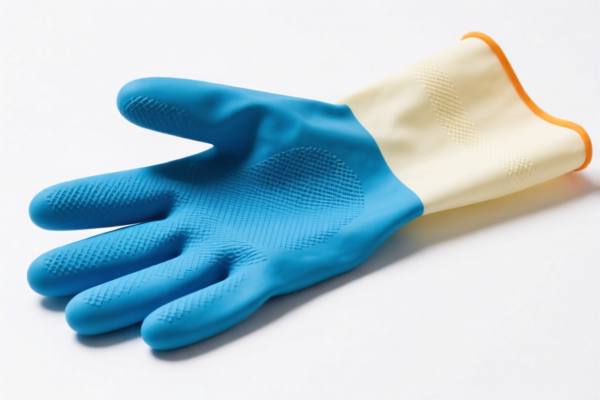



AI Analysis
🧤 Non-Rigid Rubber Gloves (Unvulcanized Compounded Rubber)
🌐 HS Code Reference & Clearance Guide | 2026 Latest Tariff Analysis | Professional Customs Strategy
📌 I. Product Definition & Classification: Do You Really Know "Non-Rigid Rubber"?
"Non-rigid rubber gloves" in an international trade context typically refers to compounded rubber in primary forms (solutions, dispersions, plates, sheets, or strips) that has not been vulcanized (set/hardened). These are raw or semi-processed materials used to manufacture finished gloves, seals, or hoses, rather than finished wearable items themselves.
Key Distinction:
- Unvulcanized (Raw/Semi-finished): Soft, sticky, or liquid state. Classified under Chapter 40 (Rubber).
- Vulcanized (Finished): Hardened, elastic, ready-to-wear. Classified under Chapter 39 (Plastics) if synthetic/latex blend, or Chapter 40 if natural rubber finished gloves.
⚠️ Critical Classification Point:
- If the product is a liquid solution or dispersion (e.g., latex dipped for manufacturing) → 4005.20.00.00
- If the product is in solid primary forms (plates, sheets, strips) → 4005.91.00.00
- NOT finished gloves for wearing (which would be under HS 4015 or 3926).
📦 II. HS Code Classification Details (2026 Latest Tariff Authority Comparison)
| HS Code | Product Description | Application Scenario | State/Form |
|---|---|---|---|
4005.20.00.00 |
Compounded rubber, unvulcanized: Solutions; dispersions other than those of subheading 4005.10 | Liquid latex, rubber solutions for dipping, adhesive coatings | 🧪 Liquid/Solution |
4005.91.00.00 |
Compounded rubber, unvulcanized: Other: Plates, sheets, and strip | Raw rubber slabs, unvulcanized sheets for cutting, rubber strips for sealing | 🧱 Solid/Sheet/Strip |
3926.20.40.10 |
Articles of plastics: Gloves, mittens... Disposable | Finished disposable plastic/polymer gloves | ✅ Finished |
3926.20.40.50 |
Articles of plastics: Gloves, mittens... Other | Finished non-disposable plastic gloves | ✅ Finished |
🔍 Key Reminder:
- The term "Non-rigid" in your query usually implies unvulcanized material in customs terminology.
- If you are importing finished, wearable gloves made of synthetic rubber/plastic, they fall under 3926.20.xxxx, NOT 4005.
- If you are importing raw rubber material to make gloves, it falls under 4005.
- Do not mix: Raw material (Ch 40) ≠ Finished product (Ch 39/40).
💰 III. 2026 Latest Tariff Rate Breakdown (Including Additional Taxes)
✅ Applicable Country: United States (US)
✅ Origin: China (CN)
✅ Effective Date: Post-2025 November 10 (Current Trade Policies)
🎯 1. 4005.20.00.00 —— Unvulcanized Rubber Solutions/Dispersions
| Item | Content |
|---|---|
| Basic Duty Rate | 0.0% |
| Section 301 Additional Duty | +25.0% |
| Total Tariff Rate | 25.0% |
| Tax Calculation | CIF Value × 25% |
| De Minimis Eligibility | ❌ Not Eligible (High tariff items excluded from Section 321) |
| Legal Basis | USITC:4005.20.00.00 → Footnote:301_Trade_Act |
📌 Explanation:
- Although the basic MFN duty is 0%, Section 301 tariffs add 25% on Chinese-origin unvulcanized rubber compounds.
- This is a high-import cost item. Do not attempt to misdeclare as "free" goods.
🎯 2. 4005.91.00.00 —— Unvulcanized Rubber Plates/Sheets/Strips
| Item | Content |
|---|---|
| Basic Duty Rate | 0.0% |
| Section 301 Additional Duty | +25.0% |
| Total Tariff Rate | 25.0% |
| Tax Calculation | CIF Value × 25% |
| De Minimis Eligibility | ❌ Not Eligible |
| Legal Basis | USITC:4005.91.00.00 → Footnote:301_Trade_Act |
📌 Note:
- Same tariff structure as liquid solutions.
- Applies to raw rubber sheets, slabs, or strips imported for manufacturing.
- Total 25% tax burden must be factored into landed cost.
🎯 3. 3926.20.40.10 / 3926.20.40.50 —— Finished Plastic/Synthetic Gloves
Note: Only if your "Non-rigid gloves" are actually finished disposable or non-disposable synthetic gloves.
| Item | Content |
|---|---|
| Basic Duty Rate | 6.5% |
| Section 301 Additional Duty | 0.0% |
| Total Tariff Rate | 6.5% |
| Tax Calculation | CIF Value × 6.5% |
| De Minimis Eligibility | ✅ Eligible (Under $800, may be duty-free) |
| Legal Basis | USITC:3926.20.40.xx |
📌 Critical Advantage:
- Finished gloves (Ch 39) have a much lower tariff (6.5%) and NO Section 301 surcharge compared to raw rubber materials.
- If possible, import finished gloves, not raw rubber. This saves 18.5% in duties (25% vs 6.5%).
🛠️ IV. Clearance Practical Advice (Combat Pitfalls Guide)
✅ 1. Document Checklist (Missing Items Cause Delays)
| Document | Mandatory? | Description |
|---|---|---|
| ✅ Product Spec Sheet | ✔️ | Must specify: Vulcanized vs. Unvulcanized, Composition, Form (Liquid/Sheet) |
| ✅ HS Code Justification Letter | ✔️ | Explain why it is Ch 40 (Raw) vs. Ch 39 (Finished) |
| ✅ Commercial Invoice | ✔️ | Clearly state: "Unvulcanized Compounded Rubber" or "Finished Synthetic Gloves" |
| ✅ Certificate of Origin (CO) | ✔️ | To prove origin (China vs. Vietnam/etc.) |
| ✅ MSDS (Material Safety Data Sheet) | ✔️ | Required for chemical/rubber solutions |
✅ 2. Declaration Strategy (Key Mantra)
🔥 “Raw Material = High Tax; Finished Glove = Low Tax; Don’t Mix Them!”
| Scenario | Correct HS Code | Error If Mislabeled |
|---|---|---|
| Raw Rubber Solution | 4005.20.00.00 |
Declared as "Gloves" → Smuggling/Fraud Risk |
| Raw Rubber Sheets | 4005.91.00.00 |
Declared as "Gloves" → 6.5% vs 25% Discrepancy |
| Finished Disposable Gloves | 3926.20.40.10 |
Declared as "Raw Rubber" → Overpayment of 18.5% |
| Finished Non-Disposable Gloves | 3926.20.40.50 |
Declared as "Raw Rubber" → Overpayment of 18.5% |
✅ 3. Special Situations Handling
| Situation | Handling Advice |
|---|---|
| OEM Raw Rubber for Glove Factory | Must declare as 4005. Provide end-use statement (for manufacturing). |
| Finished Gloves for Retail | Declare as 3926. Benefit from lower 6.5% rate. |
| Mixed Shipment (Raw + Finished) | Separate declarations! Do not lump together. |
| Origin Non-China | If from Vietnam/Thailand, check FTAs. May reduce or eliminate 25% tariff. |
🌍 V. Global Market Comparison (2026 Latest)
| Country/Region | Recommended HS Code | Tariff (China Origin) | Certification | Remarks |
|---|---|---|---|---|
| 🇺🇸 USA | 4005.91.00.00 |
25% (Section 301) | None | High tariff on raw rubber |
| 🇺🇸 USA | 3926.20.40.10 |
6.5% | None | Lower tariff on finished gloves |
| 🇨🇳 China | 4005.91.00.00 |
0% | None | Import duty-free for raw rubber |
| 🇪🇺 EU | 4005.91.00.00 |
0% | REACH | No additional tariffs |
| 🇬🇧 UK | 4005.91.00.00 |
0% | UKCA | No additional tariffs |
📌 Conclusion:
- USA is the strictest with 25% tariff on unvulcanized rubber.
- Importing finished gloves (Ch 39) into the US is significantly cheaper (6.5% vs 25%) than importing raw rubber (Ch 40).
- Supply Chain Strategy: If possible, manufacture raw rubber products in China and import finished gloves to the US, rather than raw rubber materials, to save 18.5% in duties.
📌 VI. Common Errors & Pitfalls (Lessons Learned)
❌ Error 1: Declaring "Unvulcanized Rubber Sheets" as "Gloves"
👉 Consequence: Customs will reject or reclassify, leading to 25% tariff instead of potential lower rates, plus penalties.
❌ Error 2: Declaring "Finished Gloves" as "Raw Rubber Solutions"
👉 Consequence: Overpayment of 18.5% in duties (25% vs 6.5%). No refund automatically.
❌ Error 3: Ignoring "Vulcanization" Status
👉 Consequence: Customs may require a lab test to prove state. If unvulcanized, 25% applies. If vulcanized, 6.5% may apply. Document the process!
✅ Correct Approach:
"Unvulcanized Compounded Rubber, In Primary Forms, For Glove Manufacturing"
OR
"Disposable Nitrile Gloves, Finished, For Medical Use"
🎯 VII. Conclusion: Professional Declaration, Cost Savings!
🎯 Remember the Mantra:
🔹 “Raw Rubber = 25% Tax; Finished Glove = 6.5% Tax; Choose Wisely!”
🔹 “HS Code Defines Duty, 18.5% Difference is Huge!”
📌 Pro Tip:
If your product is unvulcanized rubber, and you are importing into the US, calculate the 25% tax in your pricing model. If possible, shift supply chain to import finished gloves (Ch 39) to benefit from the lower 6.5% rate.
📣 Immediate Action:
📞 Consult a Customs Broker + Provide Product Photos + Apply for Pre-Ruling if unsure about "Vulcanization" status.
🚀 Clear Customs Smoothly, Maximize Profit!
✨ Professional Clearance Starts with Accurate Classification!
💼 Every Cent of Duty Counts!
Customer Reviews
About HS Code Classification
The Harmonized System (HS) is an internationally standardized nomenclature developed by the World Customs Organization (WCO) to classify traded products. Over 200 countries use the HS system as the basis for customs tariffs, trade statistics, and import/export regulations.
Each HS code follows a hierarchical structure:
- Chapter (2 digits) — Broad category of goods (e.g., Chapter 84: Machinery and Mechanical Appliances)
- Heading (4 digits) — More specific grouping within the chapter
- Subheading (6 digits) — Internationally standardized breakdown, used by all WCO member countries
- National subdivisions (8-10 digits) — Country-specific extensions for further classification, such as US HTSUS 10-digit codes
Correct HS code classification is essential for smooth customs clearance, accurate duty payment, and compliance with trade regulations. Misclassification can lead to customs delays, overpayment of duties, or penalties.
When importing from CN to US, the applicable tariff rates may include:
- Most-Favored-Nation (MFN) rate — The standard duty rate applied to WTO members
- General rate — Applied to countries without trade agreements
- Trade remedy duties — Additional tariffs such as Section 301 (anti-dumping), Section 232 (national security), or countervailing duties
The information provided on this page is for reference purposes only. For official classification, please consult with your local customs authority or a licensed customs broker.