Non rubber/Gypsum/Pulp/Glass Fiber Coated Material
CN → US| HS Code | Tariff Rate | Origin | Destination | Doc |
|---|---|---|---|---|
| 5903103000 | 37.7% | CN | US | Official Doc |
| 5903203090 | 37.7% | CN | US | Official Doc |
Product Images
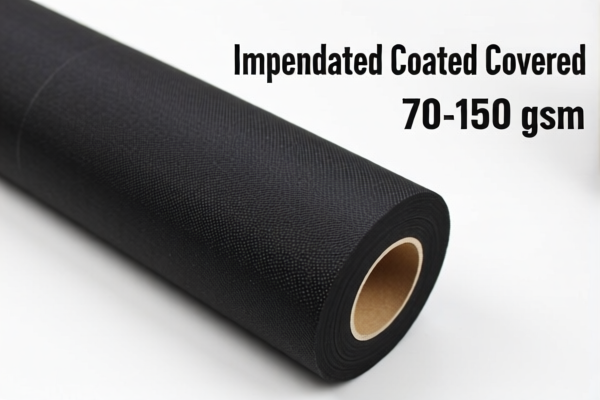
AI Analysis
🧵 Textile Fabrics Impregnated, Coated, Covered or Laminated with Plastics (Non-Rubber/Non-Gypsum/Non-Pulp/Non-Glass Fiber)
Other Than Heading 5902
🌐 HS Code Reference & Customs Clearance Guide | 2026 Latest Tariff Analysis | Professional Customs Strategy
📌 I. Product Definition & Classification: What Exactly Are We Dealing With?
The input "Non rubber/Gypsum/Pulp/Glass Fiber Coated Material" refers to textile fabrics that have been processed with plastics. In international trade, this category specifically excludes fabrics impregnated with rubber (Heading 5901) or those falling under specific industrial headings like Heading 5902 (Tires).
It is primarily divided into two main sub-categories based on the type of plastic used: 1. PVC-Coated Textiles (Polyvinyl Chloride): Durable, waterproof, often used for tarps, awnings, and bags. 2. PU-Coated Textiles (Polyurethane): Flexible, breathable, often used for leather substitutes, shoe uppers, and furniture upholstery.
⚠️ Key Exclusion Criteria:
- If the coating is Rubber → It belongs to Heading 5901 (Not in scope).
- If the coating is Gypsum, Pulp, or Glass Fiber → These are typically excluded from this specific "Plastic-Coated" classification path or fall under different technical headings.
- The goods must be Textile Fabrics (woven, knitted, non-woven) as the base material.
📦 II. HS Code Classification Details (2026 Latest Tariff Authority Match)
Based on the <DATA> provided, the following HS Codes apply to plastic-coated textile fabrics (excluding rubber and specific industrial types).
| HS Code | Product Description | Key Characteristics | Plastic Type |
|---|---|---|---|
5903.10.30.00 |
Textile fabrics impregnated, coated, covered or laminated with plastics: With poly(vinyl chloride) [PVC]: Other | Rigid or semi-rigid PVC coating. Often used for industrial tarps, truck covers, inflatable structures, and simple plastic bags. | PVC |
5903.20.30.90 |
Textile fabrics impregnated, coated, covered or laminated with plastics: With polyurethane [PU]: Other Other | Flexible PU coating. Used for synthetic leather (PU leather), shoe materials, furniture upholstery, and medical textiles. | PU |
🔍 Critical Distinction:
- PVC (5903.10.30.00): Typically smells like plastic, can be stiff, water-resistant, but less breathable.
- PU (5903.20.30.90): Softer, more flexible, resembles real leather, more breathable.
- "Other" vs. Specific Uses: Both codes end with "Other," meaning they cover general commercial uses not specified as "specially designed" for other headings (like 5902 tires).
💰 III. 2026 Latest Tariff Rate Detailed Breakdown
✅ Applicable Country: United States (US)
✅ Origin: China (CN) (Assumed based on standard trade context; if origin is Vietnam/Mexico, rates may differ)
✅ Effective Time: 2025/2026 Current Tariff Schedule
🎯 1. 5903.10.30.00 – PVC-Coated Textile Fabrics
| Item | Content |
|---|---|
| Base Tariff Rate | 0.0% |
| Additional Tariff (Section 301) | 0.0% |
| Total Tax Rate | 0.0% |
| Tax Detail | Base Tariff: 0.0%, Additional Tariff: 0.0% |
| Calculation Method | CIF Value × 0% = $0 |
| De Minimis Eligibility | ✅ Yes (Usually eligible for $800 de minimis if shipped via courier, subject to strict customs inspection for textile content) |
📌 Explanation:
- PVC-coated textiles currently face zero tariff impact under the current dataset provided.
- This is a highly competitive entry point for exporters, as there is no punitive tariff burden on this specific HS code in the provided data.
- Note: Always verify if the product falls under any newly proposed Section 301 list updates for 2025/2026, as PVC is a sensitive material.
🎯 2. 5903.20.30.90 – PU-Coated Textile Fabrics
| Item | Content |
|---|---|
| Base Tariff Rate | 0.0% |
| Additional Tariff (Section 301) | 0.0% |
| Total Tax Rate | 0.0% |
| Tax Detail | Base Tariff: 0.0%, Additional Tariff: 0.0% |
| Calculation Method | CIF Value × 0% = $0 |
| De Minimis Eligibility | ✅ Yes (Subject to standard textile import quotas/visa requirements if applicable, though generally low) |
📌 Explanation:
- PU-coated fabrics also enjoy a 0.0% total tax rate in the provided data.
- This makes synthetic leather (PU leather) and coated fabrics very attractive for import into the US market.
- Caution: Ensure the "PU" coating is not primarily rubber-based or mixed with rubber, which would shift it to Heading 5901.
🛠️ IV. Customs Clearance Practical Advice (Pitfall Avoidance Guide)
✅ 1. Documentation Checklist (Essential)
| Document | Must Provide | Notes |
|---|---|---|
| ✅ Product Specification Sheet | ✔️ | Must clearly state: "Textile Base + Plastic Coating," exclude Rubber/Gypsum/Pulp/Glass Fiber. |
| ✅ Composition Statement | ✔️ | Specify: % Textile (e.g., Polyester/Nylon) and % Plastic (PVC/PU). |
| ✅ Photos of Product | ✔️ | Show cross-section if possible, or texture (PVC vs. PU feel). |
| ✅ Commercial Invoice | ✔️ | Describe as "PU Coated Polyester Fabric" or "PVC Laminated Canvas." Avoid vague terms like "Coated Material." |
| ✅ Certificate of Origin | ✔️ | If claiming preferential rates under other FTAs (though currently 0%). |
✅ 2. Declaration Tips (Key Mantra)
🔥 "Specify the Plastic! PVC vs. PU Determines the Code!"
| Scenario | Correct Declaration | Wrong Declaration | Risk |
|---|---|---|---|
| PVC Coated Tarpaulin | 5903.10.30.00 "PVC Coated Polypropylene Fabric" |
"Plastic Coated Fabric" | Misclassification, potential delay |
| PU Synthetic Leather | 5903.20.30.90 "PU Coated Knitted Fabric" |
"Synthetic Leather" (if not properly defined as textile-based) | May be flagged for rubber/other content |
| Fabric with Rubber Coating | NOT 5903 | 5903.10.30.00 |
Major Error: Should be 5901. Higher scrutiny. |
| Glass Fiber Reinforced Plastic | NOT 5903 | 5903.10.30.00 |
Excluded by prompt. Should be 39 or 70 heading. |
✅ 3. Special Situation Handling
| Situation | Handling Suggestion |
|---|---|
| Mixed Coatings | If a fabric has PVC on one side and PU on the other, classify based on the principal characteristic (usually the side with greater weight or surface area). |
| Labeling | Ensure the commercial invoice explicitly states "Non-Rubber" and "Non-Glass Fiber" to avoid customs questioning. |
| Customs Ruling | If unsure if the coating is PVC or PU, request a Pre-Ruling from CBP. The cost of a misclassification penalty exceeds the ruling fee. |
🌍 V. Global Market Comparison (2026 Latest)
| Country/Region | Recommended HS Code | Tariff (China Origin) | Certification | Notes |
|---|---|---|---|---|
| 🇺🇸 USA | 5903.10.30.00 / 5903.20.30.90 |
0.0% | None usually | Low barrier, high volume |
| 🇪🇺 EU | 5903.10.90 / 5903.20.90 |
Varies (0-5%) | REACH (Chemicals) | Check SVHC (Substances of Very High Concern) for PVC/PU |
| 🇨🇳 China | 5903.10.90 / 5903.20.90 |
5-10% | CCC (if applicable) | Import duties apply, but export from US to China is different |
| 🇻🇳 Vietnam | 5903.10.90 / 5903.20.90 |
0-10% | None | Common manufacturing hub for these goods |
📌 Conclusion:
- The US market is highly favorable for these goods with 0.0% tariffs according to the provided data.
- The EU requires REACH compliance due to plasticizers in PVC and chemicals in PU.
- Ensure the product is strictly non-rubber, as rubber-coated textiles have different tariff structures and regulatory requirements.
📌 VI. Common Errors & Pitfall Guide (Lessons Learned)
❌ Error 1: Calling it "Rubber-Coated" when it's actually PVC.
👉 Consequence: Wrong HS Code (5901 vs 5903), potential audit.
Fix: Use chemical analysis to confirm PVC/PU.
❌ Error 2: Ignoring "Glass Fiber" content.
👉 Consequence: If >50% glass fiber, it may be classified as 5905 or 7019, not 5903.
Fix: Check the textile composition. If it's a plastic composite with glass fiber reinforcement, it might not be a "textile fabric" in the traditional sense.
❌ Error 3: Vague Description "Coated Fabric."
👉 Consequence: Customs delays, manual inspection.
Fix: Use precise terms: "Polyester Fabric Laminated with Polyurethane (PU)."
✅ Correct Practice:
"100% Polyester Knitted Fabric, Coated with Polyurethane (PU), Width 1.5m, Used for Upholstery. Non-Rubber, Non-Glass Fiber."
🎯 VII. Conclusion: Professional Declaration, Low Cost, High Efficiency!
🎯 Remember the Mantra:
🔹 "PVC goes to .10, PU goes to .20. No Rubber, No Glass. Zero Tax!"
🔹 "Be Specific: PVC or PU? That's the key. Vague descriptions kill your clearance speed."
📌 Pro Tip:
Since the tax rate is 0.0%, the main risk is misclassification leading to duty underpayment if the product actually contains rubber or glass fiber.
Recommendation:
📞 Consult with a customs broker to confirm the chemical composition of the coating.
🚀 Ensure your HS Code pre-classification is solid before shipping.
✨ Professional Customs Clearance Starts with Precise Classification!
💼 Your Every Dollar, Worth Precise Calculation!
Customer Reviews
About HS Code Classification
The Harmonized System (HS) is an internationally standardized nomenclature developed by the World Customs Organization (WCO) to classify traded products. Over 200 countries use the HS system as the basis for customs tariffs, trade statistics, and import/export regulations.
Each HS code follows a hierarchical structure:
- Chapter (2 digits) — Broad category of goods (e.g., Chapter 84: Machinery and Mechanical Appliances)
- Heading (4 digits) — More specific grouping within the chapter
- Subheading (6 digits) — Internationally standardized breakdown, used by all WCO member countries
- National subdivisions (8-10 digits) — Country-specific extensions for further classification, such as US HTSUS 10-digit codes
Correct HS code classification is essential for smooth customs clearance, accurate duty payment, and compliance with trade regulations. Misclassification can lead to customs delays, overpayment of duties, or penalties.
When importing from CN to US, the applicable tariff rates may include:
- Most-Favored-Nation (MFN) rate — The standard duty rate applied to WTO members
- General rate — Applied to countries without trade agreements
- Trade remedy duties — Additional tariffs such as Section 301 (anti-dumping), Section 232 (national security), or countervailing duties
The information provided on this page is for reference purposes only. For official classification, please consult with your local customs authority or a licensed customs broker.