Non rubber/Plaster/Paper Pulp/Glass Fiber Coating
CN → US| HS Code | Tariff Rate | Origin | Destination | Doc |
|---|---|---|---|---|
| 7019641510 | 41.0% | CN | US | Official Doc |
| 8534000040 | 35.0% | CN | US | Official Doc |
| 7019641590 | 41.0% | CN | US | Official Doc |
| 5907001500 | 43.0% | CN | US | Official Doc |
Product Images
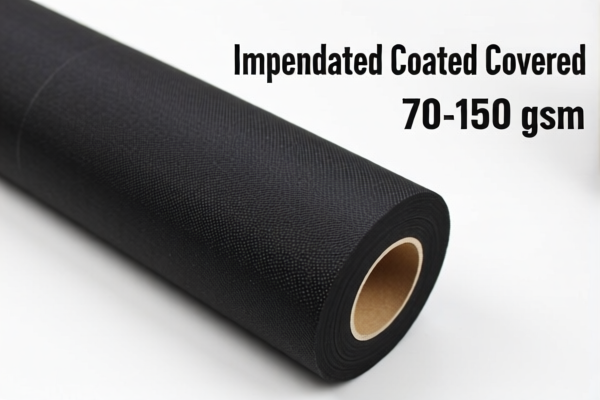
AI Analysis
🧵 Coated Textiles & Non-Wovens (Non-Rubber/Plaster/Paper/Glass Fiber)
🌐 HS Code Reference & Customs Clearance Guide | 2026 Latest Tariff Analysis | Professional Strategy
📌 I. Product Definition: What is "Non-Rubber/Plaster/Paper Pulp/Glass Fiber Coating"?
This product category refers to textile fabrics, non-wovens, or yarns that have been impregnated, coated, covered, or laminated with substances other than rubber, plaster of Paris, paper pulp, or glass fiber materials.
In international trade, these goods are primarily classified under Chapter 59 (Impregnated, Coated, Covered or Laminated Textile Fabrics; Chemical Products and Preparations). The key distinction lies in the coating material and the base fabric. If the base is not glass fiber and the coating is not rubber/plaster/paper, it often falls into the "Other" categories under HS Code 5907.
⚠️ Key Distinction Point:
- If the coating is Rubber → Go to 40 or 5901/5902;
- If the coating is Plaster/Gypsum → Go to Chapter 68 or 5903;
- If the base is Glass Fiber → Go to Chapter 70 (e.g., 7019);
- If the coating is Paper/Pulp → Go to Chapter 48;
- If NONE of the above → Likely 5907 ("Other" impregnated/coated fabrics).
📦 II. HS Code Classification Details (2026 Latest Tariff Authority Comparison)
Based on the provided data, the potential HS Codes are analyzed below. Note that while the input specifies "Non... Glass Fiber," the system still evaluates potential overlaps if the "Glass Fiber" mention in the name is ambiguous.
| HS Code | Product Description | Applicability | Material/State Conflict Check |
|---|---|---|---|
7019.64.15.10 |
Glass Fiber Fabrics, Coated, Weighing > 70 g/m² | Glass Fiber Base + Coating | ⚠️ Conflict: Input says "Non Glass Fiber". Matched only if "Glass Fiber" in name overrides description. |
8534.00.00.40 |
Printed Circuits: Glass Fiber Substrates | Glass Fiber Base | ⚠️ Conflict: Input says "Non Glass Fiber". Matched only as "Glass Fiber Material" fallback. |
7019.64.15.90 |
Glass Fiber Fabrics, Coated, Other | Glass Fiber Base + Coating | ⚠️ Conflict: Input says "Non Glass Fiber". Matched based on "Coated" feature. |
5907.00.15.00 |
Textile Fabrics Impregnated/Coated (Other) | Non-Rubber/Non-Plaster/Non-Paper/Non-GF | ✅ Best Fit: Matches "Non-rubber/plaster/paper/glass fiber" exclusion criteria. |
🔍 Key Takeaway:
- 5907.00.15.00 is the most logical fit for a product explicitly defined as "Non-rubber/plaster/paper pulp/glass fiber coating" because it captures the "Other" category for coated textiles.
- The other codes (7019,8534) are only matched if the product name strongly implies "Glass Fiber Material" despite the "Non-GF" description, leading to a classification conflict or fallback to "Other."
💰 III. 2026 Latest Tariff Rate Breakdown (Including Surcharges & Policy Add-ons)
✅ Applicable Country: United States (US)
✅ Origin: China (CN)
✅ Effective Date: November 10, 2025 (for subsequent imports)
🎯 1. 5907.00.15.00 —— Textile Fabrics, Impregnated, Coated, Covered or Laminated (Other)
| Item | Content |
|---|---|
| Base Tariff Rate | 8.0% (ad valorem) |
| USITC Additional Tariff (Section 301) | +25% |
| IEEPA Additional Tariff (China-specific) | +10% |
| Total Tariff Rate | 43.0% |
| Tax Calculation | CIF Value × 43% |
| De Minimis Exemption Eligibility | ❌ Not Eligible (deny_de_minimis) |
| Legal Basis Path | USITC:5907.00.15.00 → USITC:Footnote 9903.88.01 (+25%) → IEEPA:9903.01.24 (+10%) |
📌 Explanation:
- 8% Base: Standard Most-Favored-Nation (MFN) rate for Chapter 59.
- 25% USITC: Applied to goods of Chinese origin under Section 301.
- 10% IEEPA: Additional tariff imposed on Chinese products under the International Emergency Economic Powers Act.
- Total 43%: This is a high-cost category for coated textiles. Accurate classification is critical to avoid overpaying or underpaying.
🎯 2. 7019.64.15.10 & 7019.64.15.90 —— Glass Fiber Fabrics, Coated (If Misclassified)
| Item | Content |
|---|---|
| Base Tariff Rate | 6.0% (ad valorem) |
| USITC Additional Tariff (Section 301) | +25% |
| IEEPA Additional Tariff (China-specific) | +10% |
| Total Tariff Rate | 41.0% |
| Tax Calculation | CIF Value × 41% |
| De Minimis Exemption Eligibility | ❌ Not Eligible |
| Legal Basis Path | USITC:7019.64.15.xx → USITC:Footnote 9903.88.01 (+25%) → IEEPA:9903.01.24 (+10%) |
📌 Note:
- If the product is actually glass fiber but mislabeled as "non-glass," it may be classified here at 41%.
- However, since the input explicitly says "Non... Glass Fiber," this classification is likely incorrect unless the "Glass Fiber" mention in the product name is dominant.
🎯 3. 8534.00.00.40 —— Printed Circuits (Glass Fiber Substrates)
| Item | Content |
|---|---|
| Base Tariff Rate | 0.0% (ad valorem) |
| USITC Additional Tariff (Section 301) | +25% |
| IEEPA Additional Tariff (China-specific) | +10% |
| Total Tariff Rate | 35.0% |
| Tax Calculation | CIF Value × 35% |
| De Minimis Exemption Eligibility | ❌ Not Eligible |
| Legal Basis Path | USITC:8534.00.00.40 → USITC:Footnote 9903.88.01 (+25%) → IEEPA:9903.01.24 (+10%) |
📌 Note:
- This code is for printed circuit boards (PCBs) with glass fiber substrates.
- If the product is a bare coated fabric and not a PCB, this classification is incorrect.
- However, if the product is a "Glass Fiber Material" used for PCBs, it may fall here at a lower rate (35%).
🛠️ IV. Customs Clearance Practical Advice (Real-World Pitfall Avoidance)
✅ 1. Required Documentation Checklist (All Mandatory)
| Document | Must Provide | Description |
|---|---|---|
| ✅ Product Specification Sheet | ✔️ | Must detail: Base material (e.g., cotton, polyester, nylon), coating type (e.g., PVC, PU, acrylic, resin), weight, and width. |
| ✅ Material Safety Data Sheet (MSDS) | ✔️ | For the coating substance, to prove it is not rubber, plaster, or paper pulp. |
| ✅ Product Photos | ✔️ | Clear images showing the coating texture and labeling. |
| ✅ Third-Party Test Report | ✔️ | Proof of coating composition (e.g., chemical analysis). |
| ✅ Commercial Invoice | ✔️ | Clearly state: "Coated Textile Fabric, Non-Rubber, Non-Glass Fiber." |
| ✅ Packing List | ✔️ | Include net/gross weight and dimensions. |
✅ 2. Declaration Tips (Key Mantra)
🔥 "Material First, Coating Second, Exclude the Forbidden, Declare 'Other'!"
| Scenario | Correct Declaration | Wrong Practice |
|---|---|---|
| Coated fabric (e.g., PU-coated cotton) | 5907.00.15.00 | Misdeclare as "Plastic-coated" → May trigger Chapter 39/40 issues. |
| Product contains glass fiber but claims "non-GF" | 7019.64.15.xx | Declare as 5907 → Misdeclaration risk, penalties. |
| Product is a PCB with glass fiber | 8534.00.00.40 | Declare as fabric → Wrong chapter, audit flag. |
| Coating is rubber | 4000/5901 | Declare as "Non-rubber" → Fraud risk. |
✅ 3. Special Cases Handling
| Situation | Handling Advice |
|---|---|
| Mixed Base Material | If the fabric is blended (e.g., 50% cotton, 50% glass fiber), it may still be classified under 7019 if glass fiber is the essential character. |
| Multiple Coatings | If coated with multiple substances, classify based on the principal coating or the one giving the essential character. |
| OEM/Custom Coating | Provide supplier’s technical data sheet to prove the coating is not rubber/plaster/paper/glass fiber. |
| Sample vs. Bulk | Ensure samples match bulk production exactly. Customs may test a random sample. |
🌍 V. Global Market Customs Comparison (2026 Latest)
| Country/Region | Recommended HS Code | Tariff Rate (China Origin) | Certification Requirement | Remarks |
|---|---|---|---|---|
| 🇺🇸 USA | 5907.00.15.00 |
43% (incl. 301 & IEEPA) | None specific, but MSDS required | High tariff, strict material verification. |
| 🇨🇳 China | 5907.00.15.00 |
~8% | CCC (if applicable) | Lower tariff, but import controls apply. |
| 🇪🇺 EU | 5907.00.15.00 |
0–4% (varies) | REACH (chemical compliance) | Strict on chemical safety (coating substances). |
| 🇬🇧 UK | 5907.00.15.00 |
0–4% | UKCA (if applicable) | Post-Brexit rules apply. |
| 🇯🇵 Japan | 5907.00.15.00 |
0–5% | PSE (if electrical) | Low tariff, focus on safety standards. |
📌 Conclusion:
- USA has the highest effective tariff (43%) due to Section 301 and IEEPA surcharges.
- EU/UK/Japan have lower tariffs but strict chemical compliance (REACH, etc.) for coating substances.
- Accurate material declaration is critical to avoid penalties and delays.
📌 VI. Common Errors & Pitfall Guide (Lessons Learned)
❌ Error 1: Declaring a glass fiber-coated fabric as "non-glass fiber"
👉 Consequence: Misdeclaration, penalties, and potential seizure.
👉 Fix: Verify base material with lab tests.
❌ Error 2: Using "Plastic-Coated Fabric" for a rubber-coated item
👉 Consequence: Wrong HS Code, underpayment of duties.
👉 Fix: Distinguish between rubber (elastic, high resilience) and plastic (rigid, thermoplastic).
❌ Error 3: Ignoring the coating composition
👉 Consequence: Customs may reclassify to a higher-tariff or restricted category.
👉 Fix: Provide detailed MSDS and chemical analysis.
❌ Error 4: Claiming De Minimis for shipments under $800
👉 Consequence: Denied for Chapter 59/70/85 goods from China.
👉 Fix: Plan for full duty payment.
✅ Correct Practice:
"Coated Cotton Fabric, PU Impregnated, Non-Rubber, Non-Glass Fiber, 150gsm, White, Roll Packed"
🎯 VII. Conclusion: Precision in Classification, Savings in Costs!
🎯 Remember the Mantra:
🔹 "Non-Rubber, Non-Glass, Non-Plaster, Non-Paper → 5907 is the way!"
🔹 "Tariff 43% in USA, plan for compliance!"
🔹 "MSDS is your best friend in Chapter 59!"
📌 Pro Tip:
If your coating substance is novel or unusual, consider applying for a Customs Ruling (Pre-classification) to avoid post-import disputes.
For US imports, budget for 43% total duty. For EU, ensure REACH compliance for the coating chemicals.
📣 Take Action Now:
📞 Consult a licensed customs broker + Provide MSDS + Verify base material composition
🚀 Ensure smooth clearance, avoid penalties, and optimize your supply chain costs!
✨ Professional Customs Clearance Starts with Accurate Classification!
💼 Your Cost Savings Depend on Precision!
Customer Reviews
About HS Code Classification
The Harmonized System (HS) is an internationally standardized nomenclature developed by the World Customs Organization (WCO) to classify traded products. Over 200 countries use the HS system as the basis for customs tariffs, trade statistics, and import/export regulations.
Each HS code follows a hierarchical structure:
- Chapter (2 digits) — Broad category of goods (e.g., Chapter 84: Machinery and Mechanical Appliances)
- Heading (4 digits) — More specific grouping within the chapter
- Subheading (6 digits) — Internationally standardized breakdown, used by all WCO member countries
- National subdivisions (8-10 digits) — Country-specific extensions for further classification, such as US HTSUS 10-digit codes
Correct HS code classification is essential for smooth customs clearance, accurate duty payment, and compliance with trade regulations. Misclassification can lead to customs delays, overpayment of duties, or penalties.
When importing from CN to US, the applicable tariff rates may include:
- Most-Favored-Nation (MFN) rate — The standard duty rate applied to WTO members
- General rate — Applied to countries without trade agreements
- Trade remedy duties — Additional tariffs such as Section 301 (anti-dumping), Section 232 (national security), or countervailing duties
The information provided on this page is for reference purposes only. For official classification, please consult with your local customs authority or a licensed customs broker.