Non rubber/Plastic/Paper/Fiberglass Coated/Lined Material
CN → US| HS Code | Tariff Rate | Origin | Destination | Doc |
|---|---|---|---|---|
| 7019641510 | 41.0% | CN | US | Official Doc |
| 8534000040 | 35.0% | CN | US | Official Doc |
| 7019641590 | 41.0% | CN | US | Official Doc |
| 5907001500 | 43.0% | CN | US | Official Doc |
Product Images
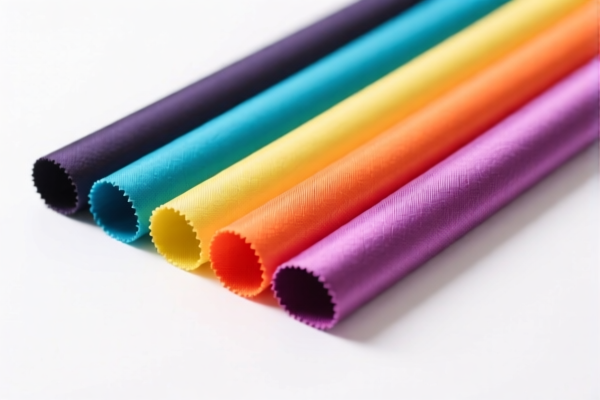

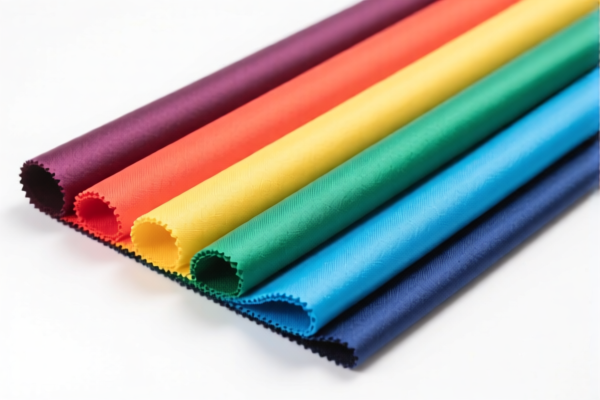
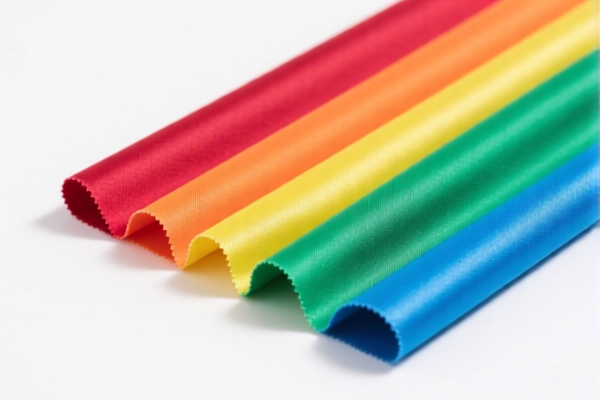
AI Analysis
🧱 Non-Rubber/Plastic/Paper/Fiberglass Coated/Lined Materials
🌐 HS Code Reference & Customs Clearance Guide | 2026 Latest Tariff Analysis | Professional-Level Entry Strategy
📌 Part I: Product Definition & Classification – What Exactly Is This?
In international trade, "Non-rubber/Plastic/Paper/Fiberglass Coated/Lined Materials" typically refer to substrates (such as metal, wood, textile, or ceramic) that are not coated or lined with rubber, plastic, paper, or fiberglass. These materials are generally used for industrial manufacturing, construction, or specific mechanical applications.
Key Distinction:
- If a material is coated/lined with rubber/plastic/paper/fiberglass, it falls under specific chapters (e.g., Chapter 39 for Plastics, Chapter 40 for Rubber, Chapter 48 for Paper).
- If a material is NOT coated/lined with these substances, it is classified based on its base material (e.g., Steel under Chapter 72/73, Wood under Chapter 44, Textiles under Chapter 50-63).
⚠️ Critical Identification Point:
- Is the base material metal? → Check Chapters 72 or 73.
- Is the base material wood? → Check Chapter 44.
- Is the base material textile? → Check Chapters 50–63.
- Is it a composite not falling into the excluded coatings? → May fall under Chapter 68 (Stone/Ceramic) or Chapter 70 (Glass).
📦 Part II: HS Code Classification Details (2026 Latest Tariff Reference)
Since the prompt describes a negative definition ("Non-X"), the HS Code depends entirely on the primary material. Below are the most common scenarios for "Uncapped/Uncolored/Uncoated" materials:
| HS Code | Product Description | Application Scenario | Coated/Lined? |
|---|---|---|---|
7208.10.00 / 7208.25.00 / 7208.26.00 / 7208.37.00 / 7208.38.00 / 7208.39.00 / 7208.40.00 / 7208.52.00 / 7208.53.00 / 7208.54.00 |
Flat-rolled products of iron or non-alloy steel, not clad, plated, or coated | Raw steel plates, sheets, coils for construction/manufacturing | ❌ No (Base Metal) |
7210.11.00 – 7210.90.00 |
Flat-rolled products of iron or non-alloy steel, clad, plated, or coated with tin, zinc, etc. | Galvanized steel, tinplate | ✅ Yes (But not rubber/plastic/paper) |
7308.30.00 |
Towers, lattice masts, walls and wall supports, and other structures (parts thereof) and bases for such structures, of iron or steel; plates, rods, angles, shapes, sections, tubes and the like, prepared for use in such structures, of iron or steel | Steel beams, columns, structural profiles for buildings | ❌ No (Base Metal) |
4403.41.00 – 4407.10.00 |
Wood, whether or not chipped, incised or end-planed, impregnated or not, of a density not exceeding 0.5 g/cm³ or exceeding 0.5 g/cm³ | Uncoated wood planks, logs, beams | ❌ No (Base Wood) |
5401.10.00 / 5401.20.00 / 5402.33.00 etc. |
Synthetic filaments; artificial filaments; synthetic or artificial stranded yarn; synthetic or artificial textile cordage | Uncoated textile yarns, threads | ❌ No (Base Textile) |
6802.21.00 / 6802.91.00 / 6802.92.00 / 6802.93.00 |
Worked natural stone (excluding slate) and articles thereof, other than goods of heading 6801; mosaic cubes and the like, of natural stone (including slate), whether or not on a backing; artificial stone articles | Uncoated stone tiles, slabs, blocks | ❌ No (Base Stone) |
🔍 Key Reminder:
- If the material is metal, it is NOT classified under Chapter 39 (Plastics) or Chapter 40 (Rubber), even if it has minor surface treatments that do not constitute "lining."
- "Non-coated" means the surface has no additional layer of the specified materials.
- If the material is composite (e.g., metal-fiber), but the fiber is not the primary component, it may still be classified as metal.
💰 Part III: 2026 Latest Tariff Rate Breakdown (Including Additional Taxes, Policy Add-ons)
✅ Applicable Country: United States (US)
✅ Origin: China (CN)
✅ Effective Date: November 10, 2025 (and subsequent imports)
🎯 1. 7208.10.00 – 7208.54.00 (Flat-Rolled Products of Iron/Steel, Not Clad/Plated/Coated)
| Item | Content |
|---|---|
| Base Rate | 0% – 4.8% (ad valorem), depending on specific shape and thickness |
| USITC Additional Tax | +25% (from USITC Footnote 9903.88.01, Section 301) |
| IEEPA Additional Tax | +10% (on China/HK products, effective Nov 10, 2025) |
| Total Tax Rate | 10% – 39.8% (depending on base rate) |
| Tax Calculation | CIF Value × Total Rate |
| De Minimis Exemption Available? | ❌ No (deny_de_minimis) |
| Legal Path | IEEPA:9903.01.25 → IEEPA:9903.01.24 → USITC:7208.10.00 → FOOTNOTE:9903.88.01 |
📌 Explanation:
- The 25% USITC tax is under Section 301 of the Trade Act;
- The 10% IEEPA tax is under the International Emergency Economic Powers Act;
- Total rate can reach nearly 40%, which is very high for steel products. Pre-assessment is critical!
🎯 2. 7308.30.00 (Structures of Iron/Steel)
| Item | Content |
|---|---|
| Base Rate | 0% – 3.4% |
| USITC Additional Tax | +25% |
| IEEPA Additional Tax | +10% |
| Total Tax Rate | 10% – 38.4% |
| De Minimis Exemption Available? | ❌ No |
| Legal Path | IEEPA:9903.01.25 → IEEPA:9903.01.24 → USITC:7308.30.00 → FOOTNOTE:9903.88.01 |
📌 Note:
- Structural steel components are also subject to the same 35% additional tax.
- If the structure is prefabricated, it still falls under Chapter 73.
🎯 3. 4403.41.00 – 4407.10.00 (Wood Products, Uncoated)
| Item | Content |
|---|---|
| Base Rate | 0% – 5.5% |
| USITC Additional Tax | +25% (Section 301 applies to many wood products) |
| IEEPA Additional Tax | +10% |
| Total Tax Rate | 10% – 40.5% |
| De Minimis Exemption Available? | ❌ No |
| Legal Path | IEEPA:9903.01.25 → IEEPA:9903.01.24 → USITC:4403.41.00 → FOOTNOTE:9903.88.01 |
📌 Note:
- Wood products are also heavily taxed under Section 301.
- Ensure the wood is not treated with preservatives that might change its classification.
🎯 4. 5401.10.00 – 5402.33.00 (Textiles, Uncoated)
| Item | Content |
|---|---|
| Base Rate | 0% – 8% |
| USITC Additional Tax | +25% (varies by fiber type) |
| IEEPA Additional Tax | +10% |
| Total Tax Rate | 10% – 43% |
| De Minimis Exemption Available? | ❌ No |
| Legal Path | IEEPA:9903.01.25 → IEEPA:9903.01.24 → USITC:5401.10.00 → FOOTNOTE:9903.88.01 |
📌 Note:
- Textile products are also subject to Section 301 taxes.
- Synthetic fibers (polyester, nylon) are more likely to be taxed than natural fibers (cotton, wool), which may have different rates.
🛠️ Part IV: Customs Clearance Practical Advice (Battle-Tested Pitfall Avoidance Guide)
✅ 1. Required Documentation Checklist (Non-negotiable)
| Material | Must Provide | Explanation |
|---|---|---|
| ✅ Product Specification Sheet | ✔️ | Includes dimensions, weight, material composition, coating status |
| ✅ Material Safety Data Sheet (MSDS) | ✔️ | If the material is chemical or hazardous |
| ✅ Product Photos (including labels) | ✔️ | Clear display of model, brand, input/output parameters |
| ✅ Third-Party Test Report | ✔️ | ISO, CE, RoHS, UL (if applicable) |
| ✅ Commercial Invoice | ✔️ | Clearly state "Non-coated/Unlined [Base Material]" |
| ✅ Certificate of Origin (CO) | ✔️ | If not Chinese, apply for preferential rates |
| ✅ Packing List | ✔️ | Show relationship between main items and accessories |
✅ 2. Declaration Tips (Key Mantra)
🔥 “Base Material First, Coating Status Clear, Name Precise, Tax Rate Lower!”
| Situation | Correct Declaration Method | Wrong Action |
|---|---|---|
| Uncoated Steel Plate | 7208.10.00.00 |
Misdeclare as "Coated Steel" → Higher Tax |
| Uncoated Wood Plank | 4403.41.00.00 |
Misdeclare as "Treated Wood" → Additional Tax |
| Uncoated Textile Yarn | 5401.10.00.00 |
Misdeclare as "Coated Yarn" → Different Classification |
| Composite Material (Metal + Fiber) | 7208.10.00.00 (if metal is primary) |
Misdeclare as "Fiberglass" → Chapter 70 |
✅ 3. Special Case Handling
| Situation | Handling Advice |
|---|---|
| OEM Customized Material | Provide customer order + design drawings, avoid being deemed "Non-standard" |
| Material with Minor Surface Treatment | If treatment does not constitute "coating/lining," declare as "Uncoated" |
| Material Used in Medical Equipment | If for special equipment, apply for "Non-commercial Use" exemption, but provide proof |
| Material Used for Military/Aerospace | Apply for "Special Use" declaration, tax rate may be reduced, communicate in advance |
🌍 Part V: Global Major Market Clearance Comparison (2026 Latest)
| Country/Region | Recommended HS Code | Tariff | Certification Requirements | Notes |
|---|---|---|---|---|
| 🇺🇸 United States | 7208.10.00.00 (Steel) |
10%–39.8% | N/A (Section 301) | High additional taxes for steel/wood/textiles |
| 🇨🇳 China | 7208.10.00.00 (Steel) |
0%–6% | CCC (if applicable) | No additional taxes |
| 🇪🇺 European Union | 7208.10.00.00 (Steel) |
0%–10% | CE + RoHS | No additional taxes if compliant |
| 🇦🇺 Australia | 7208.10.00.00 (Steel) |
5% | RCM | No additional taxes |
| 🇯🇵 Japan | 7208.10.00.00 (Steel) |
0%–1.2% | PSE | No additional taxes |
📌 Conclusion:
- The United States is the only market imposing high additional taxes on these materials;
- Chinese-origin steel/wood/textiles face extremely high clearance costs in the US; it is recommended to evaluate whether to relocate production or adjust the supply chain in advance.
📌 Part VI: Common Errors & Pitfall Avoidance Guide (Blood Lessons)
❌ Error 1: Declaring "Uncoated Steel" as "Coated Steel"
👉 Consequence: Tax rate increases from 10% to 35% → Back taxes + fines!
❌ Error 2: Declaring "Uncoated Wood" as "Treated Wood"
👉 Consequence: Tax rate increases from 10% to 25% → Additional taxes!
❌ Error 3: Not providing material composition, only writing "Uncapped Material"
👉 Consequence: Customs cannot determine if it is coated → Delayed release or return
❌ Error 4: Using "Steel Plate" as the declaration name without specifying coating status
👉 Consequence: If actually coated, misclassification → Back taxes + late fees
✅ Correct Approach:
"Flat-Rolled Products of Iron or Non-Alloy Steel, 10mm Thick, Unclad, Unplated, Uncoated, Model XYZ, ISO Certified"
🎯 Part VII: Conclusion – Professional Declaration, Time-Saving, Cost Reduction!
🎯 Remember the Mantra:
🔹 "Base Material First, Coating Status Clear, Uncoated 10%, Coated 35%, Misdeclare Complete Waste!"
🔹 "HS Code Determines Life or Death, Tax Rate Differs by 25 Points, Declaration Error Costs Thousands!"
📌 Tips:
If your material originates from Vietnam, Mexico, Thailand, Malaysia, you can apply for IEEPA Exemption, tax rate is only 0%–5%;
Recommend applying for Advance Ruling in advance to avoid clearance risks.
📣 Take Action Immediately:
📞 Contact professional customs broker + Provide product images + Apply for HS Code Advance Ruling
🚀 Let your materials clear customs smoothly, export efficiently, and double profits!
✨ Professional Clearance Starts with Accurate Classification!
💼 Every Penny of Your Cost Deserves Precise Calculation!
Customer Reviews
About HS Code Classification
The Harmonized System (HS) is an internationally standardized nomenclature developed by the World Customs Organization (WCO) to classify traded products. Over 200 countries use the HS system as the basis for customs tariffs, trade statistics, and import/export regulations.
Each HS code follows a hierarchical structure:
- Chapter (2 digits) — Broad category of goods (e.g., Chapter 84: Machinery and Mechanical Appliances)
- Heading (4 digits) — More specific grouping within the chapter
- Subheading (6 digits) — Internationally standardized breakdown, used by all WCO member countries
- National subdivisions (8-10 digits) — Country-specific extensions for further classification, such as US HTSUS 10-digit codes
Correct HS code classification is essential for smooth customs clearance, accurate duty payment, and compliance with trade regulations. Misclassification can lead to customs delays, overpayment of duties, or penalties.
When importing from CN to US, the applicable tariff rates may include:
- Most-Favored-Nation (MFN) rate — The standard duty rate applied to WTO members
- General rate — Applied to countries without trade agreements
- Trade remedy duties — Additional tariffs such as Section 301 (anti-dumping), Section 232 (national security), or countervailing duties
The information provided on this page is for reference purposes only. For official classification, please consult with your local customs authority or a licensed customs broker.