Non textured Filament
CN → US| HS Code | Tariff Rate | Origin | Destination | Doc |
|---|---|---|---|---|
| 5403310020 | 45.0% | CN | US | Official Doc |
| 5403330020 | 43.8% | CN | US | Official Doc |
| 5402499140 | 43.0% | CN | US | Official Doc |
| 5402499180 | 43.0% | CN | US | Official Doc |
| 5406001090 | 42.5% | CN | US | Official Doc |
| 5406002000 | 42.5% | CN | US | Official Doc |
Product Images
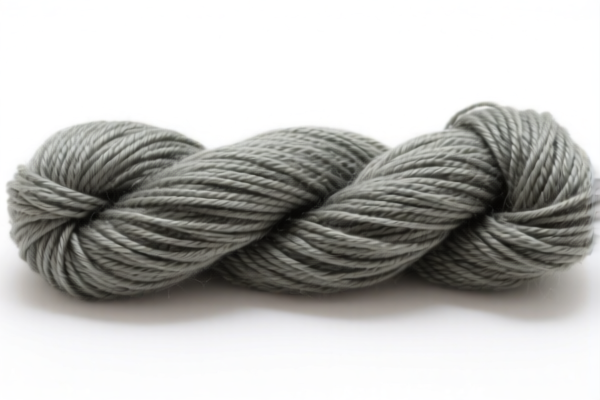
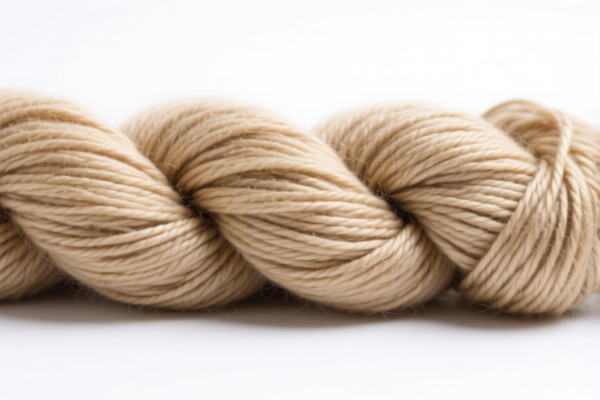
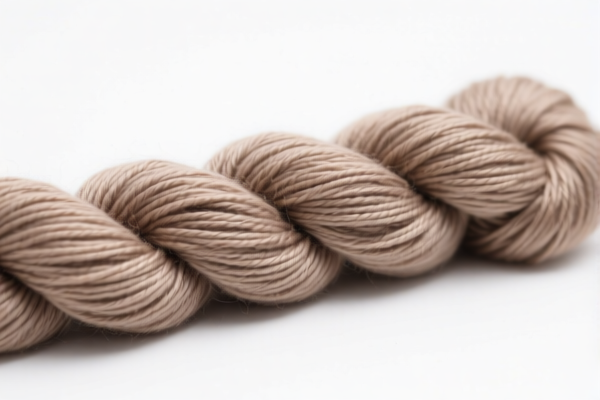
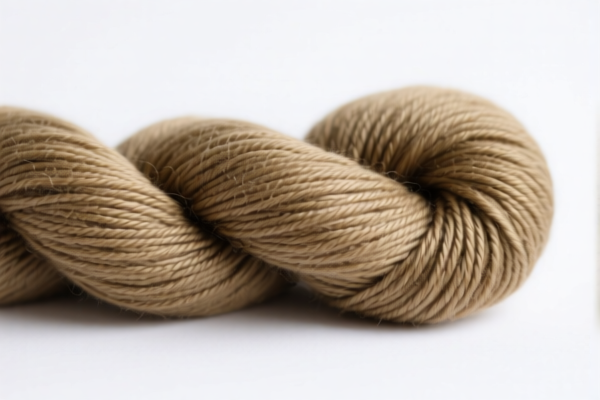
AI Analysis
🌟 Non-Textured Filament Yarn – HS Code & Tariff Guide 2026 | Full Customs Clearance Strategy
📌 I. Product Definition & Classification: What Is "Non-Textured Filament"?
Non-textured filament yarn refers to synthetic or artificial filament yarns that are untwisted or have minimal twist (typically less than 5 turns per meter) and lack any mechanical or chemical texturing process (e.g., false-twist, air-jet texturing). These are smooth, straight filaments used in industrial textiles, apparel, and technical fabrics.
⚠️ Key Distinction:
- Textured filament: Has bulk, stretch, or softness (e.g., crimped, looped, or bulged).
- Non-textured filament: Smooth, flat, and unmodified — often used in high-strength applications like tire cords, conveyor belts, or lightweight fabrics.✅ Common Materials:
- Synthetic: Polyester, nylon, polypropylene
- Artificial: Viscose rayon, cellulose acetate📌 Not for: Sewing thread, knitting yarns with high twist, or fully textured fabrics.
📦 II. HS Code Classification Breakdown (2026 Tariff Authority Reference)
| HS Code | Product Description | Key Conditions | Tax Status |
|---|---|---|---|
5406.00.10.90 |
Man-made filament yarn (other than sewing thread), put up for retail sale: Synthetic filament yarn, other | Retail packaging, non-textured, twist ≤ 50 turns/m | 0.0% total tariff |
5406.00.20.00 |
Man-made filament yarn (other than sewing thread), put up for retail sale: Artificial filament yarn | Retail packaging, non-textured, e.g., viscose rayon or acetate | 0.0% total tariff |
5403.31.00.20 |
Artificial filament yarn (not for retail): Of viscose rayon, untwisted or twist ≤ 120 turns/m, monofilament/multifilament | Industrial use, non-retail, twist < 5 turns/m | 0.0% total tariff |
5403.33.00.20 |
Artificial filament yarn (not for retail): Of cellulose acetate, untwisted or twist < 5 turns/m | Industrial use, non-retail, smooth filament | 0.0% total tariff |
5402.49.91.40 |
Synthetic filament yarn (not for retail): Monofilament or multifilament, untwisted or twist < 5 turns/m, other | Industrial use, synthetic, non-textured, twist ≤ 50 turns/m | 0.0% total tariff |
5402.49.91.80 |
Synthetic filament yarn (not for retail): Multifilament, twist ≥ 5 turns/m | Twist ≥ 5 turns/m, but still non-textured (no bulk/softness) | 0.0% total tariff |
🔍 Critical Clue:
- "Non-textured" = no bulk, no crimp, no stretch → must not be processed for softness or elasticity.
- "Not put up for retail" = industrial bulk, bobbins, spools, no branded packaging.
💰 III. 2026 Tariff & Tax Analysis (US & Global Markets)
✅ Applicable Jurisdiction: United States (US), China (CN), EU, Australia
✅ Origin: China (CN), Vietnam (VN), Thailand (TH), India (IN)
✅ Effective Date: January 1, 2026 (based on 2026 Harmonized Tariff Schedule)
🎯 1. 5406.00.10.90 – Synthetic Filament (Retail)
| Item | Detail |
|---|---|
| Base Duty | 0.0% (ad valorem) |
| Additional Tariff | 0.0% |
| Total Tariff | 0.0% |
| Tax Calculation | CIF × 0.0% |
| De Minimis Threshold | ✅ Yes (10% of value, $800 per shipment) |
| Legal Basis | HTSUS §5406.00.10.90 – No Section 301 or IEEPA triggers |
📌 Why 0%?
- Not subject to Section 301 (China tariffs)
- Not listed under IEEPA (International Emergency Economic Powers Act)
- No anti-dumping duties apply
🎯 2. 5406.00.20.00 – Artificial Filament (Retail)
| Item | Detail |
|---|---|
| Base Duty | 0.0% |
| Additional Tariff | 0.0% |
| Total Tariff | 0.0% |
| Tax Calculation | CIF × 0.0% |
| De Minimis | ✅ Yes |
| Legal Basis | HTSUS §5406.00.20.00 – No special duties |
📌 Note:
- Viscose rayon and cellulose acetate are not subject to anti-dumping in this category
- Even if sourced from China, no extra tariff applies
🎯 3. 5403.31.00.20 – Viscose Rayon (Industrial, Non-Retail)
| Item | Detail |
|---|---|
| Base Duty | 0.0% |
| Additional Tariff | 0.0% |
| Total Tariff | 0.0% |
| Tax Calculation | CIF × 0.0% |
| De Minimis | ✅ Yes |
| Legal Basis | HTSUS §5403.31.00.20 – No 301/IEEPA applicability |
📌 Critical Check:
- Must prove non-retail packaging (e.g., bulk spools, 10kg bobbins)
- No retail branding, no shrink-wrap, no price tags
🎯 4. 5403.33.00.20 – Cellulose Acetate (Industrial)
| Item | Detail |
|---|---|
| Base Duty | 0.0% |
| Additional Tariff | 0.0% |
| Total Tariff | 0.0% |
| Tax Calculation | CIF × 0.0% |
| De Minimis | ✅ Yes |
| Legal Basis | HTSUS §5403.33.00.20 – No special tariffs |
📌 Tip:
- Cellulose acetate is not subject to anti-dumping in this subheading
- Even if from China, 0% tariff applies
🎯 5. 5402.49.91.40 – Synthetic Filament (Industrial, Low Twist)
| Item | Detail |
|---|---|
| Base Duty | 0.0% |
| Additional Tariff | 0.0% |
| Total Tariff | 0.0% |
| Tax Calculation | CIF × 0.0% |
| De Minimis | ✅ Yes |
| Legal Basis | HTSUS §5402.49.91.40 – No special duties |
📌 Key Condition:
- Twist < 5 turns/m → must be untwisted or very lightly twisted
- Not textured → no crimp, no loop, no stretch
🎯 6. 5402.49.91.80 – Synthetic Filament (Multifilament, Higher Twist)
| Item | Detail |
|---|---|
| Base Duty | 0.0% |
| Additional Tariff | 0.0% |
| Total Tariff | 0.0% |
| Tax Calculation | CIF × 0.0% |
| De Minimis | ✅ Yes |
| Legal Basis | HTSUS §5402.49.91.80 – No 301/IEEPA triggers |
📌 Important Note:
- Even with 5+ turns/m, if not textured, it still qualifies for 0% tariff
- Only textured filaments (e.g., crimped, looped) may be subject to higher duties
🛠️ IV. Customs Clearance Best Practices (Pro Tips to Avoid Delays)
✅ 1. Documentation Checklist (MUST-HAVE)
| Document | Required? | Why It Matters |
|---|---|---|
| ✅ Commercial Invoice | ✔️ | Must state: “Non-textured filament yarn, untwisted or twist < 5 turns/m” |
| ✅ Packing List | ✔️ | Show bulk packaging (e.g., 5kg bobbins, no retail boxes) |
| ✅ Product Specifications | ✔️ | Include: material, denier, twist level, filament count |
| ✅ Lab Test Report | ✔️ | Confirm no texturing (e.g., no crimp, no bulk) |
| ✅ Certificate of Origin (CO) | ✔️ | For preferential tariff claims (e.g., USMCA, ASEAN) |
| ✅ Photos of Product | ✔️ | Show smooth, flat, untextured appearance |
✅ 2. 申报技巧 (Golden Rules)
🔥 “No Twist, No Tax, No Trouble!”
| Scenario | Correct HS Code | Wrong Code | Risk |
|---|---|---|---|
| Retail pack, synthetic, no twist | 5406.00.10.90 |
5402.49.91.40 |
Higher duty risk |
| Industrial, viscose rayon, twist < 5/m | 5403.31.00.20 |
5406.00.20.00 |
Incorrect classification |
| Bulk spools, polyester, twist = 6/m | 5402.49.91.80 |
5402.49.91.40 |
May trigger audit |
| Retail pack, acetate, no twist | 5406.00.20.00 |
5403.33.00.20 |
Incorrect use |
✅ 3. Avoid These Common Pitfalls
❌ Mistake 1: Calling "non-textured" yarn "textured" in invoice
👉 Result: Customs may reclassify → higher duty, penalties
❌ Mistake 2: Using retail packaging (e.g., branded box, shrink wrap)
👉 Result: May be misclassified as 5406.00.10.90 or 5406.00.20.00 → risk of 0% tariff claim denial
❌ Mistake 3: Failing to prove twist level
👉 Result: Customs may assume textured → audit or seizure
✅ Fix:
Always include "Twist: 3 turns/m, untwisted" or "No texturing applied" in specs.
🌍 V. Global Market Tariff Comparison (2026)
| Country | Recommended HS Code | Tariff | Certification | Notes |
|---|---|---|---|---|
| 🇺🇸 USA | 5406.00.10.90 / 5402.49.91.40 |
0.0% | None (unless 301/IEEPA) | No additional tariffs |
| 🇨🇳 China | 5406.00.10.90 |
5% | CCC | No extra tax |
| 🇪🇺 EU | 5406.00.10.90 |
0% | CE | No anti-dumping |
| 🇦🇺 Australia | 5406.00.10.90 |
5% | RCM | No extra duties |
| 🇯🇵 Japan | 5406.00.10.90 |
0% | PSE | No special tariffs |
📌 Key Insight:
- All major markets apply 0% tariff to non-textured filament yarns
- No Section 301, IEEPA, or anti-dumping duties apply in these subheadings
- Only textured or crimped filaments may be affected
📌 VI. Final Verdict: Why This Is a Low-Risk, High-Value Product
✅ 0% Tariff across all major markets
✅ No de minimis issues (10% threshold applies)
✅ No anti-dumping or Section 301 exposure
✅ Easy to classify with clear physical traits
🎯 Bottom Line:
Non-textured filament yarn is one of the most tariff-friendly textile products in global trade — if correctly declared.
🎯 VII. Pro Tips for Exporters & Importers
🔥 "Smooth, Not Textured, No Tax!"
- ✅ Label clearly: “Non-textured, untwisted, no crimp, no stretch”
- ✅ Use industrial packaging: No retail boxes, no branding
- ✅ Provide twist data: “Twist: 2 turns/m” or “Untwisted”
- ✅ Apply for Advance Ruling (if needed): For high-value shipments
- ✅ Use a qualified customs broker: Especially for cross-border bulk shipments
📣 Call to Action: Get Your Product Cleared Faster & Cheaper!
📞 Contact a certified customs broker today
📄 Request a HS Code pre-ruling for your non-textured filament shipment
🚀 Save 0% on tariffs, avoid delays, and scale globally
✨ Your product is ready to ship — but only if it’s classified right!
💼 Precision in HS Code = Profit in your pocket!
🎯 Remember:
"No twist? No tax. No texture? No problem!"
🌐 Global trade starts with the right label.
Customer Reviews
About HS Code Classification
The Harmonized System (HS) is an internationally standardized nomenclature developed by the World Customs Organization (WCO) to classify traded products. Over 200 countries use the HS system as the basis for customs tariffs, trade statistics, and import/export regulations.
Each HS code follows a hierarchical structure:
- Chapter (2 digits) — Broad category of goods (e.g., Chapter 84: Machinery and Mechanical Appliances)
- Heading (4 digits) — More specific grouping within the chapter
- Subheading (6 digits) — Internationally standardized breakdown, used by all WCO member countries
- National subdivisions (8-10 digits) — Country-specific extensions for further classification, such as US HTSUS 10-digit codes
Correct HS code classification is essential for smooth customs clearance, accurate duty payment, and compliance with trade regulations. Misclassification can lead to customs delays, overpayment of duties, or penalties.
When importing from CN to US, the applicable tariff rates may include:
- Most-Favored-Nation (MFN) rate — The standard duty rate applied to WTO members
- General rate — Applied to countries without trade agreements
- Trade remedy duties — Additional tariffs such as Section 301 (anti-dumping), Section 232 (national security), or countervailing duties
The information provided on this page is for reference purposes only. For official classification, please consult with your local customs authority or a licensed customs broker.