Non textured Silk
CN → US| HS Code | Tariff Rate | Origin | Destination | Doc |
|---|---|---|---|---|
| 5004000000 | 35.0% | CN | US | Official Doc |
| 5003000000 | 0.0% | CN | US | Official Doc |
Product Images
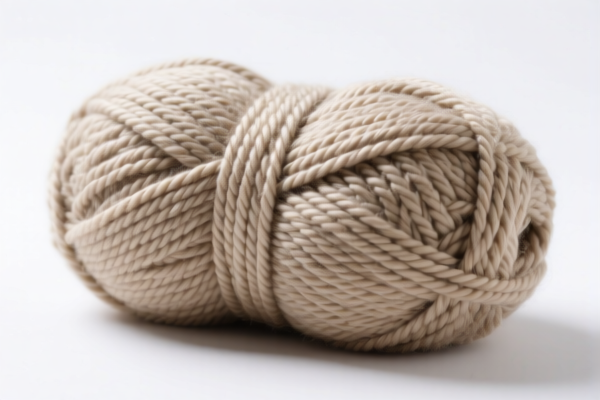

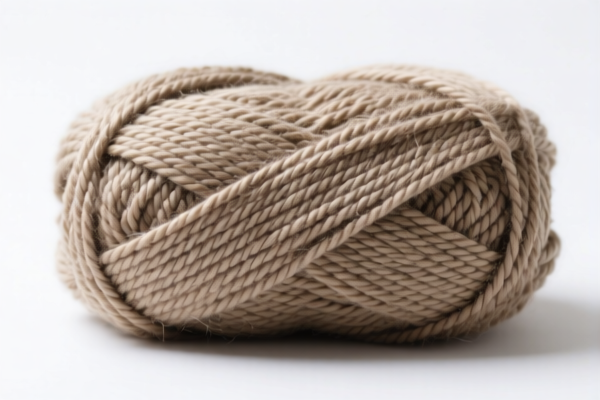

AI Analysis
🧵 Non-textured Silk: Yarn vs. Waste | HS Code Guide & Tariff Analysis 2026
🌐 HS Code Classification & Customs Clearance Guide | 2026 Latest Tariff Data | Strategic Import Strategy 📌 I. Product Definition: What is "Non-textured Silk"?
In international trade, raw silk materials are strictly divided based on their state of processing and form. The term "Non-textured Silk" generally refers to two distinct categories in the Harmonized System (HS):
- Silk Yarn (Unretailed): Continuous filament silk that has been reeled or spun but not yet textured (crimped) and not put up for retail sale (e.g., sold in large skeins, cones, or bulk bales). This is considered a semi-finished textile product.
- Silk Waste & Scrap: Degraded silk fibers, noils, or scraps from the manufacturing of silk yarn. These are low-grade materials used for spinning coarse yarns or non-woven fabrics.
⚠️ Critical Distinction Point: * If it is a continuous filament or spun yarn (intact fibers) → HS 5004 * If it is broken fibers, noils, or manufacturing scrap → HS 5003
📦 II. HS Code Classification Details (2026 Latest Tariff Authority对照)
| HS Code | Product Description | Applicable Scenario | Texture/State | Retail Status |
|---|---|---|---|---|
5004.00.00.00 |
Silk yarn (other than yarn spun from silk waste) not put up for retail sale | Bulk silk threads, industrial sewing silk, raw silk filaments for weaving | ✅ Non-textured (Raw/Straight) | ❌ Not for Retail |
5003.00.00.00 |
Silk waste and scrap, including waste from the manufacture of silk yarn | Silk noils, short fibers, cutting scraps, reeling waste | ❌ Not Yarn (Broken/Short) | ❌ Not for Retail |
🔍 Key Reminder: * HS 5004 is for functional yarn that retains fiber integrity. It is the primary category for most "silk threads." * HS 5003 is for recycled/low-grade material. Do not misclassify high-quality yarn as waste to avoid customs penalties. * "Non-textured" implies the yarn has not undergone chemical or mechanical crimping processes typical of synthetic fibers. Natural silk yarn is naturally crimped by structure, so "non-textured" usually just means "unprocessed/raw yarn."
💰 III. 2026 Latest Tariff Rate Details (US Market Focus)
✅ Applicable Country: United States (US) ✅ Origin: China (CN) (Assumed based on common trade context; verify if origin differs) ✅ Effective Time: Current applicable rates under Section 301 and IEEPA
🎯 1. 5004.00.00.00 —— Silk Yarn (Non-Retail)
| Item | Content |
|---|---|
| Base Tariff | 0.0% (Ad Valorem) |
| Section 301 Additional Tariff | +25.0% |
| Total Tariff Rate | 25.0% |
| Tax Calculation | CIF Value × 25% |
| Legal Basis | Section 301 Tariffs List |
📌 Explanation: * The base duty for silk yarn is generally low (0%). * However, due to trade tensions, Section 301 tariffs impose an additional 25% on Chinese-origin silk yarn. * Total Cost Impact: You must budget for 25% of the declared value as tariff.
🎯 2. 5003.00.00.00 —— Silk Waste and Scrap
| Item | Content |
|---|---|
| Base Tariff | Information Unavailable |
| Additional Tariffs | Information Unavailable |
| Total Tariff Rate | Error / Failed to Retrieve |
| Tax Calculation | N/A |
| Note | ⚠️ High Risk Category |
📌 Warning: * The system returned an "Error" for tax information for HS 5003.00.00.00. * This does not mean it is duty-free. It often indicates a complex tariff heading or a data gap in automated systems. * Action Required: Do NOT assume zero duty. You must consult a licensed customs broker to verify the exact rate, as silk waste may attract different rates depending on specific sub-classifications (e.g., noils vs. waste from spinning).
🛠️ IV. Customs Clearance Practical Advice (Avoid Pitfalls)
✅ 1. Documentation Checklist (Essential)
| Document | Mandatory? | Notes |
|---|---|---|
| ✅ Commercial Invoice | ✔️ | Must clearly state "Silk Yarn" or "Silk Waste" and describe the state (e.g., "Reeled Silk," "Noils"). |
| ✅ Packing List | ✔️ | Detail net/gross weight. Ensure no retail packaging is included for HS 5004. |
| ✅ Product Specification Sheet | ✔️ | Confirm "Non-textured" status. Provide fiber type (Natural Mulberry vs. Tussah). |
| ✅ Bill of Lading | ✔️ | Ensure origin is clearly marked. |
| ✅ Customs Broker Inquiry | ✔️ | Crucial for HS 5003. Request a formal rate confirmation for HS 5003.00.00.00 before shipment. |
✅ 2. Classification Strategy & Tips
🔥 "Classify by Form, Not by Feel! Yarn is 5004, Waste is 5003!"
| Situation | Correct HS Code | Risk if Misclassified |
|---|---|---|
| Bulk Silk Threads (cones/skeins) | 5004.00.00.00 |
If declared as waste (5003), you might underpay tax, leading to penalties. |
| Silk Noils/Short Fibers | 5003.00.00.00 |
If declared as yarn (5004), customs may reject it as "false description." |
| Retail-Size Silk Yarn | Different Code | HS 5004 is for non-retail. If packaged for retail (e.g., small bobbins), a different HS code may apply (not in current data). |
✅ 3. Special Handling for "Silk Waste" (HS 5003)
- Data Gap Alert: Since tax info is "Error," do not file the entry without verification.
- Physical Inspection: Customs may inspect HS 5003 goods closely to ensure they are indeed "waste" and not mislabeled low-quality yarn.
- Suggestion: If possible, avoid importing silk waste if you can source equivalent materials under a different HS code with clear tariff data, unless waste is significantly cheaper.
🌍 V. Global Market Comparison (2026)
| Region | Recommended HS Code | Tariff (Approx. for CN Origin) | Notes |
|---|---|---|---|
| 🇺🇸 USA | 5004.00.00.00 |
25% | Section 301 tax applies heavily. |
| 🇨🇳 China (Export) | 5004.00.00.00 |
0% (Export Tax Refund may apply) | Check local export policies. |
| 🇪🇺 EU | 5004.00.00.00 |
Varies (Often 0-6.5%) | No Section 301 equivalent. |
| 🇬🇧 UK | 5004.00.00.00 |
Varies | Post-Brexit tariffs may differ. |
📌 Conclusion: * USA Importers face a 25% tariff on silk yarn. Factor this into your FOB/CIF pricing. * Silk Waste (5003) is risky due to unclear tax data in the current system. Seek professional clearance.
📌 VI. Common Errors & Pitfalls (Lessons Learned)
❌ Error 1: Declaring retail-packaged silk as HS 5004 👉 Consequence: HS 5004 is strictly for non-retail. Retail packages may require a different code, leading to rejection or reclassification fines.
❌ Error 2: Assuming HS 5003 is duty-free because it says "Error" 👉 Consequence: HIGH RISK. "Error" means missing data, not exemption. You could face unexpected duties and delays.
❌ Error 3: Confusing "Textured" vs. "Non-Textured" 👉 Consequence: Natural silk is rarely "textured" like polyester. Ensure the description matches natural fiber characteristics.
✅ Correct Action:
For
5004: Declare "Silk Yarn, Non-Retail, Non-Textured, Origin: CN." For5003: Consult Broker for exact tariff before shipping.
🎯 VII. Conclusion: Professional Classification Saves Money!
🎯 Remember:
🔹 "Yarn is 5004 (25% US Tax), Waste is 5003 (Check Broker!)." 🔹 "Non-Retail is Key for 5004."
📌 Pro Tip:
If you are importing Silk Yarn (5004) to the US, ensure your supplier provides a valid Certificate of Origin to confirm Chinese origin, as this triggers the 25% tariff. If the silk originates from India, Italy, or Brazil, the tariff may be 0%. Always verify the country of origin!
📣 Immediate Action:
📞 For HS 5003: Contact your customs broker TODAY to confirm the tariff rate. 🚀 For HS 5004: Calculate the 25% tax into your landed cost.
✨ Professional Clearance Starts with Accurate Classification! 💼 Every dollar of duty saved is pure profit!
Customer Reviews
About HS Code Classification
The Harmonized System (HS) is an internationally standardized nomenclature developed by the World Customs Organization (WCO) to classify traded products. Over 200 countries use the HS system as the basis for customs tariffs, trade statistics, and import/export regulations.
Each HS code follows a hierarchical structure:
- Chapter (2 digits) — Broad category of goods (e.g., Chapter 84: Machinery and Mechanical Appliances)
- Heading (4 digits) — More specific grouping within the chapter
- Subheading (6 digits) — Internationally standardized breakdown, used by all WCO member countries
- National subdivisions (8-10 digits) — Country-specific extensions for further classification, such as US HTSUS 10-digit codes
Correct HS code classification is essential for smooth customs clearance, accurate duty payment, and compliance with trade regulations. Misclassification can lead to customs delays, overpayment of duties, or penalties.
When importing from CN to US, the applicable tariff rates may include:
- Most-Favored-Nation (MFN) rate — The standard duty rate applied to WTO members
- General rate — Applied to countries without trade agreements
- Trade remedy duties — Additional tariffs such as Section 301 (anti-dumping), Section 232 (national security), or countervailing duties
The information provided on this page is for reference purposes only. For official classification, please consult with your local customs authority or a licensed customs broker.