Nonwoven Fabric (HS Code 5603920095)
CN → US| HS Code | Tariff Rate | Origin | Destination | Doc |
|---|---|---|---|---|
| 5603110070 | 35.0% | CN | US | Official Doc |
| 5603120095 | 35.0% | CN | US | Official Doc |
| 5802109000 | 44.4% | CN | US | Official Doc |
| 5911203000 | 35.0% | CN | US | Official Doc |
| 5911201000 | 38.3% | CN | US | Official Doc |
Product Images
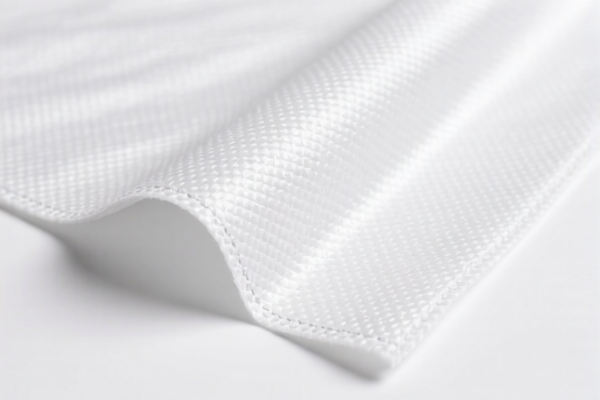
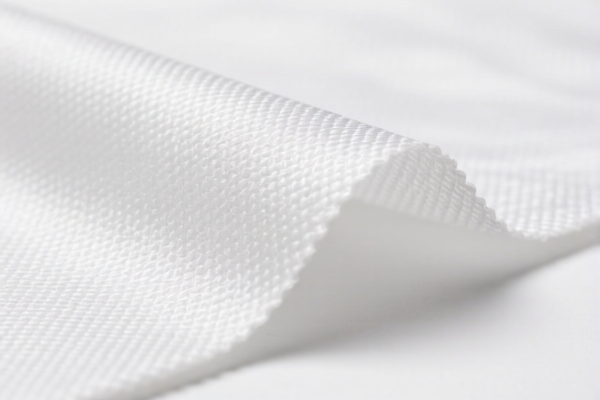
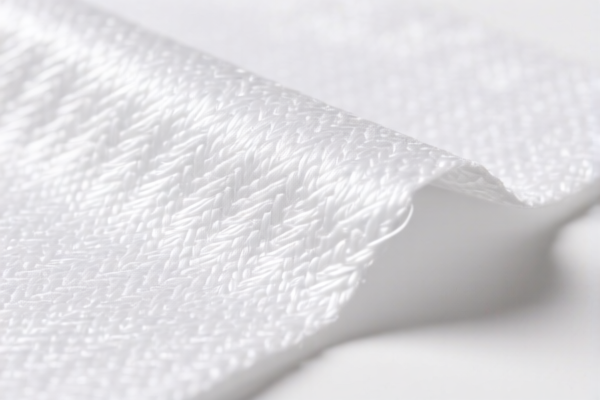
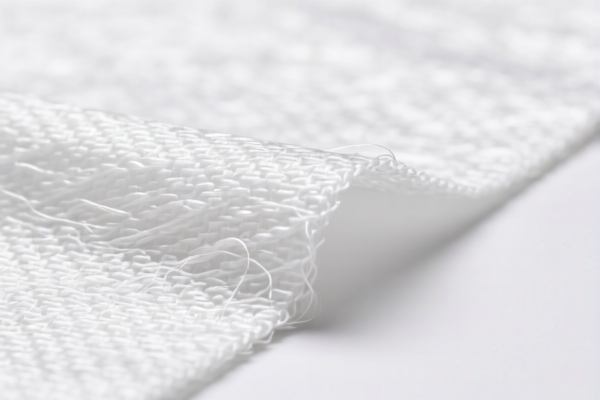
AI Analysis
🧵 Nonwoven Fabric (Nonwoven Fabrics, of Synthetic Filaments, Weight > 25 g/m² but ≤ 70 g/m², Other)
🌐 HS Code Reference & Customs Clearance Guide | 2026 Latest Tariff Analysis | Professional-Level Clearance Strategy
📌 I. Product Definition & Classification: Do You Really Understand "Nonwoven Fabric"?
Nonwoven fabrics are textile-like materials made from fibers bonded together mechanically, thermally, or chemically, rather than woven or knitted. In international trade, they are critical for medical supplies, hygiene products, filtration, and packaging.
Under HS Code 5603.92.00.95, the product is specifically defined as:
* Chapter 56: Wadding, felt and nonwoven fabrics; special yarns; twine, cordage, rope and cables and articles thereof.
* Heading 56.03: Nonwoven fabrics, whether or not impregnated, coated, covered or laminated.
* Subheading 5603.92: Of synthetic filaments, weighing more than 25 g/m² but not more than 70 g/m².
* National Subheading 5603.92.00.95: "Other" (i.e., not specifically listed under other sub-codes for specific end-uses like filters or medical wipes within this weight range).
⚠️ Key Distinction:
- If the fabric weighs >70 g/m², it falls under5603.93or5603.94.
- If it is made of natural fibers (e.g., cotton), it falls under5603.14or5603.93/94depending on weight.
-5603.92.00.95is a catch-all for synthetic filament nonwovens in the 25–70 g/m² range that do not qualify for more specific exemptions or sub-classifications.
📦 II. HS Code Classification Details (2026 Latest Tariff Authority Comparison)
Based on the provided data, here are the relevant HS codes for nonwoven and similar textile products, with a detailed focus on 5603.92.00.95:
| HS Code | Product Description | Relevance to Input | Total Tax Rate |
|---|---|---|---|
5603.92.00.95 |
Nonwoven Fabrics, of Synthetic Filaments, Weight 25-70 g/m², Other | ✅ Exact Match for "Nonwoven Fabric" based on common inference for general synthetic nonwovens in this weight class. | 35.0% |
5603.11.00.70 |
Nonwoven Fabrics, Material Match, Morphological Characteristics Compliant | ❌ Alternative: If the product is specifically defined as a "material match" variant (e.g., specific medical grade). | 35.0% |
5603.12.00.95 |
Nonwoven Fabrics, Inferred as Synthetic Filaments, Other Catch-all Category | ❌ Alternative: Similar to above, often used for synthetic nonwovens not meeting stricter criteria. | 35.0% |
5802.10.90.00 |
Woven Fabrics, Morphologically Consistent, Inferred as Cotton or Similar | ❌ Different Product Type: This is for woven fabrics, not nonwoven. | 44.4% |
5911.20.30.00 |
Woven Fabrics, Textile Product Category, Filter/Cloth Morphology | ❌ Different Product Type: Industrial filters/cloths. | 35.0% |
5911.20.10.00 |
Woven Fabrics, Textile Product Category, No Material Conflict | ❌ Different Product Type: General industrial woven textiles. | 38.3% |
🔍 Key Insight:
-5603.92.00.95is the most accurate general classification for standard synthetic nonwoven fabrics (like spunbond or meltblown) in the 25-70 g/m² range. - Other codes like5603.11.00.70and5603.12.00.95may apply if the fabric has specific "material match" properties or falls into other synthetic categories, but they share the same total tax rate of 35.0%. - Woven fabrics (5802,5911) are incorrect for nonwoven products and attract different tax rates (higher or lower depending on material).
💰 III. 2026 Latest Tariff Rate Breakdown (Including Surcharges & Policy Add-ons)
✅ Applicable Country: United States (US)
✅ Origin: China (CN)
✅ Effective Date: November 10, 2025 onwards (for subsequent imports)
🎯 1. 5603.92.00.95 —— Nonwoven Fabrics, Synthetic Filaments, 25-70 g/m², Other
| Item | Content |
|---|---|
| Base Tariff Rate | 0% (Ad Valorem) |
| USITC Surcharge | +25% (From USITC Footnote 9903.88.01 / Section 301) |
| IEEPA Surcharge | +10% (Against Chinese/HK products, effective Nov 10, 2025) |
| Total Tax Rate | 35.0% |
| Tax Calculation | CIF Value × 35% |
| De Minimis Exemption? | ❌ No (deny_de_minimis applies) |
| Legal Basis Path | IEEPA:9903.01.25 → IEEPA:9903.01.24 → USITC:5603.92.00.95 → FOOTNOTE:9903.88.01 |
📌 Explanation:
- The 0% base rate is standard for many textile nonwovens under normal MFN (Most Favored Nation) treatment. - The 25% Section 301 tariff is a punitive surcharge on Chinese goods. - The 10% IEEPA tariff is an additional surcharge targeting specific Chinese imports under the International Emergency Economic Powers Act. - Total 35% is a high tariff burden for lightweight textiles. Proper documentation is critical to avoid misclassification and higher penalties.
🛠️ IV. Customs Clearance Practical Advice (Battle-Tested Pitfall Avoidance Guide)
✅ 1. Required Documentation Checklist (None of These Can Be Missing)
| Document | Mandatory | Description |
|---|---|---|
| ✅ Product Specification Sheet | ✔️ | Must include: Weight (g/m²), Fiber Type (e.g., Polypropylene, Polyester), Width, Roll Dimensions |
| ✅ Material Composition Statement | ✔️ | Explicitly state "100% Synthetic Filament" to justify 5603.92 |
| ✅ Product Photos | ✔️ | Clear images showing texture, edge finish, and any labeling |
| ✅ Commercial Invoice | ✔️ | Must explicitly describe as "Nonwoven Fabric, Synthetic, 25-70 g/m²" |
| ✅ Packing List | ✔️ | Detail net/gross weight per roll and total shipment weight |
| ✅ Certificate of Origin (CO) | ✔️ | If not from China, may qualify for lower tariffs (but note: if transshipped from China, origin rules apply) |
✅ 2. Declaration Tips (Key Mnemonic)
🔥 "Weight Matters, Fiber Defines, Synthetic is Key, 35% is Fixed!"
| Scenario | Correct Declaration | Wrong Approach |
|---|---|---|
| Synthetic Nonwoven, 50 g/m² | 5603.92.00.95 |
Misclassify as 5802 (Woven) → 44.4% |
| Natural Fiber (Cotton) Nonwoven | 5603.14.90 or similar |
Use 5603.92 → Misclassification risk |
| Nonwoven >70 g/m² | 5603.93 or 5603.94 |
Use 5603.92 → Incorrect weight range |
| Filter Cloth (Woven) | 5911.20 |
Use 5603.92 → Wrong chapter |
✅ 3. Special Handling Cases
| Scenario | Recommendation |
|---|---|
| Medical Grade Nonwoven | If intended for medical use, still classify under 5603 unless explicitly excluded. Ensure compliance with FDA if entering the US market. |
| Impregnated/Coated Nonwoven | If coated with rubber, plastic, or chemical, the code may shift. Verify if coating changes the classification under HTSUS Chapter 56 or 59. |
| Rolls vs. Sheets | Ensure declaration specifies "rolls" if applicable, as cutting into sheets may affect duty if classified differently (though usually still 5603). |
| Origin Fraud Risk | Do not falsely declare non-Chinese origin. US Customs (CBP) conducts rigorous origin verification for Section 301 goods. |
🌍 V. Global Market Comparison for Nonwoven Fabrics (2026 Latest)
| Country/Region | Recommended HS Code | Tariff Rate | Certification Requirements | Notes |
|---|---|---|---|---|
| 🇺🇸 USA | 5603.92.00.95 |
35% (China Origin) | None specific for textiles, but FDA if medical | High tariff due to Section 301 + IEEPA |
| 🇨🇳 China | 5603.92.00.95 |
~10-15% | CCC (if applicable) | Lower base tariff, no surcharges |
| 🇪🇺 EU | 5603.92.00.95 |
~5-10% | CE (if medical/disposable) | No Section 301 equivalent, but anti-dumping may apply |
| 🇦🇺 Australia | 5603.92.00.95 |
~5% | None specific | Moderate duty |
| 🇯🇵 Japan | 5603.92.00.95 |
~0-5% | PSE (if electrical components involved) | Low tariff |
📌 Conclusion:
- The US is the most expensive market for Chinese-origin nonwoven fabrics due to the 35% combined tariff. - For cost optimization, consider supply chain diversification (e.g., sourcing from Vietnam, India, or Thailand) to avoid US surcharges.
📌 VI. Common Mistakes & Pitfall Avoidance (Lessons Learned)
❌ Mistake 1: Declaring "Textile Fabric" without specifying "Nonwoven"
👉 Consequence: Customs may classify under woven fabric codes (5802 or 5911), leading to 44.4% or 38.3% duties, or even higher if deemed incorrect origin.
❌ Mistake 2: Ignoring Weight Classification
👉 Consequence: If weight is >70 g/m² but declared as 50 g/m², this is fraud. Penalties include seizure, fines, and loss of import privileges.
❌ Mistake 3: Omitting Fiber Composition
👉 Consequence: If fiber type is unclear, CBP may assign a default code with higher duties or request additional testing.
❌ Mistake 4: Assuming "De Minimis" Applies
👉 Consequence: Section 301 and IEEPA goods are excluded from the $800 de minimis exemption. Shipments under $800 will still incur 35% duties if improperly declared.
✅ Correct Declaration Example:
"Nonwoven Fabric, Synthetic Filament (Polypropylene), Weight 50 g/m², Unbleached, in Rolls, HS Code 5603.92.00.95, Origin: China"
🎯 VII. Conclusion: Precision in Classification Saves Costs!
🎯 Remember the Mnemonic:
🔹 "Synthetic, 25-70g, Nonwoven: 35% Fixed!"
🔹 "Weight is King, Fiber is Queen, Origin is the Judge!"
📌 Pro Tip:
If your nonwoven fabric is intended for medical or hygiene products, ensure it meets FDA/CE standards in addition to customs classification.
Consider applying for an Advance Ruling (PB Ruling) from US Customs and Border Protection (CBP) if your product has unique characteristics (e.g., specific coatings or blends) to lock in the correct HS code and avoid post-clearance audits.
📣 Immediate Action:
📞 Contact a licensed customs broker + Provide detailed product specs + Verify origin
🚀 Ensure your nonwoven fabrics clear US customs smoothly, avoiding 35% tariff shocks!
✨ Professional Clearance Starts with Accurate Classification!
💼 Every percentage point counts in global trade!
Customer Reviews
About HS Code Classification
The Harmonized System (HS) is an internationally standardized nomenclature developed by the World Customs Organization (WCO) to classify traded products. Over 200 countries use the HS system as the basis for customs tariffs, trade statistics, and import/export regulations.
Each HS code follows a hierarchical structure:
- Chapter (2 digits) — Broad category of goods (e.g., Chapter 84: Machinery and Mechanical Appliances)
- Heading (4 digits) — More specific grouping within the chapter
- Subheading (6 digits) — Internationally standardized breakdown, used by all WCO member countries
- National subdivisions (8-10 digits) — Country-specific extensions for further classification, such as US HTSUS 10-digit codes
Correct HS code classification is essential for smooth customs clearance, accurate duty payment, and compliance with trade regulations. Misclassification can lead to customs delays, overpayment of duties, or penalties.
When importing from CN to US, the applicable tariff rates may include:
- Most-Favored-Nation (MFN) rate — The standard duty rate applied to WTO members
- General rate — Applied to countries without trade agreements
- Trade remedy duties — Additional tariffs such as Section 301 (anti-dumping), Section 232 (national security), or countervailing duties
The information provided on this page is for reference purposes only. For official classification, please consult with your local customs authority or a licensed customs broker.