Nonwoven fabric
CN → US| HS Code | Tariff Rate | Origin | Destination | Doc |
|---|---|---|---|---|
| 5603120070 | 35.0% | CN | US | Official Doc |
| 6307906800 | 17.5% | CN | US | Official Doc |
| 5603110070 | 35.0% | CN | US | Official Doc |
| 6307909884 | 24.5% | CN | US | Official Doc |
Product Images
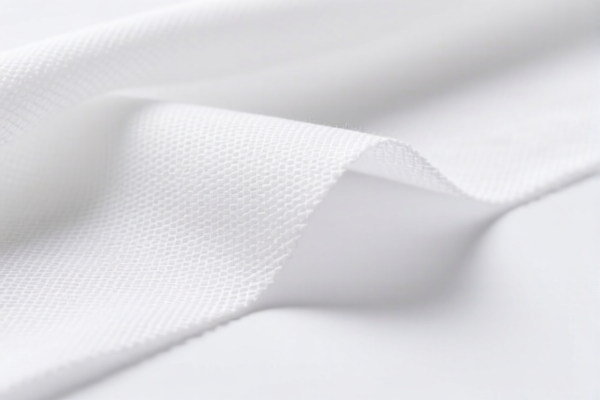
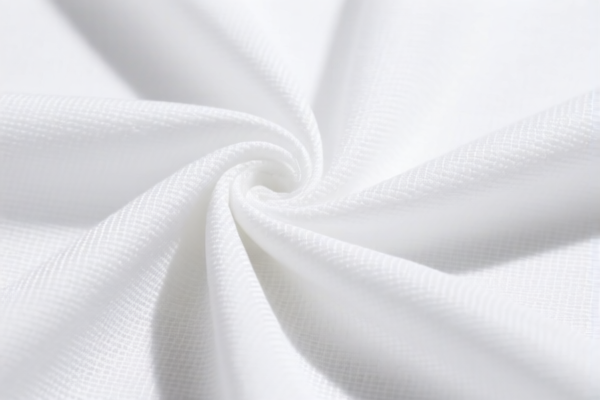


AI Analysis
🧶 Nonwoven Fabric (Nonwoven Textiles & Towels)
🌐 HS Code Reference & Customs Clearance Guide | 2026 Latest Tariff Breakdown | Strategic Import Strategy
📌 1. Product Definition & Classification: Understanding "Nonwoven Fabric"
Nonwoven fabrics are textile-like materials made from oriented or randomized fibers bonded together by chemical, mechanical, heat, or solvent treatment. In international trade, this category is broadly split based on raw material type and end-use application.
The key distinction in the provided data lies between: 1. Specialty Nonwovens (Ch 56): Often classified for specific industrial/agricultural uses (e.g., "towels or agricultural use"), typically involving synthetic fibers or specific mesh structures. 2. Finished Textile Articles (Ch 63): Classified as finished goods like towels or wipes, often viewed as consumer disposables or specific textile articles.
⚠️ Key Classification Point:
- If the product is defined as "Nonwoven towels or agricultural use" made of nonwoven material → It generally falls under Chapter 56 (Special Nonwovens).
- If the product is clearly a "Towel" made of synthetic fibers (nonwoven) → It falls under Chapter 63 (Other Made-up Textile Articles).
- Material Matters: Whether it uses Synthetic Filament (Long) vs. Artificial Fiber can shift the HS Code within these chapters.
📦 2. HS Code Classification Details (2026 Latest Tariff Authority)
Based strictly on the provided data, here are the four possible HS Codes, their descriptions, and tax implications.
| HS Code | Product Description & Summary | Key Attributes | Total Tax Rate (US) |
|---|---|---|---|
| 5603.12.00.70 | Nonwoven fabric for towels or agricultural use. | Material: Nonwoven. Status: Ready-to-use nonwovens. | 35.0% |
| 6307.90.68.00 | Nonwoven towels, single-use/consumable. | Material: Artificial or synthetic fibers. Form: Nonwoven. | 17.5% |
| 5603.11.00.70 | Nonwoven fabric for towels or agricultural use. | Material: Artificial/Synthetic Filament (Long). | 35.0% |
| 6307.90.98.84 | Nonwoven towels, artificial fiber. | Material: Artificial fiber. Form: Towel. | 24.5% |
🔍 Critical Observation:
- Ch 56 Codes (5603.1x) carry a 35% total tax rate. These are classified as "Nonwovens of synthetic or artificial fibers, weighing ≤ 25g/m²" (implied by the prefix 5603.1x), specifically noted for agricultural/towel use but categorized under the raw material/intermediate good chapter.
- Ch 63 Codes (6307.9x) carry lower rates (17.5% or 24.5%). These are classified as "Other made-up articles," treating the nonwoven item as a finished textile product (like a towel).
- Why the difference? Classification depends heavily on the manufacturing process and final form. If it's considered a "fabric" ready for further processing or specific agricultural function, it goes to Ch 56. If it's a finished "towel" for consumer/one-time use, it goes to Ch 63.
💰 3. Detailed Tariff Rate Breakdown (US Market)
✅ Applicable Country: United States (US)
✅ Origin: China (CN) (Implied by "Section 301/122" context)
✅ Effective Date: Post-2025 Trade Policies
🎯 1. 5603.12.00.70 & 5603.11.00.70 —— Specialty Nonwovens (High Tax)
| Item | Detail |
|---|---|
| Base Duty | 0.0% (Standard MFN rate for these specific subheadings) |
| Section 301 Add-on | +25.0% (Retaliatory tariff on Chinese goods) |
| Section 122/IEEPA Add-on | +10.0% (Targeted additional tariff on specific Chinese imports) |
| Total Tax Rate | 35.0% |
| Calculation | CIF Value × 35% |
| De Minimis Exemption | ❌ Not Eligible (Section 301/122 tariffs usually negate the $800 de minimis exemption for covered goods) |
| Legal Basis | USITC Section 301 Footnotes → IEEPA Authorities |
📌 Explanation:
- The 25% comes from the U.S. Trade Representative (USTR) Section 301 actions against China.
- The 10% is an additional layer (often referred to in trade data as "122" or specific IEEPA measures) targeting specific industrial or textile inputs.
- Total 35% is a significant cost driver. Importers must carefully justify if the product can be reclassified under Ch 63 to reduce costs.
🎯 2. 6307.90.68.00 —— Single-Use Nonwoven Towels (Lowest Tax)
| Item | Detail |
|---|---|
| Base Duty | 0.0% |
| Section 301 Add-on | +7.5% (Note: Lower Section 301 rate for certain textile articles) |
| Section 122/IEEPA Add-on | +10.0% |
| Total Tax Rate | 17.5% |
| Calculation | CIF Value × 17.5% |
| De Minimis Exemption | ❌ Not Eligible (Subject to Section 122/301) |
| Legal Basis | USITC Section 301 (Reduced rate tier) → IEEPA |
📌 Explanation:
- This is the most cost-effective classification in the dataset.
- The Section 301 rate is only 7.5% (vs. 25% for Ch 56), likely because finished textile articles (Ch 63) have different negotiation tracks than raw/nonwoven intermediates.
- Strategy: If your product is definitively a "towel" for single-use/consumption, argue for this classification.
🎯 3. 6307.90.98.84 —— Artificial Fiber Nonwoven Towels (Medium Tax)
| Item | Detail |
|---|---|
| Base Duty | 7.0% |
| Section 301 Add-on | +7.5% |
| Section 122/IEEPA Add-on | +10.0% |
| Total Tax Rate | 24.5% |
| Calculation | CIF Value × 24.5% |
| De Minimis Exemption | ❌ Not Eligible |
| Legal Basis | USITC Standard Base Rate → Section 301 → IEEPA |
📌 Explanation:
- Unlike the previous Ch 63 code, this one has a 7% base duty.
- The material is specified as Artificial Fiber (Viscose/Rayon) vs. Synthetic (Polyester/Nylon).
- Total 24.5% is cheaper than Ch 56 (35%) but more expensive than6307.90.68.00(17.5%).
🛠️ 4. Customs Clearance Practical Advice (Battle-Tested Strategies)
✅ 1. Documentation Checklist (Non-Negotiable)
| Document | Required? | Purpose |
|---|---|---|
| ✅ Product Specification Sheet | ✔️ | Must detail fiber type (Synthetic vs. Artificial), weight (gsm), and manufacturing process (needle-punched, spunlace, etc.). |
| ✅ Composition Label | ✔️ | Clear declaration: e.g., "100% Polyester Nonwoven" vs. "100% Viscose Nonwoven." |
| ✅ Intended Use Statement | ✔️ | Critical! Is it "Agricultural Mulch" (Ch 56) or "Disposable Bath Towel" (Ch 63)? |
| ✅ Commercial Invoice | ✔️ | Must match HS Code description exactly. Avoid vague terms like "Fabric." Use "Nonwoven Disposable Towel." |
| ✅ Origin Certificate | ✔️ | To prove CN origin and confirm liability for Section 301/122 tariffs. |
| ✅ Test Report | ✔️ | Certify fiber content (FTIR test) if the buyer disputes classification. |
✅ 2. Classification Strategy & Tax Optimization
🔥 "Choose Chapter 63 for Finished Goods, Chapter 56 for Raw/Agri Use!"
| Scenario | Recommended HS Code | Tax Rate | Why? |
|---|---|---|---|
| Disposable Wipes/Towels (Consumer/One-time) | 6307.90.68.00 | 17.5% | Lowest total tax. Classified as "Other Made-up Articles." |
| Agricultural Nonwoven Fabric (Field use) | 5603.12.00.70 | 35.0% | Must be used for agriculture. No alternative low-rate code in data. |
| Synthetic Filament Nonwovens (Intermediate) | 5603.11.00.70 | 35.0% | High tax. Avoid if possible; look for finished good status. |
| Viscose/Artificial Fiber Towels | 6307.90.98.84 | 24.5% | Higher base duty, but lower than Ch 56. Use if material is artificial. |
📌 Key Tip:
- If your product is a towel, try to classify it under 6307.90.68.00 (17.5%) rather than 5603 (35%).
- The distinction often lies in finishing: Is it cut, hemmed, and packaged as a "towel"? If yes, Ch 63 is stronger. If it's sold in rolls for industrial cutting, Ch 56 is more likely.
✅ 3. Common Pitfalls & Avoidance
| Mistake | Consequence | Solution |
|---|---|---|
| Mislabeling Fiber Type | Customs reclassifies → Back duties + penalties | Provide FTIR Test Reports to prove Synthetic vs. Artificial fiber. |
| Vague Description ("Nonwoven Cloth") | Customs assigns highest duty (35%) | Use precise terms: "Polyester Nonwoven Disposable Towel." |
| Ignoring Section 122 | Surprise 10% tax at customs | All entries above include the 10% IEEPA/122 surcharge. Budget accordingly. |
| Assuming De Minimis Applies | Seizure of low-value shipments | Section 301/122 goods do NOT qualify for $800 de minimis exemption. |
🌍 5. Global Market Comparison (2026 Context)
| Market | Recommended HS | Est. Total Tax (China Origin) | Notes |
|---|---|---|---|
| 🇺🇸 USA | 6307.90.68.00 | 17.5% | Best option. Includes 7.5% Sec 301 + 10% Sec 122. |
| 🇺🇸 USA | 5603.12.00.70 | 35.0% | High tax. 25% Sec 301 + 10% Sec 122. |
| 🇪🇺 EU | Similar Codes | Varies (0-6%) | No Section 301/122. Standard WTO rates apply. |
| 🇨🇳 China | Similar Codes | Varies | Import duties for nonwovens range 5-15%. |
📌 Conclusion:
- The U.S. market is the most challenging due to additive tariffs.
- Cost Savings: Correct classification between Ch 56 and Ch 63 can save 17.5% (35% - 17.5%) on CIF value.
- Action: If you are shipping towels/wipes, fight for 6307.90.68.00. If it's agricultural fabric, accept 35% or seek ruling.
📌 6. Final Recommendation for Importers
- Audit Your Product: Is it a "towel" (finished) or "fabric" (intermediate)?
- Check Fiber Content: Synthetic (Polyester) vs. Artificial (Viscose) changes the Ch 63 code.
- Prepare Documentation: Ensure invoices say "Nonwoven Towel" not just "Nonwoven Fabric."
- Budget for 17.5%: Aim for
6307.90.68.00to minimize the 25% Section 301 hit. - Consult a Broker: For high-volume imports, request a Binding Ruling from U.S. Customs to lock in the 17.5% rate.
🎯 Remember:
🔹 "Finished Towel = 17.5% | Raw Nonwoven = 35%"
🔹 "Don't let vague descriptions cost you 17.5% in extra taxes!"
✨ Professional Clearance Starts with Precise Classification!
💼 Every Percent Counts in the Age of Trade War Tariffs!
Customer Reviews
About HS Code Classification
The Harmonized System (HS) is an internationally standardized nomenclature developed by the World Customs Organization (WCO) to classify traded products. Over 200 countries use the HS system as the basis for customs tariffs, trade statistics, and import/export regulations.
Each HS code follows a hierarchical structure:
- Chapter (2 digits) — Broad category of goods (e.g., Chapter 84: Machinery and Mechanical Appliances)
- Heading (4 digits) — More specific grouping within the chapter
- Subheading (6 digits) — Internationally standardized breakdown, used by all WCO member countries
- National subdivisions (8-10 digits) — Country-specific extensions for further classification, such as US HTSUS 10-digit codes
Correct HS code classification is essential for smooth customs clearance, accurate duty payment, and compliance with trade regulations. Misclassification can lead to customs delays, overpayment of duties, or penalties.
When importing from CN to US, the applicable tariff rates may include:
- Most-Favored-Nation (MFN) rate — The standard duty rate applied to WTO members
- General rate — Applied to countries without trade agreements
- Trade remedy duties — Additional tariffs such as Section 301 (anti-dumping), Section 232 (national security), or countervailing duties
The information provided on this page is for reference purposes only. For official classification, please consult with your local customs authority or a licensed customs broker.