Noodle Maker
CN → US| HS Code | Tariff Rate | Origin | Destination | Doc |
|---|---|---|---|---|
| 8509400040 | 14.2% | CN | US | Official Doc |
| 8509805095 | 14.2% | CN | US | Official Doc |
| 8438100090 | 17.5% | CN | US | Official Doc |
| 8479820040 | 35.0% | CN | US | Official Doc |
| 8479820080 | 35.0% | CN | US | Official Doc |
| 8438100010 | 17.5% | CN | US | Official Doc |
Product Images
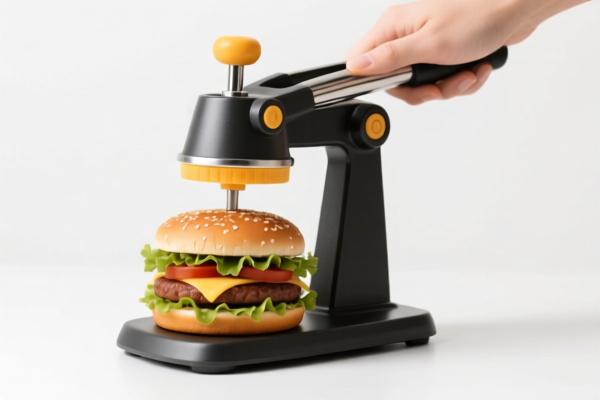
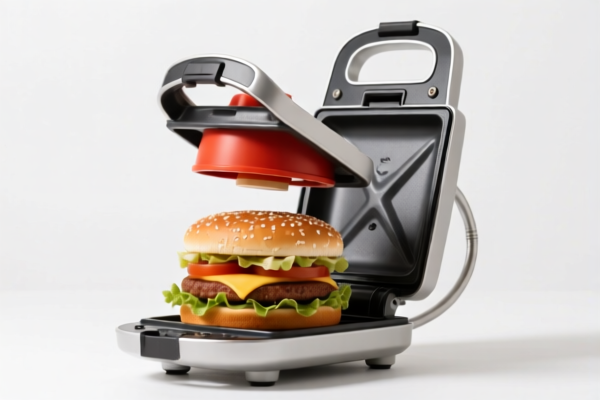
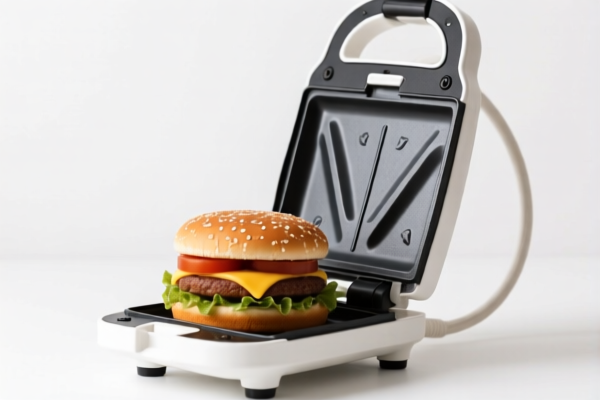
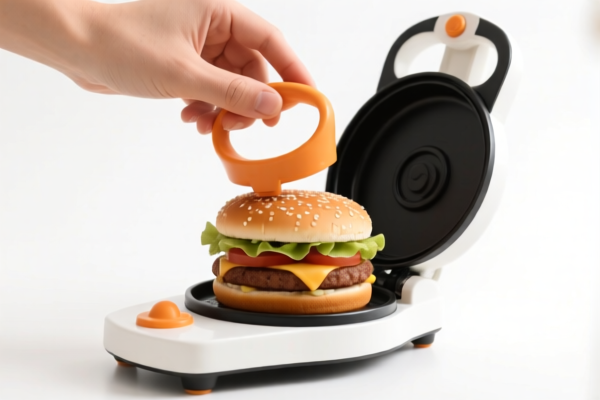
AI Analysis
🍜 Noodle Maker (Homemade & Commercial Pasta Machines)
🌐 HS Code Reference & Customs Clearance Guide | 2026 Latest Tariff Analysis | Professional Strategy 📌 I. Product Definition & Classification: Do You Really Understand "Noodle Maker"?
A Noodle Maker is a mechanical device used to process dough into noodles or pasta through kneading, mixing, and extruding processes. In international trade, the classification depends heavily on whether it is considered a household appliance or food processing machinery.
Key Distinctions: - Household Appliance Class: Devices with self-contained electric motors designed for domestic use (e.g., countertop electric noodle makers). - Food Processing Machinery Class: Devices specifically designed for manufacturing food products, often industrial or semi-industrial (e.g., dough kneaders, extruders).
⚠️ Critical Differentiator:
- If the device is primarily for home use and fits the definition of a "small electrical appliance" → 8509 Series.
- If the device is for food manufacturing (kneading, extruding dough into specific shapes) → 8438 or 8479 Series.
📦 II. HS Code Classification Details (2026 Latest Tariff Authority Comparison)
Based on the provided data, here are the valid HS Codes for Noodle Makers, their logical justifications, and tax implications:
| HS Code | Product Description & Logic | Total Tax Rate | Tax Breakdown (Base + Surtax + Section 301) |
|---|---|---|---|
| 8509.40.00.40 | Food Grinder/Processor: Defined as a "Processor" within food grinding equipment. | 14.2% | Base: 4.2% Additional: 0.0% Sec 301: 10% |
| 8509.80.50.95 | Other Household Electric Appliances: Defined as a household appliance with its own electric motor. | 14.2% | Base: 4.2% Additional: 0.0% Sec 301: 10% |
| 8438.10.00.90 | Machinery for Making Pasta: Defined as machinery for the manufacture of pasta products. | 17.5% | Base: 0.0% Additional: 7.5% Sec 301: 10% |
| 8438.10.00.10 | Food Manufacturing Machinery: High logic consistency with bread-making machinery. | 17.5% | Base: 0.0% Additional: 7.5% Sec 301: 10% |
| 8479.82.00.40 | Machinery with Individual Function: Involves kneading, mixing, and extrusion processes. | 35.0% | Base: 0.0% Additional: 25.0% Sec 301: 10% |
| 8479.82.00.80 | Machinery with Individual Function: Involves crushing, grinding, or pressing functions. | 35.0% | Base: 0.0% Additional: 25.0% Sec 301: 10% |
🔍 Key Observation:
- Lowest Risk/Tax: 8509 series (14.2%) for household-grade devices.
- Medium Risk/Tax: 8438 series (17.5%) for dedicated food manufacturing lines.
- Highest Risk/Tax: 8479 series (35.0%) for general-purpose industrial machinery, which attracts heavy Section 301 surtaxes (25%).
💰 III. 2026 Latest Tariff Rate Details (Including Surtaxes & Policy Add-ons)
✅ Applicable Country: United States (US)
✅ Origin: China (CN)
✅ Effective Time: Current Tariff Regime (Including Section 301 Measures)
🎯 1. 8509.40.00.40 & 8509.80.50.95 — Household Electric Appliances
| Item | Content |
|---|---|
| Product Logic | "Noodle maker" classified as a food processor or other household electric appliance with self-contained motor. |
| Base Duty | 4.2% |
| Additional Duty | 0.0% |
| Section 301 Duty (122 Clause) | 10% |
| Total Effective Tax | 14.2% |
| Calculation | CIF Value × 14.2% |
| De Minimis Eligibility | ❌ No (Deemed commercial entry due to high value/tax threshold implications). |
📌 Explanation:
- This is the most cost-effective classification for standard electric noodle makers sold to consumers.
- The 14.2% rate is significantly lower than industrial machinery rates.
- Risk: Customs may challenge this if the machine is large, heavy, or lacks typical household appliance features (e.g., no simple on/off switch, industrial motor).
🎯 2. 8438.10.00.90 & 8438.10.00.10 — Pasta/Food Manufacturing Machinery
| Item | Content |
|---|---|
| Product Logic | "Noodle maker" classified as machinery for the manufacture of pasta/bread. |
| Base Duty | 0.0% |
| Additional Duty | 7.5% |
| Section 301 Duty (122 Clause) | 10% |
| Total Effective Tax | 17.5% |
| Calculation | CIF Value × 17.5% |
| De Minimis Eligibility | ❌ No |
📌 Explanation:
- If the noodle maker is considered part of a "pasta production line" or "food processing equipment," it falls under 8438.
- Although the base duty is 0%, the 7.5% additional duty (likely under specific trade remedy or policy measures) pushes the total to 17.5%.
- Advantage: Still much cheaper than the 8479 category.
🎯 3. 8479.82.00.40 & 8479.82.00.80 — Other Machinery with Individual Functions
| Item | Content |
|---|---|
| Product Logic | Machinery involving kneading, mixing, extruding, pressing, or crushing. |
| Base Duty | 0.0% |
| Additional Duty | 25.0% |
| Section 301 Duty (122 Clause) | 10% |
| Total Effective Tax | 35.0% |
| Calculation | CIF Value × 35.0% |
| De Minimis Eligibility | ❌ No |
📌 Warning:
- This is the highest tax bracket among the options.
- 8479 is often a "catch-all" for machinery not specified elsewhere. Customs may default to this if the product features are ambiguous.
- The 25% surtax is severe. Avoid this classification if possible by providing clear evidence of household use (8509) or specific food manufacture (8438).
🛠️ IV. Customs Clearance Practical Advice (Pitfall Avoidance Guide)
✅ 1. Preparation Checklist (Non-negotiable)
| Document | Required | Explanation |
|---|---|---|
| ✅ Product Specifications | ✔️ | Detail dimensions, power, motor type, and weight. |
| ✅ User Manual | ✔️ | Must explicitly state "Home Use" or "Household Appliance" for 8509 classification. |
| ✅ Product Photos | ✔️ | Clear images of the control panel, brand, and overall appearance. |
| ✅ Commercial Invoice | ✔️ | Must accurately describe the product as "Noodle Maker" or "Electric Pasta Machine." |
| ✅ Originality Proof | ✔️ | Certificate of Origin (CO) if claiming exemptions or specific trade agreements. |
| ✅ Certifications | ✔️ | UL, ETL, or FCC (for electrical safety) to prove compliance. |
✅ 2. Declaration Strategy (Key Mnemonics)
🔥 “Household = 8509 (14.2%), Food Line = 8438 (17.5%), General = 8479 (35%)!”
| Scenario | Correct HS Code | Incorrect Practice | Consequence |
|---|---|---|---|
| Small Electric Noodle Maker (Countertop) | 8509.80.50.95 |
Declare as "Kitchen Tool" (Unclear) | Risk of reclassification to 8479 (35%) |
| Industrial Pasta Extruder | 8438.10.00.90 |
Declare as "Household Appliance" | Severe under-declaration penalty |
| Generic Mixing Machine (Used for noodles) | 8479.82.00.40 |
(Acceptable but costly) | High tax burden (35%) |
| Component Parts (Blades, Hoppers) | Separate Codes | Declare as part of Main Unit | Split tariffs may apply or misclassification |
✅ 3. Special Circumstances Handling
| Situation | Recommendation |
|---|---|
| OEM Custom Noodle Makers | Provide client order + design specs. If for home use, emphasize household features to target 8509. |
| Multi-function Devices | If it also chops vegetables, still argue for 8509 if the primary function is noodle making in a home setting. |
| High-Volume Commercial Machines | Default to 8438. Do not claim household use for industrial-grade motors. |
| Importing from Non-China Origins | Check for tariff exemptions. IEEPA may not apply if origin is not China/CN. |
🌍 V. Global Market Clearance Comparison (2026 Latest)
| Country/Region | Recommended HS Code | Approx. Tax Rate | Certification Requirements | Notes |
|---|---|---|---|---|
| 🇺🇸 USA | 8509.80.50.95 |
14.2% (CN Origin) | UL/ETL + FCC | Best option for low tax. |
| 🇨🇳 China | 8509.80.50.95 |
4.2% - 8% | CCC | Lower taxes, no Section 301. |
| 🇪🇺 EU | 8509.80.50.95 |
0% - 2.5% | CE + RoHS | Favorable for small appliances. |
| 🇦🇺 Australia | 8509.80.50.95 |
5% | RCM | Standard GST applies. |
📌 Conclusion:
- USA is the most complex market due to Section 301 tariffs.
- Classification choice directly impacts profit margins by up to 20% (35% vs 14.2%).
- Strongly recommend targeting 8509 or 8438 and avoiding 8479.
📌 VI. Common Errors & Pitfall Guide (Lessons Learned)
❌ Error 1: Declaring an electric noodle maker as "Kitchen Utensil" without specifying electrical features.
👉 Result: Customs may reject 8509 and force classification into 8479 or 8215, leading to 35% tax + fines.
❌ Error 2: Using vague descriptions like "Food Machine" for a household appliance.
👉 Result: Triggers review for industrial machinery (8438/8479), increasing tax to 17.5% or 35%.
❌ Error 3: Ignoring the "Section 301" (122 Clause) surtax in cost calculations.
👉 Result: Profit margin erosion. A 10% surprise tax can turn a profitable shipment into a loss.
❌ Error 4: Mixing household and industrial machines in one container without clear segregation.
👉 Result: Customs may audit the entire shipment. If any part is deemed non-compliant, the whole batch may be delayed.
✅ Correct Action:
"Electric Noodle Maker, Model XYZ, 120V, Household Use, UL Certified, Includes Dough Hook and Extrusion Nozzles"
🎯 VII. Conclusion: Professional Declaration Saves Money!
🎯 Remember the Rule of Thumb:
🔹 "Home Use = 8509 (14.2%) | Food Prod = 8438 (17.5%) | Industrial = 8479 (35%)!"
🔹 "HS Code Decides Tax Rate, 20% Difference is Huge!"
📌 Pro Tip:
If your Noodle Maker is manufactured in Vietnam, Thailand, or Malaysia, you may qualify for IEEPA Exemptions, reducing the tax to 0%~5%.
Recommendation: Apply for an Advance Ruling from CBP before shipment to lock in the 14.2% or 17.5% rate.
📣 Take Action Now:
📞 Contact a Professional Broker + Provide Product Manual + Apply for Pre-classification
🚀 Let Your Noodle Makers Clear Smoothly, Boost Margins, and Scale Fast!
✨ Professional Customs Clearance Starts with Accurate Classification!
💼 Every Percent Saved is Pure Profit!
Customer Reviews
About HS Code Classification
The Harmonized System (HS) is an internationally standardized nomenclature developed by the World Customs Organization (WCO) to classify traded products. Over 200 countries use the HS system as the basis for customs tariffs, trade statistics, and import/export regulations.
Each HS code follows a hierarchical structure:
- Chapter (2 digits) — Broad category of goods (e.g., Chapter 84: Machinery and Mechanical Appliances)
- Heading (4 digits) — More specific grouping within the chapter
- Subheading (6 digits) — Internationally standardized breakdown, used by all WCO member countries
- National subdivisions (8-10 digits) — Country-specific extensions for further classification, such as US HTSUS 10-digit codes
Correct HS code classification is essential for smooth customs clearance, accurate duty payment, and compliance with trade regulations. Misclassification can lead to customs delays, overpayment of duties, or penalties.
When importing from CN to US, the applicable tariff rates may include:
- Most-Favored-Nation (MFN) rate — The standard duty rate applied to WTO members
- General rate — Applied to countries without trade agreements
- Trade remedy duties — Additional tariffs such as Section 301 (anti-dumping), Section 232 (national security), or countervailing duties
The information provided on this page is for reference purposes only. For official classification, please consult with your local customs authority or a licensed customs broker.