Noodles
CN → US| HS Code | Tariff Rate | Origin | Destination | Doc |
|---|---|---|---|---|
| 2103909091 | 23.9% | CN | US | Official Doc |
| 2103908000 | 41.4% | CN | US | Official Doc |
| 1902192090 | 35.0% | CN | US | Official Doc |
| 1902112090 | 17.5% | CN | US | Official Doc |
| 1904900120 | 31.5% | CN | US | Official Doc |
| 1904900140 | 31.5% | CN | US | Official Doc |
Product Images
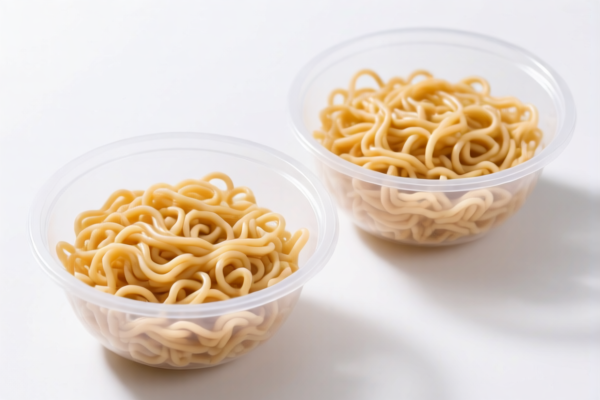

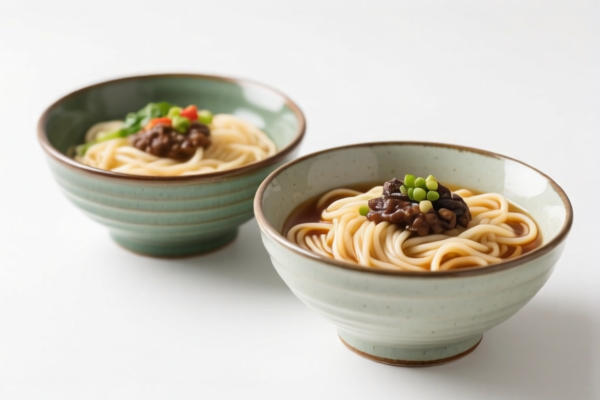
AI Analysis
🍜 Noodles & Pasta (Uncooked, Not Stuffed, Non-EU Origin)
🌐 HS Code Reference & Clearance Guide | 2026 Tariff Analysis | Professional Strategy
📌 One: Product Definition & Classification: What Are "Noodles"?
In international trade, "Noodles" (often classified under Pasta) refers to uncooked, non-stuffed, wheat-based or other cereal grain forms, excluding those containing eggs or those prepared/stuffed with meat. They are distinct from: - Stuffed pasta (e.g., ravioli, tortellini) - Egg noodles (containing significant egg content) - Ready-to-eat or pre-cooked pasta - Pasta originating from EU countries (which may enjoy different treatment)
⚠️ Key Distinction:
- If the noodles are uncooked, not stuffed, and NOT from an EU country → Likely 1902.19.20.90 (if no eggs) or 1902.11.20.90 (if containing eggs)
- If from an EU country, they are excluded from the above HS codes and may fall under different tariff lines.
📦 Two: HS Code Classification Breakdown (2026 Latest Tariff Schedule)
| HS Code | Product Description | Applicable Scenario | Egg Content | Origin Restriction |
|---|---|---|---|---|
1902.19.20.90 |
Uncooked pasta, not stuffed, other than egg-containing | Dry spaghetti, macaroni, noodles (non-egg) | ❌ No | Not from EU |
1902.11.20.90 |
Uncooked pasta, not stuffed, containing eggs | Egg noodles, enriched pasta | ✅ Yes | Not from EU |
🔍 Critical Note:
- Both codes apply only to products originating from non-EU countries.
- If the product is from an EU country, it does not qualify under these HS codes.
- Stuffed or cooked pasta (e.g., lasagna, gnocchi) fall under different HS codes (e.g., 1902.20).
💰 Three: 2026 Tariff Rate Breakdown (Including Additional Taxes)
✅ Target Market: United States
✅ Country of Origin: China (CN)
✅ Effective Date: November 10, 2025 (and onward)
🎯 1. 1902.19.20.90 —— Uncooked Pasta, Not Stuffed, Non-Egg (Non-EU Origin)
| Item | Details |
|---|---|
| Base Tariff | 0.0% |
| Section 301 Additional Tariff | +25.0% |
| Total Tariff | 25.0% |
| Tax Calculation | CIF Value × 25% |
| De Minimis Exemption | ❌ Not applicable |
| Legal Basis | USITC Footnote for 1902.19.20.90 + 301 Tariff Action |
📌 Explanation:
- Despite a 0% base rate, 25% additional tariff applies due to Section 301 measures targeting Chinese imports.
- This applies to all non-EU origin uncooked pasta (e.g., Chinese noodles, Asian-style dried pasta).
🎯 2. 1902.11.20.90 —— Uncooked Pasta, Not Stuffed, Egg-Containing (Non-EU Origin)
| Item | Details |
|---|---|
| Base Tariff | 0.0% |
| Section 301 Additional Tariff | +7.5% |
| Total Tariff | 7.5% |
| Tax Calculation | CIF Value × 7.5% |
| De Minimis Exemption | ❌ Not applicable |
| Legal Basis | USITC Footnote for 1902.11.20.90 + 301 Tariff Action |
📌 Note:
- Egg-containing pasta (e.g., egg noodles) faces a lower additional tariff (7.5%) compared to non-egg pasta (25%).
- This distinction is critical for cost planning and product positioning.
🛠️ Four: Clearance Practice Tips (Real-World Pitfall Avoidance)
✅ 1. Document Checklist (Mandatory)
| Document | Required? | Purpose |
|---|---|---|
| ✅ Product Specification Sheet | ✔️ | Confirm if egg-containing or not |
| ✅ Ingredients List | ✔️ | Prove egg content or absence |
| ✅ Origin Certificate | ✔️ | Verify non-EU origin |
| ✅ Commercial Invoice | ✔️ | Clearly state HS Code and product type |
| ✅ Packing List | ✔️ | Avoid splitting申报 (split declaration) |
| ✅ Photos (with label) | ✔️ | Show packaging and product features |
✅ 2. Declaration Strategy (Key Tips)
🔥 Rule of Thumb:
"Non-EU Origin + No Eggs = 25% | Non-EU Origin + With Eggs = 7.5%"
| Scenario | Correct Declaration | Incorrect Practice |
|---|---|---|
| Non-egg noodles from China | 1902.19.20.90 |
Declare as "pasta" without origin → 25% |
| Egg noodles from China | 1902.11.20.90 |
Declare as "other pasta" → 25% |
| Pasta from EU | Not eligible for above codes | Try to use non-EU HS Code → Rejection |
| Stuffed or cooked pasta | Use different HS Code | Force into 1902.19 → Risk of audit |
✅ 3. Special Cases Handling
| Situation | Recommendation |
|---|---|
| OEM/Private Label Noodles | Provide customer order + recipe to prove content |
| Frozen or Pre-cooked Pasta | Not covered under 1902.19; use 1904.90.01 series instead |
| Pasta with Sauce or Filling | Reclassify under 1902.20 or 1904.90 |
| Mixed Spice/Noodle Kits | May fall under 2103.90.80.00 (Mixed Condiments) → 0% tariff |
🌍 Five: Global Market Clearance Comparison (2026)
| Country/Region | Recommended HS Code | Tariff | Certification | Notes |
|---|---|---|---|---|
| 🇺🇸 USA | 1902.19.20.90 |
25% (non-egg) / 7.5% (egg) | FDA + Labeling | High risk for non-EU origin |
| 🇨🇳 China | 1902.19.20.90 |
0% | CCC + Labeling | No additional tariffs |
| 🇪🇺 EU | 1902.19.20.90 |
0% (if EU origin) | CE + Labeling | Non-EU origin may face extra |
| 🇯🇵 Japan | 1902.19.20.90 |
5% | PSE + Labeling | Moderate tariff |
| 🇦🇺 Australia | 1902.19.20.90 |
0% (if from RCEP) | SFS + Labeling | RCEP benefits apply |
📌 Conclusion:
- USA is the only major market with additional Section 301 tariffs for non-EU pasta;
- Egg-containing pasta benefits from lower rates (7.5%) in the US;
- EU-origin pasta is exempt from these high tariffs.
📌 Six: Common Mistakes & Pitfalls (Hard Lessons)
❌ Mistake 1: Declaring egg noodles as 1902.19.20.90
👉 Result: 25% instead of 7.5% → Overpayment of 17.5%!
❌ Mistake 2: Importing stuffed pasta under 1902.19.20.90
👉 Result: Rejected or penalized → Fines + Delays
❌ Mistake 3: Failing to prove non-EU origin
👉 Result: Ineligible for 0% base + tariff → Full 25% or 7.5% applies
✅ Best Practice:
"Dried Non-Egg Noodles, Wheat-Based, Non-EGG, 500g Pack, Origin: China, HS: 1902.19.20.90"
🎯 Seven: Conclusion: Accurate Classification Saves Money!
🎯 Remember the Rule:
🔹 "Non-EU + No Eggs = 25% | Non-EU + With Eggs = 7.5%"
🔹 "HS Code decides fate, tax difference is huge, one wrong step, thousands in penalty!"
📌 Pro Tip:
If your noodles are originating from Vietnam, Mexico, Thailand, or Malaysia, they may be exempt from Section 301 tariffs.
Consider applying for Advance Rulings to avoid clearance risks.
📣 Act Now:
📞 Contact a licensed customs broker + Submit product specs + Apply for HS Code Pre-Ruling
🚀 Get your noodles cleared smoothly, exported efficiently, and profit maximized!
✨ Professional Clearance Starts with Accurate Classification!
💼 Every cent counts — calculate it precisely!
Customer Reviews
About HS Code Classification
The Harmonized System (HS) is an internationally standardized nomenclature developed by the World Customs Organization (WCO) to classify traded products. Over 200 countries use the HS system as the basis for customs tariffs, trade statistics, and import/export regulations.
Each HS code follows a hierarchical structure:
- Chapter (2 digits) — Broad category of goods (e.g., Chapter 84: Machinery and Mechanical Appliances)
- Heading (4 digits) — More specific grouping within the chapter
- Subheading (6 digits) — Internationally standardized breakdown, used by all WCO member countries
- National subdivisions (8-10 digits) — Country-specific extensions for further classification, such as US HTSUS 10-digit codes
Correct HS code classification is essential for smooth customs clearance, accurate duty payment, and compliance with trade regulations. Misclassification can lead to customs delays, overpayment of duties, or penalties.
When importing from CN to US, the applicable tariff rates may include:
- Most-Favored-Nation (MFN) rate — The standard duty rate applied to WTO members
- General rate — Applied to countries without trade agreements
- Trade remedy duties — Additional tariffs such as Section 301 (anti-dumping), Section 232 (national security), or countervailing duties
The information provided on this page is for reference purposes only. For official classification, please consult with your local customs authority or a licensed customs broker.