Nose Ring
CN → US| HS Code | Tariff Rate | Origin | Destination | Doc |
|---|---|---|---|---|
| 7117909000 | 28.5% | CN | US | Official Doc |
| 7113195091 | 23.0% | CN | US | Official Doc |
| 7113195095 | 23.0% | CN | US | Official Doc |
| 9018903000 | 35.0% | CN | US | Official Doc |
| 3926909989 | 22.8% | CN | US | Official Doc |
Product Images
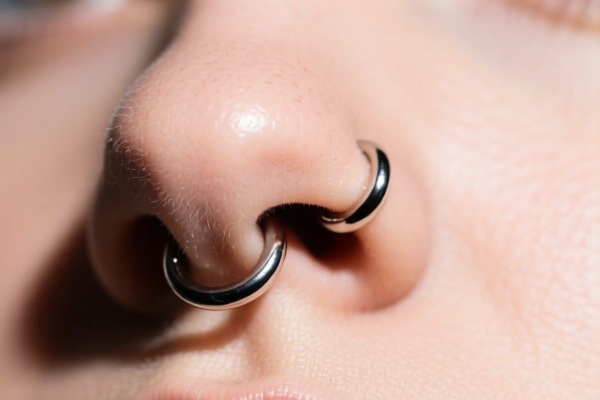
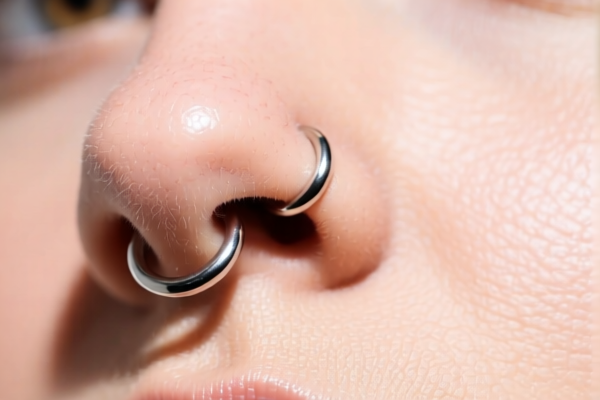


AI Analysis
💎 Nose Ring (Body Jewelry / Piercing Accessory)
🌐 HS Code Reference & Customs Clearance Guide | 2026 Latest Tariff Analysis | Professional Clearance Strategy
📌 I. Product Definition & Classification: Do You Really Understand "Nose Rings"?
A nose ring is a form of body jewelry designed to be worn through a piercing in the nose. In international trade, it is generally classified as jewelry or imitation jewelry, depending on the material composition and manufacturing method.
Key Distinctions for Classification: 1. Precious Metal Jewelry: Made of gold, silver, platinum, etc. → Falls under Chapter 71 (Precious Stones/Metals). 2. Imitation/Costume Jewelry: Made of base metals, alloys, or non-precious materials → Falls under Chapter 71 (specifically heading 7117) or other accessory chapters.
⚠️ Critical Note:
- If the nose ring is made of precious metal (e.g., solid gold/silver), it is classified as "Other jewelry of precious metal."
- If it is made of base metal (e.g., stainless steel, brass, titanium plated) or is considered "costume jewelry," it is classified as "Imitation jewelry."
📦 II. HS Code Classification Details (Based on Provided Data)
| HS Code | Product Description | Applicable Scenario | Tax Rate (Total) |
|--------|----------|--------------------------|
| 7113.19.50.91 | Jewelry of precious metal: Other nose rings (non-chain/necklace type) | Solid gold, silver, or platinum nose rings. Classified under "Other jewelry of precious metal." | 23.0% |
| 7113.19.50.95 | Jewelry of precious metal: Other (including precious metal clad base metal) | Precious metal or precious-metal-clad base metal nose rings. Broad category for precious jewelry. | 23.0% |
| 7117.90.90.00 | Imitation Jewelry: Other | Base metal, alloy, or non-precious material nose rings. Classified as "Other imitation jewelry" (catch-all category). | 28.5% |
🔍 Key Insight:
- Precious vs. Imitation: The primary differentiator is material. Precious metal items (7113.19.50.91/95) have a 23.0% total tax rate.
- Imitation/Costume: Base metal or non-precious items (7117.90.90.00) fall under "Imitation Jewelry" with a 28.5% total tax rate.
- Clad Metals: Items clad in precious metal (e.g., silver-plated brass) may still qualify under the precious metal category if they meet specific definitions, but often fall into the broader7113.19.50.95bucket.
💰 III. 2026 Latest Tariff Rate Breakdown (Detailed Tax Policy)
✅ Applicable Country: United States (US)
✅ Origin: China (CN)
✅ Effective Date: Based on current USITC/Trade Act provisions (Section 301 & IEEPA)
🎯 1. 7113.19.50.91 & 7113.19.50.95 — Precious Metal Jewelry
| Item | Content |
|---|---|
| Base Tariff | 5.5% (Ad Valorem) |
| Section 301 Additional Tariff | 7.5% (Retaliatory tariff on Chinese goods) |
| Section 122 Tariff (IEEPA) | 10% (Specific measure for certain Chinese imports, often applied to consumer goods/jewelry) |
| Total Effective Tax Rate | 23.0% |
| Tax Calculation | CIF Value × 23.0% |
| De Minimis Exemption | ❌ Not Eligible (Section 301 and Section 122 tariffs generally negate the $800 de minimis exemption for Chinese goods) |
| Legal Basis Path | USITC:7113.19.50.91 → SECTION301:7.5% → IEEPA:SECTION122:10% |
📌 Explanation:
- The 5.5% is the standard Most Favored Nation (MFN) duty rate for precious metal jewelry.
- The 7.5% is part of the Section 301 tariff list affecting Chinese-manufactured goods.
- The 10% is a specific additional tariff (Section 122) often applied to consumer products from China.
- Total: 23.0%. This is a high tariff burden for low-cost items like nose rings.
🎯 2. 7117.90.90.00 — Imitation Jewelry (Base Metal/Non-Precious)
| Item | Content |
|---|---|
| Base Tariff | 11.0% (Ad Valorem) |
| Section 301 Additional Tariff | 7.5% |
| Section 122 Tariff (IEEPA) | 10% |
| Total Effective Tax Rate | 28.5% |
| Tax Calculation | CIF Value × 28.5% |
| De Minimis Exemption | ❌ Not Eligible |
| Legal Basis Path | USITC:7117.90.90.00 → SECTION301:7.5% → IEEPA:SECTION122:10% |
📌 Explanation:
- Base rate for imitation jewelry is higher (11.0%) than for precious metal (5.5%).
- Additional tariffs (7.5% + 10%) remain the same.
- Total: 28.5%. This makes imitation jewelry even more expensive to import into the US from China compared to precious metal equivalents.
🛠️ IV. Customs Clearance Practical Advice (Avoid Pitfalls)
✅ 1. Documentation Checklist (Essential)
| Document | Required | Notes |
|---|---|---|
| Product Specification Sheet | ✔️ | Must clearly state material (e.g., "316L Stainless Steel," "14K Gold," "Silver Plated Brass"). |
| Product Photos | ✔️ | Clear images showing no precious metal hallmarks (if imitation) or hallmarks (if precious). |
| Commercial Invoice | ✔️ | Must list "Nose Ring" or "Body Jewelry," HS Code, and CIF value. |
| Origin Certificate | ✔️ | To prove Chinese origin (triggers tariffs) or other origins (may avoid tariffs). |
| Material Declaration | ✔️ | Explicitly state if "Precious Metal" or "Imitation/Base Metal." Misclassification leads to penalties. |
| Packaging List | ✔️ | Details quantity, weight, and packaging type. |
✅ 2. Classification Strategy (Key Mnemonics)
🔥 "Check Material First! Precious = 23%, Imitation = 28.5%"
| Scenario | Correct HS Code | Consequence of Misclassification |
|---|---|---|
| Solid Gold/Silver Nose Ring | 7113.19.50.91 or 7113.19.50.95 |
Misclassifying as imitation (7117.90.90.00) → Overpay tax by 5.5% + audit risk. |
| Stainless Steel/Titanium/Plated | 7117.90.90.00 |
Misclassifying as precious → Underpay tax → Penalties + Back Duties. |
| Mixed Materials (e.g., Gold Plated) | 7113.19.50.95 (if clad) |
Must prove "clad" status. If not clad, falls to 7117.90.90.00. |
| Non-Jewelry (e.g., Surgical Implant) | Not in Data | If intended for medical use, may not be "jewelry." Requires additional justification. |
📌 Note:
- De Minimis Loophole Closed: For Chinese goods, the $800 de minimis exemption does not apply due to Section 301 and Section 122 tariffs. All goods are subject to full duty.
- Material Accuracy: Customs officers will inspect the item. If you declare "Gold" but it is "Brass Plated," you will face severe penalties.
✅ 3. Special Cases
| Case | Recommendation |
|---|---|
| Custom/Engraved Nose Rings | Declare as "Custom Jewelry." Still subject to same HS code. Provide design files if requested. |
| Sets (Nose Ring + Earrings) | Declare by the highest tariff item or separate lines. Do not average taxes. |
| Gifts (<$800) | Still taxable if from China. Do not assume "gift" means tax-free. |
| Non-Chinese Origin | If sourced from Vietnam, India, or Thailand, tariffs may be lower (verify with USITC). |
🌍 V. Global Market Comparison (2026)
| Country/Region | Recommended HS Code | Total Tariff (China Origin) | Notes |
|---|---|---|---|
| 🇺🇸 USA | 7113.19.50.91/95 (23%) / 7117.90.90.00 (28.5%) |
23.0% / 28.5% | High tariffs due to Section 301 & 122. |
| 🇪🇺 EU | 7113.19 / 7117.90 | ~2.5% - 5% | No Section 301. Standard EU duties apply. |
| 🇨🇳 China | 7113.19 / 7117.90 | 0% - 5% | Low import duties. Focus on domestic market. |
| 🇬🇧 UK | 7113.19 / 7117.90 | ~2.5% - 5% | Post-Brexit tariffs. No US-style retaliatory tariffs. |
| 🇨🇦 Canada | 7113.19 / 7117.90 | ~0% - 5% | FTA benefits may apply for non-Chinese goods. |
📌 Conclusion:
- USA is the most expensive market for importing nose rings from China due to punitive tariffs.
- EU, UK, and Canada offer significantly lower duty rates (2.5%–5%).
- Strategy: Consider sourcing from non-Chinese countries (e.g., India, Thailand) to avoid US tariffs, or adjust pricing to absorb the 23–28.5% cost.
📌 VI. Common Errors & Pitfalls (Lessons Learned)
❌ Error 1: Assuming "Nose Ring" is a single HS Code.
👉 Result: Misclassification → Audit, penalties, or delayed shipment.
✅ Fix: Determine material (Precious vs. Imitation) first.
❌ Error 2: Declaring base metal as "Precious Metal" to avoid higher imitation tariffs.
👉 Result: Customs inspection reveals base metal → Severe Penalties (200%+ of duty value).
✅ Fix: Be truthful. If plated, declare as "Precious Metal Clad" or "Imitation" based on rules.
❌ Error 3: Using "Gift" to bypass de minimis.
👉 Result: US Customs rejects de minimis for Chinese goods under Section 301/122.
✅ Fix: Plan for full duty payment (23–28.5%).
❌ Error 4: Ignoring Section 122 Tariffs.
👉 Result: Underestimating total landed cost by 10%.
✅ Fix: Include 10% Section 122 tariff in all cost calculations.
🎯 VII. Conclusion: Professional Classification Saves Money!
🎯 Remember This Mnemonic:
🔹 "Material Matters: Precious 23%, Imitation 28.5%, No De Minimis for China!"
🔹 "Classify Correctly, Pay Fairly, Avoid Penalties!"
📌 Pro Tip:
If you are importing large volumes, consider:
1. Sourcing from Vietnam/India: Avoids Section 301/122 tariffs.
2. Advance Ruling: Apply for a CBP Advance Ruling to confirm HS Code and tariff liability.
3. Supply Chain Diversification: Reduce dependency on Chinese manufacturing to mitigate tariff risks.
📣 Immediate Action:
📞 Consult a licensed customs broker.
📝 Provide detailed material specs to your supplier.
🚀 Optimize your supply chain to absorb or avoid the 23–28.5% tariff burden.
✨ Professional Clearance Starts with Accurate Classification!
💼 Every percentage point counts in your final landed cost!
Customer Reviews
About HS Code Classification
The Harmonized System (HS) is an internationally standardized nomenclature developed by the World Customs Organization (WCO) to classify traded products. Over 200 countries use the HS system as the basis for customs tariffs, trade statistics, and import/export regulations.
Each HS code follows a hierarchical structure:
- Chapter (2 digits) — Broad category of goods (e.g., Chapter 84: Machinery and Mechanical Appliances)
- Heading (4 digits) — More specific grouping within the chapter
- Subheading (6 digits) — Internationally standardized breakdown, used by all WCO member countries
- National subdivisions (8-10 digits) — Country-specific extensions for further classification, such as US HTSUS 10-digit codes
Correct HS code classification is essential for smooth customs clearance, accurate duty payment, and compliance with trade regulations. Misclassification can lead to customs delays, overpayment of duties, or penalties.
When importing from CN to US, the applicable tariff rates may include:
- Most-Favored-Nation (MFN) rate — The standard duty rate applied to WTO members
- General rate — Applied to countries without trade agreements
- Trade remedy duties — Additional tariffs such as Section 301 (anti-dumping), Section 232 (national security), or countervailing duties
The information provided on this page is for reference purposes only. For official classification, please consult with your local customs authority or a licensed customs broker.