Notebook Protective Case
CN → US| HS Code | Tariff Rate | Origin | Destination | Doc |
|---|---|---|---|---|
| 4202929400 | 52.6% | CN | US | Official Doc |
| 4202929700 | 52.6% | CN | US | Official Doc |
| 8473309100 | 35.0% | CN | US | Official Doc |
| 3926909989 | 22.8% | CN | US | Official Doc |
| 8473509000 | 35.0% | CN | US | Official Doc |
Product Images
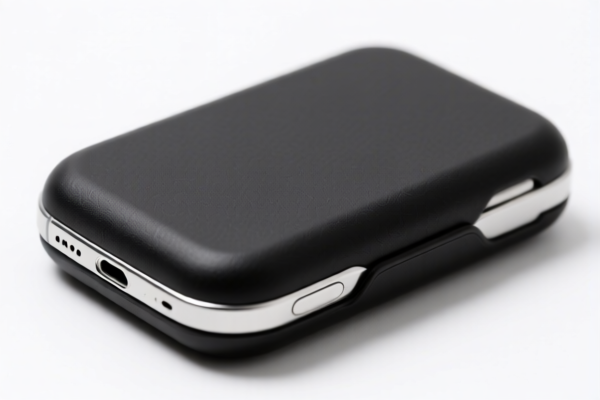
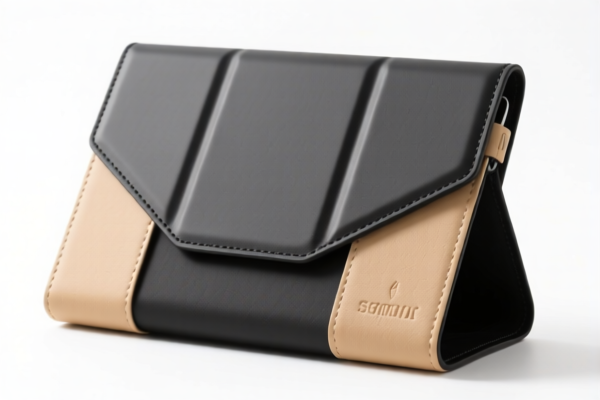
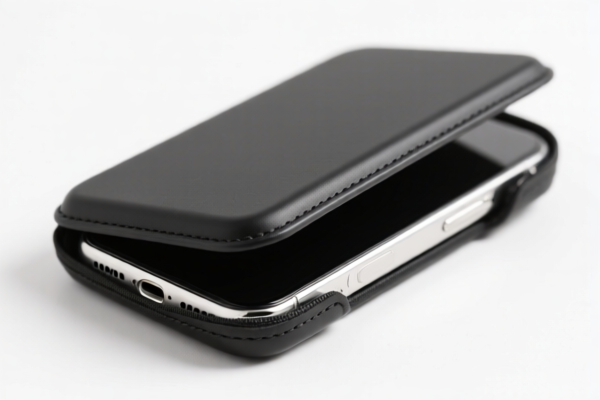
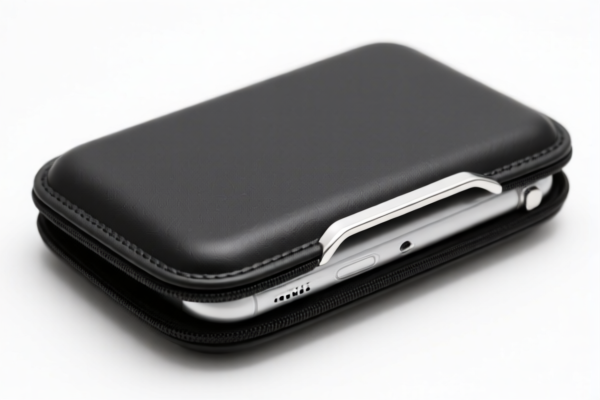
AI Analysis
💻 Notebook Protective Case (Laptop Sleeves & Hard Shells)
🌐 HS Code Reference & Customs Clearance Guide | 2026 Latest Tariff Full Analysis | Professional Clearance Strategy
📌 1. Product Definition & Classification: What Exactly Is a "Notebook Protective Case"?
A Notebook Protective Case is an accessory designed to shield laptops (Notebooks) from physical damage, scratches, and minor impacts. In international trade, classification depends heavily on material and design function:
- Case/Container Type: If it resembles a bag, sleeve, or pouch (e.g., neoprene sleeves, fabric cases), it is typically classified under Chapter 42 (Articles of Leather; Saddle and Harness Goods).
- Hard Shell/Part Type: If it is a rigid plastic shell (e.g., PC hard cases) meant to attach directly to the device as a protective layer, it may be classified as a part or accessory for machinery/electronic devices under Chapter 84 or 39 (Plastics).
⚠️ Key Distinction:
- If it is a soft case/bag (textile/plastic composite, fabric-lined) → HS 4202.92
- If it is a rigid plastic shell (PC/Abs, hard cover) → HS 8473.30/50 or HS 3926.90
📦 2. HS Code Classification Details (2026 Latest Tariff Authority Comparison)
| HS Code | Product Description | Material/Type | Classification Logic |
|---|---|---|---|
4202.92.94.00 |
Tablet/Laptop Protection Case (Shell-Type Container) | Plastic or Textile | Classified as a "Case, Container" for personal items. |
4202.92.97.00 |
Tablet/Laptop Protection Case (General/Residual) | Plastic or Textile | Residual category for protective cases not elsewhere specified. |
8473.30.91.00 |
PC Hard Shell (Machine Part/Component) | Polycarbonate (Plastic) | Classified as a "Part/Accessory" for data processing machines. |
3926.90.99.89 |
PC Hard Shell (General Plastic Article) | Polycarbonate (Plastic) | Classified as "Other Plastic Articles" (Residual). |
8473.50.90.00 |
PC Hard Shell (Machine Part/Accessory) | Polycarbonate | Classified as "Parts and Accessories" for machinery. |
🔍 Critical Note:
- Soft Cases (fabric, neoprene, leather-like) go to Chapter 42.
- Hard Cases (rigid plastic) can go to Chapter 84 (as parts) or Chapter 39 (as general plastic goods). The choice affects the base duty rate significantly (0% vs. 5.3%).
💰 3. 2026 Latest Tariff Rate Breakdown (Including Surcharges & Policy Add-ons)
✅ Applicable Country: United States (US)
✅ Origin: China (CN)
✅ Effective Time: Post-2025 (Current Trade War Environment)
🎯 1. 4202.92.94.00 & 4202.92.97.00 —— Soft/Textile Protective Cases
| Item | Content |
|---|---|
| Base Duty | 17.6% |
| Section 301 Surcharge | +25.0% |
| IEEPA Surcharge (Section 122) | +10.0% |
| Total Tax Rate | 52.6% |
| Calculation Basis | CIF Value × 52.6% |
| De Minimis Exemption | ❌ Not Applicable (Highly Restricted) |
| Legal Basis Path | USITC:4202.92.94.00 → FOOTNOTE:301 → IEEPA:122 |
📌 Explanation:
- These cases are treated as consumer goods/accessories.
- High base duty (17.6%) plus heavy political surcharges (25% + 10%) result in a stiff 52.6% total tax.
- Risk: Customs may scrutinize "textile/plastic" blends to ensure they are not misclassified as lower-duty items.
🎯 2. 8473.30.91.00 & 8473.50.90.00 —— Hard PC Shells (Classified as Machine Parts)
| Item | Content |
|---|---|
| Base Duty | 0.0% |
| Section 301 Surcharge | +25.0% |
| IEEPA Surcharge (Section 122) | +10.0% |
| Total Tax Rate | 35.0% |
| Calculation Basis | CIF Value × 35.0% |
| De Minimis Exemption | ❌ Not Applicable |
| Legal Basis Path | USITC:8473.30.91.00 → FOOTNOTE:301 → IEEPA:122 |
📌 Explanation:
- If classified as a "Part" of the laptop (e.g., integral protective cover), base duty is 0%.
- However, Section 301 (25%) and IEEPA (10%) still apply, bringing the total to 35.0%.
- Advantage: Significantly cheaper than Chapter 42 cases (17.6% less).
- Risk: Must prove it is a "part/accessory" and not a standalone "container."
🎯 3. 3926.90.99.89 —— Hard PC Shells (Classified as General Plastic Articles)
| Item | Content |
|---|---|
| Base Duty | 5.3% |
| Section 301 Surcharge | +7.5% |
| IEEPA Surcharge (Section 122) | +10.0% |
| Total Tax Rate | 22.8% |
| Calculation Basis | CIF Value × 22.8% |
| De Minimis Exemption | ❌ Not Applicable |
| Legal Basis Path | USITC:3926.90.99.89 → FOOTNOTE:301 (Reduced Rate) → IEEPA:122 |
📌 Explanation:
- If classified as a general plastic good (not a machine part), base duty is 5.3%.
- The Section 301 surcharge is reduced to 7.5% (instead of 25%) for certain plastic articles under specific provisions.
- Advantage: Lowest Total Tax (22.8%) among all options.
- Risk: Must strictly adhere to "plastic article" classification; cannot be claimed as a "laptop part" if it doesn't fit Chapter 84 criteria.
🛠️ 4. Customs Clearance Practical Advice (Real-World Pitfall Avoidance)
✅ 1. Documentation Checklist (Non-Negotiable)
| Document | Required | Notes |
|---|---|---|
| ✅ Product Specification Sheet | ✔️ | Detail material (PC, Textile, PVC), dimensions, weight. |
| ✅ Photos (Front, Back, Inside) | ✔️ | Show if it’s a bag (4202) or rigid shell (8473/3926). |
| ✅ Material Composition Certificate | ✔️ | Crucial for distinguishing Chapter 39 vs. 42. |
| ✅ Commercial Invoice | ✔️ | Use precise description: e.g., "Polycarbonate Hard Shell Case for Laptop" vs. "Fabric Laptop Sleeve". |
| ✅ Packing List | ✔️ | Ensure no loose accessories that could trigger separate classification. |
✅ 2. Declaration Strategy (Key Mantra)
🔥 “Material Defines HS: Soft=42, Hard=84/39. Choose wisely to save 30%!”
| Scenario | Correct HS Code | Tax Rate | Why? |
|---|---|---|---|
| Fabric/Neoprene Sleeve | 4202.92.94.00 |
52.6% | Treated as a "bag/container." High base duty. |
| Rigid PC Hard Case | 8473.30.91.00 |
35.0% | Treated as a "machine part." 0% base, but 35% total. |
| Rigid PC Hard Case (Plastic Article) | 3926.90.99.89 |
22.8% | Treated as "plastic good." Lowest total tax. |
📌 Strategic Recommendation:
- If your product is a hard plastic shell, try to classify under3926.90.99.89(22.8%) if possible, as it offers the lowest total tax.
- If customs insists it is a "part," use8473.30.91.00(35.0%) instead of4202(52.6%).
- Never declare a hard PC shell as a "textile bag" (4202) just to avoid scrutiny; material evidence will contradict this.
✅ 3. Special Cases & Warnings
| Situation | Handling Advice |
|---|---|
| Mixed Material Cases (e.g., PC shell with fabric lining) | Declare as the primary material or the main function. If 80% plastic, lean toward Chapter 39/84. Provide detailed composition breakdown. |
| Bundled Sales (Laptop + Case) | Declare separately. Do not bundle values. The case must have its own HS code and duty calculation. |
| "Tablet" vs. "Laptop" Case | Customs often groups them. Ensure the size matches the product. A tablet case for a laptop may be rejected as "incorrect description." |
| Pre-Clearance Ruling | For large volumes, apply for a Pre-Ruling (PORA) to confirm if 3926 or 8473 applies to your specific design. |
🌍 5. Global Market Comparison (2026)
| Region | Recommended HS Code | Estimated Total Tax | Key Requirement |
|---|---|---|---|
| 🇺🇸 USA | 3926.90.99.89 (Best) |
22.8% | Proves it’s a "plastic article," not a "bag." |
| 🇺🇸 USA | 4202.92.94.00 (Worst) |
52.6% | Applies if classified as a "bag/soft case." |
| 🇨🇳 China | 4202.92.94.00 |
~5-10% | Low duty, no trade war tariffs. |
| 🇪🇺 EU | 4202.92 |
~12% | Standard MFN rate. |
| 🇬🇧 UK | 4202.92 |
~12% | Standard MFN rate. |
📌 Conclusion:
- The US market is the most critical due to high Section 301/IEEPA tariffs.
- Classifying hard PC cases as "Plastic Articles" (3926) rather than "Bags" (4202) or "Parts" (8473) can save up to 30% in duties.
- Soft cases have no escape from the 52.6% total tax in the US. Consider sourcing soft cases from non-China origins if possible.
📌 6. Common Errors & Pitfalls (Lessons Learned)
❌ Error 1: Declaring a PC Hard Shell as a "Laptop Bag" (4202)
👉 Result: Tax jumps from 22.8% to 52.6%. Loss of profit margin.
❌ Error 2: Declaring a Fabric Sleeve as a "Plastic Article" (3926)
👉 Result: Customs inspection reveals textile material. Penalty + Back Taxes + Delay.
❌ Error 3: Ignoring IEEPA Section 122 (10%)
👉 Result: All Chinese-origin goods are subject to this 10% surcharge. Failing to include it leads to underpayment penalties.
❌ Error 4: Using vague descriptions like "Accessory"
👉 Result: Customs may assign a default high-duty code. Always specify material and type.
✅ Correct Declaration Example:
"Hard Protective Case for Laptop, Made of Polycarbonate Plastic, Model XYZ, No Electronic Components" → HS 3926.90.99.89
🎯 7. Conclusion: Professional Classification Saves Money!
🎯 Remember the Mantra:
🔹 "Soft = Bag (52.6%), Hard = Plastic (22.8%). Know your material!"
🔹 "Don't let a $2 case cost you $1 in duties. Classify correctly."
📌 Pro Tip:
If your product is a hybrid (e.g., PC back with fabric front), consult a customs broker to determine if the primary character leans towards Chapter 39 or 42. In some cases, Chapter 84 might be argued if the shell is integral to the laptop's operation.
📣 Immediate Action:
📞 Review your BOM (Bill of Materials) to confirm primary material.
📄 Prepare photo evidence of material texture.
🚀 Optimize your HS Code to reduce US tariffs by up to 30%!
✨ Professional Clearance Starts with Accurate Classification!
💼 Your Bottom Line Depends on the First 4 Digits!
Customer Reviews
About HS Code Classification
The Harmonized System (HS) is an internationally standardized nomenclature developed by the World Customs Organization (WCO) to classify traded products. Over 200 countries use the HS system as the basis for customs tariffs, trade statistics, and import/export regulations.
Each HS code follows a hierarchical structure:
- Chapter (2 digits) — Broad category of goods (e.g., Chapter 84: Machinery and Mechanical Appliances)
- Heading (4 digits) — More specific grouping within the chapter
- Subheading (6 digits) — Internationally standardized breakdown, used by all WCO member countries
- National subdivisions (8-10 digits) — Country-specific extensions for further classification, such as US HTSUS 10-digit codes
Correct HS code classification is essential for smooth customs clearance, accurate duty payment, and compliance with trade regulations. Misclassification can lead to customs delays, overpayment of duties, or penalties.
When importing from CN to US, the applicable tariff rates may include:
- Most-Favored-Nation (MFN) rate — The standard duty rate applied to WTO members
- General rate — Applied to countries without trade agreements
- Trade remedy duties — Additional tariffs such as Section 301 (anti-dumping), Section 232 (national security), or countervailing duties
The information provided on this page is for reference purposes only. For official classification, please consult with your local customs authority or a licensed customs broker.