Nozzle
CN → US| HS Code | Tariff Rate | Origin | Destination | Doc |
|---|---|---|---|---|
| 8481809050 | 37.0% | CN | US | Official Doc |
| 8481909085 | 85.0% | CN | US | Official Doc |
| 8421290005 | 35.0% | CN | US | Official Doc |
| 8424201000 | 37.9% | CN | US | Official Doc |
| 8424209000 | 35.0% | CN | US | Official Doc |
Product Images
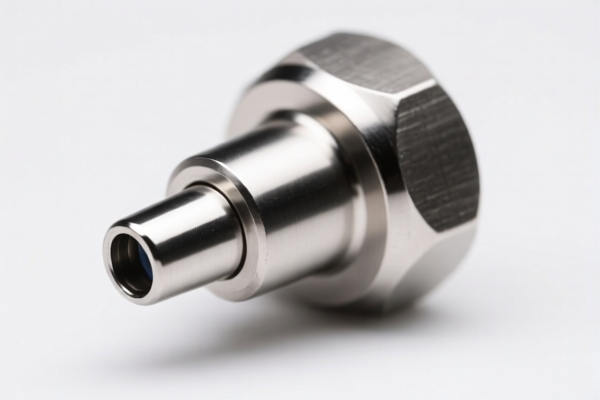
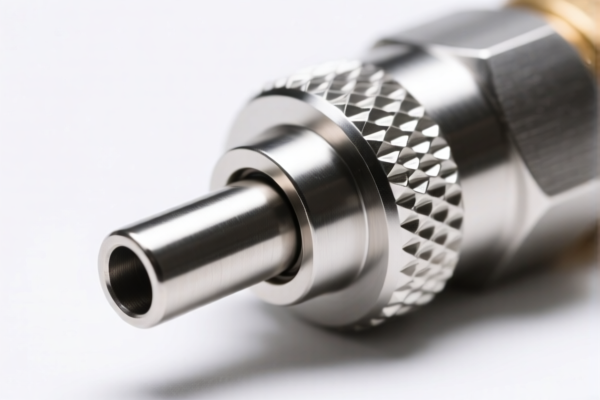
AI Analysis
🚿 Nozzles: The Critical Component of Fluid Control Systems
🌐 HS Code Reference & Customs Clearance Guide | 2024/2025 Latest Tariff Analysis | Professional Compliance Strategy
📌 I. Product Definition & Classification: Do You Really Understand "Nozzles"?
Nozzles are precision components used in piping, fuel injection, and fluid handling systems to direct, shape, or atomize fluid flow. In international trade, their classification depends heavily on function and system integration. They are generally categorized into two main groups:
- Fuel Injection Valves/Nozzles (喷油嘴): Critical components of engines or fuel systems, functioning as valves or spray devices.
- Key Feature: High-pressure fuel delivery, part of the fuel injection system.
- Spray Guns/Spray Nozzles (喷枪/喷射器具): Used for applying liquids (paint, chemicals, water) via air pressure or hydraulic force.
- Key Feature: Atomization or stream shaping for application purposes.
⚠️ Key Distinction Point:
- If the nozzle is an integral part of a fuel injection system (acting as a valve), it may fall under Chapter 84.81 (Valves) or 84.84 (Parts).
- If it is a spray gun or spray device for applying substances, it falls under Chapter 84.24 (Spray Guns, etc.).
- If it is a mechanical processing component (e.g., for liquid treatment machinery), it may fall under Chapter 84.21 (Separating/Filtering Machinery Parts).
📦 II. HS Code Classification Details (2024/2025 Latest Tariff Authority Comparison)
Based on the provided data, here are the precise HS Code mappings for "Nozzles" with their specific tax implications:
| HS Code | Product Description | Applicable Scenario | Key Function |
|---|---|---|---|
8481.80.90.50 |
Injection器具 (Valve-like) for Piping/Fuel Systems | Fuel injection nozzles, engine fuel systems | Acts as a valve/like device in fuel/piping systems |
8481.90.90.85 |
Parts/Spare Parts for Valves/Nozzle Devices | General valve/nozzle spares, fallback category | Fallback classification for unspecified valve parts |
8421.29.00.05 |
Mechanical Parts for Liquid Treatment | Fluid handling machinery, industrial spray systems | Mechanical component for liquid processing devices |
8424.20.10.00 |
Spray Guns & Similar Appliances | Paint sprayers, agricultural spray guns, cleaning nozzles | Matches usage and form of spray guns |
8424.20.90.00 |
Other Spray Guns & Similar Devices | Industrial spray applications, non-standard spray nozzles | Matches usage and category of spray devices |
🔍 Critical Reminder:
- Fuel Injection Nozzles are highly sensitive to classification. Misclassifying them as "general parts" can lead to significant duty disparities.
- Spray Nozzles (e.g., for painting, cleaning) are distinctly governed by Chapter 84.24, not Chapter 84.81.
- The "Fallback" category (8481.90.90.85) carries the highest tariff risk due to material-based add-ons.
💰 III. 2024/2025 Latest Tariff Rate Breakdown (Including Additional Taxes & Policy Surcharges)
✅ Applicable Country: United States (US)
✅ Country of Origin: China (CN)
✅ Effective Date: Current trade policies (Section 301 & IEEPA)
🎯 1. 8481.80.90.50 —— Injection Valves for Piping/Fuel Systems
| Item | Content |
|---|---|
| Base Tariff | 2.0% (ad valorem) |
| Section 301 Add-on | +25.0% (from USITC Footnote 9903.88.01) |
| Section 122 IEEPA Add-on | +10.0% (for China/HK products) |
| Total Tariff | 37.0% |
| Tax Calculation | CIF Value × 37.0% |
| De Minimis Eligibility | ❌ Not Eligible (deny_de_minimis) |
| Legal Path | USITC:8481.80.90.50 → SEC301:25% → IEEPA122:10% |
📌 Explanation:
- This classification is for valve-like injection nozzles.
- The 37% total rate is standard for high-tech automotive/fuel components.
- No steel/aluminum surcharge applies here.
🎯 2. 8481.90.90.85 —— Parts/Spare Parts for Valves/Nozzle Devices (Fallback)
| Item | Content |
|---|---|
| Base Tariff | 0.0% |
| Section 301 Add-on | +25.0% |
| Section 122 IEEPA Add-on | +10.0% |
| Steel/Aluminum/Copper Surcharge | +50.0% (if made of these materials) |
| Total Tariff | 85.0% |
| Tax Calculation | CIF Value × 85.0% |
| De Minimis Eligibility | ❌ Not Eligible |
| Legal Path | USITC:8481.90.90.85 → SEC301:25% → IEEPA122:10% → IEEPA:SteelAlCu:50% |
📌 Warning:
- This is the MOST EXPENSIVE classification.
- The 85% total rate includes a punitive +50% surcharge for steel, aluminum, or copper components.
- Avoid this code unless absolutely necessary. Misclassification here can double your costs.
🎯 3. 8421.29.00.05 —— Mechanical Parts for Liquid Treatment
| Item | Content |
|---|---|
| Base Tariff | 0.0% |
| Section 301 Add-on | +25.0% |
| Section 122 IEEPA Add-on | +10.0% |
| Total Tariff | 35.0% |
| Tax Calculation | CIF Value × 35.0% |
| De Minimis Eligibility | ❌ Not Eligible |
| Legal Path | USITC:8421.29.00.05 → SEC301:25% → IEEPA122:10% |
📌 Note:
- Applies to nozzles used in industrial liquid handling/separation machinery.
- Slightly lower than fuel injection nozzles (35% vs 37%).
- No material surcharge applies.
🎯 4. 8424.20.10.00 —— Spray Guns & Similar Appliances
| Item | Content |
|---|---|
| Base Tariff | 2.9% |
| Section 301 Add-on | +25.0% |
| Section 122 IEEPA Add-on | +10.0% |
| Total Tariff | 37.9% |
| Tax Calculation | CIF Value × 37.9% |
| De Minimis Eligibility | ❌ Not Eligible |
| Legal Path | USITC:8424.20.10.00 → SEC301:25% → IEEPA122:10% |
📌 Note:
- For spray guns with specific technical specifications matching this subheading.
- Highest base tariff (2.9%) among spray devices.
🎯 5. 8424.20.90.00 —— Other Spray Guns & Similar Devices
| Item | Content |
|---|---|
| Base Tariff | 0.0% |
| Section 301 Add-on | +25.0% |
| Section 122 IEEPA Add-on | +10.0% |
| Total Tariff | 35.0% |
| Tax Calculation | CIF Value × 35.0% |
| De Minimis Eligibility | ❌ Not Eligible |
| Legal Path | USITC:8424.20.90.00 → SEC301:25% → IEEPA122:10% |
📌 Note:
- Fallback for spray devices not meeting the specific criteria of8424.20.10.00.
- Best option for spray nozzles if correctly classified (35% vs 37.9% or 85%).
🛠️ IV. Customs Clearance Practical Advice (Battle-Tested Pitfall Avoidance)
✅ 1. Required Documentation Checklist (All Mandatory)
| Document | Required | Notes |
|---|---|---|
| ✅ Product Datasheet | ✔️ | Must specify flow rate, pressure rating, fluid type, connection size |
| ✅ Technical Drawing | ✔️ | Show internal structure to prove if it's a "valve" or "spray" device |
| ✅ Material Composition Statement | ✔️ | CRITICAL: Declare if steel, aluminum, or copper to avoid 85% tariff |
| ✅ Commercial Invoice | ✔️ | Must clearly state "Nozzle for [Specific Machine/System]" |
| ✅ Packing List | ✔️ | Separate parts from assemblies if applicable |
| ✅ OEM/Design Agreement | ✔️ | If custom-made, provide design specs to justify classification |
✅ 2. Declaration Tactics (Key Mnemonics)
🔥 “Valve for Fuel, Spray for Paint, Material Matters, Avoid the Fallback!”
| Scenario | Correct Declaration | Wrong Approach |
|---|---|---|
| Fuel Injection Nozzle | 8481.80.90.50 (Valve-like) |
Misclassify as "Spray Gun" → Risk of audit |
| Paint Spray Gun | 8424.20.90.00 (35%) or 8424.20.10.00 (37.9%) |
Misclassify as "Valve Part" → 37% |
| Generic Nozzle Part | 8481.90.90.85 (85% - AVOID!) |
Use this code unless no other option exists |
| Liquid Treatment Nozzle | 8421.29.00.05 (35%) |
Misclassify as "Valve" → 37% |
✅ 3. Special Cases Handling
| Situation | Handling Advice |
|---|---|
| Steel/Aluminum/Copper Nozzles | ⚠️ HIGH RISK: If classified under 8481.90.90.85, 85% duty applies. Try to classify as 8481.80.90.50 (37%) if it functions as a valve. |
| Fuel Nozzle vs. Spray Nozzle | Fuel nozzles go to Ch. 84.81. Spray nozzles (paint, water) go to Ch. 84.24. Do not mix them. |
| Custom OEM Nozzles | Provide design drawings and application specs to prove function. Avoid generic names like "Metal Nozzle." |
| Nozzle Kits (with Gaskets/Tools) | Declare as a set if functionally integral. Otherwise, split and declare separately. |
🌍 V. Global Customs Comparison (2024/2025 Latest)
| Country/Region | Recommended HS Code | Tariff (China Origin) | Certification Requirements | Notes |
|---|---|---|---|---|
| 🇺🇸 USA | 8481.80.90.50 (Fuel) or 8424.20.90.00 (Spray) |
35% - 37.9% (or 85% if fallback) | None typically | Avoid 8481.90.90.85 due to 85% rate |
| 🇨🇳 China | 8481.80.90.50 / 8424.20.90.00 |
0% - 5% (varies) | None | Domestic trade has low duties |
| 🇪🇺 EU | 8481.80 / 8424.20 |
0% - 3.7% | CE Mark (if applicable) | No Section 301/IEEPA surcharges |
| 🇯🇵 Japan | 8481.80 / 8424.20 |
0% - 3.0% | PSE (if electrical) | Low baseline tariffs |
| 🇦🇺 Australia | 8481.80 / 8424.20 |
0% - 5.0% | RCM (if electrical) | No major surcharges |
📌 Conclusion:
- USA is the highest-cost market due to Section 301 (25%) and IEEPA (10%) surcharges.
- EU, Japan, and Australia have significantly lower tariffs (0-5%) with no punitive add-ons.
- Critical US Risk: Misclassification into8481.90.90.85results in 85% total duty.
📌 VI. Common Errors & Pitfall Avoidance (Lessons Learned)
❌ Error 1: Using "Nozzle" as the sole product description
👉 Consequence: Customs may assign 8481.90.90.85 → 85% duty.
✅ Fix: Specify "Fuel Injection Nozzle" or "Spray Gun Nozzle."
❌ Error 2: Classifying steel nozzles under 8481.90.90.85
👉 Consequence: 85% duty due to steel surcharge.
✅ Fix: If it functions as a valve, use 8481.80.90.50 (37%).
❌ Error 3: Mixing fuel nozzles and spray nozzles in one declaration
👉 Consequence: Classification audit → Delay or penalty.
✅ Fix: Declare separately by function.
❌ Error 4: Ignoring material composition
👉 Consequence: Unexpected 50% surcharge on steel/aluminum parts.
✅ Fix: Provide material test reports.
🎯 VII. Conclusion: Precision Classification Saves Cost!
🎯 Remember the Golden Rules:
🔹 “Fuel Nozzle → 8481.80 (37%) | Spray Nozzle → 8424.20 (35-37.9%) | Avoid 8481.90 (85%)!”
🔹 “Steel/Aluminum Nozzles in Fallback Category → 85% Duty!”
🔹 “Clear Function Description = Lower Risk!”
📌 Pro Tip:
If your nozzles are made of plastic or non-ferrous metals and function as spray devices,
8424.20.90.00(35%) is often the most cost-effective classification for the US market.
Request an Advance Ruling from CBP if uncertain.
📣 Immediate Action:
📞 Contact a licensed customs broker.
📄 Provide product images, datasheets, and material specs.
🚀 Classify accurately to avoid 85% penalties!
✨ Professional Customs Clearance Starts with Accurate Classification!
💼 Your Cost Efficiency Depends on Every Digit of the HS Code!
Customer Reviews
About HS Code Classification
The Harmonized System (HS) is an internationally standardized nomenclature developed by the World Customs Organization (WCO) to classify traded products. Over 200 countries use the HS system as the basis for customs tariffs, trade statistics, and import/export regulations.
Each HS code follows a hierarchical structure:
- Chapter (2 digits) — Broad category of goods (e.g., Chapter 84: Machinery and Mechanical Appliances)
- Heading (4 digits) — More specific grouping within the chapter
- Subheading (6 digits) — Internationally standardized breakdown, used by all WCO member countries
- National subdivisions (8-10 digits) — Country-specific extensions for further classification, such as US HTSUS 10-digit codes
Correct HS code classification is essential for smooth customs clearance, accurate duty payment, and compliance with trade regulations. Misclassification can lead to customs delays, overpayment of duties, or penalties.
When importing from CN to US, the applicable tariff rates may include:
- Most-Favored-Nation (MFN) rate — The standard duty rate applied to WTO members
- General rate — Applied to countries without trade agreements
- Trade remedy duties — Additional tariffs such as Section 301 (anti-dumping), Section 232 (national security), or countervailing duties
The information provided on this page is for reference purposes only. For official classification, please consult with your local customs authority or a licensed customs broker.