Nozzle for Fire Extinguishing Agent
CN → US| HS Code | Tariff Rate | Origin | Destination | Doc |
|---|---|---|---|---|
| 8424201000 | 37.9% | CN | US | Official Doc |
| 8413810040 | 35.0% | CN | US | Official Doc |
| 8424100000 | 17.5% | CN | US | Official Doc |
| 8479896500 | 20.3% | CN | US | Official Doc |
Product Images
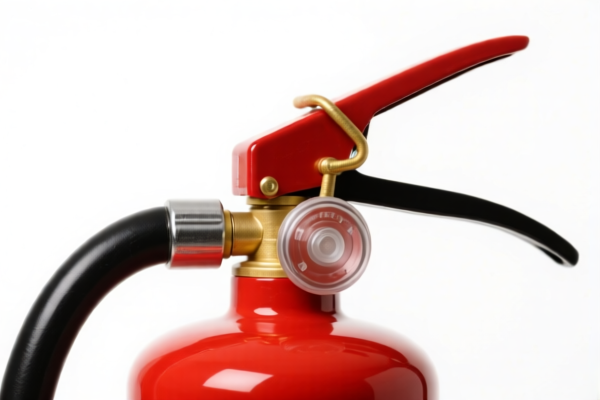
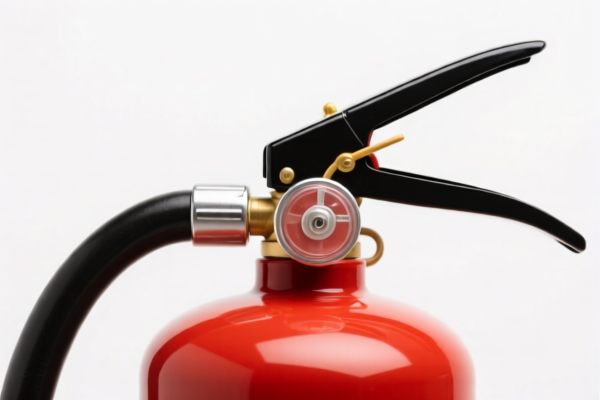

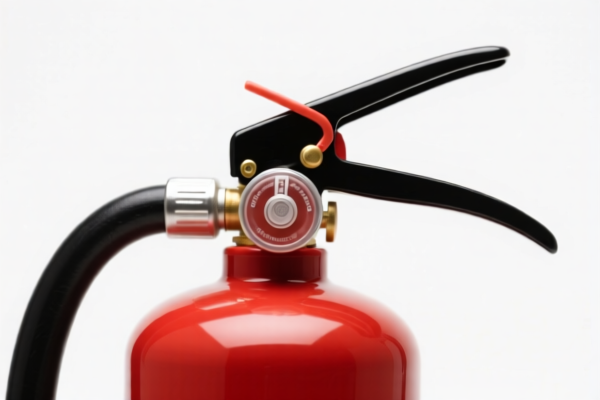
AI Analysis
🚒 Nozzle for Fire Extinguishing Agent (Water-Based)
🌐 HS Code Reference & Clearance Guide | 2026 Latest Tariff Analysis | Professional Customs Strategy
📌 I. Product Definition & Classification: What is a "Fire Extinguishing Nozzle"?
A "Nozzle for Fire Extinguishing Agent" is a critical component of fire safety systems. In international trade, its classification depends heavily on whether it is viewed as a spraying mechanical apparatus (8424), a liquid pump (8413), or a generic mechanical device (8479).
For water-based extinguishing agents, the key functional characteristic is the spraying/dispersing of liquid. The classification logic below analyzes four potential HS Codes based on this function, material, and mechanical structure.
⚠️ Key Distinction Points:
- If the item is a complete spraying machine/device capable of dispersing liquid → Consider 8424 (Spraying Machinery).
- If the item is primarily a pumping mechanism for liquids → Consider 8413 (Pumps).
- If the item is a general mechanical device without a specific primary function like spraying or pumping → Consider 8479 (Other Machinery).
- Note: Fire extinguishers themselves are classified under Chapter 84 (8424.10), but this guide focuses on the nozzle/sprayer unit context provided in the data.
📦 II. HS Code Classification Details (Based on Provided Data)
| HS Code | Product Description | Matching Logic (Why this Code?) | Total Tax Rate (US/CN) |
|---|---|---|---|
8424.20.10.00 |
Spraying Machinery for Liquid | Matches "Sprayer" function; "Water-based agent" fits liquid spraying category. No material/shape conflict. | 37.9% |
8413.81.00.40 |
Other Pumps (Liquid) | Functional fit: Liquid spraying involves liquid transport/pumping. Classified under "Other Pumps" due to internal transport mechanism. | 35.0% |
8424.10.00.00 |
Fire Extinguishers (incl. Chargeable) | Matches "Spraying/Dispersing Liquid" function. "Water-based agent" is a liquid substance, consistent with fire extinguisher function. | 17.5% |
8479.89.65.00 |
Other Independent Mechanical Devices | General fit: Independent mechanical device. "Water-based" implies non-specific chemical raw material. Fits "Other Mechanical Devices" with no material conflict. | 20.3% |
🔍 Critical Insight:
- The lowest tax rate is associated with 8424.10.00.00 (17.5%), but this code typically refers to complete fire extinguishers (including the charge).
- If the item is only the nozzle/sprayer assembly (not a complete extinguisher), 8424.20.10.00 or 8479.89.65.00 are more technically accurate for the component, but come with higher tariffs.
- 8413.81.00.40 represents a functional argument (it acts like a pump), but may be contested if no pumping mechanism is explicitly present.
💰 III. 2026 Latest Tariff Rate Breakdown (Including Surcharges)
✅ Applicable Country: United States (US)
✅ Origin: China (CN)
✅ Effective Date: November 10, 2025 onwards
🎯 1. 8424.20.10.00 — Spraying Machinery (Highest Risk, High Cost)
| Item | Content |
|---|---|
| Base Rate | 2.9% |
| Section 301 Surcharge | +25.0% |
| IEEPA Surcharge (122 Clause) | +10.0% |
| Total Rate | 37.9% |
| Tax Calculation | CIF Value × 37.9% |
| De Minimis Eligibility | ❌ No (deny_de_minimis) |
| Legal Basis | USITC:8424.20.10.00 → Section301:8424 → IEEPA:122 |
📌 Explanation:
- This code is for spraying machinery. The 25% Section 301 tariff applies to many mechanical appliances.
- The additional 10% under IEEPA (Section 122) further increases the cost.
- Total 37.9% is a significant cost driver. Ensure the product is indeed a "spraying machine" and not just a simple nozzle.
🎯 2. 8413.81.00.40 — Other Pumps (Mid-High Cost)
| Item | Content |
|---|---|
| Base Rate | 0.0% |
| Section 301 Surcharge | +25.0% |
| IEEPA Surcharge (122 Clause) | +10.0% |
| Total Rate | 35.0% |
| Tax Calculation | CIF Value × 35.0% |
| De Minimis Eligibility | ❌ No |
| Legal Basis | USITC:8413.81.00.40 → Section301:8413 → IEEPA:122 |
📌 Explanation:
- Base rate is 0%, but the 25% + 10% surcharges make it costly.
- Argument: If the nozzle relies on pressure/pumping to spray, this may apply. However, Customs may reject this if it’s purely a passive nozzle.
🎯 3. 8424.10.00.00 — Fire Extinguishers (Lowest Rate, Best Value)
| Item | Content |
|---|---|
| Base Rate | 0.0% |
| Section 301 Surcharge | +7.5% |
| IEEPA Surcharge (122 Clause) | +10.0% |
| Total Rate | 17.5% |
| Tax Calculation | CIF Value × 17.5% |
| De Minimis Eligibility | ❌ No |
| Legal Basis | USITC:8424.10.00.00 → Section301:8424 → IEEPA:122 |
📌 Explanation:
- This is the most tax-efficient code at 17.5%.
- Crucial Condition: This code is for complete fire extinguishers. If you are importing only the nozzle without the extinguisher tank/charge, this classification is incorrect and risky.
- If the product is sold as a complete unit (nozzle + tank + agent), use this code.
- The Section 301 surcharge is lower (7.5%) for fire extinguishers compared to other spraying machinery (25%).
🎯 4. 8479.89.65.00 — Other Mechanical Devices (Moderate Cost)
| Item | Content |
|---|---|
| Base Rate | 2.8% |
| Section 301 Surcharge | +7.5% |
| IEEPA Surcharge (122 Clause) | +10.0% |
| Total Rate | 20.3% |
| Tax Calculation | CIF Value × 20.3% |
| De Minimis Eligibility | ❌ No |
| Legal Basis | USITC:8479.89.65.00 → Section301:8479 → IEEPA:122 |
📌 Explanation:
- A "catch-all" for mechanical devices.
- 20.3% is competitive, but only if the product cannot be clearly classified as a "sprayer" or "pump."
- Requires strong justification that it is an "independent mechanical device" not fitting other specific chapters.
🛠️ IV. Customs Clearance Practical Advice (Pitfall Avoidance Guide)
✅ 1. Document Checklist (Essential for Clearance)
| Document | Required? | Notes |
|---|---|---|
| ✅ Product Specification | ✔️ | Must clarify: Is it a nozzle only or a complete fire extinguisher? |
| ✅ Commercial Invoice | ✔️ | Must clearly state "Fire Extinguishing Nozzle" or "Complete Fire Extinguisher" |
| ✅ Photos | ✔️ | Show the item with/without tank to prove it’s not a complete unit if claiming non-8424.10 |
| ✅ Material Declaration | ✔️ | Confirm no hazardous materials (except the agent, if included) |
| ✅ UL/FSR Certification | ✔️ | Fire safety products often require UL or FM approval for customs inspection |
✅ 2. Declaration Strategy (Key Tips)
🔥 "Complete Unit = 17.5%; Nozzle Only = 20-38%!"
| Scenario | Correct HS Code | Reason |
|---|---|---|
| Complete Fire Extinguisher (Tank + Agent + Nozzle) | 8424.10.00.00 |
Lowest tax (17.5%). Classified as fire extinguisher. |
| Nozzle Only (Spraying Head/Mechanism) | 8424.20.10.00 |
Classified as spraying machinery. Higher tax (37.9%). |
| Nozzle with Pump Mechanism | 8413.81.00.40 |
If it includes a pumping action, may argue for pump classification (35.0%). |
| Generic Mechanical Sprayer | 8479.89.65.00 |
If it doesn’t fit "spraying machinery" strictly, use as fallback (20.3%). |
⚠️ Warning:
- Do NOT declare a nozzle-only product as8424.10.00.00(Fire Extinguisher). This is misclassification and can lead to seizures, fines, and back taxes.
- If the product is a complete extinguisher, ensure the agent type is declared as "Water-Based" to support the 17.5% rate.
✅ 3. Special Cases
| Case | Advice |
|---|---|
| OEM Custom Nozzles | Provide design drawings to prove it’s a mechanical device, not a generic pump. |
| Nozzles with Electric Motors | May fall under 8501 (Electric Motors) if motor is primary function. Consult specialist. |
| Part of a Larger System | If part of a fire suppression system, consider system-level classification. |
🌍 V. Global Market Comparison (2026 Latest)
| Country/Region | Recommended HS Code | Tariff (CN Origin) | Notes |
|---|---|---|---|
| 🇺🇸 USA | 8424.10.00.00 |
17.5% (Complete Unit) | Lowest rate for complete units. Nozzle-only is 37.9%. |
| 🇨🇳 China | 8424.10.00.00 |
8% | Standard import duty. |
| 🇪🇺 EU | 8424.10.00.00 |
0% | Fire extinguishers often duty-free if CE marked. |
| 🇬🇧 UK | 8424.10.00.00 |
0% | Post-Brexit, often 0% for fire safety equipment. |
📌 Conclusion:
- USA is the most complex market due to Section 301 and IEEPA surcharges.
- Completing the product (selling as a full extinguisher) significantly reduces tax burden (17.5% vs 37.9%).
- For nozzle-only imports, expect high tariffs (20-38%). Plan pricing accordingly.
📌 VI. Common Errors & Pitfalls (Lessons Learned)
❌ Error 1: Declaring a nozzle-only part as a complete fire extinguisher (8424.10.00.00)
👉 Consequence: Customs seizure, fines for misdeclaration, back taxes of 20%+ difference.
❌ Error 2: Using 8413 (Pumps) for a passive nozzle
👉 Consequence: Rejection by Customs if no pumping mechanism is present. Must be rejected in favor of 8424 (Sprayers) or 8479 (General Machinery).
❌ Error 3: Ignoring IEEPA 122 Clause
👉 Consequence: Underpaying 10% of the value. This is a recent surcharge affecting many Chinese mechanical goods.
❌ Error 4: Not providing UL/FSR Certification
👉 Consequence: Customs may detain the shipment for safety inspections, causing delays and storage fees.
✅ Correct Practice:
- Complete Unit: "Fire Extinguisher, Water-Based, 2kg, UL Listed, Model XYZ" →
8424.10.00.00- Nozzle Only: "Spraying Nozzle for Fire Extinguisher, Brass, No Tank, No Agent" →
8424.20.10.00
🎯 VII. Conclusion: Strategic Classification for Cost Efficiency
🎯 Remember the Golden Rule:
🔹 "Complete Extinguisher = 17.5% | Nozzle Only = 20-38%"
🔹 "Don't misclassify parts as complete units to save tax—it's fraud!"
🔹 "Always check for IEEPA 122 Clause: +10% is mandatory."
📌 Pro Tip:
If you are importing nozzles only, consider bundling them with empty tanks (if permissible) to create a complete but non-pressurized unit for classification purposes, but consult a customs broker to ensure this doesn’t violate safety regulations.
For complete extinguishers, ensure UL/FM certification is upfront to avoid inspection delays.
📣 Immediate Action:
📞 Contact a Licensed Customs Broker
📄 Provide Product Photos & Specs
🔍 Apply for Advance Ruling if importing high volumes
🚀 Clearance Success: Start with Accurate Classification!
✨ Professional Customs Clearance Starts with Precise HS Codes!
💼 Every Percentage Point Matters in Your Supply Chain Cost!
Customer Reviews
About HS Code Classification
The Harmonized System (HS) is an internationally standardized nomenclature developed by the World Customs Organization (WCO) to classify traded products. Over 200 countries use the HS system as the basis for customs tariffs, trade statistics, and import/export regulations.
Each HS code follows a hierarchical structure:
- Chapter (2 digits) — Broad category of goods (e.g., Chapter 84: Machinery and Mechanical Appliances)
- Heading (4 digits) — More specific grouping within the chapter
- Subheading (6 digits) — Internationally standardized breakdown, used by all WCO member countries
- National subdivisions (8-10 digits) — Country-specific extensions for further classification, such as US HTSUS 10-digit codes
Correct HS code classification is essential for smooth customs clearance, accurate duty payment, and compliance with trade regulations. Misclassification can lead to customs delays, overpayment of duties, or penalties.
When importing from CN to US, the applicable tariff rates may include:
- Most-Favored-Nation (MFN) rate — The standard duty rate applied to WTO members
- General rate — Applied to countries without trade agreements
- Trade remedy duties — Additional tariffs such as Section 301 (anti-dumping), Section 232 (national security), or countervailing duties
The information provided on this page is for reference purposes only. For official classification, please consult with your local customs authority or a licensed customs broker.