Number Plate
CN → US| HS Code | Tariff Rate | Origin | Destination | Doc |
|---|---|---|---|---|
| 7326901000 | 85.0% | CN | US | Official Doc |
| 7326908688 | 87.9% | CN | US | Official Doc |
| 8310000000 | 35.0% | CN | US | Official Doc |
Product Images
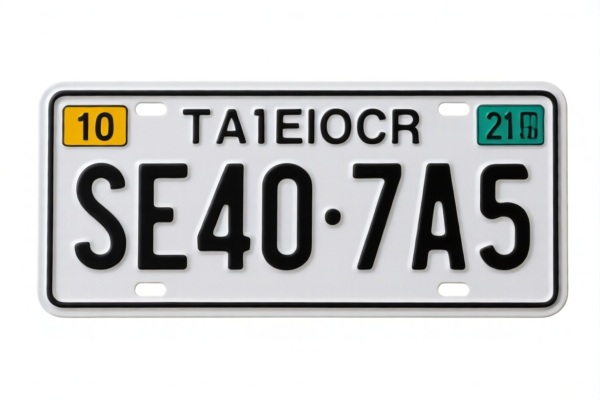
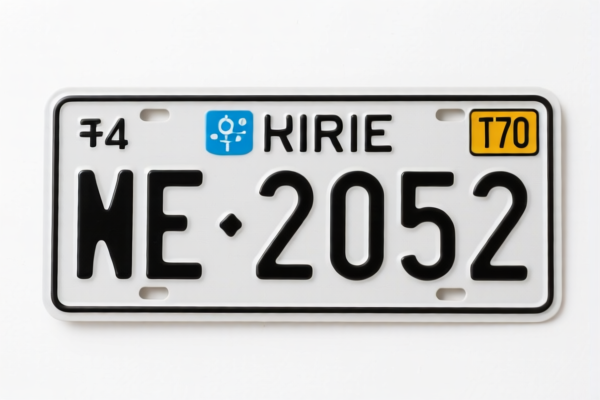
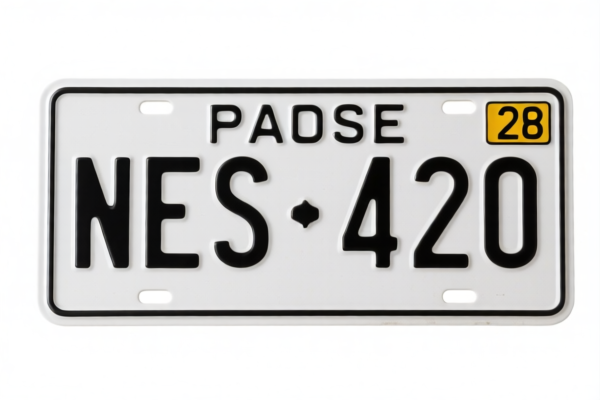
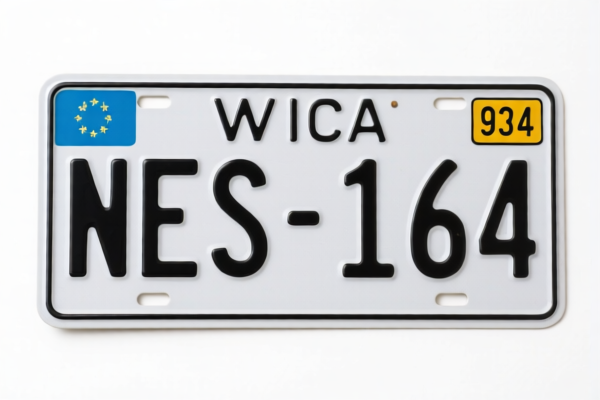
AI Analysis
🚗 License Plates (Number Plates)
🌐 HS Code Reference & Customs Clearance Guide | 2026 Latest Tariff Analysis | Professional Clearance Strategy
📌 I. Product Definition & Classification: What Exactly is a "License Plate"?
In international trade, "License Plates" (or Number Plates) are regulatory identification devices attached to vehicles. Their classification heavily depends on material composition and intended use.
There are two primary classification paths based on customs logic: 1. As General Metal Articles: If the plate is viewed primarily as a fabricated metal item (aluminum or steel) without specific functional coding beyond identification, it often falls under "Other articles of iron or steel." 2. As Signs/Placards: If the plate is viewed as a "sign" or "address plate" made of base metal, it falls under the category of "Signs, placards, and similar articles."
⚠️ Key Distinction:
- Material Driven: Aluminum/Steel generic fabrication → Chapter 73
- Function Driven: "Sign/Label" function → Chapter 83
📦 II. HS Code Classification Details (2026 Latest Tariff Authority Comparison)
| HS Code | Product Description | Application Scenario | Basis for Classification |
|---|---|---|---|
7326.90.10.00 |
Other articles of iron or steel, aluminum | Generic metal license plates (Aluminum/Steel) | Material: "Other articles of iron/steel." Matches common metal materials. No specific shape conflict. |
7326.90.86.88 |
Other articles of iron or steel, aluminum (Other) | General steel/iron metal parts | Material: "Other iron/steel articles." Logical category for non-specific metal shapes. |
8310.00.00.00 |
Signs, placards, nameplates, address plates | License plates viewed as "Signs" | Function: Matches "Signs/Address Plates." Material: Base metal (Aluminum/Steel). Lowest Tax Option. |
🔍 Critical Analysis:
- 7326 Series: Relies on the assumption that the plate is a "manufactured metal article." The summary confirms no material conflict for aluminum/steel.
- 8310 Series: Relies on the functional argument that a license plate is a "sign" or "placard." This is often the most strategic classification for cost-saving, as it has a lower base tariff.
💰 III. 2026 Latest Tariff Rate Breakdown (Including Additional Duties & Policy Surcharges)
✅ Applicable Country: United States (US)
✅ Origin: China (CN)
✅ Effective Date: Current Trade Policies (Section 301 & IEEPA)
🎯 1. 7326.90.10.00 — Other Articles of Iron or Steel
| Item | Detail |
|---|---|
| Base Tariff | 0.0% (Ad Valorem) |
| Section 301 Additional Duty | +25.0% |
| Section 122 / IEEPA Surcharges | +10% (China-specific) + 50% (Steel/Aluminum/Copper Surcharge under specific clauses) |
| Total Tax Rate | 85.0% |
| Tax Calculation | CIF Value × 85.0% |
| De Minimis Eligibility | ❌ Not Eligible (High tariff burden exceeds thresholds) |
| Legal Pathway | Base: 0% → 301: 25% → IEEPA 10% + Steel/Al Surcharge 50% |
📌 Explanation:
- This classification triggers multiple layers of punitive tariffs.
- The 50% steel/aluminum surcharge is a critical cost driver, often applied to metal goods under specific trade enforcement clauses.
- Total Cost Impact: Extremely High.
🎯 2. 7326.90.86.88 — Other Iron or Steel Articles
| Item | Detail |
|---|---|
| Base Tariff | 2.9% |
| Section 301 Additional Duty | +25.0% |
| Section 122 / IEEPA Surcharges | +10% (China-specific) + 50% (Steel/Aluminum/Copper Surcharge) |
| Total Tax Rate | 87.9% |
| Tax Calculation | CIF Value × 87.9% |
| De Minimis Eligibility | ❌ Not Eligible |
| Legal Pathway | Base: 2.9% → 301: 25% → IEEPA 10% + Steel/Al Surcharge 50% |
📌 Note:
- Slightly higher than7326.90.10.00due to the 2.9% base rate.
- Still subject to the brutal 50% metal surcharge.
🎯 3. 8310.00.00.00 — Signs, Placards, Nameplates (Strategic Choice)
| Item | Detail |
|---|---|
| Base Tariff | 0.0% |
| Section 301 Additional Duty | +25.0% |
| Section 122 / IEEPA Surcharges | +10% (China-specific) |
| Total Tax Rate | 35.0% |
| Tax Calculation | CIF Value × 35.0% |
| De Minimis Eligibility | ⚠️ Check Specific Clauses (Generally high tax, but lower than 7326) |
| Legal Pathway | Base: 0% → 301: 25% → IEEPA 10% |
| Avoids | The 50% Steel/Aluminum Surcharge |
📌 Why This is Better:
- Massive Savings: 35% vs. 85%+ = ~50% tax reduction.
- Logic: Customs often accepts "Signs/Placards" (Ch. 83) for license plates because their primary function is identification/signage, not structural metal utility.
- No Metal Surcharge: Chapter 83 articles typically escape the steep 50% steel/aluminum surcharge applied to Chapters 72-74.
🛠️ IV. Customs Clearance Practical Advice (Risk Mitigation Guide)
✅ 1. Document Preparation Checklist (Mandatory)
| Document | Required? | Description |
|---|---|---|
| ✅ Product Specifications | ✔️ | Material (Aluminum/Steel), Dimensions, Reflectivity standards. |
| ✅ Material Declaration | ✔️ | Explicitly state "Aluminum Alloy" or "Steel." |
| ✅ Function Statement | ✔️ | "Vehicle Identification Plate" or "Regulatory Sign." |
| ✅ Commercial Invoice | ✔️ | Clearly describe as "License Plate (Sign/Placard)" to support HS 8310. |
| ✅ Photos | ✔️ | Show the plate clearly, including mounting holes and reflective surface. |
| ✅ Origin Certificate | ✔️ | For China-origin goods, to confirm applicability of IEEPA/301 duties. |
✅ 2. Declaration Strategy (The "How-To")
🔥 "Function over Form: Declare as Sign, Not just Metal!"
| Scenario | Recommended HS Code | Reason | Risk |
|---|---|---|---|
| Standard Aluminum/Steel Plate | 8310.00.00.00 |
Classify as "Sign/Placard" to avoid 50% metal surcharge. | Low Risk: Common acceptance for license plates. |
| Structural Metal Bracket + Plate | 7326.90.10.00 |
If the item is primarily a metal fixture, not a sign. | High Risk: 85%+ tax. |
| Reflective Plastic Plate | Different HS (e.g., 3926) | Not covered in this data. | N/A |
📌 Crucial Tip:
- When submitting the invoice, use the description: "Vehicle License Plate (Sign/Placard, Aluminum Alloy)".
- Avoid vague terms like "Metal Part" or "Steel Article."
- Argue that the primary function is informational/signage (Chapter 83), not structural metal utility (Chapter 73).
✅ 3. Special Handling for High Tariffs
| Situation | Advice |
|---|---|
| High Duty Burden (85%) | If forced to classify under 7326, calculate if shipping costs make the item uncompetitive. Consider third-country transshipment (risky, verify rules of origin). |
| Customs Audit | Be prepared to provide samples proving the item is a "sign" (text/numbers for identification) rather than a generic metal plate. |
| Combined Shipments | Do not mix license plates with unrelated steel hardware in the same container to avoid blanket classification as "Steel Articles." |
🌍 V. Global Market Clearance Comparison (2026)
| Market | Recommended HS Code | Est. Total Tax (China Origin) | Key Certification |
|---|---|---|---|
| 🇺🇸 USA | 8310.00.00.00 |
35% (Optimal) | None specific, but must meet DOT standards if for road use. |
| 🇺🇸 USA | 7326.90.10.00 |
85% (Avoid) | N/A |
| 🇪🇺 EU | 8310.00.00.00 |
Low/0% (Check FTAs) | CE Marking (if electronic components included), E-mark for vehicles. |
| 🇨🇳 China | 8310.00.00.00 |
5-13% | CCC (if part of vehicle assembly), GB standards. |
📌 Conclusion:
- The US is the highest cost market due to Section 301 and IEEPA tariffs.
- Choosing8310vs7326creates a 50% tax differential. This is the single most important decision in the classification process.
📌 VI. Common Errors & Pitfalls (Lessons Learned)
❌ Error 1: Classifying License Plates under 7326 (Iron/Steel)
👉 Result: Triggering the 50% Steel/Aluminum Surcharge.
👉 Fix: Re-classify under 8310 (Signs/Placards).
❌ Error 2: Using "Metal Plate" as the sole description
👉 Result: Customs officers default to Chapter 73 (Metal).
👉 Fix: Use "Vehicle License Sign" or "Identification Placard."
❌ Error 3: Ignoring IEEPA Surcharges
👉 Result: Underestimating total landed cost by 10%+.
👉 Fix: Always add 10% IEEPA + 25% Section 301 to base rates for China-origin goods.
✅ Correct Declaration Example:
"ALUMINUM LICENSE PLATES (SIGN/PLACARD), REFLECTIVE, FOR PASSENGER VEHICLES, MODEL XYZ"
→ Supports HS8310.00.00.00→ 35% Total Tax.
🎯 VII. Conclusion: Strategic Classification Saves Money!
🎯 Remember the Golden Rule:
🔹 "Plate is a Sign, Not Just Metal!"
🔹 HS 8310 = 35% Tax
🔹 HS 7326 = 85% Tax
🔹 Difference = 50% Savings!
📌 Pro Tip:
If you are shipping large volumes, consider applying for an Advance Ruling from U.S. Customs and Border Protection (CBP) to lock in the 8310 classification. This provides legal certainty and protects against future audits.
📣 Action Plan:
📞 Contact your freight forwarder immediately.
📄 Update Invoice Descriptions to emphasize "Sign/Placard."
🚀 Secure 35% tax rate, not 85%. Profit margins depend on this decision!
✨ Professional Customs Clearance: Start with Precision!
💼 Every percentage point of tax saved is pure profit.
Customer Reviews
About HS Code Classification
The Harmonized System (HS) is an internationally standardized nomenclature developed by the World Customs Organization (WCO) to classify traded products. Over 200 countries use the HS system as the basis for customs tariffs, trade statistics, and import/export regulations.
Each HS code follows a hierarchical structure:
- Chapter (2 digits) — Broad category of goods (e.g., Chapter 84: Machinery and Mechanical Appliances)
- Heading (4 digits) — More specific grouping within the chapter
- Subheading (6 digits) — Internationally standardized breakdown, used by all WCO member countries
- National subdivisions (8-10 digits) — Country-specific extensions for further classification, such as US HTSUS 10-digit codes
Correct HS code classification is essential for smooth customs clearance, accurate duty payment, and compliance with trade regulations. Misclassification can lead to customs delays, overpayment of duties, or penalties.
When importing from CN to US, the applicable tariff rates may include:
- Most-Favored-Nation (MFN) rate — The standard duty rate applied to WTO members
- General rate — Applied to countries without trade agreements
- Trade remedy duties — Additional tariffs such as Section 301 (anti-dumping), Section 232 (national security), or countervailing duties
The information provided on this page is for reference purposes only. For official classification, please consult with your local customs authority or a licensed customs broker.