Nursing Manicure
CN → US| HS Code | Tariff Rate | Origin | Destination | Doc |
|---|---|---|---|---|
| 3304300000 | 35.0% | CN | US | Official Doc |
| 8214209000 | 14.1% | CN | US | Official Doc |
| 3304995000 | 35.0% | CN | US | Official Doc |
| 8214203000 | 14.0% | CN | US | Official Doc |
| 9603298090 | 0.0% | CN | US | Official Doc |
Product Images
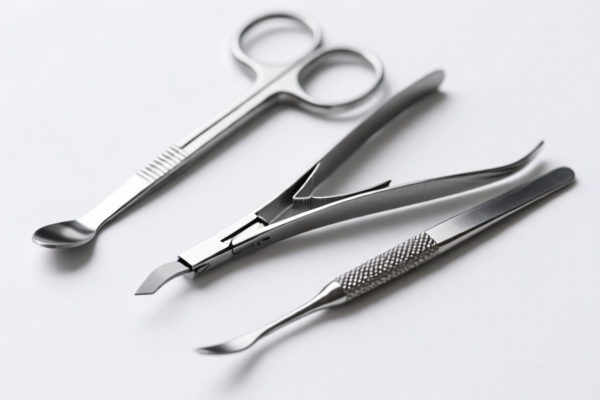
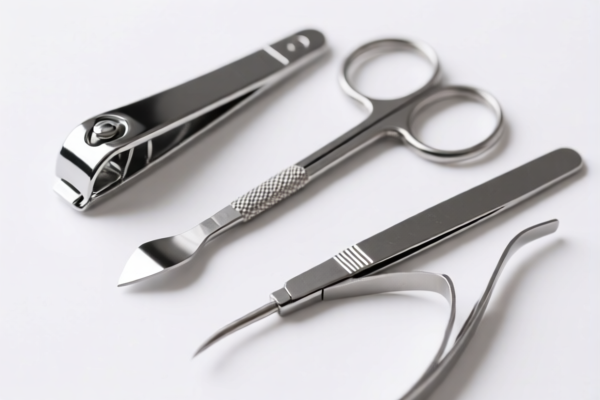
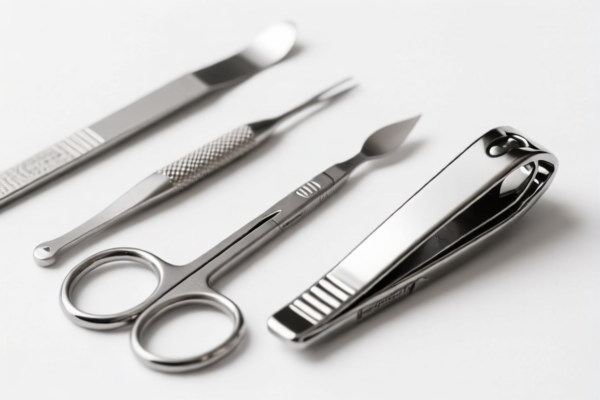
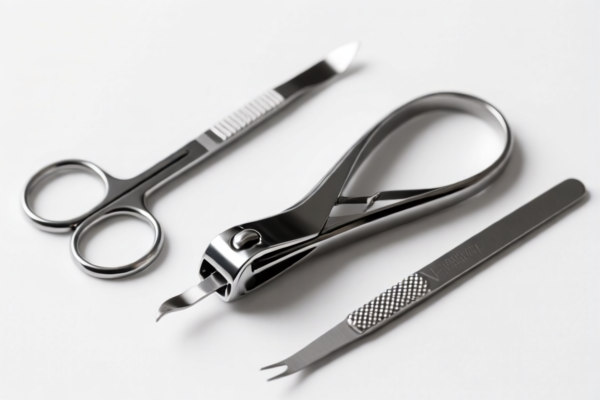
AI Analysis
💅 Manicure Kit (Nursing Manicure)
🌐 HS Code Reference & Customs Clearance Guide | 2026 Latest Tariff Analysis | Professional Clearance Strategy
📌 I. Product Definition & Classification: Do You Really Understand "Manicure Kits"?
A "Manicure Kit" (often referred to as Nursing Manicure in retail contexts) is a set of tools and/or preparations for nail care. In international trade, these sets are typically classified based on their primary material or primary function, leading to significant tariff differences.
Key Distinctions:
- Chemical/Cosmetic Based: Sets dominated by nail polishes, removers, oils, or creams.
- Metal Tool Based: Sets dominated by nail clippers, files, cuticle pushers, or scissors.
- Mixed/Other: Sets where the proportion or primary function is ambiguous, often falling under "Other" categories.
⚠️ Critical Compliance Point:
- If the kit is primarily cosmetic preparations (liquids/creams), it usually falls under Chapter 33.
- If the kit is primarily metal tools (clippers/files), it usually falls under Chapter 82 or Chapter 96.
- Misclassification Risk: Declaring a chemical-heavy kit as "Tools" or vice versa can lead to severe penalties, especially with US import regulations.
📦 II. HS Code Classification Details (2026 Latest Tariff Authority)
Based on the provided data, here are the four most likely HS Codes for "Nursing Manicure" sets, along with their specific tax implications for imports into the United States (from China).
| HS Code | Product Description | Primary Basis | Total Tax Rate (CN Origin) | Tax Structure |
|---|---|---|---|---|
| 3304.30.00.00 | Preparations for manicure or pedicure | Chemical/Cosmetic | 35.0% | Base: 0% + Sec 301: 25% + Section 122: 10% |
| 8214.20.90.00 | Manicure or pedicure sets and instruments (Other) | Metal Tools (General) | 14.1% | Base: 4.1% + Sec 301: 0% + Section 122: 10% |
| 3304.99.50.00 | Other beauty/makeup preparations (Manicure) | Chemical/Cosmetic (Misc) | 35.0% | Base: 0% + Sec 301: 25% + Section 122: 10% |
| 8214.20.30.00 | Manicure or pedicure sets (Specific Metal) | Metal Tools (Specific) | 14.0% | Base: 4.0% + Sec 301: 0% + Section 122: 10% |
| 9603.29.80.90 | Other toilet brushes, including nail brushes | Nail Brushes/Parts | 0.3¢/ea + 3.6% + 10% | Base: 0.3¢/ea + 3.6% + Section 122: 10% |
🔍 Key Insight:
- Chapter 33 (Cosmetics): Attracts a 25% Section 301 additional tariff on top of the base rate. Total effective rate: 35%.
- Chapter 82 (Tools): Generally exempt from Section 301 tariffs (0% additional), but still subject to Section 122 tariffs (10%) and base duties. Total effective rate: ~14%.
- Conclusion: Classifying as "Metal Tools" (HS 8214) is significantly more tax-efficient than classifying as "Cosmetic Preparations" (HS 3304).
💰 III. Detailed Tariff Breakdown (2026 Latest)
✅ Applicable Country: United States (US)
✅ Country of Origin: China (CN)
✅ Effective Date: Post-November 2025 (Current Trade Regime)
🎯 1. 3304.30.00.00 & 3304.99.50.00 —— Manicure Preparations (Cosmetics)
| Item | Detail |
|---|---|
| Base Duty | 0% (ad valorem) |
| USITC Additional Duty (Sec 301) | +25% (Footnote 9903.88.01 / IEEPA) |
| Section 122 Tariff | +10% (Specific provisions for certain goods) |
| Total Duty | 35.0% |
| Calculation | CIF Value × 35% |
| De Minimis Exemption? | ❌ No (High-risk category, usually scrutinized) |
| Legal Basis | IEEPA:9903.01.25 → USITC:3304.30.00.00 |
📌 Explanation:
- This classification is used when the kit is primarily made up of nail polishes, removers, lotions, or gels.
- The 25% Section 301 tariff is the key driver, making these kits expensive to import from China.
- Warning: If your kit contains >50% liquid/cream by value, CBP is likely to enforce this classification.
🎯 2. 8214.20.30.00 & 8214.20.90.00 —— Manicure/Pedicure Sets (Metal Tools)
| Item | Detail |
|---|---|
| Base Duty | 4.0% - 4.1% |
| USITC Additional Duty (Sec 301) | 0% (Exempt) |
| Section 122 Tariff | +10% |
| Total Duty | 14.0% - 14.1% |
| Calculation | CIF Value × 14.0% (approx) |
| De Minimis Exemption? | ✅ Possibly (Check specific value thresholds for Section 321, but high risk for sets) |
| Legal Basis | Section 122 → USITC:8214.20.30.00 |
📌 Explanation:
- This classification is used when the kit is primarily metal tools like clippers, cuticle nippers, and files.
- Crucial Advantage: No 25% Section 301 tariff. This is a 21% tax saving compared to cosmetic classification.
- Condition: The tools must be the primary component. If the kit is 90% polish and 10% clipper, CBP may reject this.
🎯 3. 9603.29.80.90 —— Nail Brushes & Accessories
| Item | Detail |
|---|---|
| Base Duty | 0.3¢ each + 3.6% |
| USITC Additional Duty (Sec 301) | 0% |
| Section 122 Tariff | +10% |
| Total Duty | 0.3¢/ea + ~3.6% + 10% |
| Calculation | Per-unit duty + Ad valorem |
| Applicability | Only for kits dominated by brushes or specific brush components. |
📌 Explanation:
- Use this only if the primary item is a nail brush or if the kit is explicitly declared as brushes.
- Less common for general "manicure sets" but viable for brush-only kits.
🛠️ IV. Customs Clearance Practical Advice (Battle-Tested Guide)
✅ 1. Document Checklist (Non-Negotiable)
| Document | Required? | Description |
|---|---|---|
| Product Spec Sheet | ✔️ | Must list components: % by weight/value of liquids vs. metals. |
| Photos of Kit Contents | ✔️ | Show each tool and bottle clearly. |
| Commercial Invoice | ✔️ | Clearly state "Manicure Set" and component breakdown. |
| Bill of Lading/Air Waybill | ✔️ | Standard shipping docs. |
| Labeling/Compliance Certs | ✔️ | FDA (for cosmetics), Prop 65 (for CA), Material Safety Data Sheet (MSDS) for liquids. |
✅ 2. Classification Strategy (Key Mantra)
🔥 "Liquid Heavy = 3304 (35% Tax); Metal Heavy = 8214 (14% Tax)!"
| Scenario | Recommended HS Code | Reasoning |
|---|---|---|
| Kit is 80% Polish/Oil, 20% Tool | 3304.30.00.00 |
Primary function is cosmetic preparation. |
| Kit is 80% Clippers/Files, 20% Oil | 8214.20.30.00 |
Primary function is mechanical nail care. |
| Mixed Kit (50/50) | Consult Expert | High risk of CBP challenge. Consider splitting shipments. |
| Kit is Just Brushes | 9603.29.80.90 |
Specific tool category. |
⚠️ Critical Tip:
- Do not arbitrarily choose the lower tax rate without justification.
- If CBP audits and finds the kit is mostly liquid, they will reassess at 35% + penalties.
- Documentation is Key: Provide a value breakdown (e.g., "$50 worth of polish, $10 worth of clippers") to support the "Primary Component" argument for HS 8214.
✅ 3. Special Considerations
| Situation | Recommendation |
|---|---|
| MSDS Required | If declaring as HS 3304 (cosmetics), you must provide MSDS for any liquids. |
| FDA Registration | Cosmetics (HS 3304) may require FDA facility registration if sold in the US. |
| Section 122 Tariff | Note that both 3304 and 8214 are subject to a 10% Section 122 tariff. This is often overlooked. |
| De Minimis (Section 321) | For shipments < $800, duties may be exempt, but FDA/SECURITY checks still apply. |
🌍 V. Global Market Comparison (2026)
| Market | Recommended HS Code | Est. Total Duty (CN Origin) | Notes |
|---|---|---|---|
| 🇺🇸 USA | 8214.20.30.00 |
14.0% | Best for tool-heavy kits. Avoid 3304 if possible due to 35% total. |
| 🇪🇺 EU | 8214.20.90 |
~4-10% | No Section 301. Varies by country. |
| 🇨🇳 China | 8214.20.90 |
4-10% | Import duties apply. |
| 🇬🇧 UK | 8214.20.90 |
~4-10% | Post-Brexit rules apply. |
📌 Conclusion:
- USA is the most tax-sensitive market due to Section 301 and 122 tariffs.
- Strategy: If you can justify the kit as "Tool-Based," use HS 8214 to save 21% in duties.
📌 VI. Common Mistakes & Pitfalls (Lessons Learned)
❌ Mistake 1: Declaring a liquid-heavy kit as "Metal Tools" to save taxes.
👉 Consequence: CBP audit → Reassignment to 3304 + 25% retroactive duty + Penalties.
❌ Mistake 2: Ignoring the 10% Section 122 Tariff.
👉 Consequence: Budgeting error. Both 3304 and 8214 carry this 10% charge. Total tax is not just the base rate.
❌ Mistake 3: Missing MSDS for cosmetic kits.
👉 Consequence: Shipment held at customs, returned, or fined.
❌ Mistake 4: Vague description "Beauty Kit."
👉 Consequence: CBP assigns worst-case scenario or delays clearance for inspection.
✅ Correct Declaration Example:
"Manicure Set: Contains 4 metal nail clippers, 2 nail files, and 1 small bottle of cuticle oil. Primary component: Metal tools."
HS Code:8214.20.30.00
🎯 VII. Conclusion: Smart Classification for Profit Maximization
🎯 Remember:
🔹 "Tools Pay Less, Cosmetics Pay More!"
🔹 "Check the Ratio: If >50% Liquid, Prepare for 35% Tax."
🔹 "Never Forget the 10% Section 122 Tariff!"
📌 Pro Tip:
If you are importing from China, negotiate your supplier to ship tools and cosmetics separately if possible.
- Ship tools as 8214 (14%).
- Ship cosmetics as 3304 (35%) or find an exempt route.
This allows you to optimize logistics and declare accurately per item type.
📣 Immediate Action:
📞 Audit your current product mix.
📸 Take clear photos of every kit.
📄 Prepare a value breakdown sheet.
🚀 Declare accurately to avoid 301 penalties!
✨ Professional clearance starts with precise classification!
💼 Every percentage point saved is pure profit!
Customer Reviews
About HS Code Classification
The Harmonized System (HS) is an internationally standardized nomenclature developed by the World Customs Organization (WCO) to classify traded products. Over 200 countries use the HS system as the basis for customs tariffs, trade statistics, and import/export regulations.
Each HS code follows a hierarchical structure:
- Chapter (2 digits) — Broad category of goods (e.g., Chapter 84: Machinery and Mechanical Appliances)
- Heading (4 digits) — More specific grouping within the chapter
- Subheading (6 digits) — Internationally standardized breakdown, used by all WCO member countries
- National subdivisions (8-10 digits) — Country-specific extensions for further classification, such as US HTSUS 10-digit codes
Correct HS code classification is essential for smooth customs clearance, accurate duty payment, and compliance with trade regulations. Misclassification can lead to customs delays, overpayment of duties, or penalties.
When importing from CN to US, the applicable tariff rates may include:
- Most-Favored-Nation (MFN) rate — The standard duty rate applied to WTO members
- General rate — Applied to countries without trade agreements
- Trade remedy duties — Additional tariffs such as Section 301 (anti-dumping), Section 232 (national security), or countervailing duties
The information provided on this page is for reference purposes only. For official classification, please consult with your local customs authority or a licensed customs broker.