Nursing Pads
CN → US| HS Code | Tariff Rate | Origin | Destination | Doc |
|---|---|---|---|---|
| 9619001560 | 17.5% | CN | US | Official Doc |
| 9619002100 | 21.1% | CN | US | Official Doc |
| 6307908940 | 17.0% | CN | US | Official Doc |
| 6307909875 | 17.0% | CN | US | Official Doc |
| 3005905010 | 10.0% | CN | US | Official Doc |
| 3005905090 | 10.0% | CN | US | Official Doc |
Product Images
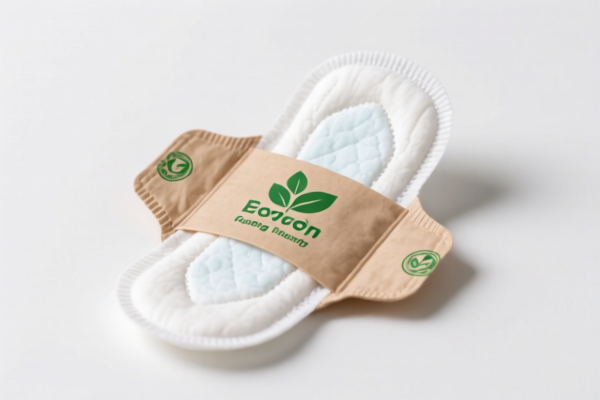
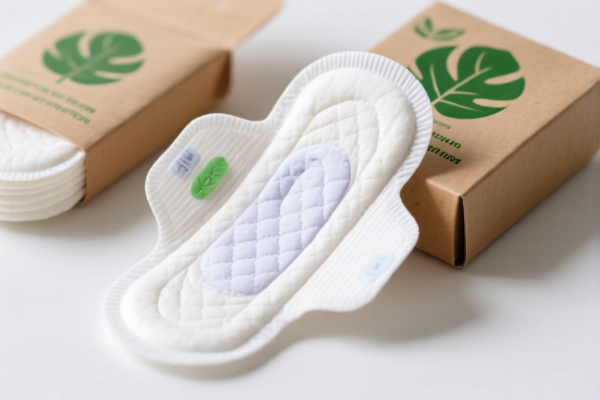
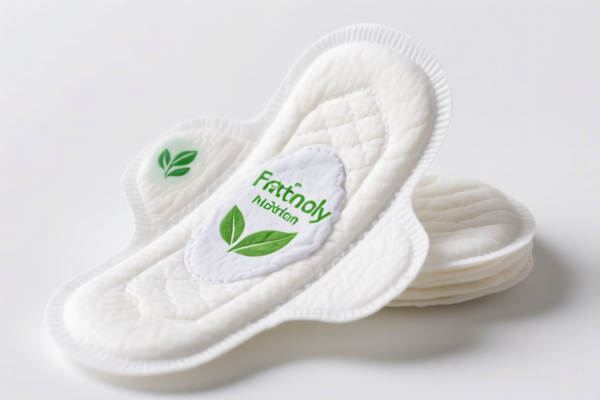
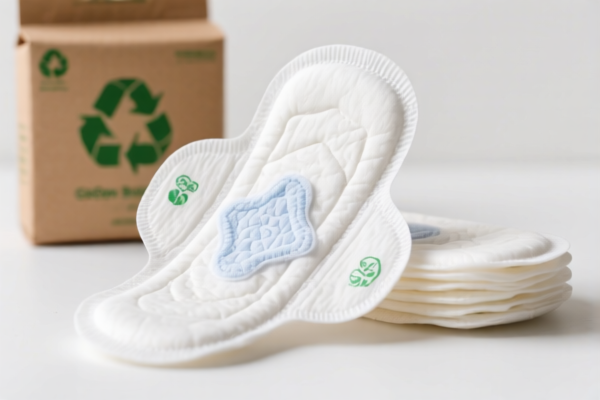
AI Analysis
🩸 Nursing Pads (Maternity & Hygiene Products)
🌐 HS Code Reference & Customs Clearance Guide | 2026 Latest Tariff Analysis | Professional Strategy
📌 I. Product Definition & Classification: What Exactly Are "Nursing Pads"?
Nursing Pads (also known as breast feeding pads or lactation pads) are hygienic inserts worn inside bras to absorb leakage from breasts during pregnancy and breastfeeding. They are designed for single use and are often made of cotton, cellulose wadding, or synthetic fibers, sometimes with a plastic backing to prevent moisture from leaking onto clothing.
In international trade, these items fall under the broad category of "Sanitary articles" or "Make-up/removal articles." However, the specific HS Code depends heavily on the material composition: 1. Paper/Cellulose-based: Most common disposable nursing pads (soft, absorbent core, possibly with a plastic film). 2. Textile-based: Reusable or disposable pads made of cotton wadding, flannel, or other textile materials.
⚠️ Key Distinction:
- If the product is primarily paper, cellulose wadding, or webs of cellulose fibers (even if it has a tiny plastic backing for leak protection), it is classified under 9619.00.
- If the product is made of textile wadding (e.g., cotton), it is also classified under 9619.00, but with different sub-tariff lines depending on the specific fiber content (e.g., cotton).
📦 II. HS Code Classification Details (2026 Latest Tariff Reference)
Based on the provided data, here are the exact HS Codes for Nursing Pads and related sanitary articles:
| HS Code | Product Description | Material Composition | Tax Rate (Total) |
|---|---|---|---|
9619.00.15.60 |
Sanitary pads, tampons, diapers, and similar articles... Of paper, cellulose wadding or webs of cellulose fibers | Paper, Wood Pulp, Cellulose | 7.5% (0% Base + 7.5% Additional) |
9619.00.21.00 |
Sanitary pads, tampons, diapers, and similar articles... Of textile wadding: Of cotton | Cotton Wadding, Flannel | 0.0% (0% Base + 0% Additional) |
🔍 Critical Note:
- Nursing Pads are explicitly covered under HS 9619. The description "Sanitary pads (towels) and tampons, diapers (napkins), diaper liners and similar articles, of any material" encompasses nursing pads as "similar articles" used for hygienic purposes.
- Do NOT confuse with Towels:
- Nursing Pads are not classified under6307.90.89.40(Cotton towels of pile/tufted construction). While both are made of cotton, nursing pads are "hygienic/sanitary articles" (HS 9619), whereas towels are "made-up articles" (HS 6307).
- Do NOT confuse with Face Masks:
- Nursing Pads are not classified under6307.90.98.75(Other face masks). They are for bodily fluid absorption, not respiratory filtration.
- Do NOT confuse with Medical Sponges:
- Nursing Pads are not classified under3005.90.50.10(Laparotomy sponges). Laparotomy sponges are for surgical use inside the body; nursing pads are external hygiene products.
💰 III. 2026 Tariff Rate Detailed Explanation
✅ Applicable Country: United States (US)
✅ Origin: China (CN)
✅ Effective Date: Rates apply to imports entering the US customs territory.
🎯 1. 9619.00.15.60 – Nursing Pads (Paper/Cellulose Base)
| Item | Content |
|---|---|
| Base Tariff | 0.0% |
| Additional Tariff (Section 301/IEEPA) | 7.5% |
| Total Tariff | 7.5% |
| Tax Calculation | CIF Value × 7.5% |
| De Minimis Exemption? | ❌ No. Section 301 tariffs generally apply regardless of value for Chinese-origin goods in this category. |
| Legal Basis Path | USITC:9619.00.15.60 → FOOTNOTE:301 |
📌 Explanation:
- Most disposable nursing pads are made of cellulose wadding (wood pulp) with a plastic liner. This falls under "Of paper, cellulose wadding or webs of cellulose fibers."
- These products are subject to the 7.5% additional tariff due to ongoing trade measures against China.
- Even though the base tariff is 0%, the total effective rate is 7.5%.
🎯 2. 9619.00.21.00 – Nursing Pads (Cotton Textile Base)
| Item | Content |
|---|---|
| Base Tariff | 0.0% |
| Additional Tariff (Section 301/IEEPA) | 0.0% |
| Total Tariff | 0.0% |
| Tax Calculation | $0 |
| De Minimis Exemption? | ✅ Yes (if under $800, though 0% makes it irrelevant for duty). |
| Legal Basis Path | USITC:9619.00.21.00 |
📌 Explanation:
- If the nursing pads are made primarily of cotton wadding (e.g., reusable cloth pads or certain disposable cotton-based pads), they fall under "Of textile wadding: Of cotton."
- These products are exempt from the additional 7.5% tariff, resulting in a 0% total duty rate.
- Strategy: If you can source or manufacture nursing pads using cotton wadding instead of cellulose/paper, you can save 7.5% in tariffs.
🛠️ IV. Customs Clearance Practical Advice (Pitfall Avoidance Guide)
✅ 1. Documentation Checklist (Must-Have)
| Document | Required? | Notes |
|---|---|---|
| Commercial Invoice | ✔️ | Must clearly state "Nursing Pads" or "Breastfeeding Pads." Avoid vague terms like "Hygiene Products." |
| Material Composition Statement | ✔️ | Crucial! Must specify: "Made of 100% Cotton Wadding" or "Made of Cellulose Wadding with Plastic Backing." This determines the HS Code. |
| Product Photos | ✔️ | Show the product structure. Is it a thin pad? Does it have a plastic film? |
| Bill of Lading | ✔️ | Ensure HS Code 9619.00.xxxx is listed. |
| Certificate of Origin | ✔️ | Required to determine if Section 301 tariffs apply (CN origin vs. non-CN). |
✅ 2. Classification Strategy (Key Tips)
🔥 “Material Dictates Duty: Cotton is Free, Cellulose Costs 7.5%!”
| Scenario | Correct HS Code | Duty Rate | Risk Level |
|---|---|---|---|
| Disposable Nursing Pads (Most Common) | 9619.00.15.60 |
7.5% | 🟡 Medium (Check material carefully) |
| Reusable/Cotton Nursing Pads | 9619.00.21.00 |
0.0% | 🟢 Low (Preferable for cost) |
Misclassified as Towels (6307.90.89.40) |
INCORRECT | 0.0% | 🔴 High (Penalty for misclassification) |
Misclassified as Medical Sponges (3005.90.50.10) |
INCORRECT | 0.0% | 🔴 High (Penalty for misclassification) |
⚠️ Warning:
- Do NOT declare nursing pads as "Cotton Towels" (6307.90.89.40) to avoid the 7.5% tariff. Customs will reject this because nursing pads are sanitary articles (HS 9619), not towels (HS 6307). Misclassification can lead to seizure, fines, and delayed clearance.
- Do NOT declare them as "Medical Sponges" (3005.90.50.10). These are for surgical use inside the body. Nursing pads are for external hygiene. Using the wrong code is a red flag for customs.
✅ 3. Special Handling Tips
| Situation | Recommendation |
|---|---|
| Mixed Materials (e.g., cotton outer + cellulose inner) | Declare based on chief material or consult a customs broker. If the core absorbent layer is cellulose, 9619.00.15.60 is more likely. |
| Packaging | If nursing pads are packed with other hygiene items (e.g., tampons, panty liners), they may be subject to bundling rules. Ensure the invoice itemizes them separately if possible. |
| Origin Verification | Ensure the Certificate of Origin accurately reflects the manufacturing location. If the cotton is sourced from China but processed elsewhere, rules of origin may vary. |
🌍 V. Global Market Comparison (2026)
| Market | Recommended HS Code | Duty Rate (China Origin) | Key Requirement |
|---|---|---|---|
| 🇺🇸 USA | 9619.00.15.60 (Cellulose) 9619.00.21.00 (Cotton) |
7.5% (Cellulose) 0% (Cotton) |
Clear material declaration. |
| 🇨🇳 China | 9619.00 (General) |
~0-10% (Varies) | Import license may be required for certain hygiene products. |
| 🇪🇺 EU | 9619.00 (General) |
0% (Most FDI Countries) | CE marking not required, but hygiene standards apply. |
| 🇬🇧 UK | 9619.00 (General) |
0% (Most FDI Countries) | Post-Brexit rules apply. |
📌 Conclusion:
- The USA is the only major market in this data set with additional tariffs on certain types of nursing pads.
- Cotton-based nursing pads offer a tariff advantage (0% vs. 7.5%) in the US market.
- Misclassification is a high-risk area. Do not try to disguise nursing pads as towels or medical devices.
📌 VI. Common Errors & Pitfalls (Lessons Learned)
❌ Error 1: Declaring nursing pads as "Cotton Towels" (6307.90.89.40) to avoid tariffs.
👉 Consequence: Customs will classify them as HS 9619 (sanitary articles) and apply the correct tariff (7.5%) + penalties for misdeclaration.
❌ Error 2: Ignoring the material composition.
👉 Consequence: If you declare "Cotton" but the product is "Cellulose," you may face retroactive duty charges of 7.5% + interest.
❌ Error 3: Using vague descriptions like "Hygiene Pads" without specifying material.
👉 Consequence: Customs may hold the shipment for inspection, causing delays and storage fees.
✅ Correct Practice:
“Nursing Pads, Disposable, 100% Cellulose Wadding with Plastic Backing” → HS 9619.00.15.60 (7.5%)
“Reusable Nursing Pads, 100% Cotton Wadding” → HS 9619.00.21.00 (0%)
🎯 VII. Conclusion: Professional Classification, Cost Optimization
🎯 Key Takeaway:
🔹 “Check the Material: Cellulose = 7.5%, Cotton = 0%!”
🔹 “Sanitary, Not Towels: Use HS 9619, Not 6307!”
📌 Action Plan:
1. Verify Material: Confirm if your nursing pads are made of cellulose/paper or cotton.
2. Select Correct HS Code: Use 9619.00.15.60 for cellulose, 9619.00.21.00 for cotton.
3. Document Clearly: Include material composition in the commercial invoice.
4. Consult a Broker: For mixed-material products, seek professional advice to avoid misclassification.
📣 Final Note:
Proper classification saves you 7.5% in tariffs and prevents customs delays.
Optimize your supply chain by choosing cotton-based products if tariff avoidance is a priority.
✨ Professional Customs Clearance Starts with Accurate Classification!
💼 Every Cent Counts in International Trade.
Customer Reviews
About HS Code Classification
The Harmonized System (HS) is an internationally standardized nomenclature developed by the World Customs Organization (WCO) to classify traded products. Over 200 countries use the HS system as the basis for customs tariffs, trade statistics, and import/export regulations.
Each HS code follows a hierarchical structure:
- Chapter (2 digits) — Broad category of goods (e.g., Chapter 84: Machinery and Mechanical Appliances)
- Heading (4 digits) — More specific grouping within the chapter
- Subheading (6 digits) — Internationally standardized breakdown, used by all WCO member countries
- National subdivisions (8-10 digits) — Country-specific extensions for further classification, such as US HTSUS 10-digit codes
Correct HS code classification is essential for smooth customs clearance, accurate duty payment, and compliance with trade regulations. Misclassification can lead to customs delays, overpayment of duties, or penalties.
When importing from CN to US, the applicable tariff rates may include:
- Most-Favored-Nation (MFN) rate — The standard duty rate applied to WTO members
- General rate — Applied to countries without trade agreements
- Trade remedy duties — Additional tariffs such as Section 301 (anti-dumping), Section 232 (national security), or countervailing duties
The information provided on this page is for reference purposes only. For official classification, please consult with your local customs authority or a licensed customs broker.