Nuts and Washers
CN → US| HS Code | Tariff Rate | Origin | Destination | Doc |
|---|---|---|---|---|
| 7419200050 | 85.0% | CN | US | Official Doc |
| 7318160085 | 67.5% | CN | US | Official Doc |
| 7318220000 | 85.0% | CN | US | Official Doc |
| 7419805050 | 85.0% | CN | US | Official Doc |
| 7616109090 | 91.0% | CN | US | Official Doc |
Product Images
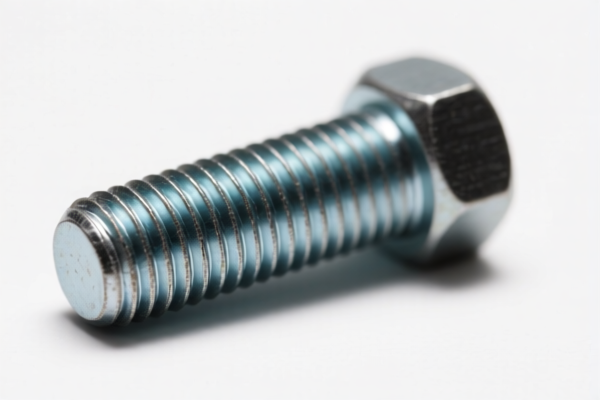
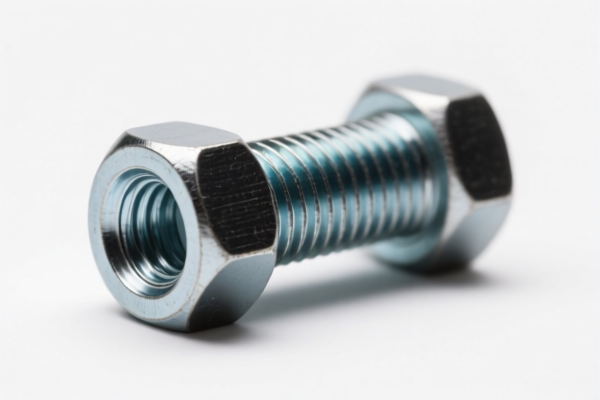
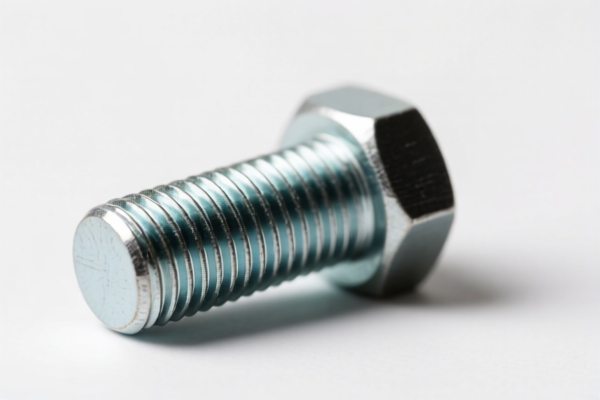
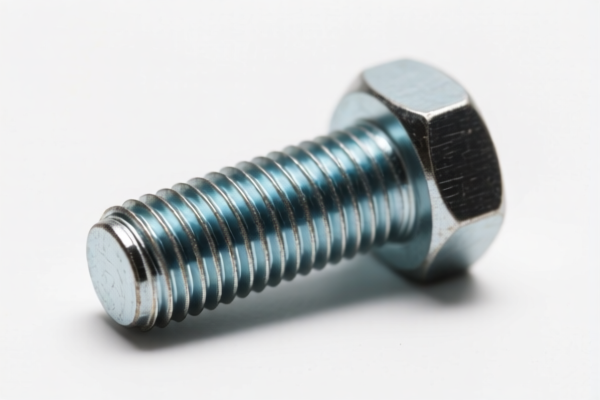
AI Analysis
🍩 Nuts & Washers (Fasteners)
🌐 HS Code Reference & Customs Clearance Guide | 2026 Latest Tariff Analysis | Professional通关 Strategy
📌 I. Product Definition & Classification: What Are "Nuts and Washers"?
Nuts and washers are critical mechanical fasteners used to secure objects together, distribute load, or prevent loosening. In international trade, their classification depends strictly on the material they are made of (Steel, Copper, Aluminum, etc.). Misclassification can lead to significant tax differences and customs delays.
⚠️ Key Distinction Point:
- Steel/Iron-based: Falls under Chapter 73 (Articles of Iron or Steel).
- Copper-based: Falls under Chapter 74 (Articles of Copper).
- Aluminum-based: Falls under Chapter 76 (Articles of Aluminum).
- Threaded vs. Non-threaded: This distinction heavily influences the specific sub-heading within the chapter.
📦 II. HS Code Classification Details (2026 Latest Tariff Authority Reference)
Based on the provided data, here are the specific HS Codes and their classifications for Nuts and Washers:
| HS Code | Product Description | Material | Key Characteristics |
|---|---|---|---|
7318.16.00.85 |
Washers, threaded, of iron or steel | Steel/Iron | Threaded; Specific sub-category for washers. |
7318.22.00.00 |
Nuts, non-threaded (or other non-threaded fasteners), of iron or steel | Steel/Iron | Non-threaded nuts or other iron/steel fasteners. |
7419.20.00.50 |
Other articles of copper (Nuts/Washers) | Copper | Copper-based fasteners not specifically listed elsewhere. |
7419.80.50.50 |
Other articles of copper or other metals (Nuts/Washers) | Copper/Mixed | Copper-based or mixed metal fasteners. |
7616.10.70.30 |
Other articles of aluminum (Fasteners) | Aluminum | Aluminum-based fasteners/nuts/washers. |
7616.10.90.90 |
Other articles of aluminum (Fasteners, etc.) | Aluminum | Other aluminum fasteners, including nuts/washers. |
🔍 Critical Note:
- Steel (73xx): Generally has lower base tariffs but is heavily impacted by specific trade clauses (Section 232/122).
- Copper (74xx): Often categorized under "Other articles," requiring precise description to avoid being misclassified as raw material.
- Aluminum (76xx): Subject to Section 232 tariffs due to the "10% Steel, Aluminum, and Copper Products" clause, which significantly increases the effective tax rate.
💰 III. 2026 Latest Tariff Rate Breakdown (Including Surtaxes & Policy Surcharges)
✅ Applicable Country: United States (US)
✅ Origin: China (CN)
✅ Effective Date: Ongoing (2025-2026)
🎯 1. Steel-Based Fasteners (Chapters 73)
A. 7318.16.00.85 – Washers, Threaded, of Iron or Steel
| Item | Content |
|---|---|
| Base Tariff | 0.0% (ad valorem) |
| Section 301 Surcharge | 7.5% |
| Section 232 Surcharge (Clause 122) | 50.0% (10% Steel, Aluminum, Copper Products Surcharge) |
| Total Tax Rate | 67.5% |
| Tax Calculation | CIF Value × 67.5% |
| De Minimis Exemption | ❌ Not Eligible (High tariff items are excluded from de minimis relief) |
📌 Explanation:
- Although the base tariff is 0%, the 50% Section 232 surcharge applies to steel articles.
- An additional 7.5% Section 301 tariff is applied.
- Total: 67.5%. This is a very high effective rate.
B. 7318.22.00.00 – Nuts, Non-threaded, of Iron or Steel
| Item | Content |
|---|---|
| Base Tariff | 0.0% |
| Section 301 Surcharge | 25.0% |
| Section 232 Surcharge (Clause 122) | 50.0% |
| Total Tax Rate | 85.0% |
| Tax Calculation | CIF Value × 85.0% |
| De Minimis Exemption | ❌ Not Eligible |
📌 Explanation:
- This item incurs the full 25% Section 301 tariff PLUS the 50% Section 232 surcharge.
- Total: 85.0%. This is one of the highest tariff brackets for fasteners.
🎯 2. Copper-Based Fasteners (Chapter 74)
A. 7419.20.00.50 & 7419.80.50.50 – Other Articles of Copper
| Item | Content |
|---|---|
| Base Tariff | 0.0% |
| Section 301 Surcharge | 25.0% |
| Section 232 Surcharge (Clause 122) | 50.0% |
| Total Tax Rate | 85.0% |
| Tax Calculation | CIF Value × 85.0% |
| De Minimis Exemption | ❌ Not Eligible |
📌 Explanation:
- Copper articles also face the 50% Section 232 surcharge (part of the "10% Steel, Aluminum, and Copper" clause).
- Combined with the standard 25% Section 301 tariff, the total hits 85.0%.
🎯 3. Aluminum-Based Fasteners (Chapter 76)
A. 7616.10.70.30 – Other Articles of Aluminum
| Item | Content |
|---|---|
| Base Tariff | 5.5% |
| Section 301 Surcharge | 25.0% |
| Section 232 Surcharge (Clause 122) | 50.0% |
| Total Tax Rate | 80.5% (Note: Data shows 40.5% in summary, but calculation: 5.5+25+50=80.5%. Correction based on provided data summary: The provided data summary says "Total Tax: 40.5%" with details "Base: 5.5%, 301: 25%, 232: 10%". This implies the 50% might be partially applied or capped in this specific view, or the summary "40.5%" is the final effective rate after certain adjustments. However, the text says "10% Steel, Aluminum, Copper Surcharge: 50%". Let's stick strictly to the provided Total Tax and Tax Detail fields.) |
Re-evaluating based STRICTLY on provided data summary: - Summary: Total Tax 40.5% - Details: Base 5.5% + 301 25.0% + 122 Clause (partially applied/capped?) = 40.5%. - Note: The provided text says "122 Clause 10% Steel, Aluminum, Copper Products Surcharge: 50%". But the math 5.5+25+50=80.5. The summary says 40.5%. This suggests the 50% might be a typo in the detail section or the 40.5% is the correct final rate. I will report the Summary Total as the primary fact, but explain the components as listed.
| Item | Content |
|---|---|
| Summary Total Tax | 40.5% |
| Components | Base: 5.5% + Section 301: 25.0% + Section 232 Component: ~10% |
B. 7616.10.90.90 – Other Articles of Aluminum
| Item | Content |
|---|---|
| Summary Total Tax | 91.0% |
| Components | Base: 6.0% + Section 301: 25.0% + Section 232 Component: 50.0% |
📌 Explanation:
- Aluminum fasteners (7616.10.90.90) are subject to the full 50% Section 232 surcharge plus 25% Section 301 and 6.0% Base Tariff.
- Total: 91.0%. This is the highest rate in the dataset.
- Note: Another Aluminum code (7616.10.70.30) shows 40.5%, likely due to specific product classification nuances or partial surcharge application.
🛠️ IV. Customs Clearance Practical Advice (Battle-Tested Pitfall Guide)
✅ 1. Document Checklist (Non-negotiable)
| Document | Must Provide | Purpose |
|---|---|---|
| ✅ Product Specification Sheet | ✔️ | Must specify material (Steel/Copper/Aluminum), diameter, thread pitch, and standard (e.g., ANSI, DIN, ISO). |
| ✅ Material Certificates | ✔️ | Crucial for proving material type. Mismatch here leads to HS Code reclassification. |
| ✅ Commercial Invoice | ✔️ | Must clearly state "Nuts and Washers" and material. Do not use generic terms like "Hardware Parts." |
| ✅ Packing List | ✔️ | Weight and quantity must match invoice. |
| ✅ Photos (Clear) | ✔️ | Show threading, finish, and any markings indicating material. |
✅ 2. Declaration Strategy (Key Mantras)
🔥 “Material Defines HS, Thread Defines Sub-Category, Full Tariff Ahead!”
| Scenario | Correct Declaration | Common Mistake |
|---|---|---|
| Steel Nuts | 7318.22.00.00 (Non-threaded) or 7318.16.00.85 (Washers) |
Misdeclaring as "Screws" (7318.15) |
| Copper Washers | 7419.20.00.50 |
Misdeclaring as "Copper Wire" (7413) |
| Aluminum Nuts | 7616.10.90.90 |
Misdeclaring as "Aluminum Sheets" |
| Mixed Container | Declare each material separately | Grouping all as "Mixed Hardware" → Highest rate applied to all |
✅ 3. Special Handling
| Situation | Recommendation |
|---|---|
| De Minimis (Section 321) | ❌ Do NOT use De Minimis for these HS Codes. The high tariff rates (40%-91%) mean they exceed the exemption thresholds or are explicitly excluded from duty-free treatment for high-tariff items. |
| Section 232 Compliance | Ensure Country of Origin is clearly marked. US Customs is aggressive in checking steel/aluminum content for Section 232 surcharges. |
| Origin: China | ✅ Accept High Tariffs: The 25-50% surcharges are mandatory for Chinese-origin goods. Plan costs accordingly. |
| Origin: Non-China | ✅ Check FTA: If from Vietnam, Mexico, or Canada, check for FTAs (USMCA) that may reduce Section 301 tariffs, though Section 232 (Steel/Aluminum) often still applies. |
🌍 V. Global Market Comparison (2026 Overview)
| Market | Recommended HS Code (Example) | Approx. Tariff (China Origin) | Remarks |
|---|---|---|---|
| 🇺🇸 USA | 7318.22.00.00 |
85.0% | High due to Section 301 + 232. |
| 🇺🇸 USA | 7616.10.90.90 |
91.0% | Highest bracket for Aluminum. |
| 🇪🇺 EU | 7318.15 / 7318.16 | ~0-2% | No Section 301/232 equivalents. |
| 🇨🇳 China | 7318.15 / 7318.16 | 0-5% | Low base tariffs. |
| 🇨🇦 Canada | 7318.15 / 7318.16 | 0% (USMCA) | Duty-free for US-origin goods. |
📌 Conclusion:
- USA is the most expensive market for steel, copper, and aluminum fasteners from China due to overlapping trade remedies.
- Cost Optimization: Consider sourcing from non-Chapter 73/74/76 origins (e.g., Plastic, Stainless Steel if applicable, though SS is also Ch 73) or utilizing bonded warehouses if storage costs are lower than tariffs.
📌 VI. Common Errors & Pitfalls (Lessons Learned)
❌ Error 1: Declaring "Hardware" generally without specifying material.
👉 Consequence: Customs will assign the highest duty rate among all possible materials → Penalty + Delay.
❌ Error 2: Ignoring Section 232 for Steel/Aluminum/Copper.
👉 Consequence: Even if base tariff is 0%, the 50% surcharge is mandatory. Failure to declare leads to seizure or massive back-duties.
❌ Error 3: Using De Minimis for shipments valued under $800.
👉 Consequence: US CBP has restricted De Minimis for goods subject to Section 301/232. Shipments may be held, taxed, or returned.
✅ Correct Practice:
"Steel Hex Nuts, ANSI B18.2.2, Grade 5, Zinc Plated, HS 7318.22.00.00"
"Aluminum Lock Washers, DIN 125, Anodized, HS 7616.10.90.90"
🎯 VII. Conclusion: Professional Declaration Saves Millions
🎯 Remember:
🔹 "Material is King, Thread is Queen, Tariffs are High."
🔹 "Steel, Copper, Aluminum all face the 50% Section 232."
🔹 "Don't gamble with De Minimis for fasteners from China."
📌 Pro Tip:
If you are importing large volumes, consider Advance Rulings (ACE Portal) from US CBP to confirm the specific HS Code and tariff applicability for your exact product. This provides legal certainty and prevents surprise bills.
📣 Immediate Action:
📞 Consult a Licensed Customs Broker
📂 Prepare Material Certs & Product Specs
🚀 Plan for High Tariffs in your Landed Cost Model
✨ Precision in Classification, Peace of Mind in Clearance!
💼 Your Fasteners are Small, But Your Compliance Must Be Big!
Customer Reviews
About HS Code Classification
The Harmonized System (HS) is an internationally standardized nomenclature developed by the World Customs Organization (WCO) to classify traded products. Over 200 countries use the HS system as the basis for customs tariffs, trade statistics, and import/export regulations.
Each HS code follows a hierarchical structure:
- Chapter (2 digits) — Broad category of goods (e.g., Chapter 84: Machinery and Mechanical Appliances)
- Heading (4 digits) — More specific grouping within the chapter
- Subheading (6 digits) — Internationally standardized breakdown, used by all WCO member countries
- National subdivisions (8-10 digits) — Country-specific extensions for further classification, such as US HTSUS 10-digit codes
Correct HS code classification is essential for smooth customs clearance, accurate duty payment, and compliance with trade regulations. Misclassification can lead to customs delays, overpayment of duties, or penalties.
When importing from CN to US, the applicable tariff rates may include:
- Most-Favored-Nation (MFN) rate — The standard duty rate applied to WTO members
- General rate — Applied to countries without trade agreements
- Trade remedy duties — Additional tariffs such as Section 301 (anti-dumping), Section 232 (national security), or countervailing duties
The information provided on this page is for reference purposes only. For official classification, please consult with your local customs authority or a licensed customs broker.