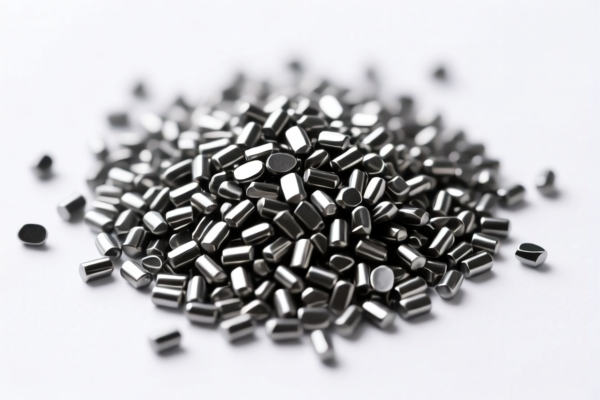
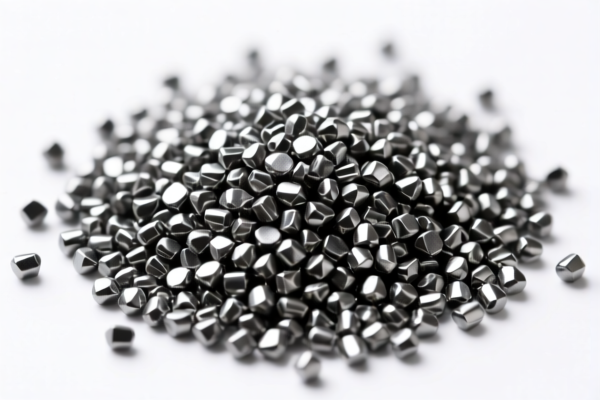
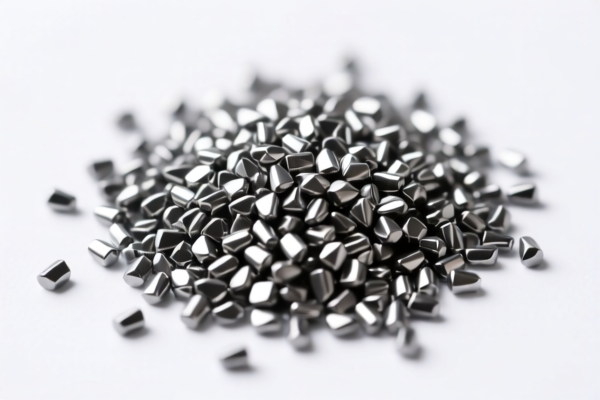
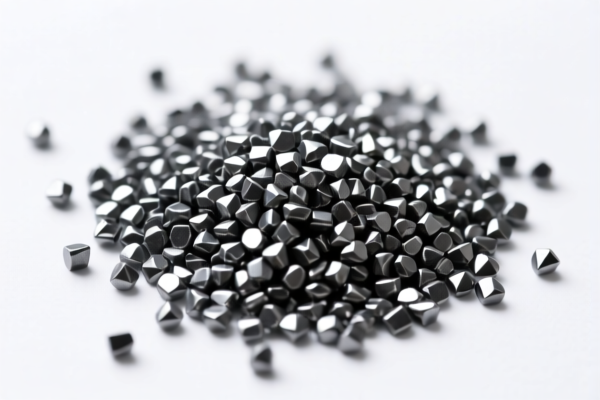
Nylon 6,6 Granules
CN → US| HS Code | Tariff Rate | Origin | Destination | Doc |
|---|---|---|---|---|
| 3908100000 | 41.3% | CN | US | Official Doc |
| 3908907000 | 41.5% | CN | US | Official Doc |
| 3908100000 | 41.3% | CN | US | Official Doc |
| 3908907000 | 41.5% | CN | US | Official Doc |
| 3908100000 | 41.3% | CN | US | Official Doc |
Product Images
AI Analysis
🧪 Nylon 6,6 Granules (Polyamide 6,6 Resin)
🌐 HS Code Reference & Customs Clearance Guide | 2026 Latest Tariff Analysis | Professional Strategy
📌 One: Product Definition & Classification: Are You Sure About "Plastic Resin"?
Nylon 6,6 (Polyamide 66, PA66) granules are semi-crystalline thermoplastic polymers produced from hexamethylenediamine and adipic acid. In international trade, they are classified not by their end-use (e.g., "car parts" or "textiles"), but by their state at importation and chemical composition.
Crucial Distinction:
Raw Resin (Granules/Pellets): Unprocessed polymer powder or pellets → Chapter 39 (Plastics).
Finished Articles: Injection-molded parts, fibers, or fabrics → Chapter 39 (Parts) or Chapter 54/55 (Textiles).
⚠️ Key Differentiator:
- If the product is in the form of powders, flakes, or granules and has not been processed into specific articles → It is "Primary Forms" of Plastics.
- If it contains additives (e.g., glass fiber, flame retardants) >5% by weight → It is "Plastics in Primary Forms" (still usually Ch. 39, but specific subheading varies).
- Do NOT classify as "Fibers" or "Textiles" unless it is spun into yarn or woven fabric.
📦 Two: HS Code Classification Details (2026 Latest Tariff Authority Comparison)
| HS Code | Product Description | Applicable Scenario | Additive Content |
|---|---|---|---|
3908.10.00.00 |
Polyamides-6, -10, -11, -12, -6,6, -6,9, -6,10, -6,12, -11 or -12,12, in primary forms | Standard Nylon 6,6 Granules (Virgin resin) | ✅ Pure or <5% additives |
3908.10.00.00 |
Polyamides-6, -10... (Primary Forms) | Glass-Fiber Reinforced PA66 (Common in auto parts) | ✅ Up to 30-50% GF (Still Ch. 39) |
3902.10.00.00 |
Polypropylene, in primary forms | ❌ Wrong Code (PA66 is Polyamide, not Polyolefin) | - |
5402.69.00.00 |
Synthetic filament yarn (PA66) | ❌ Wrong Code (If spun into thread) | - |
9023.00.00.00 |
Instruments, apparatus... | ❌ Wrong Code (Not lab equipment) | - |
🔍 Key Reminder:
- PA66 belongs to Heading 3908 (Polyamides in primary forms).
- Even if reinforced with glass fibers (GF), carbon fibers, or impact modifiers, Nylon 6,6 granules remain under3908.10.00.00provided they are in "primary form" (granules/powder).
- Do not confuse with3902(Polyolefins like PP/PE) or3907(Polyacetals).
💰 Three: 2026 Latest Tariff Rate Breakdown (Including Surcharges & Policy Add-ons)
✅ Applicable Country: United States (US)
✅ Country of Origin: China (CN)
✅ Effective Date: November 10, 2025 onwards (for imports)
🎯 1. 3908.10.00.00 —— Nylon 6,6 Granules (Primary Forms)
| Item | Content |
|---|---|
| Base Rate | 0% (ad valorem) |
| USITC Surcharge (Section 301) | +7.5% (Note: Many chemical intermediates have reduced rates, but PA66 granules often attract the full 7.5% or 25% depending on specific exclusions. Check latest USITC exclusion list). |
| IEEPA Surcharge | +10% (Targeting Chinese/ HK products, effective Nov 2025) |
| Total Effective Rate | 17.5% (Base 0 + 301 7.5% + IEEPA 10%) |
| Tax Calculation | CIF Value × 17.5% |
| De Minimis Eligibility | ❌ No (deny_de_minimis) |
| Legal Basis Path | IEEPA:9903.01.25 → IEEPA:9903.01.24 → USITC:3908.10.00.00 → FOOTNOTE:301.01 |
📌 Explanation:
- "Base Rate 0%": General US MFN rate for plastic resins is often 0%.
- "Section 301 Tariff (7.5%): Many chemical intermediates were granted exclusions, but if no valid exclusion is held, the standard 7.5% (or 25% for some) applies. Verify current exclusion list for "Nylon 6,6".
- "IEEPA 10%": New surcharge effective Nov 10, 2025, on Chinese-origin goods.
- Total: ~17.5%. This is a significant cost driver for plastic manufacturers importing raw PA66.📌 Critical Note:
- If your PA66 is imported from Vietnam, Thailand, or Malaysia (with sufficient transformation), you may exempt from China-specific surcharges.
- Exclusions: Check if your specific supplier has a Section 301 Exclusion for PA66 granules. Some industrial resins are excluded.
🛠️ Four: Customs Clearance Practical Advice (Real-World Pitfall Guide)
✅ 1. Required Documents Checklist (Non-Negotiable)
| Document | Required | Explanation |
|---|---|---|
| ✅ Product Specification Sheet | ✔️ | Must specify: "Polyamide 66, PA66", Melt Flow Index (MFI), Density, Color (Natural/White/Black). |
| ✅ Composition Statement | ✔️ | List % of PA66 vs. additives (e.g., "90% PA66, 10% Glass Fiber"). Crucial for classification. |
| ✅ Safety Data Sheet (SDS) | ✔️ | Required for chemical safety compliance. |
| ✅ Commercial Invoice | ✔️ | Must clearly state "Nylon 6,6 Granules, Primary Form, HS 3908.10.00.00". Avoid vague terms like "Plastic Material". |
| ✅ Certificate of Origin (CO) | ✔️ | Critical for determining IEEPA applicability. |
| ✅ Bill of Lading | ✔️ | Ensure packing details match invoice. |
✅ 2. Declaration Tips (Key Mantra)
🔥 "Primary Form, Not Article; PA66, Not PP; Declare Additives, Avoid Penalty!"
| Scenario | Correct Declaration | Wrong Practice |
|---|---|---|
| Virgin PA66 Granules | 3908.10.00.00 + "Nylon 6,6 Resin" |
Declaring as "Plastic Toy" → Wrong Chapter |
| Glass-Fiber Reinforced PA66 | 3908.10.00.00 + "PA66/GF Composite" |
Declaring as "Auto Part" → Wrong Chapter |
| PA66 Yarn/Filament | 5402.69.00.00 (Textile Chapter) |
Declaring as "Granules" → Misclassification |
| PA66 Injection Molded Gear | 8483.90.00.00 or 3926.90.00.00 |
Declaring as "Granules" → Under-Declaration |
✅ 3. Special Case Handling
| Case | Handling Advice |
|---|---|
| Recycled PA66 Granules | Still 3908.10.00.00 if in primary form. Must declare "Recycled". |
| Colored Granules | Still 3908.10.00.00. Color does not change classification. |
| Pre-Compounded with Flame Retardants | Still 3908.10.00.00. Do not classify as "Chemical Product" (Ch. 29/38) unless it's a pure chemical compound, not a polymer mix. |
| Small Samples (< 5kg) | May still be subject to duties if declared as commercial sample. Use FAK (Freight All Kinds) rate if applicable, but check de minimis rules. |
🌍 Five: Global Market Comparison (2026 Latest)
| Country/Region | Recommended HS Code | Tariff Rate | Certification Requirement | Notes |
|---|---|---|---|---|
| 🇺🇸 USA | 3908.10.00.00 |
~17.5% (China) | TSCA (EPA) | High tariff due to IEEPA + 301 |
| 🇨🇳 China | 3908.10.00.00 |
6.5% | CCC (if for specific use) | Standard import duty |
| 🇪🇺 EU | 3908.10.00.00 |
0% (Most FTA) | REACH Registration | No import duty under most FTAs |
| 🇦🇺 Australia | 3908.10.00.00 |
5% | ACCC | Standard MFN rate |
| 🇮🇳 India | 3908.10.00.00 |
10%~20% | BIS (if applicable) | High anti-dumping duties possible |
📌 Conclusion:
- USA is the most challenging market for Chinese-origin PA66 due to IEEPA + Section 301.
- EU and ASEAN are favorable due to 0% or low tariffs.
- Sourcing Strategy: Consider sourcing from Vietnam/Thailand to mitigate US tariffs, but ensure Substantial Transformation occurs (not just transshipment).
📌 Six: Common Mistakes & Pitfall Guide (Blood & Tears Lessons)
❌ Mistake 1: Declaring "Plastic Resin" without specifying "PA66"
👉 Consequence: Customs may assign a higher generic rate or request additional classification review → Delay.
❌ Mistake 2: Classifying Recycled PA66 as "Waste" (Chapter 37/38)
👉 Consequence: Incorrect classification → Fines + Penalties. Recycled plastic granules are still "Primary Forms of Plastics" (Ch. 39).
❌ Mistake 3: Ignoring TSCA (Toxic Substances Control Act) Compliance in the US
👉 Consequence: Cargo detained at US port. All plastic resins must be TSCA compliant. Ensure your supplier provides a TSCA Certification.
❌ Mistake 4: Confusing PA66 with PA6
👉 Consequence: Both are 3908.10.00.00, but if misdeclared as "PP" or "PE", it may trigger Anti-Dumping Duties or Surveillance.
✅ Correct Declaration Example:
"Nylon 6,6 (Polyamide 66) Granules, Virgin, Natural Color, MFI: 25g/10min, HS 3908.10.00.00, TSCA Compliant, Made in China"
🎯 Seven: Conclusion: Professional Declaration, Save Time & Money!
🎯 Remember the Mantra:
🔹 "Granules = Ch. 39; Articles = Ch. 39/40/84; Yarn = Ch. 54"
🔹 "PA66 is 3908, Not 3902; Check IEEPA, Don't Miss the Surcharge!"
🔹 "TSCA Certification is Mandatory for USA; No Cert, No Entry!"
📌 Pro Tip:
If your PA66 is sourced from non-China countries (e.g., Thailand, India), you may avoid the 10% IEEPA surcharge.
For US imports, verify Section 301 Exclusions annually. Some PA66 grades may be excluded.
📣 Immediate Action:
📞 Contact Customs Broker + Provide TSCA Cert + Verify HS Code 3908.10.00.00
🚀 Ensure Smooth Clearance, Avoid Demurrage, Protect Margin!
✨ Professional Classification Starts with Precision!
💼 Every Percentage Point of Tariff Counts!
Customer Reviews
About HS Code Classification
The Harmonized System (HS) is an internationally standardized nomenclature developed by the World Customs Organization (WCO) to classify traded products. Over 200 countries use the HS system as the basis for customs tariffs, trade statistics, and import/export regulations.
Each HS code follows a hierarchical structure:
- Chapter (2 digits) — Broad category of goods (e.g., Chapter 84: Machinery and Mechanical Appliances)
- Heading (4 digits) — More specific grouping within the chapter
- Subheading (6 digits) — Internationally standardized breakdown, used by all WCO member countries
- National subdivisions (8-10 digits) — Country-specific extensions for further classification, such as US HTSUS 10-digit codes
Correct HS code classification is essential for smooth customs clearance, accurate duty payment, and compliance with trade regulations. Misclassification can lead to customs delays, overpayment of duties, or penalties.
When importing from CN to US, the applicable tariff rates may include:
- Most-Favored-Nation (MFN) rate — The standard duty rate applied to WTO members
- General rate — Applied to countries without trade agreements
- Trade remedy duties — Additional tariffs such as Section 301 (anti-dumping), Section 232 (national security), or countervailing duties
The information provided on this page is for reference purposes only. For official classification, please consult with your local customs authority or a licensed customs broker.