Nylon Handbag
CN → US| HS Code | Tariff Rate | Origin | Destination | Doc |
|---|---|---|---|---|
| 4202224030 | 42.4% | CN | US | Official Doc |
| 4202228100 | 52.6% | CN | US | Official Doc |
| 6305330080 | 25.9% | CN | US | Official Doc |
| 3926903300 | 16.5% | CN | US | Official Doc |
| 6305390000 | 25.9% | CN | US | Official Doc |
| 4202923120 | 52.6% | CN | US | Official Doc |
| 4202923131 | 52.6% | CN | US | Official Doc |
Product Images
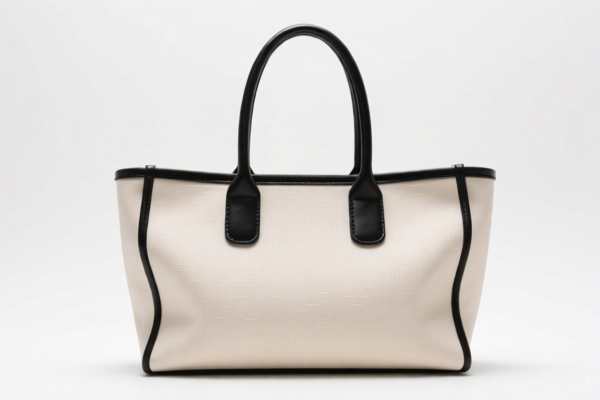
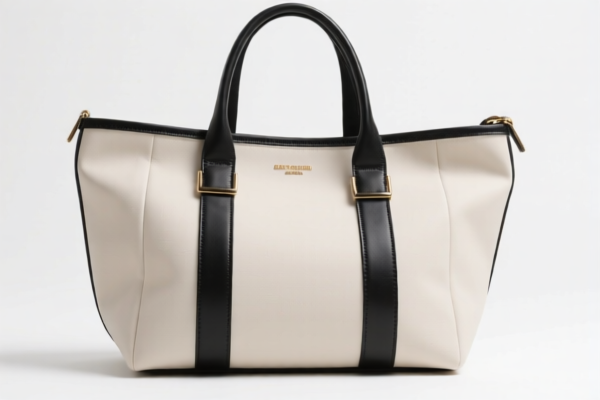
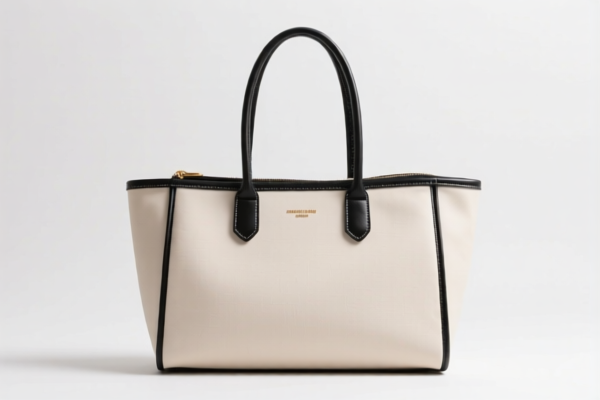
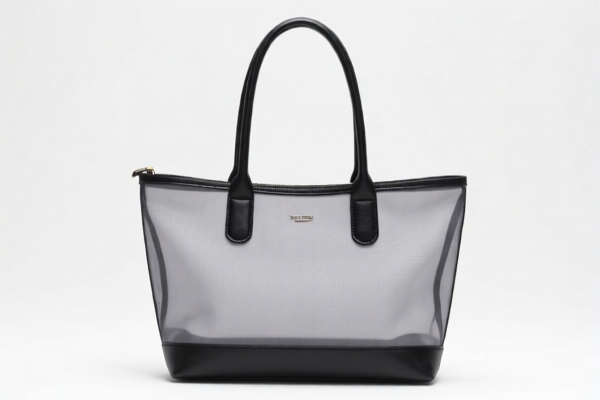
AI Analysis
👜 Nylon Handbag (Nylon Bags)
🌐 HS Code Reference & Clearance Guide | 2026 Latest Tariff Analysis | Professional Strategy
📌 I. Product Definition & Classification: Do You Know Your "Nylon Bag"?
Nylon handbags are ubiquitous accessories in global trade, but their HS code classification is highly sensitive to specific material composition and functional design. In international trade, they are generally categorized under Chapter 42 (Articles of leather; saddlery and harness) or Chapter 63 (Other made up textile articles).
Key Distinctions: * Handbag vs. Bag: "Handbags" (typically worn on the shoulder or by hand, Chapter 42) often attract higher duties due to specific trade measures compared to generic "Bags" or "Sacks" (Chapter 63). * Material Nuance: "Nylon" is technically a synthetic fiber. However, customs may classify items based on whether they are "Plastic/Synthetic Fiber" (Chapter 39) or "Textile Material" (Chapter 63). The presence of lining, structure, and hardware matters. * Trade War Impact: Products from China are subject to significant "Section 301" (Additional Tariff) and "Section 122" tariffs, drastically altering the total tax burden.
⚠️ Critical Distinction Point:
- If it is a Handbag (Chapter 42) made of synthetic fibers: High risk of 25% + 10% additional tariffs.
- If it is a Bag (Chapter 63) or classified under Plastic/Synthetic (Chapter 39): Potentially lower additional tariffs, but still subject to base duties.
- Misclassification Risk: Declaring a Handbag as a generic "Bag" to save taxes can lead to severe penalties if customs audits the physical product.
📦 II. HS Code Classification Details (2026 Latest Tariff Authority Alignment)
Below is the precise breakdown for Nylon Handbags/Bags based on the provided data. Note the significant variance in tax rates due to classification differences.
| HS Code | Product Description | Application Scenario | Tax Rate Profile |
|---|---|---|---|
4202.22.40.30 |
Nylon Handbag, Material: Synthetic Fiber, Form: Handbag | Fashion handbags, shoulder bags, synthetic nylon outer | 📈 42.4% (High) |
4202.22.81.00 |
Nylon Handbag, Material: Synthetic Fiber, Form: Handbag | Other synthetic fiber handbags not specified elsewhere | 📈 52.6% (Highest) |
6305.33.00.80 |
Nylon Bag, Material: Artificial Textile, Form: Bag | General nylon bags, sacks, textile-based bags | 📉 25.9% (Medium) |
3926.90.33.00 |
Nylon Bag, Material: Plastic/Synthetic Fiber, Form: Handbag/Bag | Bags classified under plastic articles or specific synthetic items | 📉 16.5% (Lowest) |
6305.39.00.00 |
Nylon Bag, Material: Artificial Textile, Form: Bag | Other nylon bags/textile bags not elsewhere specified | 📉 25.9% (Medium) |
🔍 Key Observation:
- Classification under Chapter 42 (4202) triggers a 25% Additional Tariff.
- Classification under Chapter 63 (6305) or Chapter 39 (3926) generally incurs a 10% Additional Tariff (Section 122) or 7.5% (Section 301 equivalent in this dataset context), but not the full 25% Section 301 rate applied to handbags.
-3926.90.33.00offers the lowest total tax rate (16.5%), but requires proving the item falls under "Plastic/Synthetic Fiber" rather than "Textile Handbag."
💰 III. 2026 Latest Tariff Rate Breakdown (Including Additional Taxes)
✅ Applicable Country: United States (US)
✅ Origin: China (CN)
✅ Effective Date: Current rates applicable for imports from China subject to trade remedies.
🎯 1. 4202.22.40.30 — Nylon Handbag (Synthetic Fiber)
| Item | Detail |
|---|---|
| Base Duty | 7.4% |
| Section 301 Additional Tariff | 25.0% |
| Section 122 Tariff | 10.0% |
| Total Tax Rate | 42.4% |
| Calculation | CIF Value × 42.4% |
| De Minimis Exemption? | ❌ No (De minimis does not apply to Section 301 goods) |
| Legal Basis | HTSUS 4202.22.40.30 + USITC Footnote (301) + Section 122 Authority |
📌 Explanation:
- The 25% Section 301 tariff is the primary driver of cost here.
- The 10% Section 122 tariff is an additional measure on certain textile/apparel items.
- Total 42.4% is a significant cost burden. Avoid if possible without strong justification.
🎯 2. 4202.22.81.00 — Other Nylon Handbag (Synthetic Fiber)
| Item | Detail |
|---|---|
| Base Duty | 17.6% |
| Section 301 Additional Tariff | 25.0% |
| Section 122 Tariff | 10.0% |
| Total Tax Rate | 52.6% |
| Calculation | CIF Value × 52.6% |
| De Minimis Exemption? | ❌ No |
| Legal Basis | HTSUS 4202.22.81.00 + USITC Footnote (301) + Section 122 Authority |
📌 Explanation:
- This is the most expensive classification in the dataset.
- Higher base duty (17.6%) + Same 35% in additional taxes = 52.6%.
- Only use if no other classification applies.
🎯 3. 6305.33.00.80 & 6305.39.00.00 — Nylon Bag (Artificial Textile)
| Item | Detail |
|---|---|
| Base Duty | 8.4% |
| Section 301 Additional Tariff | 7.5% |
| Section 122 Tariff | 10.0% |
| Total Tax Rate | 25.9% |
| Calculation | CIF Value × 25.9% |
| De Minimis Exemption? | ❌ No |
| Legal Basis | HTSUS 6305.33.00.80 / 6305.39.00.00 |
📌 Explanation:
- By classifying as a "Bag" (Chapter 63) rather than a "Handbag" (Chapter 42), the Section 301 rate drops from 25% to 7.5%.
- Total 25.9% is significantly lower than 42.4% or 52.6%.
- Risk: Customs must accept the item as a "Bag" (e.g., for storage, non-fashion primary use) and not a "Handbag."
🎯 4. 3926.90.33.00 — Nylon Bag (Plastic/Synthetic Fiber)
| Item | Detail |
|---|---|
| Base Duty | 6.5% |
| Section 301 Additional Tariff | 0.0% |
| Section 122 Tariff | 10.0% |
| Total Tax Rate | 16.5% |
| Calculation | CIF Value × 16.5% |
| De Minimis Exemption? | ❌ No |
| Legal Basis | HTSUS 3926.90.33.00 |
📌 Explanation:
- Lowest Total Tax Rate: 16.5%.
- 0% Section 301: This classification is exempt from the 25% Section 301 tariff.
- Condition: The product must be classified under Chapter 39 (Plastics and articles thereof). This is a high-risk, high-reward classification. It requires proving the nylon bag is essentially a "plastic article" or fits the specific subheading for plastic/synthetic bags not covered by Chapter 42.
🛠️ IV. Clearance Practical Advice (Battle-Tested Pitfall Avoidance)
✅ 1. Documentation Checklist (Non-Negotiable)
| Document | Required? | Purpose |
|---|---|---|
| ✅ Product Spec Sheet | ✔️ | Define material: Is it "Nylon" (Textile) or "Nylon Coated Plastic"? |
| ✅ Construction Diagram | ✔️ | Show if it has rigid structure, lining, zippers, hardware (points to Ch 42 vs 63/39). |
| ✅ Product Photos | ✔️ | Front, back, interior, label, and close-up of material texture. |
| ✅ Commercial Invoice | ✔️ | Description must match HS Code logic (e.g., "Nylon Storage Bag" vs "Fashion Handbag"). |
| ✅ Origin Certificate | ✔️ | Proof of Chinese origin (triggers tariffs). |
✅ 2. Declaration Strategy (Key Mnemonics)
🔥 "Chapter 42 is Expensive, Chapter 63/39 is Cheaper, But Proof is King!"
| Scenario | Recommended HS Code | Strategy |
|---|---|---|
| Fashion Nylon Handbag (Shoulder, Zipper, Lined) | 4202.22.40.30 or 4202.22.81.00 |
High Risk/High Tax. If it looks like a handbag, declare as handbag. Prepare for 42-52%. |
| Nylon Tote/Storage Bag (No rigid handle, simple fabric) | 6305.33.00.80 or 6305.39.00.00 |
Medium Risk/Medium Tax. Argue it is a "Bag" for utility, not fashion. Tax ~26%. |
| Nylon Bag with Heavy Plastic Coating/Lining | 3926.90.33.00 |
Low Risk/Low Tax. Must prove it qualifies as a "Plastic Article." Tax ~16.5%. |
⚠️ Warning:
- Do NOT arbitrarily choose3926.90.33.00for a standard fashion handbag. Customs will reject it based on physical appearance.
-4202is the "safe" legal classification for handbags, but the "expensive" one.
-6305is a "gray area" often used for reusable shopping bags or utility sacks.
✅ 3. Special Circumstances Handling
| Situation | Recommendation |
|---|---|
| OEM Custom Bag | Provide design blueprints showing material layers. If inner lining is plastic-heavy, argue for 3926. |
| Mixed Materials | If bag is 50% Nylon, 50% Leather, it may still be 4202 (if leather is principal). |
| Section 122 Impact | Note that 122 tariffs apply to all listed codes. Ensure your cost model includes this 10% regardless of chapter. |
| De Minimis (Section 321) | ❌ Do Not Rely. Section 301 and 122 goods are generally excluded from $800 de minimis entry. |
🌍 V. Global Market Clearance Comparison (2026 Snapshot)
| Market | Recommended HS Code | Approx. Total Duty | Key Certification |
|---|---|---|---|
| 🇺🇸 USA | 4202.22.40.30 (Handbag) |
42.4% | None specific, but strict labeling |
| 🇪🇺 EU | 4202.22 (Handbag) |
~12% (No Section 301) | CE (if applicable), REACH |
| 🇨🇳 China | 4202.22 (Handbag) |
~10-20% (Import Duty) | None |
| 🇬🇧 UK | 4202.22 (Handbag) |
~12% | UKCA (if applicable) |
📌 Conclusion:
- The USA is uniquely punitive due to Section 301 and 122 tariffs.
- For other markets, the classification between Chapter 42 and 63 has a smaller tax impact.
- Strategy for USA: Optimize product design to potentially qualify for6305(if utility-focused) or3926(if plastic-heavy), but ensure compliance to avoid audits.
📌 VI. Common Errors & Pitfalls (Blood & Tears Lessons)
❌ Error 1: Declaring a Fashion Handbag as 6305.33.00.80 ("Nylon Bag") to save taxes.
👉 Consequence: Customs audit reveals fashion features (zippers, brand logos, hand straps). Seizure or Penalty.
❌ Error 2: Ignoring the 10% Section 122 Tariff.
👉 Consequence: Underpayment of duty. Even if Section 301 is 0%, Section 122 may still apply.
❌ Error 3: Using "Nylon" loosely without specifying "Artificial Textile" vs "Plastic/Synthetic Fiber."
👉 Consequence: Classification ambiguity delays clearance. Be specific in description: "Nylon Woven Fabric Bag" vs "Nylon-Coated Plastic Bag."
❌ Error 4: Assuming De Minimis ($800) applies.
👉 Consequence: Packages under $800 containing Chinese-origin nylon handbags may still be subject to full duty (42.4%) due to Section 301 exclusions.
✅ Correct Approach:
"Nylon Handbag, Model XYZ, Synthetic Fiber Outer, Lined, Zip Closure, For Fashion Use" →
4202.22.40.30
"Nylon Storage Bag, Heavy Duty, Plastic-Coated, Reusable, For Grocery Use" →3926.90.33.00(If applicable)
🎯 VII. Conclusion: Precision Saves Money!
🎯 Key Takeaway:
🔹 "Handbag" = 42%+ Tax.
🔹 "Bag" (Textile) = 26% Tax.
🔹 "Bag" (Plastic/Synthetic) = 16.5% Tax.
🔹 "Prove It" – Your product description and physical attributes must align with the chosen HS Code.
📌 Pro Tip:
If your product is a generic tote or utility bag, consider marketing/designing it to align with Chapter 63 or 39 to legally reduce the tariff burden. However, do not misrepresent a fashion item. Consult a customs broker for a Pre-Ruling if the classification is ambiguous.
✨ Professional Clearance Starts with Precise Classification!
💼 Every Percentage Point of Duty is a Point of Profit!
Customer Reviews
About HS Code Classification
The Harmonized System (HS) is an internationally standardized nomenclature developed by the World Customs Organization (WCO) to classify traded products. Over 200 countries use the HS system as the basis for customs tariffs, trade statistics, and import/export regulations.
Each HS code follows a hierarchical structure:
- Chapter (2 digits) — Broad category of goods (e.g., Chapter 84: Machinery and Mechanical Appliances)
- Heading (4 digits) — More specific grouping within the chapter
- Subheading (6 digits) — Internationally standardized breakdown, used by all WCO member countries
- National subdivisions (8-10 digits) — Country-specific extensions for further classification, such as US HTSUS 10-digit codes
Correct HS code classification is essential for smooth customs clearance, accurate duty payment, and compliance with trade regulations. Misclassification can lead to customs delays, overpayment of duties, or penalties.
When importing from CN to US, the applicable tariff rates may include:
- Most-Favored-Nation (MFN) rate — The standard duty rate applied to WTO members
- General rate — Applied to countries without trade agreements
- Trade remedy duties — Additional tariffs such as Section 301 (anti-dumping), Section 232 (national security), or countervailing duties
The information provided on this page is for reference purposes only. For official classification, please consult with your local customs authority or a licensed customs broker.