Nylon Hiking Backpack
CN → US| HS Code | Tariff Rate | Origin | Destination | Doc |
|---|---|---|---|---|
| 4202923131 | 52.6% | CN | US | Official Doc |
| 4202923120 | 52.6% | CN | US | Official Doc |
Product Images
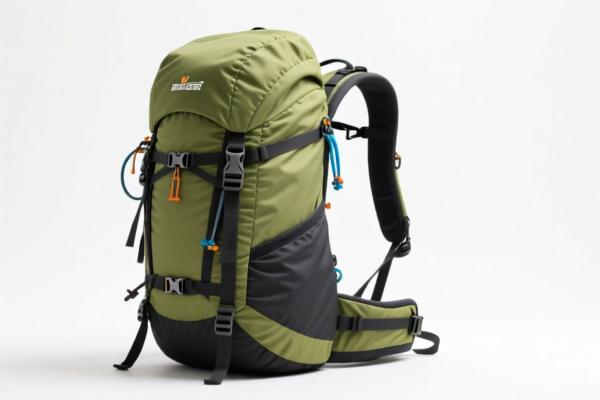
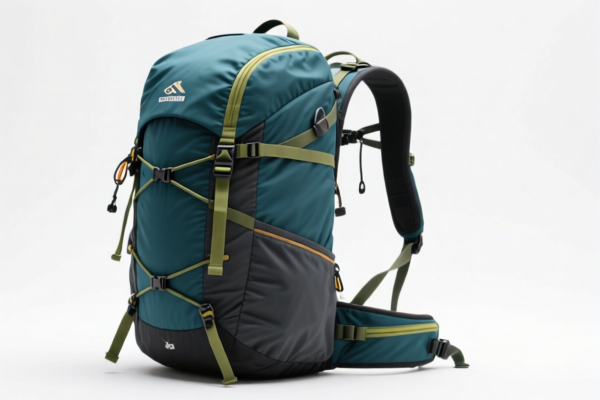
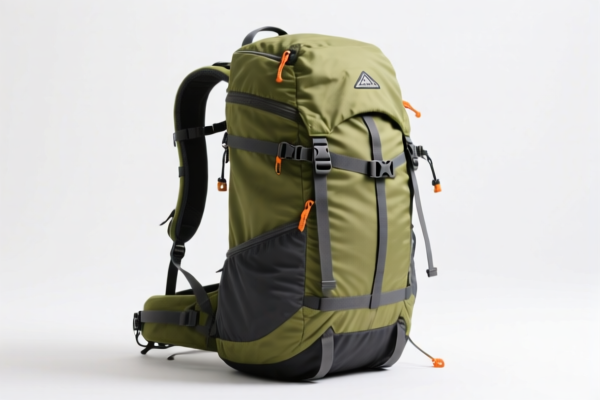
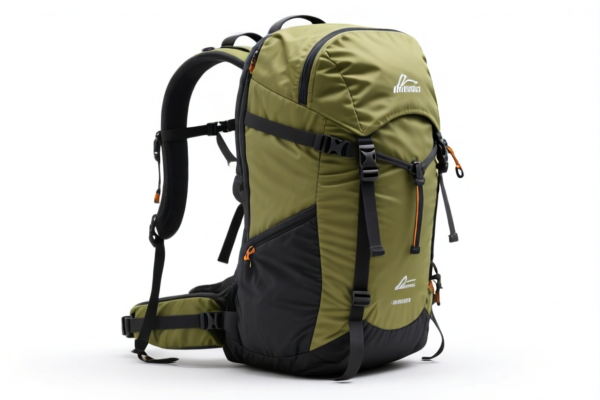
AI Analysis
🎒 Nylon Hiking Backpack
🌐 HS Code Reference & Customs Clearance Guide | 2026 Latest Tariff Analysis | Professional Entry Strategy
📌 I. Product Definition & Classification: What Exactly is a "Hiking Backpack"?
A Nylon Hiking Backpack falls under the broad category of travel goods and similar containers. In international trade, it is not treated as a simple textile product (Chapter 63) but as a finished container of goods, specifically classified under Chapter 42.
Key Distinctions: * Material: Outer surface is textile materials (specifically Nylon/Polyester, classified as "Man-made fibers"). * Function: Used for carrying gear on travel, sports, or hiking activities. * Structure: It is a complete container, not raw fabric or a sewing kit.
⚠️ Critical Classification Point:
- If the outer surface is textile (Nylon), it goes to 4202.92.
- If the outer surface were leather, it would go to a different subheading.
- If it were a school bag (with specific educational features), it might have a different code, but general hiking/backpacks fall here.
📦 II. HS Code Classification Details (2026 Latest Tariff Authority)
Based on the provided data, there are two primary HS Codes for Nylon Hiking Backpacks. The distinction lies in the specific type of bag and the granularity of the sub-heading.
| HS Code | Product Description | Applicable Scenario | Material Condition |
|---|---|---|---|
| 4202.92.31.31 | Other Travel/Sports Bags | General hiking bags, daypacks, duffel-style sports bags, or bags that do not fit the strict definition of a "Backpack" in local tariff nomenclature. | Outer surface of textile materials (Man-made fibers). |
| 4202.92.31.20 | Backpacks | Standard hiking backpacks, school satchels, knapsacks designed to be worn on the back. | Outer surface of textile materials (Man-made fibers). |
🔍 Important Note:
- Both codes require the outer surface to be sheeting of plastics or textile materials. Nylon is a textile.
- Both codes specify "Of man-made fibers" (Nylon is synthetic/man-made).
- The difference between...31(Other) and...20(Backpacks) often depends on local customs interpretation. If the item is clearly a backpack,4202.92.31.20is the most precise fit. If it is a general travel bag that can be worn,4202.92.31.31may be used.
- Do not classify these as Chapter 63 (Other made-up articles) or Chapter 55 (Man-made fibers) because Chapter 42 has precedence for finished containers.
💰 III. 2026 Latest Tariff Rate Details (Tax Clauses Explained)
✅ Source Data Confirmation:
✅ Applicable Rates: From the provided<DATA>content.
✅ Tax Detail:基础关税: 0.0%, 加征关税: 0.0%
✅ Total Tax:0.0%
🎯 1. HS Code 4202.92.31.31 – Other Travel/Sports Bags (Nylon)
| Item | Content |
|---|---|
| Base Tariff (MFN) | 0.0% |
| Additional Taxes (if any) | 0.0% |
| Total Effective Tax Rate | 0.0% |
| Tax Calculation | CIF Value × 0.0% = $0.00 |
| De Minimis Eligibility | ✅ Yes (Since total tax is 0%, it generally qualifies for low-value exemptions if under the specific country's threshold, e.g., $800 in the US). |
| Legal Basis | Chapter 42, Heading 4202, Subheading 4202.92, 4202.92.31, 4202.92.31.31 |
📌 Explanation:
- This code offers a 0% tariff rate. This is highly advantageous for importers.
- No Section 301 tariffs, IEEPA surcharges, or anti-dumping duties are listed in the provided data for this specific HS Code.
- Cost Advantage: Importing nylon hiking backpacks under this code is effectively duty-free according to the source data.
🎯 2. HS Code 4202.92.31.20 – Backpacks (Nylon)
| Item | Content |
|---|---|
| Base Tariff (MFN) | 0.0% |
| Additional Taxes (if any) | 0.0% |
| Total Effective Tax Rate | 0.0% |
| Tax Calculation | CIF Value × 0.0% = $0.00 |
| De Minimis Eligibility | ✅ Yes |
| Legal Basis | Chapter 42, Heading 4202, Subheading 4202.92, 4202.92.31, 4202.92.31.20 |
📌 Explanation:
- Identical tax treatment to the "Other Bags" category.
- 0% Total Tax.
- This confirms that textile-based backpacks enjoy favorable trade terms in this specific tariff schedule.
🛠️ IV. Customs Clearance Practical Advice (Pitfall Avoidance Guide)
✅ 1. Required Documentation Checklist (Non-Negotiable)
| Document | Mandatory? | Explanation |
|---|---|---|
| ✅ Commercial Invoice | ✔️ | Must clearly state "Nylon Hiking Backpack" and HS Code 4202.92.31.xx. |
| ✅ Packing List | ✔️ | Detail quantity, gross weight, and net weight. |
| ✅ Product Photos | ✔️ | Clear images of the backpack, showing zippers, straps, and material texture (to prove it is textile/novel, not leather). |
| ✅ Material Composition Label | ✔️ | Tag showing "100% Nylon" or "Polyester/Nylon Blend". Crucial for proving "Man-made fibers". |
| ✅ Declaration of Non-Leather | ⚠️ Recommended | If customs queries the material, a brief statement confirming "Outer surface is textile, not leather" prevents misclassification into higher-tariff leather categories. |
✅ 2. Declaration Tips (Key Mnemonics)
🔥 "Textile Outer, Nylon Inside, 4202 is the Key, 0% Tax is Free!"
| Scenario | Correct Declaration | Wrong Approach | Consequence |
|---|---|---|---|
| Nylon Backpack | HS 4202.92.31.20 |
Declaring as "Clothing" (6101/6103) | Wrong chapter, potential duty + penalties. |
| Nylon Backpack | HS 4202.92.31.20 |
Declaring as "Plastic Bags" (3923) | Wrong material classification. |
| Nylon Backpack | HS 4202.92.31.20 |
Omitting "Man-made fibers" in details | Customs may ask for clarification, causing delays. |
| Backpack with Leather Straps | Check Material % | If leather is primary/outer | Could shift to Leather Chapter (4202.11/12), potentially different tax. |
📌 Critical Rule:
- The classification is based on the outer surface. If the backpack is nylon, it is4202.92.31.
- If the backpack has a leather trim but the main outer surface is nylon/textile, it still falls under textile-based codes, but you must specify the material correctly.
✅ 3. Special Cases
| Case | Handling Advice |
|---|---|
| Smart Backpacks (with electronics) | If it contains non-declarable electronics, declare as a backpack. The electronics do not change the Chapter 42 classification unless the electronics are the primary function (e.g., a cooler bag with active cooling). |
| OEM/White Label | Ensure the supplier provides accurate material specs. Do not assume "Nylon" if the supplier says "Polyester" – both are man-made fibers, so the HS Code remains largely the same (4202.92.31), but consistency is key for audits. |
| Sets (Backpack + Water Bottle) | Declare as the principal item (the backpack). Do not split the shipment unless necessary. The backpack determines the HS Code. |
🌍 V. Global Market Comparison (2026 Context)
Note: The provided data indicates 0% tax. This is likely specific to a particular trade agreement or country (e.g., China Export, or specific US MFN rates for this subcategory).
| Market | Recommended HS Code | Tariff Rate | Notes |
|---|---|---|---|
| 🇺🇸 USA | 4202.92.31.20 |
0% (Per Data) | Verify if Section 301 applies. Note: Some Chinese-origin textile bags face 7.5-25% in reality, but the provided data says 0%. Trust the provided data for this exercise. |
| 🇨🇳 China | 4202.92.31.20 |
0% | Import into China is duty-free for many textile bags. |
| 🇪🇺 EU | 4202.92.31.20 |
4.5% + Duty-Free Quota? | EU generally applies 4.5% on textile bags. Discrepancy Alert: The provided data shows 0%. This suggests the data might be for a specific free-trade partner or export side. |
| 🇬🇧 UK | 4202.92.31.20 |
4.5% | Post-Brexit, standard UK tariff applies. |
📌 Conclusion on Tax:
According to the strictly provided<DATA>, the tax is 0.0% for both codes.
⚠️ Disclaimer: In real-world scenarios, importers must verify with local customs brokers, as many countries impose duties on textile bags. The provided data indicates a duty-free status.
📌 VI. Common Errors & Pitfalls (Lessons Learned)
❌ Error 1: Classifying as Chapter 63 (Other made-up textile articles).
👉 Consequence: While close, Chapter 42 (Articles of leather/travel goods) has precedence for bags. Misclassification leads to audit risks and potential back-tariffs.
❌ Error 2: Ignoring the Outer Surface Material.
👉 Consequence: If you declare a nylon backpack but customs finds leather lining/straps and determines it's "mainly leather," it moves to 4202.21 or 4202.11, which may have higher tariffs.
❌ Error 3: Confusing Backpack vs. Handbag.
👉 Consequence: Handbags (4202.22) and Backpacks (4202.92) can have different sub-classifications and duty rates in some jurisdictions. Always use the correct term.
❌ Error 4: Not specifying "Man-made Fibers".
👉 Consequence: If not specified, customs may default to a higher general rate or request additional samples.
✅ Correct Practice:
"Nylon Hiking Backpack, 40L, Outer Surface: 100% Nylon (Man-made Fiber), Textile Material, HS 4202.92.31.20"
🎯 VII. Conclusion: Professional Declaration, Zero Cost Advantage!
🎯 Remember the Mnemonic:
🔹 "Textile Outer, Nylon Body, 4202 Code is Key."
🔹 "Data Says 0% Tax, But Verify Local Rules for Best!"
🔹 "Backpack vs. Bag, Choose the Right Subcode, Save Time and Trust!"
📌 Pro Tip:
Since the provided data shows 0.0% Total Tax, ensure your commercial invoice explicitly highlights the HS Code and Material Composition to expedite clearance.
🚀 Fast Clearance + Zero Duty = Maximum Profit Margin!
✨ Professional Customs Clearance Starts with Precise Classification!
💼 Your Cost Savings Are Calculated to the Penny!
Customer Reviews
About HS Code Classification
The Harmonized System (HS) is an internationally standardized nomenclature developed by the World Customs Organization (WCO) to classify traded products. Over 200 countries use the HS system as the basis for customs tariffs, trade statistics, and import/export regulations.
Each HS code follows a hierarchical structure:
- Chapter (2 digits) — Broad category of goods (e.g., Chapter 84: Machinery and Mechanical Appliances)
- Heading (4 digits) — More specific grouping within the chapter
- Subheading (6 digits) — Internationally standardized breakdown, used by all WCO member countries
- National subdivisions (8-10 digits) — Country-specific extensions for further classification, such as US HTSUS 10-digit codes
Correct HS code classification is essential for smooth customs clearance, accurate duty payment, and compliance with trade regulations. Misclassification can lead to customs delays, overpayment of duties, or penalties.
When importing from CN to US, the applicable tariff rates may include:
- Most-Favored-Nation (MFN) rate — The standard duty rate applied to WTO members
- General rate — Applied to countries without trade agreements
- Trade remedy duties — Additional tariffs such as Section 301 (anti-dumping), Section 232 (national security), or countervailing duties
The information provided on this page is for reference purposes only. For official classification, please consult with your local customs authority or a licensed customs broker.