Nylon Mountaineering Backpack
CN → US| HS Code | Tariff Rate | Origin | Destination | Doc |
|---|---|---|---|---|
| 4202923131 | 52.6% | CN | US | Official Doc |
| 4202923120 | 52.6% | CN | US | Official Doc |
Product Images
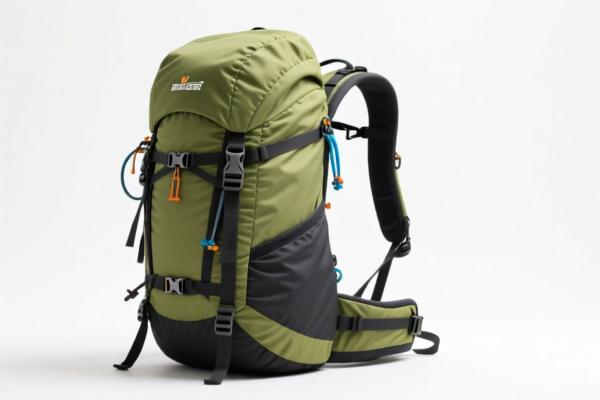
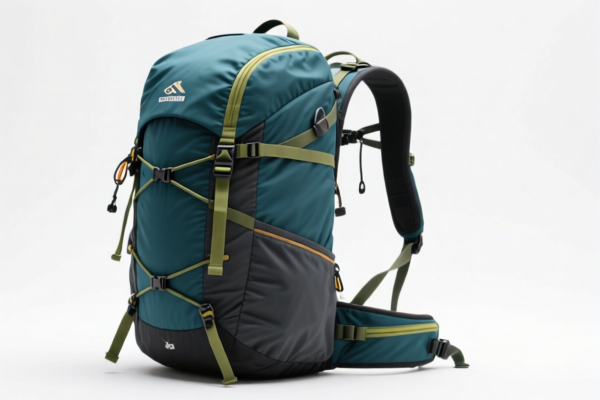
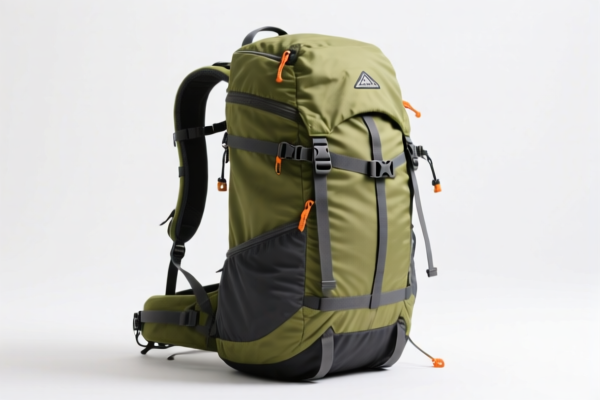
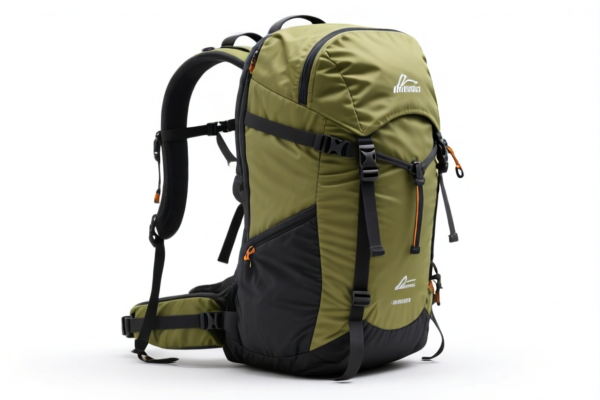
AI Analysis
🎒 Nylon Mountaineering Backpack (High-Performance Trekking Packs)
🌐 HS Code Reference & Customs Clearance Guide | 2026 Latest Tariff Analysis | Professional Entry Strategy
📌 1. Product Definition & Classification: What Exactly is a "Nylon Mountaineering Backpack"?
A Nylon Mountaineering Backpack is a specialized bag designed for rugged outdoor activities. In international trade, it is strictly classified under Chapter 42 (Articles of Leather; Saddle Gear), specifically as "Traveling Bags, Knapsacks, and Backpacks."
The key to accurate classification lies in the material and intended use: * Material: The outer surface is made of textile materials (specifically Nylon, which falls under "man-made fibers" in customs terminology). * Structure: It includes straps, handles, and possibly a frame, but is not considered a "suitcase" or "briefcase." * Distinction: * If it is a standard backpack used for general travel or sports → 4202.92.31.20 * If it is a specialized mountaineering pack with complex framing, hydration systems, or technical gear loops that exceeds standard knapsack definitions → It may fall under "Other" subcategories, but typically, high-end nylon backpacks still default to the standard man-made fiber backpack code unless they are classified as "sports bags" of specific technical construction not covered by the backpack heading. However, for most standard nylon mountaineering packs, the Backpack code is the primary correct classification.
⚠️ Key Classification Point: * Nylon = Textile Material (Man-made fibers). * Backpack = Specific type of container (as opposed to handbag, wallet, or suitcase). * Do NOT classify under Chapter 63 (Other made-up textile articles) or Chapter 39 (Plastics) unless the outer surface is primarily plastics, not textile.
📦 2. HS Code Classification Details (2026 Latest Tariff Authority)
Based on the provided DATA, here are the precise classifications for Nylon Mountaineering Backpacks:
| HS Code | Product Description | Application Scenario | Material Basis |
|---|---|---|---|
4202.92.31.20 |
Backpacks of man-made fibers | Standard mountaineering packs, hiking backpacks, trekking bags with nylon outer surface | ✅ Nylon (Man-made Fiber) |
4202.92.31.31 |
Other bags (Travel, sports, similar) of man-made fibers | Specialized technical bags, hydration packs not strictly defined as "backpacks," or unique shapes that don't fit the "knapsack/backpack" definition | ✅ Nylon (Man-made Fiber) |
🔍 Critical Note: *
4202.92.31.20is the standard and most common code for mountaineering backpacks made of nylon. *4202.92.31.31is a residual "Other" category. Use this only if the bag has unique structural features that prevent it from being classified as a standard backpack (e.g., a frame-less, soft-shell specialized gear sling that isn't a knapsack). For 95% of mountaineering backpacks,.20is correct.
💰 3. 2026 Latest Tariff Rate Details (Including Surtaxes & Policy Add-ons)
✅ Applicable Country: USA (US)
✅ Origin: China (CN) (Assuming standard high-risk origin for tariff analysis)
✅ Effective Date: 2026 Tariff Schedule
🎯 1. 4202.92.31.20 — Nylon Backpacks
| Item | Content |
|---|---|
| Base Tariff Rate | 0.0% (Ad Valorem) |
| Section 301 Surtax | 0.0% (Note: Check latest USITC lists; many 4202 items were excluded or have low rates) |
| Additional Surtax | 0.0% |
| Total Tax Rate | 0.0% |
| Tax Calculation | CIF Value × 0.0% = $0 |
| De Minimis Eligibility | ✅ Yes (Likely eligible under Section 321 if value < $800, but subject to scrutiny for dual-use tech) |
| Legal Basis | HTSUS:4202.92.31.20 |
📌 Explanation: * Nylon backpacks generally enjoy 0% base duty in the US. * Unlike electronics or steel, textile bags are rarely subject to high Section 301 surcharges. * Total Cost Impact: Low. This is a favorable HS code for margin protection.
🎯 2. 4202.92.31.31 — Other Textile Bags (Non-Backpack Specific)
| Item | Content |
|---|---|
| Base Tariff Rate | 0.0% (Ad Valorem) |
| Section 301 Surtax | 0.0% |
| Additional Surtax | 0.0% |
| Total Tax Rate | 0.0% |
| Tax Calculation | CIF Value × 0.0% = $0 |
| Legal Basis | HTSUS:4202.92.31.31 |
📌 Note: Even if misclassified as "Other," the rate remains 0%. However, misclassification risks include customs delays or audits for declaring a "backpack" as "other."
🛠️ 4. Customs Clearance Operational Advice (Practical Pitfall Guide)
✅ 1. Required Documentation Checklist
| Document | Mandatory? | Notes |
|---|---|---|
| ✅ Commercial Invoice | ✔️ | Must clearly state: "Nylon Mountaineering Backpack, Model XYZ, Origin: China" |
| ✅ Packing List | ✔️ | Include dimensions, weight, and material composition (e.g., "100% Nylon Outer, Polyester Lining") |
| ✅ Product Photos | ✔️ | Show the backpack from all angles, including straps, zippers, and branding |
| ✅ Material Declaration | ✔️ | Explicitly state: "Outer Surface: Textile (Nylon)" to support 4202.92 classification |
| ✅ Country of Origin Certificate | ✔️ | Required if claiming preferential rates (though here it's 0% anyway) |
✅ 2. Declaration Tips (Golden Rules)
🔥 “Material First, Type Second, Name Specific!”
| Scenario | Correct Declaration | Wrong Practice |
|---|---|---|
| Standard Nylon Hiking Pack | HS 4202.92.31.20 "Nylon Backpack, Mountaineering" |
❌ "Travel Bag" → Risk of reclassification |
| Backpack with Hydration Bladder | HS 4202.92.31.20 Declare as one unit |
❌ Split into "Bag" + "Plastic Bottle" → Complex clearance |
| Backpack with Leather Straps | HS 4202.92.31.20 If leather is minor/decorative |
❌ If leather is >50% surface → Chapter 4201 (Higher tariff) |
| Backpack with Plastic Coating | HS 4202.92.31.20 Check if coating is >50% surface area |
❌ If coated plastics dominate → HS 4202.92.11 (Plastics, not textiles) |
✅ 3. Special Case Handling
| Situation | Handling Advice |
|---|---|
| Waterproof Coating | If the outer surface is primarily plastic-coated textile, still 4202.92.31 but ensure material description is precise. |
| Leather Accents | If leather handles/straps are structural and prominent, customs may classify under 4202.11/4202.12 (Leather bags). Keep leather accents minimal to stay in 4202.92. |
| Dual-Use Items | If the backpack contains hidden compartments for sensitive goods (e.g., drone parts, optics), declare fully to avoid BIS/EAR violations. |
| Bulk vs. Individual | For de minimis (<$800), ensure each package is clearly labeled and declared individually to avoid "consolidation" flags. |
🌍 5. Global Market Clearance Comparison (2026 Latest)
| Country/Region | Recommended HS Code | Tariff Rate | Certification Requirements | Notes |
|---|---|---|---|---|
| 🇺🇸 USA | 4202.92.31.20 |
0.0% | None (General) | Most favorable; low risk |
| 🇨🇳 China | 4202.92.31.20 |
8.0% | None | Import duty applies |
| 🇪🇺 EU | 4202.92.91 |
0.0% | CE (if safety gear included) | Free trade under many FTA |
| 🇬🇧 UK | 4202.92.91 |
4.0% | UKCA (if applicable) | Post-Brexit tariff |
| 🇯🇵 Japan | 4202.92.910 |
0.0% | None | JETRO free tariff |
📌 Conclusion: * USA: Best market for margin due to 0% duty. * EU/UK/Japan: Also favorable or low duty, but CE/UKCA certifications may be required if the bag is marketed as "safety equipment" (e.g., with reflective strips or fire-retardant materials).
📌 6. Common Mistakes & Pitfall Guide (Lessons Learned)
❌ Mistake 1: Classifying as "Suitcase" (4202.11)
👉 Consequence: Wrong subheading; potential audit for misclassification. Backpacks have specific straps/handles that define them under 4202.92.
❌ Mistake 2: Ignoring Material Composition 👉 Consequence: If the bag is 60% Nylon and 40% Leather, it may be classified as a Leather Bag (higher tariff, e.g., 10-12%). Always ensure textile is the outer surface.
❌ Mistake 3: Failing to Declare "Man-Made Fiber" 👉 Consequence: Customs may assign a default higher duty rate if material is not specified. Explicitly state "Nylon (Polyamide)" in the description.
✅ Correct Declaration Example:
"Nylon Mountaineering Backpack, 50L, Water-Resistant, Adjustable Straps, Outer Surface: 100% Nylon (Man-Made Fiber), Model: Summit Pro, Origin: China"
🎯 7. Conclusion: Professional Clearance for Maximized Profit
🎯 Key Takeaways:
🔹 HS Code 4202.92.31.20 is your best friend for nylon backpacks. 🔹 Tariff is 0% in the US — protect this margin by accurate classification. 🔹 Material is King: Ensure Nylon is the primary outer material to avoid leather/plastic misclassification. 🔹 Documentation: Always include material specs in the invoice to speed up customs release.
📌 Pro Tip:
If your backpack includes electronic components (e.g., GPS pockets, USB ports), still classify as 4202, but ensure the electronics are non-functional (just wiring) or declared separately if they constitute a significant part of the value. Keep it simple: It's a bag, not a gadget.
📣 Immediate Action:
✅ Use HS Code:
4202.92.31.20for standard nylon backpacks. ✅ Declare Material: "Nylon" explicitly. ✅ Verify Origin: Ensure China origin is correctly stated to avoid sudden tariff spikes if policies change. 🚀 Clear, Fast, and Cost-Effective Clearance Awaits!
✨ Precision in Classification Saves Thousands! 💼 Your Backpack, Your Border — Clear It Right!
Customer Reviews
About HS Code Classification
The Harmonized System (HS) is an internationally standardized nomenclature developed by the World Customs Organization (WCO) to classify traded products. Over 200 countries use the HS system as the basis for customs tariffs, trade statistics, and import/export regulations.
Each HS code follows a hierarchical structure:
- Chapter (2 digits) — Broad category of goods (e.g., Chapter 84: Machinery and Mechanical Appliances)
- Heading (4 digits) — More specific grouping within the chapter
- Subheading (6 digits) — Internationally standardized breakdown, used by all WCO member countries
- National subdivisions (8-10 digits) — Country-specific extensions for further classification, such as US HTSUS 10-digit codes
Correct HS code classification is essential for smooth customs clearance, accurate duty payment, and compliance with trade regulations. Misclassification can lead to customs delays, overpayment of duties, or penalties.
When importing from CN to US, the applicable tariff rates may include:
- Most-Favored-Nation (MFN) rate — The standard duty rate applied to WTO members
- General rate — Applied to countries without trade agreements
- Trade remedy duties — Additional tariffs such as Section 301 (anti-dumping), Section 232 (national security), or countervailing duties
The information provided on this page is for reference purposes only. For official classification, please consult with your local customs authority or a licensed customs broker.