Nylon Suit Including Shirt
CN → US| HS Code | Tariff Rate | Origin | Destination | Doc |
|---|---|---|---|---|
| 6105202030 | 49.5% | CN | US | Official Doc |
| 6106202010 | 49.5% | CN | US | Official Doc |
| 6110303053 | 49.5% | CN | US | Official Doc |
| 6110303059 | 49.5% | CN | US | Official Doc |
Product Images
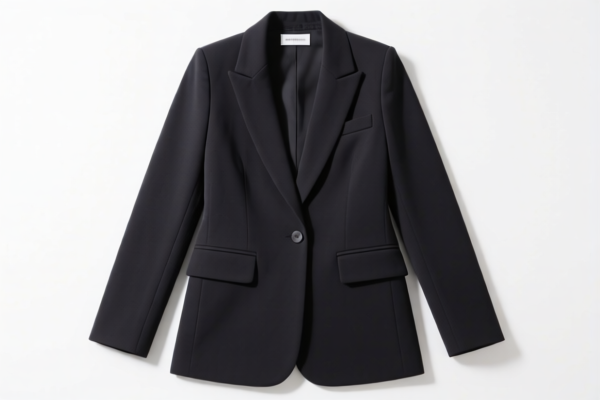


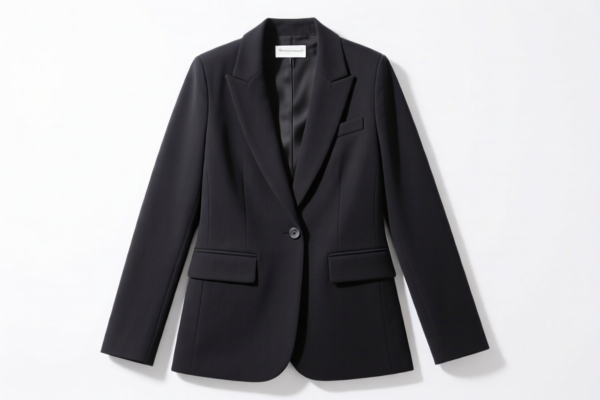
AI Analysis
🧥 Nylon Suit (Including Shirt) | 100% Man-Made Fiber Knitted Apparel
🌐 HS Code Reference & Customs Clearance Guide | 2026 Latest Tariff Analysis | Professional Clearance Strategy
📌 I. Product Definition & Classification: Do You Truly Understand "Nylon Suit"?
A Nylon Suit (Including Shirt) in this context refers to a coordinated set of apparel made primarily from man-made fibers (synthetic nylon), formed via knitting or crocheting processes. Unlike traditional woven suits (which fall under Chapter 62), these items are classified under Chapter 61 because they are knitted.
The complexity lies in the specific cut and function of the components within the suit set: * Type A: Contains a Shirt (specifically a button-front or similar shirt structure). * Type B: Contains an Upper Garment (generic knit top/jacket/blouse that isn't strictly a "shirt"). * Type C: Contains Other Knitted/Crocheted Articles (vests, specific knit tops, or mixed compositions).
⚠️ Key Distinction Point:
- If the set includes a distinct Shirt → Look at 6105.
- If the set includes a general Upper Garment (but not a shirt) → Look at 6106.
- If the set includes other knit items (vests, accessories, mixed) → Look at 6110.
- Crucial: Since it is a Suit/Set, the classification is often based on the principal component or the specific heading that best describes the ensemble.
📦 II. HS Code Classification Details (2026 Latest Tariff Authority Match)
Below are the exact HS Codes from the provided data, with detailed explanations for why each applies to specific configurations of the "Nylon Suit (Including Shirt)."
| HS Code | Product Description | Applicability Scenario | Tax Logic |
|---|---|---|---|
6105.20.20.30 |
Nylon Suit (Including Shirt): Man-made fiber, Knitted/Crocheted Shirt suit set. | ✅ Best Match for "Shirt" Use when the set explicitly contains a shirt (button-up, polo-style shirt, etc.) as a primary component. |
49.5% |
6106.20.20.10 |
Nylon Suit (Including Shirt): Man-made fiber, Knitted/Crocheted Upper Garment suit set. | ✅ Best Match for "Top/Jacket" Use when the set contains an upper body garment (blouse, jacket, sweater) but is not classified strictly as a "shirt" under 6105, or if the regulatory body classifies the "suit" under the general upper garment heading. |
49.5% |
6110.30.30.53 |
Nylon Suit (Including Shirt): Man-made fiber, Knitted/Similar Articles suit set. | ✅ Best Match for "Other Knitted Items" Use when the suit includes vests, knit cardigans, or other "similar articles" that don't fit neatly into shirt/upper garment categories, or for mixed knit sets. |
49.5% |
6110.30.30.59 |
Nylon Suit (Including Shirt): Man-made fiber, Knitted/Crocheted Apparel suit set. | ✅ Best Match for "General Knit Apparel" Use for residual cases of knit suit sets, including accessories or components not covered by 6105/6106. |
49.5% |
🔍 Important Note:
- All four codes result in the same total tax rate (49.5%) in this dataset.
- However, misclassification can lead to customs delays, audits, or penalties, even if the tax rate is identical.
- Always match the description to the actual garment type: Shirt → 6105; Top/Jacket → 6106; Other/Vest → 6110.
💰 III. 2026 Latest Tariff Rate Breakdown (Detailed Tax Clauses)
✅ Applicable Country: United States (US)
✅ Origin: China (CN)
✅ Total Effective Tax Rate: 49.5%
🎯 1. Tax Structure Breakdown
| Tax Component | Rate | Description & Legal Basis |
|---|---|---|
| Base Tariff | 32.0% | Standard MFN (Most Favored Nation) or applicable basic duty for knit apparel (6105/6106/6110). |
| Section 301 Additional Tariff | 7.5% | Additional duty imposed under US Trade Act Section 301 for specific Chinese imports. |
| Section 122 Tariff | 10.0% | Additional duty imposed under 122 Tariff (often related to specific trade remedies or emergency actions). |
| Total Tax Rate | 49.5% | Sum: 32.0% + 7.5% + 10.0% = 49.5% |
📌 Explanation:
- The 32.0% is the baseline duty for man-made fiber knit apparel.
- The 7.5% and 10.0% are additional punitive tariffs targeting Chinese-made textiles.
- Combined, nearly half of the CIF value is lost to taxes. This is a high-cost classification.
📊 2. Tax Calculation Example
| Item | Value (USD) |
|---|---|
| CIF Value (Cost + Insurance + Freight) | $10,000.00 |
| Base Tariff (32%) | $3,200.00 |
| Additional Tariff (7.5%) | $750.00 |
| 122 Tariff (10%) | $1,000.00 |
| Total Tax Payable | $4,950.00 |
| Effective Tax Rate | 49.5% |
⚠️ Critical Warning:
- No De Minimis Exemption: These items DO NOT qualify for the $800 de minimis exemption (Section 321) due to the nature of textile apparel and high tariffs.
- Strict Documentation Required: Any discrepancy in the description ("Shirt" vs. "Top") may trigger an audit.
🛠️ IV. Customs Clearance Practical Advice (Pitfall Avoidance Guide)
✅ 1. Required Documentation Checklist (Do Not Miss Any)
| Document | Mandatory? | Purpose |
|---|---|---|
| ✅ Commercial Invoice | ✔️ | Must clearly state: "Nylon Suit Set, Man-Made Fiber, Knitted, Includes Shirt." |
| ✅ Packing List | ✔️ | Detail contents: e.g., "1 Suit Set (1 Shirt + 1 Jacket)." |
| ✅ Product Specification Sheet | ✔️ | Must confirm Knitted/Crocheted (not Woven) and 100% Nylon/Man-Made Fiber. |
| ✅ Composition Label | ✔️ | Photos of garment tags showing fiber content (e.g., "100% Nylon"). |
| ✅ Origin Certificate | ✔️ | Proof of Chinese origin (if applicable) to confirm tariff applicability. |
| ✅ Bill of Lading/Air Waybill | ✔️ | Standard shipping document. |
✅ 2. Declaration Strategy (Key Tips)
🔥 "Be Specific: Knit vs. Woven, Shirt vs. Top!"
| Scenario | Correct Declaration | Risk of Misclassification |
|---|---|---|
| Suit contains a Shirt | Use 6105.20.20.30 | If declared as generic "suit," customs may default to higher scrutiny. |
| Suit contains a Jacket/Blouse | Use 6106.20.20.10 | Declaring as "shirt" when it's a jacket → Misdeclaration Penalty. |
| Suit contains Vests/Other | Use 6110.30.30.53/59 | Declaring as "shirt" → Wrong HS Code. |
| Woven Suit (Misclassified as Knit) | STOP! | Woven suits fall under Chapter 62 (e.g., 6203/6204). Knit (61) vs. Woven (62) is a critical distinction. |
✅ 3. Special Cases
| Situation | Handling Advice |
|---|---|
| Set Includes Shoes | Do not declare as a suit! Shoes must be declared separately under Chapter 64. |
| Set Includes Underwear | Underwear is usually classified separately (6107). A "suit" typically refers to top/bottom outerwear. |
| Sample vs. Commercial | Even samples are subject to duty if value > $800. Do not declare as "Gift" if it has commercial value. |
| Mixed Fiber | If nylon is mixed with cotton, classification may change. Ensure the label reflects the main fiber. |
🌍 V. Global Market Comparison (2026)
| Market | HS Code (Typical) | Est. Tax Rate | Key Certification |
|---|---|---|---|
| 🇺🇸 USA | 6105.20.20.30 etc. |
49.5% | No specific FDA, but must meet FTC labeling laws. |
| 🇨🇳 China | 6105.20.00.00 |
~13-15% | CCC (if applicable, usually not for apparel). |
| 🇪🇺 EU | 6105.10 or 6105.20 |
~12-16% | REACH, CE (if technical textile), EPR. |
| 🇯🇵 Japan | 6105.20 |
~15-18% | JIS standards. |
📌 Conclusion:
- USA has the highest tariff burden (49.5%) due to multiple layers of additional duties.
- Cost-saving Opportunity: Consider sourcing from countries with FTA benefits (e.g., Mexico under USMCA, Vietnam, Cambodia) if possible, to avoid Section 301/122 tariffs.
📌 VI. Common Mistakes & Pitfalls (Lessons Learned)
❌ Mistake 1: Declaring a Woven nylon suit under 61xx (Knitted).
👉 Consequence: 61xx is for knit; 62xx is for woven. Wrong chapter → Seizure/Return.
❌ Mistake 2: Ignoring the 122 Tariff.
👉 Consequence: If the 122 tariff applies to your specific product line, failing to account for the 10% leads to underpayment and penalties.
❌ Mistake 3: Using "Suit" as a generic description without specifying Knitted.
👉 Consequence: Customs officers may ask for clarification, causing port delays.
❌ Mistake 4: Misidentifying Shirt vs. Upper Garment.
👉 Consequence: While the tax rate is the same (49.5%), inconsistency between invoice and HS code description triggers audits.
✅ Correct Practice:
"Nylon Suit Set, Knitted, Man-Made Fiber, Includes Button-Up Shirt and Matching Trousers. 100% Nylon. Made in China."
🎯 VII. Conclusion: Professional Declaration, Cost Control, Efficiency!
🎯 Remember the Rule:
🔹 "Knit is 61, Woven is 62. Shirt is 6105, Top is 6106. Tax is 49.5%, so plan ahead!"
🔹 "High Tariff Alert: 49.5% is steep. Check for FTA alternatives."
📌 Pro Tip:
If your product is shipped from a third country (e.g., Vietnam) but originates in China, the 49.5% tariff still applies. Ensure Country of Origin is correctly marked.
📣 Immediate Action:
📞 Consult a Customs Broker: Verify if your specific suit design fits 6105 (Shirt) or 6106 (Upper Garment).
💡 Calculate Landed Cost: Include the 49.5% in your pricing model.
🚀 Optimize Supply Chain: Consider shifting production to non-China FTA partners to reduce tax burden.
✨ Professional Clearance Starts with Accurate Classification!
💼 Every Dollar Saved in Tariffs is Pure Profit!
Customer Reviews
About HS Code Classification
The Harmonized System (HS) is an internationally standardized nomenclature developed by the World Customs Organization (WCO) to classify traded products. Over 200 countries use the HS system as the basis for customs tariffs, trade statistics, and import/export regulations.
Each HS code follows a hierarchical structure:
- Chapter (2 digits) — Broad category of goods (e.g., Chapter 84: Machinery and Mechanical Appliances)
- Heading (4 digits) — More specific grouping within the chapter
- Subheading (6 digits) — Internationally standardized breakdown, used by all WCO member countries
- National subdivisions (8-10 digits) — Country-specific extensions for further classification, such as US HTSUS 10-digit codes
Correct HS code classification is essential for smooth customs clearance, accurate duty payment, and compliance with trade regulations. Misclassification can lead to customs delays, overpayment of duties, or penalties.
When importing from CN to US, the applicable tariff rates may include:
- Most-Favored-Nation (MFN) rate — The standard duty rate applied to WTO members
- General rate — Applied to countries without trade agreements
- Trade remedy duties — Additional tariffs such as Section 301 (anti-dumping), Section 232 (national security), or countervailing duties
The information provided on this page is for reference purposes only. For official classification, please consult with your local customs authority or a licensed customs broker.