Nylon Watch Strap
CN → US| HS Code | Tariff Rate | Origin | Destination | Doc |
|---|---|---|---|---|
| 5806321070 | 41.0% | CN | US | Official Doc |
| 5606000090 | 43.0% | CN | US | Official Doc |
| 3926909989 | 22.8% | CN | US | Official Doc |
| 5806321060 | 41.0% | CN | US | Official Doc |
Product Images
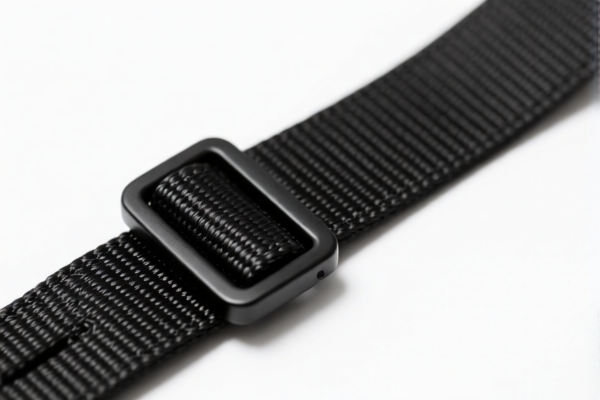
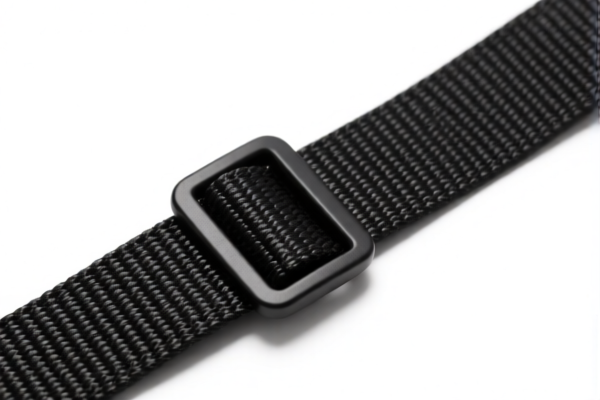
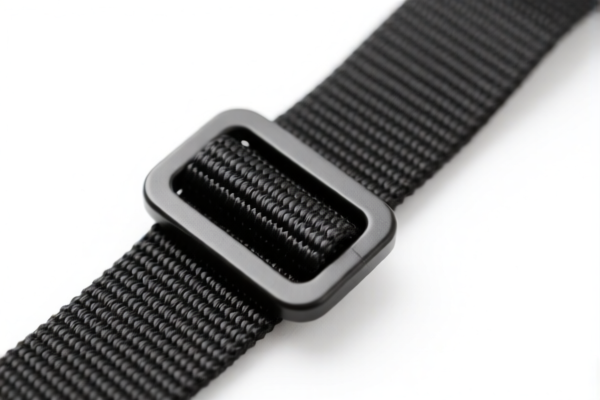

AI Analysis
⌚ Nylon Watch Strap (Nylon Band)
🌐 HS Code Reference & Customs Clearance Guide | 2026 Latest Tariff Analysis | Professional Classification Strategy
📌 Part 1: Product Definition & Classification: What Exactly is a "Nylon Watch Strap"?
Nylon watch straps are flexible bands used to secure timepieces to the wrist. In international trade, they are not a single, monolithic category. Their classification depends heavily on material composition, manufacturing process (woven vs. twisted yarn vs. plastic molding), and structural integrity.
Misclassification is the leading cause of customs delays and tariff overpayments for these items.
⚠️ Key Distinction Points:
- If it is a woven ribbon or narrow woven fabric → Likely Chapter 58 (Textiles).
- If it is made from twisted nylon yarns/threads → Likely Chapter 56 (Miscellaneous Made-Up Articles).
- If it is a molded plastic/resin piece resembling a strap → Likely Chapter 39 (Plastics).
📦 Part 2: HS Code Classification Details (2026 Latest Tariff Authority对照)
Based on the provided data, here are the three primary classification paths for Nylon Watch Straps:
| HS Code | Product Description | Applicable Scenario | Material/Process Note |
|---|---|---|---|
5806.32.10.70 |
Nylon Ribbon Classification | Common nylon straps, often with printed patterns or specific weaving structures. | Classified as "Woven Ribbons" or "Narrow Woven Fabrics". |
5606.00.00.90 |
Nylon Twisted Yarn/Strap Classification | Straps made from twisted nylon threads or braided yarn structures. | Classified as "Miscellaneous Made-Up Articles of Yarn". |
3926.90.99.89 |
Nylon Plastic Product Classification | Solid molded nylon straps, resin-coated straps, or rigid plastic-like bands. | Classified as "Other articles of plastics". |
🔍 Critical Analysis:
-5806.32.10.70: This is the most common code for standard fabric-based nylon straps. It falls under "Woven Ribbons".
-5606.00.00.90: Use this if the strap is fundamentally constructed from twisted or plied yarns rather than a woven ribbon structure.
-3926.90.99.89: Use this ONLY if the product is essentially a plastic item (e.g., hard plastic buckles that form the band, or fully resin-infused rigid straps). Do not use this for soft, flexible woven fabric straps.
💰 Part 3: 2026 Latest Tariff Rate Breakdown (Including Surtaxes & Policy Add-ons)
✅ Applicable Country: United States (US)
✅ Origin: China (CN)
✅ Effective Date: 2025/2026 (Current Trade Regulations)
🎯 1. 5806.32.10.70 & 5806.32.10.60 —— Nylon Ribbons / Narrow Woven Fabrics
These two codes share the same tax structure.
| Item | Content |
|---|---|
| Base Tariff (MFN) | 6.0% |
| Section 301 Surcharge | +25.0% |
| Section 122 Tariff | +10.0% |
| Total Effective Rate | 41.0% |
| Calculation Basis | CIF Value × 41.0% |
| De Minimis Exemption | ❌ Not Eligible (deny_de_minimis) |
| Legal Basis Path | Base: 5806.32 → 301: 25% → 122: 10% |
📌 Explanation:
- Base Rate (6%): Standard Most Favored Nation (MFN) rate for woven ribbons.
- Section 301 (25%): High-priority surcharge on Chinese textile/apparel related goods.
- Section 122 (10%): Additional tariff based on national security/emergency powers.
- Total Cost: The duty is substantial. Importers must account for a 41% tax burden on the declared value.
🎯 2. 5606.00.00.90 —— Nylon Twisted Yarn / Straps
| Item | Content |
|---|---|
| Base Tariff (MFN) | 8.0% |
| Section 301 Surcharge | +25.0% |
| Section 122 Tariff | +10.0% |
| Total Effective Rate | 43.0% |
| Calculation Basis | CIF Value × 43.0% |
| De Minimis Exemption | ❌ Not Eligible (deny_de_minimis) |
| Legal Basis Path | Base: 5606.00 → 301: 25% → 122: 10% |
📌 Explanation:
- This code attracts a slightly higher base rate (8%) compared to woven ribbons (6%).
- Total Cost: 43%. This is the most expensive classification among the options.
- Risk: If a product is classified as "twisted yarn" when it is actually a "woven ribbon," you will pay an extra 2% unnecessarily. However, if you classify a twisted yarn as a woven ribbon, you risk a penalty for misdeclaration.
🎯 3. 3926.90.99.89 —— Nylon Plastic Products
| Item | Content |
|---|---|
| Base Tariff (MFN) | 5.3% |
| Section 301 Surcharge | +7.5% |
| Section 122 Tariff | +10.0% |
| Total Effective Rate | 22.8% |
| Calculation Basis | CIF Value × 22.8% |
| De Minimis Exemption | ❌ Not Eligible (deny_de_minimis) |
| Legal Basis Path | Base: 3926.90 → 301: 7.5% → 122: 10% |
📌 Explanation:
- Significant Savings: This code offers the lowest total tariff at 22.8%.
- Condition: You can ONLY use this if the item is legally considered a "Plastic Product" (e.g., solid molded nylon, not woven fabric).
- Strategy: If your "nylon strap" is actually a molded resin band or has significant plastic components that define its character, this is the optimal classification for cost savings.
- Warning: Do not force this classification for standard fabric straps. Customs will reject it, leading to re-valuation at the higher textile rates plus penalties.
🛠️ Part 4: Customs Clearance Operational Advice (Practical Pitfall Guide)
✅ 1. Documentation Checklist (Essential for Clearance)
| Document | Mandatory? | Description |
|---|---|---|
| ✅ Product Specification Sheet | ✔️ | Must detail material composition (% nylon, % polyester, etc.), weave type, and width. |
| ✅ High-Resolution Photos | ✔️ | Show texture (woven vs. smooth plastic), buckle material, and cross-section if possible. |
| ✅ Commercial Invoice | ✔️ | Must clearly state "Nylon Watch Strap" and specify "Woven" vs. "Molded". |
| ✅ Packing List | ✔️ | Include net/gross weight accurately. |
| ✅ Material Declaration | ✔️ | Explicitly state if the item is "Woven Fabric" (Ch 58) or "Plastic Article" (Ch 39). |
✅ 2. Declaration Tips (Key Mnemonic)
🔥 "Weave is Ribbon, Twist is Yarn, Mold is Plastic. Get it wrong, Tax rises!"
| Scenario | Correct HS Code | Tax Rate | Incorrect Risk |
|---|---|---|---|
| Standard woven nylon fabric strap | 5806.32.10.70 |
41.0% | Misclassified as Plastic → Penalty + Back Duties |
| Twisted nylon yarn strap | 5606.00.00.90 |
43.0% | Misclassified as Ribbon → Minor Rate Diff, but Audit Risk |
| Solid molded Nylon/Plastic band | 3926.90.99.89 |
22.8% | Misclassified as Textile → Overpay by ~20% |
✅ 3. Special Handling for "Hybrid" Straps
Many watch straps have metal buckles and nylon webs.
| Situation | Handling Advice |
|---|---|
| Strap + Buckle Sold Together | Declare as the main component (the nylon strap). The buckle is considered an accessory. Do not split the declaration unless instructed by customs broker. |
| Fully Plastic Buckle + Nylon Web | Still likely 5806.32 or 5606, depending on the web structure. The buckle does not change the textile nature of the strap. |
| 100% Molded Nylon (No Weave) | Use 3926.90.99.89 to save on tariffs. Ensure photos show no weave pattern. |
🌍 Part 5: Global Market Comparison (2026 Snapshot)
| Market | Recommended HS Code | Est. Total Duty (China Origin) | Notes |
|---|---|---|---|
| 🇺🇸 USA | 5806.32.10.70 (Typical) |
41.0% | High Section 301 + 122 tariffs. |
| 🇺🇸 USA | 3926.90.99.89 (Plastic) |
22.8% | Only if truly plastic/molded. |
| 🇨🇳 China (Import) | Varies | 5-10% | Lower base tariffs, fewer surcharges. |
| 🇪🇺 EU | 5806 32 90 | 6-8% | Generally lower than US, no 301 equivalent. |
📌 Conclusion:
- The US market is the most expensive for nylon watch straps due to the combination of Base, 301, and 122 tariffs.
- Cost Saving Strategy: If your product design allows, consider molded/resin-based designs to qualify for3926.90.99.89(22.8% vs 41%).
- Compliance Warning: Never declare a woven fabric strap as plastic to save tax. Customs inspections (especially physical checks) will quickly identify the weave, leading to fines and potential loss of import privileges.
📌 Part 6: Common Errors & Pitfalls (Lessons Learned)
❌ Error 1: Declaring a woven nylon strap as "Plastic Accessory" (3926).
👉 Consequence: Customs seizes the goods, reclassifies to 5806 or 5606, and demands 41-43% duty + penalties. You lose the 20% savings you thought you had.
❌ Error 2: Ignoring the "Twisted" vs. "Woven" distinction.
👉 Consequence: Using 5606 (43%) when 5806 (41%) is applicable results in unnecessary overpayment of 2%. While small per unit, it adds up significantly for bulk shipments.
❌ Error 3: Omitting "122 Tariff" in cost calculations.
👉 Consequence: Budgeting for 31% (301 only) but facing 41% (301+122) leads to margin erosion and unexpected cash flow issues.
✅ Correct Practice:
"Nylon Woven Watch Strap, 20mm width, with Metal Buckle, Printed Pattern, Made in China."
Declared HS:5806.32.10.70
Declared Duty: 41.0%
🎯 Part 7: Conclusion: Professional Classification Saves Money!
🎯 Remember the Golden Rules:
🔹 "Woven = 41% | Twisted = 43% | Molded = 22.8%"
🔹 "Don't Force Plastic if It's Fabric!"
🔹 "Always Include Section 122 in Your Cost Model."
📌 Pro Tip:
If you are unsure whether your strap is "Woven" or "Twisted," submit a Sample Kit with detailed macro-photos to a customs broker for a Pre-Ruling (Advance Ruling). The cost of a ruling is far less than the risk of a 20% overpayment or a compliance violation.
📣 Immediate Action:
📞 Contact your freight forwarder
🖼️ Provide clear photos of the strap texture
📝 Confirm if your strap is Woven, Twisted, or Molded
🚀 Get the correct HS Code before shipment to avoid customs hold-ups!
✨ Precision in Classification is the Key to Profitability!
💼 Every percentage point of duty matters in the watch accessory industry.
Customer Reviews
About HS Code Classification
The Harmonized System (HS) is an internationally standardized nomenclature developed by the World Customs Organization (WCO) to classify traded products. Over 200 countries use the HS system as the basis for customs tariffs, trade statistics, and import/export regulations.
Each HS code follows a hierarchical structure:
- Chapter (2 digits) — Broad category of goods (e.g., Chapter 84: Machinery and Mechanical Appliances)
- Heading (4 digits) — More specific grouping within the chapter
- Subheading (6 digits) — Internationally standardized breakdown, used by all WCO member countries
- National subdivisions (8-10 digits) — Country-specific extensions for further classification, such as US HTSUS 10-digit codes
Correct HS code classification is essential for smooth customs clearance, accurate duty payment, and compliance with trade regulations. Misclassification can lead to customs delays, overpayment of duties, or penalties.
When importing from CN to US, the applicable tariff rates may include:
- Most-Favored-Nation (MFN) rate — The standard duty rate applied to WTO members
- General rate — Applied to countries without trade agreements
- Trade remedy duties — Additional tariffs such as Section 301 (anti-dumping), Section 232 (national security), or countervailing duties
The information provided on this page is for reference purposes only. For official classification, please consult with your local customs authority or a licensed customs broker.