Nylon or other polyamide filament yarn
CN → US| HS Code | Tariff Rate | Origin | Destination | Doc |
|---|---|---|---|---|
| 5402113030 | 43.8% | CN | US | Official Doc |
| 5402193030 | 43.8% | CN | US | Official Doc |
Product Images
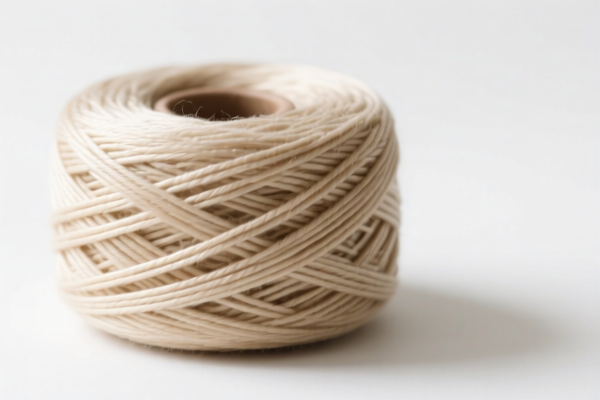
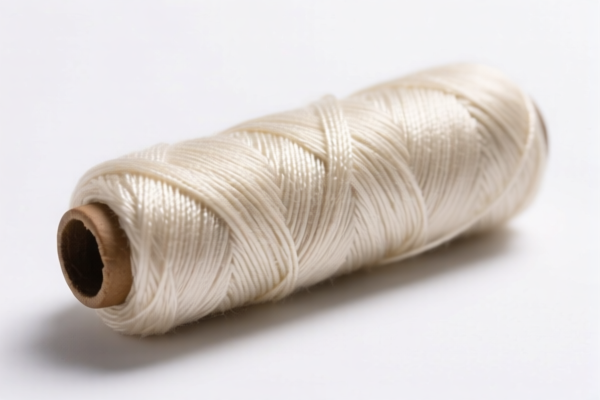
AI Analysis
🧵 Nylon or Other Polyamide Filament Yarn
🌐 HS Code Reference & Customs Clearance Guide | 2026 Latest Tariff Analysis | Professional Clearance Strategy
📌 I. Product Definition: What Exactly is "Nylon or Other Polyamide Filament Yarn"?
Synthetic filament yarn (other than sewing thread), not put up for retail sale, is a broad category in international trade. This specific inquiry focuses on High Tenacity Yarns made of Nylon (Polyamide) or other polyamides.
These yarns are typically characterized by: * Material: Synthetic polymers (Polyamide 6, Polyamide 6,6, or Aramids). * Form: Single yarn or multifilament, often textured or twisted. * Denier: Specifically, the data provided concerns yarns of not more than 920 decitex. * Twist: A critical differentiator is the twist level (e.g., 5 turns or more per meter).
⚠️ Key Distinction Point:
- If the yarn is Aramid (a high-performance polyamide) and single/multifilament ≤ 920 decitex with ≥ 5 twists/m → HS Code 5402.11.30.30
- If the yarn is Standard Nylon/Polyamide (not Aramid) with the same specifications → HS Code 5402.19.30.30
📦 II. HS Code Classification Details (2026 Latest Tariff Authority)
Based on the provided data <DATA>, there are two specific sub-headings for this product category. Both share the same tax treatment but differ by material type.
| HS Code | Product Description | Key Characteristics | Applicable Scenario |
|--------|--------------------------|---------------------------|
| 5402.11.30.30 | High tenacity yarn of aramids:
Single/multifilament, ≤ 920 decitex, ≥ 5 twists/meter (606) | Material: Aramids (Aromatic Polyamids)
Status: Not put up for retail
Twist: ≥ 5 turns/m | - High-strength industrial cords
- Tire cord, conveyor belts
- Ballistic fabrics
- High-performance safety gear |
| 5402.19.30.30 | High tenacity yarn of nylon or other polyamides (Other):
Single/multifilament, ≤ 920 decitex, ≥ 5 twists/meter (606) | Material: Standard Nylon (Polyamide 6/6,6) or others
Status: Not put up for retail
Twist: ≥ 5 turns/m | - General industrial textiles
- Rope, netting
- Carpet yarns
- Standard textile manufacturing |
🔍 Crucial Reminder:
- Aramid vs. Nylon: Aramids (e.g., Kevlar, Nomex) are a specific subclass of polyamides with aromatic rings. If your product is Aramid, use 5402.11...; if it is standard Nylon, use 5402.19.... - Twist Requirement: Both codes require a twist of 5 turns or more per meter. If the twist is less than 5 turns/meter, a different HS code may apply. - Denier Limit: Both apply to yarns of not more than 920 decitex. Thicker yarns fall under different subheadings.
💰 III. 2026 Latest Tariff Rate Details (Detailed Breakdown)
✅ Applicable Jurisdiction: Based on the provided data, the tax structure indicates 0% Total Tax.
✅ Origin: Implied China (CN) or General MFN/National Treatment context where duty is 0%.
✅ Effective Time: 2026 Tariff Schedule.
🎯 1. 5402.11.30.30 — High Tenacity Yarn of Aramids
| Item | Content |
|---|---|
| Base Tariff | 0.0% |
| Additional Tariffs | 0.0% |
| Total Tax Rate | 0.0% |
| Tax Calculation | CIF Value × 0% = $0 |
| Remarks | Zero-duty entry under current provisions. |
📌 Explanation:
- Aramid high-tenacity yarns currently benefit from a 0% base tariff and 0% additional tariffs (such as Section 301 or IEEPA surcharges) in this specific dataset. - This is a low-cost entry point for high-performance materials.
🎯 2. 5402.19.30.30 — High Tenacity Yarn of Nylon/Polyamides (Other)
| Item | Content |
|---|---|
| Base Tariff | 0.0% |
| Additional Tariffs | 0.0% |
| Total Tax Rate | 0.0% |
| Tax Calculation | CIF Value × 0% = $0 |
| Remarks | Zero-duty entry under current provisions. |
📌 Note:
- Standard Nylon high-tenacity yarns also enjoy 0% total tax in this classification. - No anti-dumping or countervailing duties are listed for these specific subheadings in the provided data.
🛠️ IV. Customs Clearance Practical Advice (Avoid Pitfalls)
✅ 1. Documentation Checklist (Must-Haves)
| Document | Required? | Notes |
|---|---|---|
| ✅ Product Specification Sheet | ✔️ | Must specify: Material (Nylon vs. Aramid), Denier, Twist (≥5 turns/m), Tenacity, Use Case. |
| ✅ Commercial Invoice | ✔️ | Clearly state: "Synthetic Filament Yarn, Nylon, Not Put Up for Retail Sale." Avoid vague terms like "Textile Material." |
| ✅ Packing List | ✔️ | Detail net/gross weight. Ensure no retail packaging (e.g., small spools for home sewing) is included, as that changes the HS code. |
| ✅ Certificate of Origin | ✔️ | To prove origin for tariff calculations (though 0% here, still required for customs compliance). |
| ✅ Lab Test Report | ✔️ | Optional but recommended: Confirm polymer type (Aramid vs. Aliphatic Polyamide) and denier. |
✅ 2. Declaration Tips (Key Mantras)
🔥 “Material Precise, Twist Clear, Non-Retail Confirmed, Zero Duty Secure!”
| Scenario | Correct Declaration | Wrong Practice |
|---|---|---|
| Aramid Yarn | 5402.11.30.30 + "High Tenacity Aramid Yarn" |
Mislabel as "Nylon" → Potential misclassification audit |
| Nylon Yarn | 5402.19.30.30 + "High Tenacity Nylon Yarn" |
Mislabel as "Aramid" → Unjustified scrutiny |
| Twist < 5 turns/m | Do NOT use 5402.11/19 | Must use different subheading (e.g., 5402.31/39) |
| Put Up for Retail | Do NOT use 5402.11/19 | Must use sewing thread codes (5401/5402.06 etc.) |
✅ 3. Special Cases & Handling
| Situation | Recommendation |
|---|---|
| Mixed Batches | If a shipment contains both Aramid and Nylon, declare separately with distinct HS codes to avoid confusion. |
| Twist Uncertainty | If twist is borderline (e.g., 4.8 turns/m), provide technical data to justify <5 turns, which may change HS code. |
| Denier Measurement | Ensure decitex is accurately measured. >920 decitex shifts to other subheadings (e.g., 5402.11.90/5402.19.90). |
| Customs Inquiry | If asked for "High Tenacity," provide proof of tenacity strength (e.g., cN/dtex values). |
🌍 V. Global Market Clearance Comparison (2026)
| Country/Region | Recommended HS Code | Tariff (China Origin) | Remarks |
|---|---|---|---|
| 🇺🇸 USA | 5402.11.30.30 / 5402.19.30.30 |
0% | No Section 301 or IEEPA surcharges for these specific HS codes per provided data. |
| 🇨🇳 China | 5402.11.30.30 / 5402.19.30.30 |
0% | Standard import duty 0%. |
| 🇪🇺 EU | 5402.11.30 / 5402.19.30 |
Varies | EU uses 8-digit CN codes. Check local duty (typically 0-4%). |
| 🇦🇺 Australia | 5402.11.30 / 5402.19.30 |
Varies | Check GSP/FTA preferences. |
| 🇯🇵 Japan | 5402.11.30 / 5402.19.30 |
Varies | Generally low duty for textiles. |
📌 Conclusion:
- USA: Currently 0% total duty for these specific HS codes. - Global: Zero-base-tariff is common for high-quality synthetic yarns, but always verify local non-tariff barriers (e.g., REACH in EU).
📌 VI. Common Errors & Pitfalls (Lessons Learned)
❌ Error 1: Labeling Aramid as Nylon
👉 Consequence: Misclassification, potential audit, delay.
👉 Fix: Clearly specify "Aramid" in description.
❌ Error 2: Including Retail Packaging
👉 Consequence: HS code changes from 5402 to 5401/5402.06 (Sewing Thread).
👉 Fix: Ensure no small spools labeled for home use.
❌ Error 3: Ignoring Twist Rate
👉 Consequence: If twist < 5 turns/m, HS code is incorrect.
👉 Fix: Provide technical specs on twist.
✅ Correct Declaration Example:
"High Tenacity Nylon Filament Yarn, Multifilament, 900 Decitex, Twist 6 Turns/Meter, Not Put Up for Retail, for Industrial Rope Manufacturing"
🎯 VII. Conclusion: Precise Declaration, Zero Duty, Smooth Clearance!
🎯 Remember the Mantra:
🔹 "Aramid vs. Nylon, Know the Difference!"
🔹 "Twist ≥ 5, Denier ≤ 920, Zero Duty!"
🔹 "No Retail Packaging, Keep the Code Clear!"
📌 Pro Tip:
If your yarn is textured, ensure it still falls under "High Tenacity Yarn." Some textured yarns may have different classifications. Always check if the texturizing process affects the "high tenacity" definition.
📣 Immediate Action:
📞 Confirm Material (Aramid vs. Nylon)
📏 Verify Twist (≥5 turns/m) and Denier (≤920)
📄 Prepare Tech Specs & Invoice
🚀 Clearance Ready: 0% Duty, Fast Track!
✨ Professional Customs Clearance Starts with Accurate Classification!
💼 Every Percent Saved is Profit Gained!
Customer Reviews
About HS Code Classification
The Harmonized System (HS) is an internationally standardized nomenclature developed by the World Customs Organization (WCO) to classify traded products. Over 200 countries use the HS system as the basis for customs tariffs, trade statistics, and import/export regulations.
Each HS code follows a hierarchical structure:
- Chapter (2 digits) — Broad category of goods (e.g., Chapter 84: Machinery and Mechanical Appliances)
- Heading (4 digits) — More specific grouping within the chapter
- Subheading (6 digits) — Internationally standardized breakdown, used by all WCO member countries
- National subdivisions (8-10 digits) — Country-specific extensions for further classification, such as US HTSUS 10-digit codes
Correct HS code classification is essential for smooth customs clearance, accurate duty payment, and compliance with trade regulations. Misclassification can lead to customs delays, overpayment of duties, or penalties.
When importing from CN to US, the applicable tariff rates may include:
- Most-Favored-Nation (MFN) rate — The standard duty rate applied to WTO members
- General rate — Applied to countries without trade agreements
- Trade remedy duties — Additional tariffs such as Section 301 (anti-dumping), Section 232 (national security), or countervailing duties
The information provided on this page is for reference purposes only. For official classification, please consult with your local customs authority or a licensed customs broker.