Nylon or other polyamide high tenacity yarn tire cord fabric
CN → US| HS Code | Tariff Rate | Origin | Destination | Doc |
|---|---|---|---|---|
| 5407100090 | 48.6% | CN | US | Official Doc |
| 5407100010 | 48.6% | CN | US | Official Doc |
| 5911101000 | 37.9% | CN | US | Official Doc |
| 5911900080 | 38.8% | CN | US | Official Doc |
Product Images
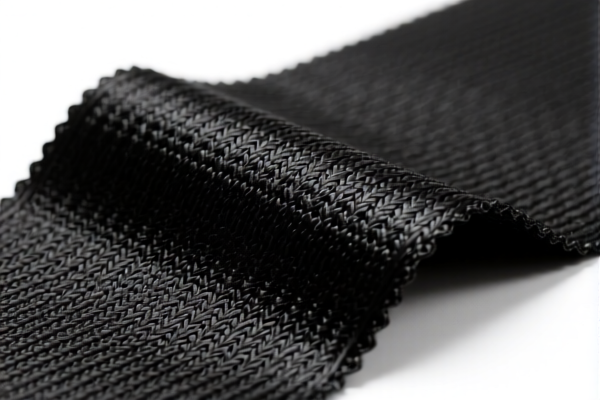
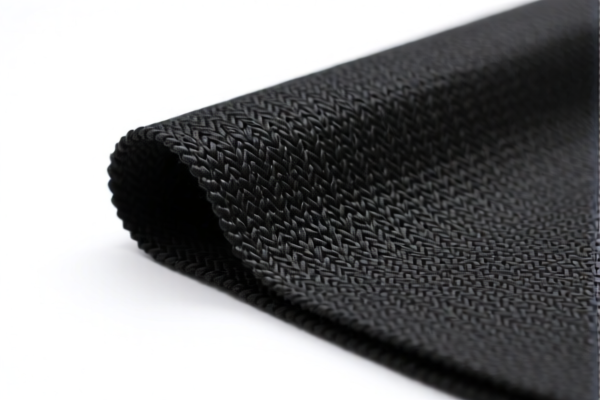
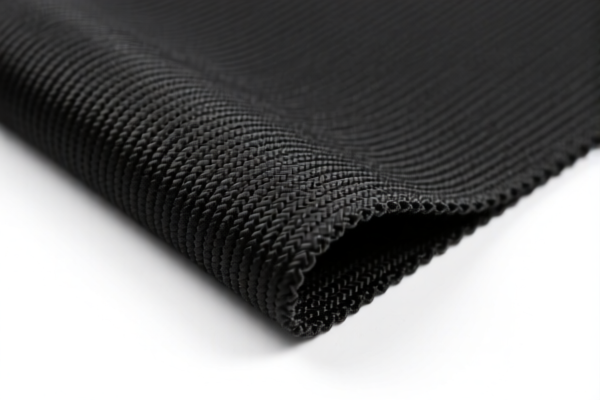
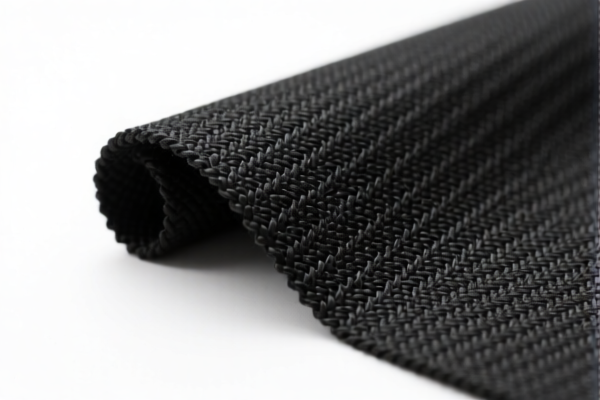
AI Analysis
🧵 Nylon/Polyamide High Tenacity Yarn Tire Cord Fabric
🌐 HS Code Reference & Customs Clearance Guide | 2026 Latest Tariff Analysis | Professional Clearance Strategy
📌 I. Product Definition & Classification: Do You Really Understand "Tire Cord Fabric"?
Nylon (Polyamide) Tire Cord Fabric is a specialized textile used primarily for reinforcing pneumatic tires, belts, and hoses. It is characterized by high tenacity (strength), low elongation, and resistance to heat and abrasion. In international trade, the classification hinges on whether it is classified as a general synthetic fiber fabric (Chapter 54) or a technical textile for specific industrial uses (Chapter 59).
Key Distinction:
- If classified under Chapter 54 (Synthetic Filament Fabric): It is treated as a standard textile fabric made of nylon/polyamide filaments, often due to its specific weave structure or marketing as a "fabric" rather than a specialized technical product.
- If classified under Chapter 59 (Technical Textiles): It is treated as an impregnated, coated, or specifically engineered textile for industrial use, such as tire reinforcement.
⚠️ Critical Classification Points:
- Material: Must be Nylon or Polyamide.
- Structure: High tenacity yarns, woven into a fabric.
- End Use: Specifically for tire cord reinforcement.
- HS Code Risk: Misclassification between Chapter 54 and Chapter 59 can lead to significant tariff differences (13.6% vs. 2.9% base duty).
📦 II. HS Code Classification Details (2026 Latest Tariff Authority Comparison)
| HS Code | Product Description | Applicable Scenario | Base Duty | Total Tax Rate |
|---|---|---|---|---|
5407.10.00.90 |
High tenacity nylon/polyamide yarn tire cord fabric; matches polyamide material and fabric characteristics | General nylon/polyamide woven fabric for tire reinforcement | 13.6% | 48.6% |
5407.10.00.10 |
High tenacity synthetic filament fabric of nylon/polyamide material, in the form of tire cord fabric | Specific subheading for nylon/polyamide tire cord fabric | 13.6% | 48.6% |
5911.10.10.00 |
Nylon/polyamide yarn and tire cord fabric conforming to textile characteristics, classified as a textile product | Technical textiles, tire cord fabric with specific textile features | 2.9% | 37.9% |
5911.90.00.80 |
Nylon/polyamide material tire cord fabric, used for tire reinforcement, classified under technical textiles | Specialized industrial technical textiles for tire reinforcement | 3.8% | 38.8% |
5407.10.00.90 |
High tenacity nylon or other polyamide yarn tire cord fabric; matches polyamide material and fabric morphology | Duplicate entry for general polyamide tire cord fabric | 13.6% | 48.6% |
🔍 Key Reminder:
- Chapter 54 (5407.10.00) codes carry a higher base duty (13.6%) and result in a 48.6% total tax rate.
- Chapter 59 (5911.10.10.00and5911.90.00.80) codes carry lower base duties (2.9% and 3.8%) and result in lower total tax rates (37.9% and 38.8%).
- Strategic Advantage: If your product qualifies under Chapter 59, you can save ~10% in base duties. However, justification for Chapter 59 (technical textile status) must be robust.
💰 III. 2026 Latest Tariff Rate Details (Including Surtaxes, Policy Surcharges)
✅ Applicable Country: United States (US)
✅ Origin: China (CN)
✅ Effective Date: From November 10, 2025 (including subsequent imports)
🎯 1. 5407.10.00.90 & 5407.10.00.10 —— Nylon/Polyamide Tire Cord Fabric (Chapter 54)
| Item | Content |
|---|---|
| Base Duty Rate | 13.6% (ad valorem) |
| Section 301 Surtax | +25.0% (from USITC Footnote 9903.88.01) |
| 122 Clause Tariff | +10.0% (Specific policy surcharge) |
| Total Tax Rate | 48.6% |
| Tax Calculation | CIF Value × 48.6% |
| De Minimis Eligibility | ❌ Not Eligible (deny_de_minimis) |
| Legal Basis Path | USITC:5407.10.00.90 → SECTION301:9903.88.01 → CLAUSE122:10% |
📌 Explanation:
- The 25% surtax is imposed under Section 301 of the Trade Act of 1974 on Chinese-origin goods.
- The 10% surtax is imposed under the specific "122 Clause" policy.
- The 13.6% base duty is the standard MFN rate for Chapter 54 fabrics.
- Total of 48.6% is a very high effective tariff, significantly impacting cost competitiveness.
🎯 2. 5911.10.10.00 —— Technical Textile (Chapter 59, Specific Subheading)
| Item | Content |
|---|---|
| Base Duty Rate | 2.9% |
| Section 301 Surtax | +25.0% |
| 122 Clause Tariff | +10.0% |
| Total Tax Rate | 37.9% |
| Tax Calculation | CIF Value × 37.9% |
| De Minimis Eligibility | ❌ Not Eligible |
| Legal Basis Path | USITC:5911.10.10.00 → SECTION301:9903.88.01 → CLAUSE122:10% |
📌 Note:
- This code offers a 10.7% savings in total tax compared to Chapter 54 codes.
- Justification must prove the fabric meets the definition of "technical textile" (e.g., specific impregnation, coating, or reinforcement properties).
🎯 3. 5911.90.00.80 —— Other Technical Textiles (Chapter 59, Other)
| Item | Content |
|---|---|
| Base Duty Rate | 3.8% |
| Section 301 Surtax | +25.0% |
| 122 Clause Tariff | +10.0% |
| Total Tax Rate | 38.8% |
| Tax Calculation | CIF Value × 38.8% |
| De Minimis Eligibility | ❌ Not Eligible |
| Legal Basis Path | USITC:5911.90.00.80 → SECTION301:9903.88.01 → CLAUSE122:10% |
📌 Note:
- Slightly higher than5911.10.10.00but still ~9.8% lower than Chapter 54 codes.
- Use this if the product does not fit the specific description of5911.10.10.00but still qualifies as a technical textile.
🛠️ IV. Customs Clearance Practical Advice (Battle-Tested Pitfall Avoidance Guide)
✅ 1. Required Documentation Checklist (All or Nothing)
| Document | Mandatory | Explanation |
|---|---|---|
| ✅ Product Specification Sheet | ✔️ | Must include material composition (100% Nylon/Polyamide), tenacity (denier/force), weave density, and width. |
| ✅ End-Use Declaration | ✔️ | Explicitly state "For Tire Reinforcement" to support Chapter 59 classification if applicable. |
| ✅ Technical Data Sheet (TDS) | ✔️ | Provide data on tensile strength, elongation at break, and heat resistance to justify "High Tenacity." |
| ✅ Product Photos | ✔️ | Clear images of the fabric roll, label, and any coating/impregnation. |
| ✅ Commercial Invoice | ✔️ | Must accurately describe the product as "Nylon/Polyamide Tire Cord Fabric." |
| ✅ Certificate of Origin (CO) | ✔️ | Essential for confirming Chinese origin and applying applicable tariffs. |
| ✅ Packing List | ✔️ | Detail net/gross weight and dimensions. |
✅ 2. Declaration Tactics (Key Mantras)
🔥 "Material First, Use Second, Chapter 59 is Cheaper, Justify Well!"
| Scenario | Correct Declaration | Incorrect Action |
|---|---|---|
| Standard Nylon Tire Cord Fabric | 5407.10.00.90 or 5407.10.00.10 |
N/A |
| Impregnated/Coated Tire Cord | 5911.10.10.00 or 5911.90.00.80 |
Misdeclaring as Chapter 54 → Pay 48.6% instead of ~38% |
| Fabric without Tire Cord Use | 5407.10.00.90 |
Claiming tire use without proof → Risk of fraud penalties |
| Non-Polyamide Fabric | Different HS Code | Misdeclaring Nylon as Polyester → Misclassification |
✅ 3. Special Circumstances Handling
| Situation | Handling Advice |
|---|---|
| OEM Custom Fabric | Provide customer order + design specs. If customer specifies "tire cord," use that in declaration. |
| Fabric with Coating | If coated for water resistance or adhesion, strongly consider Chapter 59 (5911.xxxx). Provide coating specs. |
| Blended Yarns | If not 100% Nylon/Polyamide, classification may change. Ensure material breakdown is accurate. |
| High Tenacity Proof | Keep third-party lab test reports showing tenacity values (e.g., cN/dtex) to justify "High Tenacity" if audited. |
🌍 V. Global Market Clearance Comparison (2026 Latest)
| Country/Region | Recommended HS Code | Tariff (Base + Surtax) | Certification Requirements | Notes |
|---|---|---|---|---|
| 🇺🇸 USA | 5407.10.00.90 |
48.6% (CN Origin) | None specific | High tariff due to 301 & 122 Clause |
| 🇺🇸 USA | 5911.10.10.00 |
37.9% (CN Origin) | None specific | Preferred if eligible, saves ~10% |
| 🇨🇳 China | 5407.10.00.90 |
Low (Export) | N/A | No export tax for textiles usually |
| 🇪🇺 EU | 5407.10.00.90 |
~6% (Most Favored) | REACH Compliance | No Section 301 surtax |
| 🇯🇵 Japan | 5407.10.00.90 |
~5-7% | JIS Standards | Competitive market |
📌 Conclusion:
- USA is the highest-cost market due to additive tariffs (301 + 122 Clause).
- Chapter 59 codes (5911.xxxx) offer a strategic advantage in the US market, reducing total tax by ~10%.
- Ensure your product technically qualifies for Chapter 59 (technical textile status) to leverage this benefit.
📌 VI. Common Mistakes & Pitfall Guide (Blood and Tears Lessons)
❌ Mistake 1: Declaring all tire cord fabric under Chapter 54 (5407.10.00) without justification for Chapter 59.
👉 Consequence: Paying 48.6% instead of 37.9%-38.8%. Lost profit margin!
❌ Mistake 2: Mislabeling product as "Nylon Fabric" without specifying "Tire Cord."
👉 Consequence: Customs may reclassify, causing delays or disputes over origin/end-use.
❌ Mistake 3: Ignoring the "122 Clause Tariff."
👉 Consequence: Unexpected 10% charge at border, leading to cash flow issues.
❌ Mistake 4: Providing incomplete technical specs.
👉 Consequence: Customs cannot verify "High Tenacity" or "Tire Cord" use, leading to audit flags.
✅ Correct Approach:
"High Tenacity Polyamide (Nylon) Tire Cord Fabric, Woven, 100% Polyamide, For Pneumatic Tire Reinforcement, Impregnated [if applicable], Model XYZ, Tensile Strength: [Value] cN/dtex"
🎯 VII. Conclusion: Professional Declaration, Save Time, Save Money!
🎯 Remember the Mantra:
🔹 "Chapter 59 is Cheaper, Justify Technical Use!"
🔹 "301 + 122 Clause = High Cost, Plan Ahead!"
🔹 "HS Code Determines Profit, Declaration Determines Speed!"
📌 Pro Tip:
If your tire cord fabric is originally from Vietnam, Thailand, or Malaysia, you may be eligible for reduced or zero Section 301 tariffs.
Recommend applying for a Pre-Ruling (Advance Ruling) from US Customs and Border Protection (CBP) to confirm the correct HS Code and duty rate before shipment.
📣 Take Action Now:
📞 Contact a Professional Customs Broker + Provide Product Tech Sheet + Apply for HS Code Pre-Ruling
🚀 Let your tire cord fabric pass through customs smoothly, efficiently, and profitably!
✨ Professional Clearance Starts with Accurate Classification!
💼 Every Cent of Cost Deserves Precise Calculation!
Customer Reviews
About HS Code Classification
The Harmonized System (HS) is an internationally standardized nomenclature developed by the World Customs Organization (WCO) to classify traded products. Over 200 countries use the HS system as the basis for customs tariffs, trade statistics, and import/export regulations.
Each HS code follows a hierarchical structure:
- Chapter (2 digits) — Broad category of goods (e.g., Chapter 84: Machinery and Mechanical Appliances)
- Heading (4 digits) — More specific grouping within the chapter
- Subheading (6 digits) — Internationally standardized breakdown, used by all WCO member countries
- National subdivisions (8-10 digits) — Country-specific extensions for further classification, such as US HTSUS 10-digit codes
Correct HS code classification is essential for smooth customs clearance, accurate duty payment, and compliance with trade regulations. Misclassification can lead to customs delays, overpayment of duties, or penalties.
When importing from CN to US, the applicable tariff rates may include:
- Most-Favored-Nation (MFN) rate — The standard duty rate applied to WTO members
- General rate — Applied to countries without trade agreements
- Trade remedy duties — Additional tariffs such as Section 301 (anti-dumping), Section 232 (national security), or countervailing duties
The information provided on this page is for reference purposes only. For official classification, please consult with your local customs authority or a licensed customs broker.