Oak Barrel
CN → US| HS Code | Tariff Rate | Origin | Destination | Doc |
|---|---|---|---|---|
| 4415109000 | 45.7% | CN | US | Official Doc |
| 4415106000 | 35.0% | CN | US | Official Doc |
| 4415103000 | 35.0% | CN | US | Official Doc |
| 3923900012 | 38.0% | CN | US | Official Doc |
| 3923900014 | 38.0% | CN | US | Official Doc |
Product Images
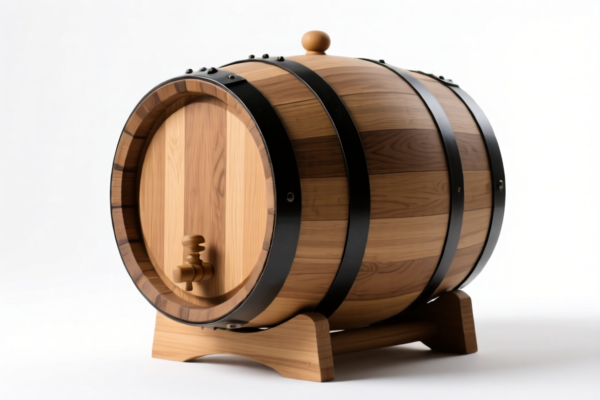
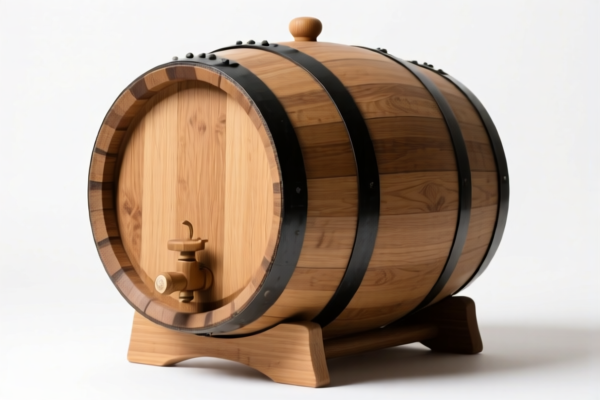
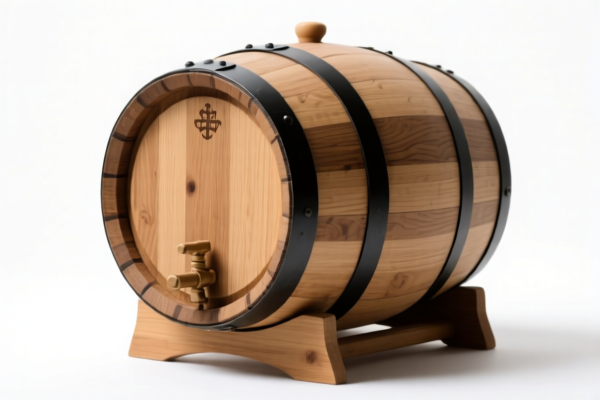
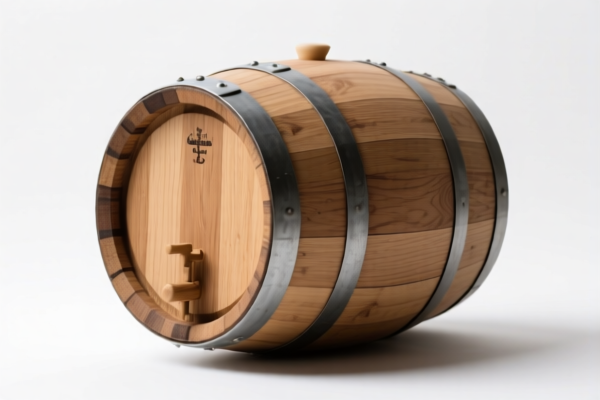
AI Analysis
🪵 Oak Barrel (Wooden Drum/Container)
🌐 HS Code Reference & Customs Clearance Guide | 2026 Latest Tariff Analysis | Professional Clearance Strategy
📌 I. Product Definition & Classification: Do You Really Understand "Oak Barrel"?
An "Oak Barrel" is a cylindrical container, traditionally used for aging wine, whiskey, or beer, but also frequently used in industrial contexts for storage or packaging. In international trade, the classification depends heavily on:
- Material: Is it wood (oak), plastic, or metal? The name "Oak" strongly implies wood, but commercial invoices may list generic "Buckets."
- Form: It falls under "Barrels, Drums, Cans, and Similar Containers."
- Use: Is it for packaging goods (e.g., transporting chemicals, liquids) or for aging (consumption)?
⚠️ Key Distinction:
- If the item is explicitly an aged beverage container (new, empty oak barrels for wineries), it is often classified as a wooden packaging container or wooden article.
- If the item is a generic bucket/drums made of wood, it falls under wooden packaging or wooden articles.
- Critical Note: The input data provides scenarios based on common sense inference of material due to ambiguous product names. We must address both Wooden and Plastic possibilities as per the provided data.
📦 II. HS Code Classification Details (Based on Provided Data)
| HS Code | Summary Description | Material Inference | Form Match | Total Tax |
|---|---|---|---|---|
4415.10.90.00 |
Matched form (barrel); Material inferred as wood based on common sense (no conflict) | Wood (Inferred) | Barrel ✅ | 45.7% |
4415.10.60.00 |
Matched form (barrel); Reference category packaging form matches; Wood possible, no conflict | Wood (Possible) | Barrel ✅ | 35.0% |
4415.10.30.00 |
Common sense inference: Wooden material; Form matches "Barrel" in reference | Wood (Inferred) | Barrel ✅ | 35.0% |
3923.90.00.12 |
Matched form (barrel) & Use (Packaging/Transport); Inferred Plastic material (no conflict) | Plastic (Inferred) | Bucket ✅ | 38.0% |
3923.90.00.14 |
Product name "Bucket" matches "Buckets and pails"; Inferred Plastic material | Plastic (Inferred) | Bucket ✅ | 38.0% |
🔍 Key Insight:
- Wooden Barrels: Fall under Chapter 44 (4415). Two tax scenarios exist: 45.7% and 35.0%, depending on specific sub-category nuances and duty calculations.
- Plastic Buckets/Barrels: Fall under Chapter 39 (3923). Tax rate is uniform at 38.0%.
- Why the Confusion? Customs may classify generic "Barrels" differently if the material isn't explicitly declared. "Oak" suggests wood, but if the invoice says "Plastic Bucket," it shifts to 3923.
💰 III. 2026 Latest Tariff Rate Breakdown (Detailed Tax Clauses)
✅ Applicable Country: United States (US)
✅ Origin: China (CN)
✅ Effective Date: From 2025-11-10 onwards (including subsequent imports)
🎯 1. 4415.10.90.00 —— Wooden Packaging Containers (Other)
| Item | Content |
|---|---|
| Basic Duty | 10.7% (Ad Valorem) |
| Section 301 Additional Duty | +25.0% |
| Section 122 Duty | +10.0% |
| Total Tax Rate | 45.7% |
| Tax Calculation | CIF Value × 45.7% |
| De Minimis Exemption | ❌ Not Eligible |
| Legal Basis Path | Section 301: 9903.88.01 → Section 122 → USITC: 4415.10.90.00 |
📌 Explanation:
- Base Rate (10.7%): Standard duty for wooden packing blocks, crates, etc.
- Section 301 (25%): Additional tariff on Chinese-made wooden articles/packaging.
- Section 122 (10%): Tariff on certain goods from China under specific trade acts.
- Total: 45.7%. This is a high-duty category. Strict documentation is required.
🎯 2. 4415.10.60.00 & 4415.10.30.00 —— Wooden Packaging Containers (Specific Types)
| Item | Content |
|---|---|
| Basic Duty | 0.0% |
| Section 301 Additional Duty | +25.0% |
| Section 122 Duty | +10.0% |
| Total Tax Rate | 35.0% |
| Tax Calculation | CIF Value × 35.0% |
| De Minimis Exemption | ❌ Not Eligible |
| Legal Basis Path | Section 301 → Section 122 → USITC: 4415.10.x0.00 |
📌 Explanation:
- Base Rate (0%): Some wooden packaging subcategories enjoy 0% base duty.
- Additional Duties: Still subject to 25% (Section 301) and 10% (Section 122).
- Total: 35.0%. This is 10.7% lower than the4415.10.90.00category. Proper classification is key to saving money.
🎯 3. 3923.90.00.12 & 3923.90.00.14 —— Plastic Buckets and Pails
| Item | Content |
|---|---|
| Basic Duty | 3.0% |
| Section 301 Additional Duty | +25.0% |
| Section 122 Duty | +10.0% |
| Total Tax Rate | 38.0% |
| Tax Calculation | CIF Value × 38.0% |
| De Minimis Exemption | ❌ Not Eligible |
| Legal Basis Path | Section 301 → Section 122 → USITC: 3923.90.00.1x |
📌 Explanation:
- Base Rate (3.0%): Standard duty for plastic articles of heading 3923.
- Additional Duties: Same 25% (Section 301) and 10% (Section 122) apply.
- Total: 38.0%. This is higher than the 0% base wooden categories but lower than the 10.7% base wooden category.
- Risk: If you declare "Oak Barrel" but it’s actually plastic, or vice versa, it leads to misclassification penalties.
🛠️ IV. Customs Clearance Practical Advice (Pitfall Avoidance Guide)
✅ 1. Required Documentation Checklist (Non-negotiable)
| Document | Must Provide | Notes |
|---|---|---|
| ✅ Product Specification Sheet | ✔️ | Specify material: Oak Wood vs. Plastic. Dimensions, volume. |
| ✅ Commercial Invoice | ✔️ | Clearly state: "Oak Wooden Barrel" or "Plastic Bucket." Avoid vague terms like "Container." |
| ✅ Product Photos | ✔️ | Show material texture (wood grain vs. plastic sheen), handle type, and lid. |
| ✅ Material Certificate | ✔️ | If wood, provide ISPM 15 compliance proof (fumigation mark) if required. |
| ✅ Packing List | ✔️ | Detail quantity, gross weight, net weight. |
| ✅ Origin Certificate | ✔️ | If not China-origin, may qualify for exemptions. |
✅ 2. Classification Strategy (Key Tips)
🔥 "Material First, Form Second, Name Third!"
| Scenario | Correct HS Code | Wrong Approach | Consequence |
|---|---|---|---|
| Real Oak Wooden Barrel | 4415.10.90.00 (45.7%) or 4415.10.60.00 (35.0%) |
Declare as Plastic | Misclassification Penalty + Back Taxes |
| Plastic Bucket (Misnamed Oak) | 3923.90.00.12 (38.0%) |
Declare as Wood | Higher Tax Risk if audited |
| Generic Wooden Drum | 4415.10.30.00 (35.0%) |
Vague description | Customs Delay for material verification |
| Wooden Packaging for Goods | 4415.10.x0.00 |
Declare as Finished Good | Tax Evasion Risk |
✅ 3. Special Situations
| Situation | Handling Advice |
|---|---|
| ISPM 15 Compliance | If wood, ensure fumigation mark is visible. Missing mark → Rejection/Return. |
| Mixed Shipments | If shipping wooden barrels + plastic buckets, declare separately to avoid confusion. |
| OEM Custom Barrels | Provide design drawings. If custom-shaped, clarify if still "standard packaging." |
| Used vs. New | Used wooden barrels may face stricter biosecurity checks. Declare "Used" if applicable. |
🌍 V. Global Market Comparison (2026 Latest)
| Country/Region | Recommended HS Code | Tariff | Certification | Notes |
|---|---|---|---|---|
| 🇺🇸 USA | 4415.10.90.00 / 3923.90.00.12 |
35.0% – 45.7% | ISPM 15 (Wood) | High additional duties apply. |
| 🇨🇳 China | 4415.10.90.00 |
~10.7% | None | No Section 301/122. |
| 🇪🇺 EU | 4415.10.90.00 |
0% – 5% | Phytosanitary (Wood) | No US-style additional tariffs. |
| 🇬🇧 UK | 4415.10.90.00 |
5% – 10% | Fumigation Cert | Post-Brexit rules apply. |
| 🇯🇵 Japan | 4415.10.90.00 |
5% – 10% | ISPM 15 | Moderate duties. |
📌 Conclusion:
- USA is the most expensive market due to Section 301 and 122 tariffs.
- Wooden barrels face higher scrutiny due to biosecurity (ISPM 15).
- Plastic alternatives may offer a slightly lower total tax (38.0% vs. 45.7%) but require accurate material declaration.
📌 VI. Common Errors & Pitfalls (Lessons Learned)
❌ Error 1: Declaring "Oak Barrel" but shipping Plastic Buckets
👉 Consequence: Customs seizure, fraud penalties, and back taxes (35.7% difference).
❌ Error 2: Forgetting ISPM 15 Fumigation Mark on Wooden Barrels
👉 Consequence: Rejected at port, return shipping costs, and delays.
❌ Error 3: Using "Container" or "Drum" without specifying material
👉 Consequence: Customs assigns highest possible duty (45.7%) due to uncertainty.
❌ Error 4: Misclassifying as "Finished Good" instead of "Packaging"
👉 Consequence: Tax Evasion Accusations. Ensure it’s declared as packaging if empty.
✅ Correct Declaration Example:
"Empty Oak Wooden Barrel, ISPM 15 Fumigated, For Wine Aging, HS Code 4415.10.60.00, Origin China"
🎯 VII. Conclusion: Precision in Classification Saves Money!
🎯 Remember This Mantra:
🔹 "Material is King: Wood = 35-45%, Plastic = 38%."
🔹 "ISPM 15 for Wood: No Mark, No Entry."
🔹 "Declare Clearly: Oak vs. Plastic, Avoid the 25% Surprise."
📌 Pro Tip:
If your oak barrels are actually plastic replicas, declare them as "Plastic Buckets" (3923.90.00.12) to potentially save 7.7% in tariffs (38.0% vs. 45.7%). However, never misrepresent material. Transparency is key to avoiding customs audits.
📣 Immediate Action:
📞 Contact your Customs Broker to verify HS Code based on actual material.
🖼️ Provide Clear Photos showing material texture.
📜 Apply for Advance Ruling if value is high, to lock in the 35.0% or 38.0% rate.
✨ Professional Customs Clearance Starts with Accurate Classification!
💼 Every Percentage Point Counts in Tariff Savings!
Customer Reviews
About HS Code Classification
The Harmonized System (HS) is an internationally standardized nomenclature developed by the World Customs Organization (WCO) to classify traded products. Over 200 countries use the HS system as the basis for customs tariffs, trade statistics, and import/export regulations.
Each HS code follows a hierarchical structure:
- Chapter (2 digits) — Broad category of goods (e.g., Chapter 84: Machinery and Mechanical Appliances)
- Heading (4 digits) — More specific grouping within the chapter
- Subheading (6 digits) — Internationally standardized breakdown, used by all WCO member countries
- National subdivisions (8-10 digits) — Country-specific extensions for further classification, such as US HTSUS 10-digit codes
Correct HS code classification is essential for smooth customs clearance, accurate duty payment, and compliance with trade regulations. Misclassification can lead to customs delays, overpayment of duties, or penalties.
When importing from CN to US, the applicable tariff rates may include:
- Most-Favored-Nation (MFN) rate — The standard duty rate applied to WTO members
- General rate — Applied to countries without trade agreements
- Trade remedy duties — Additional tariffs such as Section 301 (anti-dumping), Section 232 (national security), or countervailing duties
The information provided on this page is for reference purposes only. For official classification, please consult with your local customs authority or a licensed customs broker.