Oak fence stake
CN → US| HS Code | Tariff Rate | Origin | Destination | Doc |
|---|---|---|---|---|
| 440420 | 0.0% | CN | US | Official Doc |
| 440799 | 0.0% | CN | US | Official Doc |
| 4404200040 | 35.0% | CN | US | Official Doc |
| 4404200080 | 35.0% | CN | US | Official Doc |
Product Images
AI Analysis
🌲 Oak Fence Stake – Comprehensive HS Code & Tariff Guide (2026 Edition)
🌐 HS Code Classification & Customs Clearance Strategy | 2026 Updated Tariff Rules | Expert-Level Compliance Framework
📌 I. Product Definition & Classification: What Exactly Is an "Oak Fence Stake"?
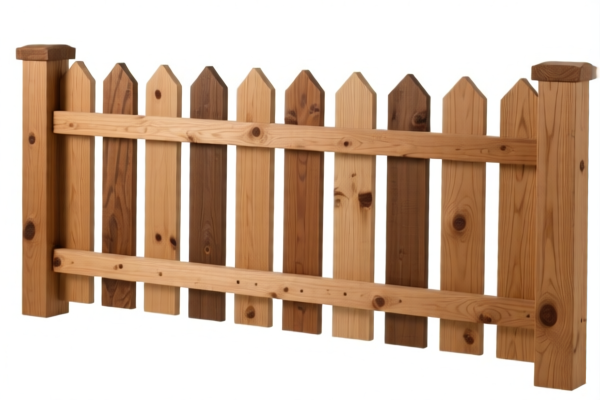
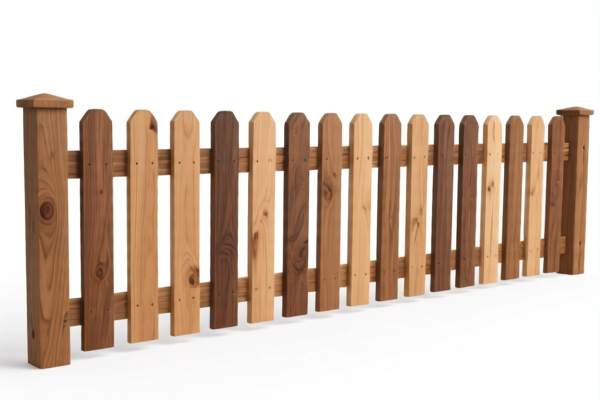
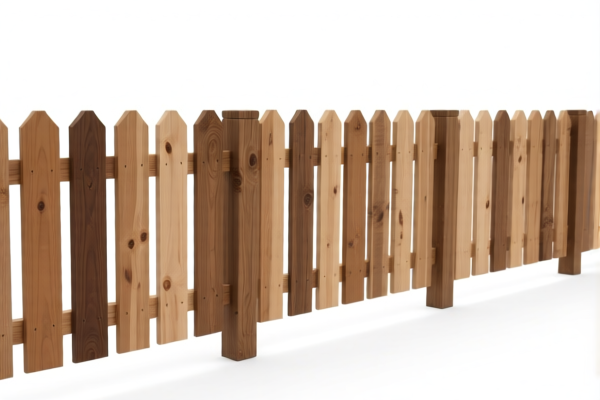
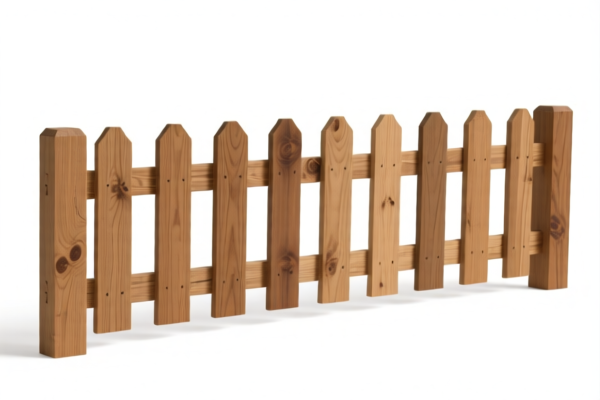
An oak fence stake is a wooden post made from oak wood, typically used as a structural support in fencing systems. It is designed to be driven into the ground to hold fence rails, panels, or wire.
⚠️ Key Distinction in Classification: - If the stake is roughly trimmed but not sawn, planed, or otherwise worked → HS Code:
4404.20.00.40or4404.20.00.80- If the stake is sawn, planed, or fully processed → HS Code:4407.99🔍 Critical Insight:
- "Roughly trimmed" means minimal shaping — no smooth surface, no uniform dimensions, no sawing lengthwise. - "Sawn or planed" implies mechanical processing — smooth edges, uniform cross-section, ready for use without further preparation.
📦 II. HS Code Breakdown (2026 Official Tariff Table – U.S. Focus)
| HS Code | Product Description | Applicable Scenario | Processing Level |
|---|---|---|---|
4404.20.00.40 |
Nonconiferous Fence pickets, palings and rails | Used for fencing: stakes, pickets, rails made from non-coniferous wood (e.g., oak) | Roughly trimmed, not sawn lengthwise |
4404.20.00.80 |
Nonconiferous Poles, piles and posts | Structural posts, stakes, piles for construction, fencing, or support | Same as above — roughly trimmed, not further processed |
4407.99 |
Other sawn or planed wood (non-coniferous) | Stakes that have been sawn, planed, or otherwise machined | Fully processed, smooth, dimensionally stable |
✅ Rule of Thumb:
- "Roughly trimmed" =4404.20.00.40or.80
- "Sawn or planed" =4407.99❗ Common Mistake:
Many exporters incorrectly declare "roughly trimmed oak stakes" under4407.99— this leads to overpayment, penalties, or seizure.
💰 III. 2026 U.S. Tariff Breakdown (Detailed & Compliant)
✅ Applicable Country: United States (US)
✅ Origin: China (CN) or other countries under U.S. trade measures
✅ Effective Date: 2025–2026 (current enforcement)
🎯 1. HS Code 4404.20.00.40 – Nonconiferous Fence Pickets, Palings & Rails
| Item | Detail |
|---|---|
| Base Duty | 0.0% (ad valorem) |
| Additional Tariff (USITC 301) | +25.0% (from U.S. Trade Act Section 301) |
| IEEPA Emergency Tariff | Not applicable (this item is not under IEEPA) |
| Total Effective Tariff | 25.0% |
| Tax Calculation | CIF Value × 25.0% |
| De Minimis Threshold | ❌ Not applicable (denied due to 301 tariffs) |
| Legal Basis | USITC: 4404.20.00.40 → FOOTNOTE: 9903.88.01 → 301 Tariff List |
📌 Explanation:
- The 25% additional tariff comes from the U.S. Section 301 China Tariff List, targeting goods from China deemed to have unfair trade practices. - No IEEPA (International Emergency Economic Powers Act) applies here — only USITC 301 is active. - No de minimis exemption — even small shipments face full 25% duty.
🎯 2. HS Code 4404.20.00.80 – Nonconiferous Poles, Piles & Posts
| Item | Detail |
|---|---|
| Base Duty | 0.0% |
| Additional Tariff (USITC 301) | +25.0% |
| IEEPA Emergency Tariff | Not applicable |
| Total Effective Tariff | 25.0% |
| Tax Calculation | CIF Value × 25.0% |
| De Minimis Threshold | ❌ Not applicable |
| Legal Basis | USITC: 4404.20.00.80 → FOOTNOTE: 9903.88.01 → 301 Tariff List |
📌 Note:
- Same tariff treatment as4404.20.00.40— both are under non-coniferous wood and not processed. - Whether it's a picket, rail, or post, the 25% 301 tariff applies equally.
🎯 3. HS Code 4407.99 – Sawn or Planed Oak Fence Stake
| Item | Detail |
|---|---|
| Base Duty | 0.0% |
| Additional Tariff (USITC 301) | +25.0% |
| IEEPA Emergency Tariff | Not applicable |
| Total Effective Tariff | 25.0% |
| Tax Calculation | CIF Value × 25.0% |
| De Minimis Threshold | ❌ Not applicable |
| Legal Basis | USITC: 4407.99 → FOOTNOTE: 9903.88.01 → 301 Tariff List |
📌 Important:
- Even sawn or planed oak stakes are subject to the same 25% 301 tariff. - The processing level does not exempt the item from Section 301 — only non-wood or non-coniferous items might qualify for different treatment.❗ Warning:
- If you misclassify a roughly trimmed stake as4407.99, you may be underpaying duties — risk of post-clearance audit, penalties, and interest.
🛠️ IV. Customs Clearance Best Practices (Pro Tips for Success)
✅ 1. Documentation Checklist (Mandatory)
| Document | Required? | Purpose |
|---|---|---|
| ✅ Commercial Invoice | ✔️ | Clearly state: "Oak fence stake, roughly trimmed, non-coniferous wood" |
| ✅ Packing List | ✔️ | Detail quantity, weight, dimensions, packaging |
| ✅ Product Photos | ✔️ | Show raw, unprocessed ends, no planing/sawing marks |
| ✅ Origin Certificate (CO) | ✔️ | Prove country of manufacture (critical for tariff eligibility) |
| ✅ Material Test Report | ✔️ | Confirm species is oak (Quercus spp.), not other hardwood |
| ✅ HS Code Pre-Ruling Request | ✔️ | Recommended for high-value or frequent shipments |
✅ 2.申报技巧(Key Rules of Thumb)
🔥 "Trimmed ≠ Processed, Rough ≠ Raw — Know the Line!"
| Scenario | Correct HS Code | Common Mistake |
|---|---|---|
| Stake has rough bark, uneven ends, no sawing | 4404.20.00.40 or .80 |
Incorrectly using 4407.99 |
| Stake has smooth edges, uniform shape, planed surface | 4407.99 |
Misclassifying as 4404.20.00.80 |
| Stake is used in fencing, not structural | 4404.20.00.40 |
Overpaying by using 4407.99 |
📌 Pro Tip:
- Use "roughly trimmed but not sawn lengthwise" in the invoice description to trigger correct classification. - Avoid terms like "sawn", "planed", "machined", "finished" — they imply processing.
✅ 3. Special Cases & Risk Mitigation
| Situation | Recommended Action |
|---|---|
| Stakes from Vietnam, Thailand, or Mexico | Apply for 301 Tariff Exemption — these countries may qualify for 0% additional duty |
| Stakes with minor planing (e.g., tip smoothing) | Consult a customs broker — may still qualify as "roughly trimmed" |
| Mixed shipments (rough + processed) | Split by HS Code — avoid misclassification |
| Re-export from China via third country | Requires proof of substantial transformation — otherwise, China origin still applies |
🌍 V. Global Market Comparison (2026 Tariff Snapshot)
| Country | Recommended HS Code | Base Duty | Additional Tariffs | Notes |
|---|---|---|---|---|
| 🇺🇸 United States | 4404.20.00.40 / .80 / 4407.99 |
0% | +25% (301) | No de minimis |
| 🇨🇳 China | 4404.20.00.40 |
5% | 0% | No 301 tariffs |
| 🇪🇺 European Union | 4404.20.00.40 |
0% | 0% (if CE compliant) | No 301 or IEEPA |
| 🇦🇺 Australia | 4404.20.00.40 |
0% | 0% | No additional tariffs |
| 🇯🇵 Japan | 4404.20.00.40 |
0% | 0% | No extra duties |
📌 Insight:
- Only the U.S. applies the 25% 301 tariff on oak fence stakes from China. - All other major markets have no additional tariffs — ideal for export diversification.
📌 VI. Common Mistakes & Risk Warnings (Avoid These!)
❌ Mistake 1:
Using
4407.99for a roughly trimmed stake
👉 Result: Overpayment, audit risk, potential seizure
❌ Mistake 2:
Declaring "oak fence stake" without specifying processing level
👉 Result: Customs delays, request for clarification, penalties
❌ Mistake 3:
Assuming "roughly trimmed" is exempt from 301 tariffs
👉 Result: 25% duty still applies — no exemption
❌ Mistake 4:
Not providing photos or test reports
👉 Result: Rejection, return shipment, loss of time and money
✅ Correct Declaration Example:
"Oak fence stake, non-coniferous, roughly trimmed but not sawn lengthwise, suitable for fencing, origin: Vietnam, CIF $1.20/unit"
🎯 VII. Final Verdict: How to Win at Customs
🎯 Remember the Golden Rule:
🔹 "Roughly trimmed? →
4404.20.00.40or.80→ 25% 301 tariff applies!"
🔹 "Sawn or planed? →4407.99→ Still 25%!"
🔹 "No de minimis, no exemptions — pay the full 25%!"
📣 Call to Action: Secure Your Shipment Today!
📞 Contact a licensed customs broker with your product photos, specs, and invoice
🚀 Request an HS Code pre-ruling — avoid surprises
🌐 Explore alternative origins (Vietnam, Mexico, Thailand) to avoid 301 tariffs
✨ Your Oak Stake, Your Success
💼 Precise classification = Lower cost, faster clearance, zero risk
🚀 From forest to fence — clear the way with confidence!
✅ Pro Tip:
If your origin is Vietnam or Thailand, apply for 301 Tariff Exemption — you may qualify for 0% additional duty.
Use "Substantial Transformation" evidence to qualify.
📣 Don’t wait until the cargo is delayed — get your HS Code right from the start!
Customer Reviews
About HS Code Classification
The Harmonized System (HS) is an internationally standardized nomenclature developed by the World Customs Organization (WCO) to classify traded products. Over 200 countries use the HS system as the basis for customs tariffs, trade statistics, and import/export regulations.
Each HS code follows a hierarchical structure:
- Chapter (2 digits) — Broad category of goods (e.g., Chapter 84: Machinery and Mechanical Appliances)
- Heading (4 digits) — More specific grouping within the chapter
- Subheading (6 digits) — Internationally standardized breakdown, used by all WCO member countries
- National subdivisions (8-10 digits) — Country-specific extensions for further classification, such as US HTSUS 10-digit codes
Correct HS code classification is essential for smooth customs clearance, accurate duty payment, and compliance with trade regulations. Misclassification can lead to customs delays, overpayment of duties, or penalties.
When importing from CN to US, the applicable tariff rates may include:
- Most-Favored-Nation (MFN) rate — The standard duty rate applied to WTO members
- General rate — Applied to countries without trade agreements
- Trade remedy duties — Additional tariffs such as Section 301 (anti-dumping), Section 232 (national security), or countervailing duties
The information provided on this page is for reference purposes only. For official classification, please consult with your local customs authority or a licensed customs broker.