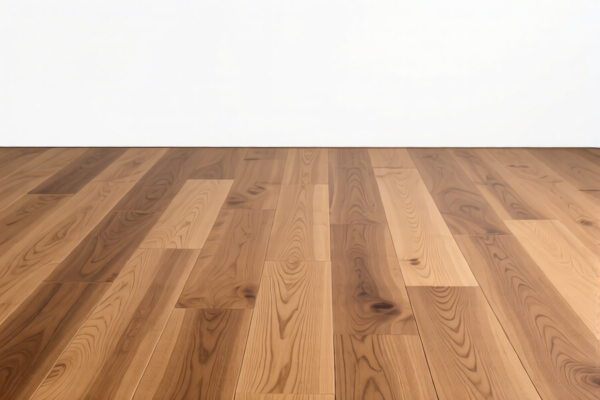
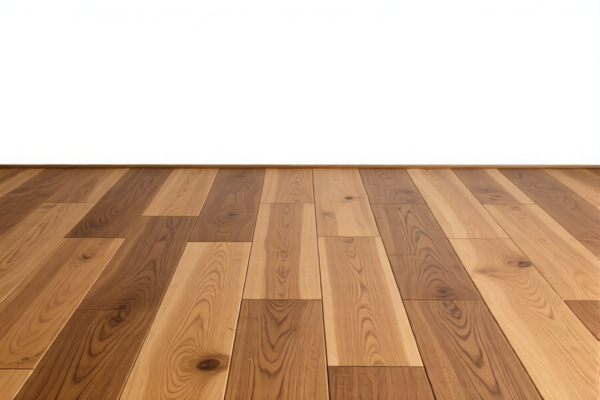
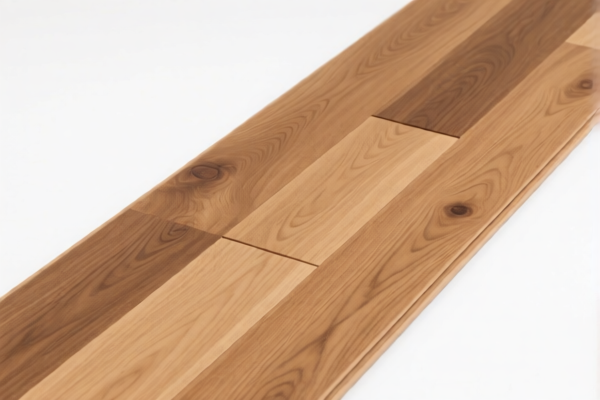
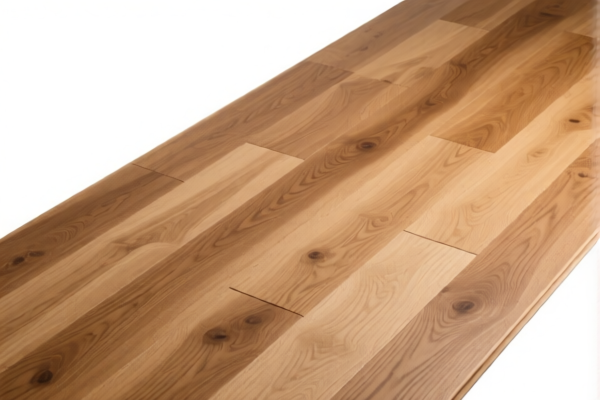
Oak flooring planks
CN → US| HS Code | Tariff Rate | Origin | Destination | Doc |
|---|---|---|---|---|
| 4407910022 | 35.0% | CN | US | Official Doc |
| 4407910063 | 35.0% | CN | US | Official Doc |
Product Images
AI Analysis
🌳 Oak Flooring Planks (Engineered & Solid Wood Components)
🌐 HS Code Reference & Customs Clearance Guide | 2026 Latest Tariff Analysis | Professional Entry Strategy 📌 I. Product Definition & Classification: Do You Really Understand "Oak Flooring"?
In international trade, "Oak Flooring Planks" are not a single HS Code category. They are classified based on processing method and material origin. Since they are "sawn, chipped, sliced, or peeled wood," they fall under Chapter 44 (Wood and articles of wood).
Crucial Distinction: * Raw/Processed Lumber: If the wood is merely sawn, planed, sanded, or end-jointed (but not yet assembled into a finished floor with locking systems or surface treatments like varnish/paint), it is classified as Sawn Wood. * Finished Flooring: If the planks have specific locking mechanisms (Tongue & Groove with precision tolerances), surface treatments, or are assembled into panels, they might fall under HS 4412 (Plywood, Veneered Panels) or HS 9406 (Prefabricated Buildings). However, standard solid oak planks for installation are typically treated as sawn wood.
⚠️ Key Classification Point: * If it is raw sawn/planed oak planks (even if sanded) → Chapter 44. * If it is finished with complex locking/paint → Potential HS 4412 or 9406. * Note: The provided specifically lists HS Codes for "Wood sawn... of oak," which is the most common classification for bulk oak plank imports.
📦 II. HS Code Classification Details (2026 Latest Tariff Authority)
Based on the provided <DATA>, here are the specific HS Codes for Oak Sawn Wood, categorized by Oak Species (Red vs. Other).
| HS Code | Product Description | Application Scenario | Key Identifier |
|---|---|---|---|
4407.91.00.22 |
Oak (Quercus spp.) - Red Oak | Hardwood flooring planks made from Red Oak species | 🟥 Red Oak |
4407.91.00.63 |
Oak (Quercus spp.) - Other | Hardwood flooring planks made from White Oak or other Oak species | ⬜ Other Oak |
🔍 Critical Reminder: * Thickness: These codes apply to wood with a thickness exceeding 6 mm. (Most flooring planks are 15mm–22mm, so this condition is met). * Processing: Includes wood that is planed, sanded, or end-jointed. * Misclassification Risk: Do not classify as "Finished Furniture" (HS 9403) if it is just planks. Do not classify as "Carpet/Flooring" (HS 57) if it is solid wood.
💰 III. 2026 Latest Tariff Rate Breakdown (Including Supplementary Taxes)
✅ Applicable Country: United States (US) ✅ Origin: China (CN) (Assumed based on typical 25% tariff context in similar trade scenarios) ✅ Effective Time: Ongoing (Section 301 Tariffs)
🎯 1. 4407.91.00.22 —— Red Oak Sawn Wood
| Item | Content |
|---|---|
| Base Tariff | 0.0% (Ad Valorem) |
| Section 301 Supplementary Tariff | +25.0% |
| Total Tax Rate | 25.0% |
| Tax Calculation | CIF Value × 25% |
| De Minimis Exemption | ❌ Not Applicable (Section 301 tariffs apply to all shipments, no $800 exemption) |
| Legal Basis | HTSUS 4407.91.00.22 → USITC Footnote for Section 301 |
📌 Explanation: * Although the base MFN (Most Favored Nation) rate for sawn wood is 0%, Section 301 imposes an additional 25% on Chinese-origin wood products. * This is a high-cost item for importers. Ensure your supplier’s Certificate of Origin is accurate.
🎯 2. 4407.91.00.63 —— Other Oak Sawn Wood (e.g., White Oak)
| Item | Content |
|---|---|
| Base Tariff | 0.0% (Ad Valorem) |
| Section 301 Supplementary Tariff | +25.0% |
| Total Tax Rate | 25.0% |
| Tax Calculation | CIF Value × 25% |
| De Minimis Exemption | ❌ Not Applicable |
| Legal Basis | HTSUS 4407.91.00.63 → USITC Footnote for Section 301 |
📌 Note: * "Other Oak" typically refers to White Oak (Quercus alba etc.) or mixed oak species. * The tariff rate is identical to Red Oak: 25% total. * Importance: You must accurately identify the oak species. Mislabeling White Oak as "General Wood" to avoid the 25% tariff is customs fraud and carries severe penalties.
🛠️ IV. Customs Clearance Practical Advice (Avoid Pitfalls)
✅ 1. Preparation Checklist (Mandatory)
| Document | Required | Explanation |
|---|---|---|
| ✅ Commercial Invoice | ✔️ | Must clearly state: "Oak Sawn Wood," "Red Oak" or "White Oak," Thickness, Dimensions. |
| ✅ Packing List | ✔️ | Detail pallet counts, total CBM, gross/net weight. |
| ✅ Certificate of Origin (CO) | ✔️ | Essential for proving Chinese origin (triggering the 25% tax). |
| ✅ Fumigation Certificate (ISPM 15) | ✔️ | Mandatory for raw wood products. Untreated wood will be rejected or destroyed. |
| ✅ Species Verification | ✔️ | Botanical name (Quercus spp.) and common name (Red/White Oak). |
| ✅ Therapeutic Treatment Report | ✔️ | Proof of heat treatment or fumigation to prevent pests. |
✅ 2. Declaration Strategy (Key Rules)
🔥 "Species Matters, Thickness Matters, Treatment is Key!"
| Situation | Correct Declaration | Incorrect Practice |
|---|---|---|
| Red Oak Planks | HS: 4407.91.00.22Desc: "Red Oak Sawn Wood" |
Declaring as "General Wood" → High Risk of Audit |
| White Oak Planks | HS: 4407.91.00.63Desc: "White Oak Sawn Wood" |
Declaring as "Furniture Parts" → Wrong Classification |
| Thickness < 6mm | HS: 4408.10.00.00 (Veneer) |
Declaring as Planks → Tax Error |
| No Fumigation | Stop Shipment | Ship anyway → Seizure/Destruction |
📌 Critical Tip: * Ensure the thickness is > 6mm. If it is ≤ 6mm, it may be classified as veneer sheets (HS 4408), which has different tax implications. * "End-jointed" wood is still considered sawn wood (HS 4407), not glued furniture components.
✅ 3. Special Cases
| Scenario | Handling Advice |
|---|---|
| Engineered Oak Flooring | If it has a plywood core + thin oak veneer + locking system → HS 4412.10 (Plywood). Tax may differ. Check construction. |
| Pre-finished Flooring | If sanded and varnished in factory, it may still be HS 4407. If assembled into panels with click-lock, consult HS 4412. |
| Mixed Shipments | If Red Oak and White Oak are in one container, declare separately to avoid customs delays. |
🌍 V. Global Market Comparison (2026)
| Country/Region | Recommended HS Code | Tariff (China Origin) | Key Requirement | Note |
|---|---|---|---|---|
| 🇺🇸 USA | 4407.91.00.22 / .63 |
25% (301 Tariff) | ISPM 15 Fumigation | High tariff impact |
| 🇨🇳 China | 4407.91.00.22 / .63 |
~8-10% | Import License | Low tariff, but import quotas may apply |
| 🇪🇺 EU | 4407.91.00 |
0% - 3% | EUTR (Timber Regulation) | Strict legality verification |
| 🇬🇧 UK | 4407.91.00 |
0% - 3% | UK Timber Regulations | Similar to EU |
| 🇦🇺 Australia | 4407.91.00 |
5% | Biosecurity Check | Strict pest control |
📌 Conclusion: * The USA is the most expensive market for Chinese oak wood due to the 25% supplementary tariff. * EU/UK have stricter environmental laws (EUTR) but lower tariffs. * Always verify if the oak is sustainably sourced; non-compliance can lead to seizures in Western markets.
📌 VI. Common Mistakes & Pitfalls (Blood Lessons)
❌ Mistake 1: Ignoring the 25% Section 301 Tariff 👉 Consequence: Unexpected $25,000+ tax bill on a $100,000 shipment. 👉 Fix: Pre-calculate landed cost including 25%.
❌ Mistake 2: Missing ISPM 15 Fumigation Mark 👉 Consequence: Cargo held at port, demurrage fees accrue, or wood is destroyed. 👉 Fix: Ensure every pallet has the official IPPC stamp.
❌ Mistake 3: Misidentifying Oak Species
👉 Consequence: Customs disputes classification between .22 and .63, leading to delays.
👉 Fix: Provide botanical names and photos of wood grain.
❌ Mistake 4: Declaring "Flooring" as "Furniture" 👉 Consequence: Wrong HS Code, potential fraud allegations. 👉 Fix: Stick to Chapter 44 for raw/plank materials.
✅ Correct Declaration Example:
"Red Oak (Quercus spp.) Sawn Wood, Planed and Sanded, 18mm Thickness, for Flooring, Fumigated per ISPM 15, Origin: China."
🎯 VII. Conclusion: Precision Saves Money!
🎯 Remember These Keys:
🔹 "Red Oak is .22, White Oak is .63." 🔹 "25% Tax is Non-Negotiable for China Origin." 🔹 "Fumigation Stamp is Mandatory." 🔹 "Thickness > 6mm for these Codes."
📌 Pro Tip:
If you are importing Engineered Oak Flooring (plywood core + oak veneer), check HS 4412. It may have different tariff rates or exemptions. Do not assume all oak flooring is HS 4407.
📣 Immediate Action:
📞 Contact your freight forwarder to verify ISPM 15 compliance. 📄 Apply for Pre-classification Ruling from CBP if unsure about species. 🚀 Clear, Compliant, and Cost-Effective Shipping Starts Here!
✨ Professional Customs Clearance: From Accurate Classification to Smooth Delivery! 💼 Every Percent of Tax Counts!
Customer Reviews
About HS Code Classification
The Harmonized System (HS) is an internationally standardized nomenclature developed by the World Customs Organization (WCO) to classify traded products. Over 200 countries use the HS system as the basis for customs tariffs, trade statistics, and import/export regulations.
Each HS code follows a hierarchical structure:
- Chapter (2 digits) — Broad category of goods (e.g., Chapter 84: Machinery and Mechanical Appliances)
- Heading (4 digits) — More specific grouping within the chapter
- Subheading (6 digits) — Internationally standardized breakdown, used by all WCO member countries
- National subdivisions (8-10 digits) — Country-specific extensions for further classification, such as US HTSUS 10-digit codes
Correct HS code classification is essential for smooth customs clearance, accurate duty payment, and compliance with trade regulations. Misclassification can lead to customs delays, overpayment of duties, or penalties.
When importing from CN to US, the applicable tariff rates may include:
- Most-Favored-Nation (MFN) rate — The standard duty rate applied to WTO members
- General rate — Applied to countries without trade agreements
- Trade remedy duties — Additional tariffs such as Section 301 (anti-dumping), Section 232 (national security), or countervailing duties
The information provided on this page is for reference purposes only. For official classification, please consult with your local customs authority or a licensed customs broker.