Off the Highway Pneumatic Tires for Agricultural Vehicles
CN → US| HS Code | Tariff Rate | Origin | Destination | Doc |
|---|---|---|---|---|
| 4012909000 | 37.7% | CN | US | Official Doc |
| 4012198000 | 20.9% | CN | US | Official Doc |
| 4011201025 | 39.0% | CN | US | Official Doc |
| 4011205050 | 38.4% | CN | US | Official Doc |
Product Images
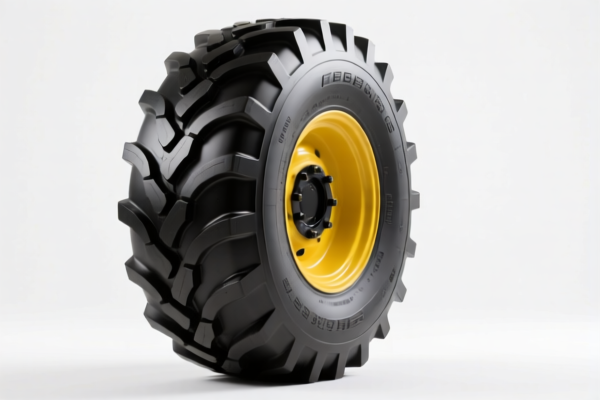
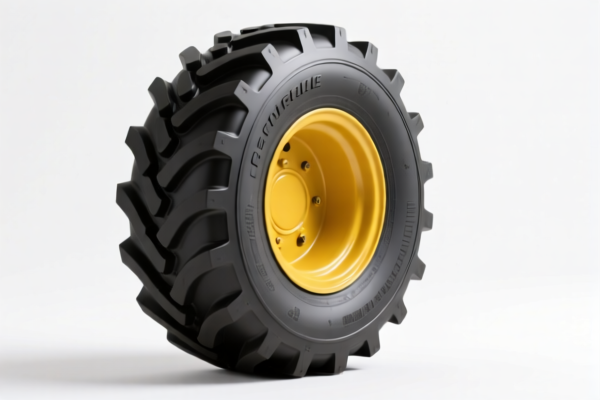
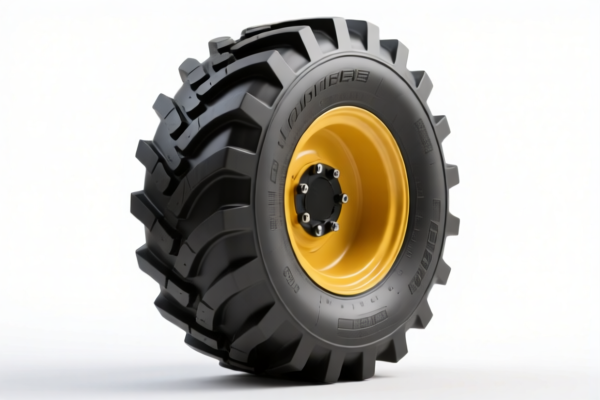
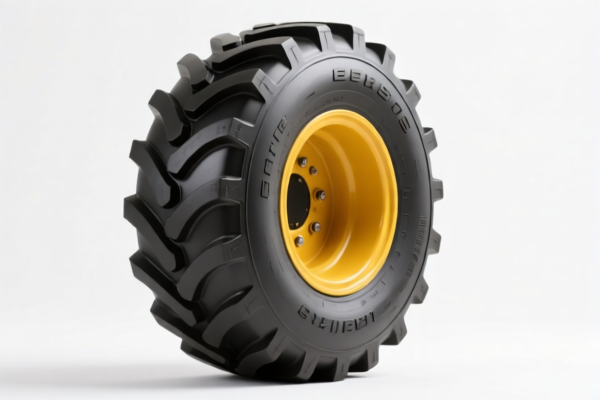
AI Analysis
🚜 Off-the-Highway Pneumatic Tires for Agricultural Vehicles
🌐 HS Code Reference & Customs Clearance Guide | 2026 Latest Tariff Analysis | Professional Clearance Strategy
📌 I. Product Definition & Classification: Do You Really Understand "Agricultural Tires"?
Off-the-highway pneumatic tires for agricultural vehicles are heavy-duty rubber tires designed specifically for tractors, harvesters, and other farm machinery. They operate on unpaved surfaces (fields, mud, gravel) rather than public roads. In international trade, these tires are often confused with general "industrial" or "construction" tires, but agricultural tires have distinct tread patterns and load specifications that dictate their HS code.
⚠️ Key Distinction Point:
- If the tire is specifically designed for agricultural machinery (tractor, combine harvester) → It falls under Chapter 40, Heading 40.11 or 40.12 depending on condition.
- If the tire is for construction/mining equipment (bulldozers, excavators) → It also falls under 40.11, but with different subheadings.
- Crucial Note: Used/retreaded tires are classified differently (40.12) than new tires (40.11). Misclassification here leads to massive duty discrepancies.
📦 II. HS Code Classification Details (2026 Latest Tariff Authority Comparison)
Based on the provided , the following HS codes are applicable. Note that the classification depends heavily on whether the tire is new or retreaded/used, and its specific application.
| HS Code | Product Description | Application Scenario | Condition |
|---|---|---|---|
4012.90.90.00 |
Other pneumatic tires, new (Non-highway), Rubber | General off-highway use, not specifically agricultural but matches classification requirements | ✅ New |
4012.19.80.00 |
Retreaded or used pneumatic tires, Rubber | Specifically for agricultural vehicles, matches use case | ✅ Used/Retreaded |
4011.20.10.25 |
New pneumatic tires, off-highway, Rubber | Specifically matched for agricultural vehicle use | ✅ New |
4011.20.50.50 |
New pneumatic tires, off-highway, Rubber | Shape and use match, agricultural/off-highway | ✅ New |
🔍 Key Insight:
-4012.19.80.00is the only used/retreaded option. If you are importing new tires, do NOT use this code.
-4011.20.10.25and4011.20.50.50are for new agricultural/off-highway tires. The difference lies in specific sub-heading criteria (e.g., size, ply rating).
-4012.90.90.00is a "catch-all" for other non-highway tires, but may not be the most accurate for specific agricultural equipment if4011codes apply.
💰 III. 2026 Latest Tariff Rate Breakdown (Including Additional Taxes)
✅ Applicable Country: United States (US)
✅ Origin: China (CN)
✅ Effective Date: 2025/2026 (Includes subsequent imports)
✅ Currency: Ad Valorem (Percentage of CIF Value)
🎯 1. 4012.90.90.00 —— Other Pneumatic Tires, New (Non-Highway)
| Item | Content |
|---|---|
| Base Duty Rate | 2.7% |
| Section 301 Additional Duty | +25.0% |
| Section 122 Duty | +10.0% |
| Total Effective Duty | 37.7% |
| Calculation | CIF Value × 37.7% |
| De Minimis Exemption | ❌ Not Applicable (High value item) |
| Legal Basis Path | HTSUS:4012.90.90.00 → USITC:301 → IEEPA:122 |
📌 Explanation:
- This code has the lowest total duty among the new tire options (37.7%).
- However, it is a "general" code. If customs determines the tire is specifically for agriculture, they may force reclassification to4011codes, which have higher duties.
- Risk: If misclassified from4011to4012, you might save money initially but face penalties later.
🎯 2. 4012.19.80.00 —— Retreaded/Used Pneumatic Tires (Agricultural Use)
| Item | Content |
|---|---|
| Base Duty Rate | 3.4% |
| Section 301 Additional Duty | +7.5% |
| Section 122 Duty | +10.0% |
| Total Effective Duty | 20.9% |
| Calculation | CIF Value × 20.9% |
| De Minimis Exemption | ❌ Not Applicable |
| Legal Basis Path | HTSUS:4012.19.80.00 → USITC:301 → IEEPA:122 |
📌 Explanation:
- Lowest Duty Rate (20.9%)! This is the most cost-effective option.
- BUT: It applies ONLY to used or retreaded tires.
- If you import new tires under this code, it is fraudulent misclassification. Customs will reclassify to4011and charge higher duties + penalties.
- Use Case: Only for importing retreads (common in agricultural sectors to reduce costs).
🎯 3. 4011.20.10.25 —— New Pneumatic Tires, Off-Highway (Agricultural Match)
| Item | Content |
|---|---|
| Base Duty Rate | 4.0% |
| Section 301 Additional Duty | +25.0% |
| Section 122 Duty | +10.0% |
| Total Effective Duty | 39.0% |
| Calculation | CIF Value × 39.0% |
| De Minimis Exemption | ❌ Not Applicable |
| Legal Basis Path | HTSUS:4011.20.10.25 → USITC:301 → IEEPA:122 |
📌 Explanation:
- This is the most precise code for new agricultural tires.
- The "10.25" suffix indicates specific sub-classification for agricultural use.
- Total Duty: 39.0%. Slightly higher than4012.90.90.00, but legally safer if the tire is clearly for agriculture.
- Why pay more? Avoids customs audits, reclassification penalties, and delays.
🎯 4. 4011.20.50.50 —— New Pneumatic Tires, Off-Highway (General Match)
| Item | Content |
|---|---|
| Base Duty Rate | 3.4% |
| Section 301 Additional Duty | +25.0% |
| Section 122 Duty | +10.0% |
| Total Effective Duty | 38.4% |
| Calculation | CIF Value × 38.4% |
| De Minimis Exemption | ❌ Not Applicable |
| Legal Basis Path | HTSUS:4011.20.50.50 → USITC:301 → IEEPA:122 |
📌 Explanation:
- Another new tire option, slightly cheaper than4011.20.10.25(38.4% vs 39.0%).
- Used when the tire is off-highway but may not fit the strict "agricultural" definition of10.25, or has different shape/use parameters.
- Still a "Section 301 + Section 122" target, so high duties apply.
🛠️ IV. Customs Clearance Practical Advice (Real-World Pitfall Guide)
✅ 1. Documentation Checklist (Non-Negotiable)
| Document | Required | Description |
|---|---|---|
| ✅ Product Specification Sheet | ✔️ | Must state: "Off-the-Highway," "Agricultural Vehicle," "Pneumatic," "Rubber" |
| ✅ Tire Data Sheet (TDS) | ✔️ | Includes size (e.g., 16.9-28), ply rating, tread pattern type |
| ✅ Product Photos | ✔️ | Clear images of tire sidewall, tread, and label |
| ✅ Commercial Invoice | ✔️ | Must specify HS Code and describe "Used" vs "New" accurately |
| ✅ Certificate of Origin | ✔️ | For preferential treatment (if applicable, though rare for US-China) |
| ✅ Bill of Lading/Air Waybill | ✔️ | Standard shipping documents |
⚠️ Critical: If importing used tires (
4012.19.80.00), you MUST prove they are retreaded or used. Customs may require an Inspection Report or Manufacturer’s Statement confirming the tire is not new.
✅ 2. Declaration Tips (Key Mantra)
🔥 "New vs. Used, Distinguish Clearly! Agricultural Use, Specify Properly!"
| Scenario | Correct Declaration | Wrong Declaration |
|---|---|---|
| New Agricultural Tire | 4011.20.10.25 (or 4011.20.50.50) |
4012.19.80.00 → Penalty! |
| Retreaded Agricultural Tire | 4012.19.80.00 |
4011.20.10.25 → Overpaid Duty |
| General Off-Highway Tire | 4012.90.90.00 |
4011.20.10.25 → Risk of Rejection |
| Mislabeling "New" as "Used" | N/A | Fraud, leads to seizure and fines |
✅ 3. Special Cases & Handling
| Scenario | Handling Advice |
|---|---|
| OEM Custom Tires | Provide design drawings + customer PO to prove specific agricultural use. |
| Mixed Containers | If both new and used tires are in one container, declare separately by HS code. Do not mix declarations. |
| Retreaded Tires | Must have a visible retread mark or manufacturer certification. Without proof, customs will treat as new and charge 38-39%. |
| Agricultural Machinery Import | If tires are part of a complete tractor, they may be classified with the machine (Chapter 84/87), not separately. Check machine HS first. |
🌍 V. Global Market Clearance Comparison (2026 Latest)
| Country/Region | Recommended HS Code | Duty Rate (China Origin) | Certification | Notes |
|---|---|---|---|---|
| 🇺🇸 USA | 4011.20.10.25 / 4012.19.80.00 |
39.0% / 20.9% | None specific | High tariffs due to Section 301 & 122 |
| 🇨🇳 China | 4011.20.10.25 |
~10-15% | CCC (if applicable) | No additional Section 301 taxes |
| 🇪🇺 EU | 4011.20.10.25 |
4.5% | CE (if on machinery) | No Section 301 equivalent, but watch for environmental rules |
| 🇦🇺 Australia | 4011.20.10.25 |
5% | SAA | No major additional tariffs |
| 🇯🇵 Japan | 4011.20.10.25 |
5% | JIS | Stable tariffs |
📌 Conclusion:
- USA is the most expensive market for these tires due to Section 301 (25%) and Section 122 (10%) duties.
- Retreaded tires (4012.19.80.00) offer a 20.9% duty rate, which is significantly lower than new tires (38-39%).
- Strategy: If cost is critical, consider retreading in-country (if allowed) or sourcing from countries with FTAs (Free Trade Agreements) to avoid Section 301.
📌 VI. Common Mistakes & Pitfall Guide (Lessons Learned)
❌ Mistake 1: Declaring New Tires as Used (4012.19.80.00)
👉 Consequence: Customs detects new tread → Reclassification to 4011 + 25% penalty + seizure risk.
❌ Mistake 2: Declaring Agricultural Tires as General Off-Highway (4012.90.90.00)
👉 Consequence: Customs may agree (37.7%) or disagree. If they disagree, they may argue for 4011 (38.4-39.0%), leading to disputes and delays.
❌ Mistake 3: Not specifying "Agricultural" in the description
👉 Consequence: Customs may classify under a different subheading with higher duties or require additional documentation for verification.
❌ Mistake 4: Ignoring Section 122 Duties
👉 Consequence: Forgetting the 10% Section 122 tax leads to underpayment and unexpected bills from CBP (Customs and Border Protection).
✅ Correct Approach:
"Off-the-Highway Pneumatic Tire, New, Rubber, for Agricultural Tractors, Size 16.9-28, Ply 12, Model ABC"
For used:
"Retreaded Off-the-Highway Pneumatic Tire, Rubber, for Agricultural Vehicles, Size 16.9-28, Certified Retread"
🎯 VII. Conclusion: Professional Declaration, Save Money, Ensure Compliance
🎯 Remember the Mantra:
🔹 "New vs. Used, Distinguish Clearly!"
🔹 "Agricultural Use, Specify Properly!"
🔹 "Section 301 + 122 = High Duty, Plan Ahead!"
🔹 "Retreads Save Money, But Prove They Are Used!"
📌 Pro Tip:
If your tires are shipped from Vietnam, Mexico, or Thailand, you may be eligible for Section 301 Exclusions or lower base duties due to USMCA or ASEAN agreements.
Recommendation: Apply for CBP Ruling or Advance Ruling before shipping to confirm the correct HS code and duty rate.
📣 Immediate Action:
📞 Contact a licensed customs broker + Provide Product Photos + Apply for HS Code Pre-Ruling
🚀 Ensure your agricultural tires clear customs smoothly, avoid penalties, and maximize profit!
✨ Professional Clearance Starts with Accurate Classification!
💼 Every percent of duty matters! Calculate precisely!
Customer Reviews
About HS Code Classification
The Harmonized System (HS) is an internationally standardized nomenclature developed by the World Customs Organization (WCO) to classify traded products. Over 200 countries use the HS system as the basis for customs tariffs, trade statistics, and import/export regulations.
Each HS code follows a hierarchical structure:
- Chapter (2 digits) — Broad category of goods (e.g., Chapter 84: Machinery and Mechanical Appliances)
- Heading (4 digits) — More specific grouping within the chapter
- Subheading (6 digits) — Internationally standardized breakdown, used by all WCO member countries
- National subdivisions (8-10 digits) — Country-specific extensions for further classification, such as US HTSUS 10-digit codes
Correct HS code classification is essential for smooth customs clearance, accurate duty payment, and compliance with trade regulations. Misclassification can lead to customs delays, overpayment of duties, or penalties.
When importing from CN to US, the applicable tariff rates may include:
- Most-Favored-Nation (MFN) rate — The standard duty rate applied to WTO members
- General rate — Applied to countries without trade agreements
- Trade remedy duties — Additional tariffs such as Section 301 (anti-dumping), Section 232 (national security), or countervailing duties
The information provided on this page is for reference purposes only. For official classification, please consult with your local customs authority or a licensed customs broker.