Office Chairs
CN → US| HS Code | Tariff Rate | Origin | Destination | Doc |
|---|---|---|---|---|
| 9401310000 | 35.0% | CN | US | Official Doc |
| 4205008000 | 35.0% | CN | US | Official Doc |
| 9401991010 | 17.5% | CN | US | Official Doc |
| 9403100040 | 85.0% | CN | US | Official Doc |
| 9403308090 | 35.0% | CN | US | Official Doc |
Product Images
AI Analysis
🪑 Office Chairs (Ergonomic & Business Seating Solutions)
🌐 HS Code Reference & Customs Clearance Guide | 2026 Latest Tariff Analysis | Professional-Level Clearance Strategy
📌 I. Product Definition & Classification: Do You Really Understand "Office Chairs"?
An office chair is not just a seat; it is a functional component of workspace ergonomics. In international trade, classification depends heavily on material composition (leather vs. fabric/wood/metal) and structural form (rotating vs. static). The data provided highlights the complexity of classifying office chairs based on US import tariffs, specifically focusing on leather material and finished good status.
⚠️ Critical Distinction for US Imports:
- Rotating Leather Chairs: Often fall under9401.31.00.00(Rotating seats) or4205.00.80.00(Other leather articles).
- Non-Rotating or Mixed Material Chairs: May fall under9401.99.10.10or9403.xxxxseries.
- High-Tariff Trap: If classified as general office furniture (9403.10.00.40) due to material ambiguity, tariffs can skyrocket to 85%!
📦 II. HS Code Classification Details (2026 Latest Tariff Authority Comparison)
| HS Code | Product Description | Application Scenario | Key Classification Logic |
|---|---|---|---|
9401.31.00.00 |
Rotating Office Chairs (Leather/Leather-like) | Premium executive chairs, rotating/swivel mechanisms, leather upholstery. | ✅ Specific: Matches "Office Chair" + "Leather Material" + "Rotating Seat" |
4205.00.80.00 |
Other Leather Articles | Chairs viewed primarily as "finished leather goods" rather than furniture; leather-heavy construction. | ✅ Material: Matches "Leather Product" + "Office Chair Form" |
9401.99.10.10 |
Parts/Finished Seats (Leather) | Chairs or parts made of leather, not specifically rotating, or falling into broader seat categories. | ✅ General: Matches "Office Chair Use" + "Leather Material" (General Seat Category) |
9403.10.00.40 |
Metal/Aluminum/Steel Office Furniture | Chairs with significant metal frames; if leather is deemphasized or if classified as general metal furniture. | ⚠️ High Risk: Matches "Office Furniture" + "Metal/Aluminum" |
9403.30.80.90 |
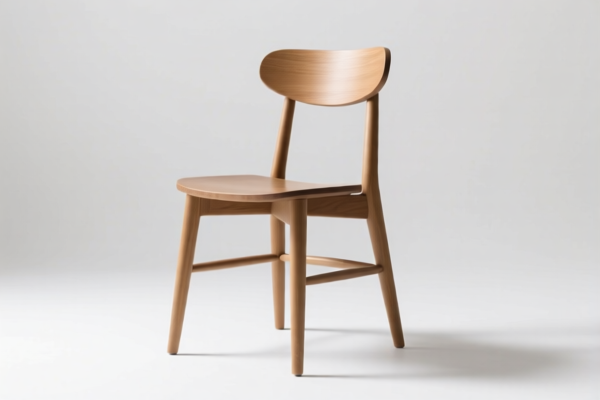
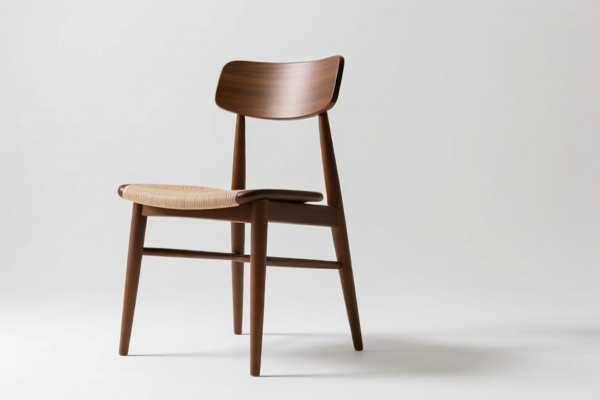
Other Wooden Office Furniture | Chairs with wood frames or components, falling under general wooden office furniture categories. | ⚠️ General: Matches "Office Use" + "Wooden Furniture" (Fallback Logic) |
🔍 Key Reminder:
- Leather is King: If the chair is predominantly leather,9401.31.00.00and4205.00.80.00are the primary contenders.
- Shape Matters: "Rotating" functionality pushes classification toward9401.31.
- Material Ambiguity is Dangerous: If you fail to prove it's a "seat" or misidentify the primary material (e.g., calling a metal-frame chair "furniture"), you risk the 85% tariff under9403.10.00.40.
💰 III. 2026 Latest Tariff Rate Breakdown (Including Surtaxes & Policy Add-ons)
✅ Applicable Country: United States (US)
✅ Country of Origin: China (CN)
✅ Effective Time: From November 10, 2025 (and subsequent imports)
🎯 1. 9401.31.00.00 —— Rotating Office Chairs (Leather)
The most precise classification for premium rotating leather chairs.
| Item | Content |
|---|---|
| Base Tariff | 0% (ad valorem) |
| Section 301 Surtax | +25% (USITC Footnote) |
| Section 122 Surtax | +10% (Specific US Import Policy) |
| Total Tariff Rate | 35.0% |
| Tax Calculation | CIF Value × 35% |
| De Minimis Exemption | ❌ Not Applicable (Denied) |
| Legal Basis Path | USITC:9401.31.00.00 → Section 301: 25% → Section 122: 10% |
📌 Explanation:
- This is the standard classification for rotating leather office chairs.
- Total tariff is 35%, which is manageable compared to general furniture but still significant.
- No de minimis exemption: You must pay this tax on every shipment, regardless of value.
🎯 2. 4205.00.80.00 —— Other Leather Articles (Leather Chairs)
Used when the chair is classified as a "leather article" rather than a "seat."
| Item | Content |
|---|---|
| Base Tariff | 0% |
| Section 301 Surtax | +25% |
| Section 122 Surtax | +10% |
| Total Tariff Rate | 35.0% |
| Tax Calculation | CIF Value × 35% |
| De Minimis Exemption | ❌ Not Applicable |
| Legal Basis Path | USITC:4205.00.80.00 → Section 301: 25% → Section 122: 10% |
📌 Note:
- The tariff rate is identical to9401.31.00.00(35%).
- This classification is less common for standard office chairs but may apply to unique leather constructions.
- Risk: Customs may challenge this if the item is clearly a "seat" under Chapter 94.
🎯 3. 9401.99.10.10 —— Other Seats / Leather Parts
Broader category for non-rotating or mixed-leather seats.
| Item | Content |
|---|---|
| Base Tariff | 0% |
| Section 301 Surtax | +7.5% |
| Section 122 Surtax | +10% |
| Total Tariff Rate | 17.5% |
| Tax Calculation | CIF Value × 17.5% |
| De Minimis Exemption | ❌ Not Applicable |
| Legal Basis Path | USITC:9401.99.10.10 → Section 301: 7.5% → Section 122: 10% |
📌 Optimization Tip:
- This is the lowest tariff option (17.5%) among leather/chair classifications.
- Strategy: If the chair is not rotating or has minimal rotating mechanisms, classify under this code to save 17.5% in tariffs.
- Warning: Ensure the product description strictly avoids "Rotating" keywords if using this code.
🎯 4. 9403.10.00.40 —— Metal/Aluminum Steel Office Furniture (⚠️ HIGH RISK)
Applied if the chair is deemed "Metal Furniture" or material is ambiguous.
| Item | Content |
|---|---|
| Base Tariff | 0% |
| Section 301 Surtax | +25% (Base) + 50% (Steel/Aluminum Specific) |
| Section 122 Surtax | +10% |
| Total Tariff Rate | 85.0% |
| Tax Calculation | CIF Value × 85% |
| De Minimis Exemption | ❌ Not Applicable |
| Legal Basis Path | USITC:9403.10.00.40 → Steel/Aluminum Surtax: 50% → Section 301: 25% → Section 122: 10% |
📌 CRITICAL WARNING:
- This is the DISASTER ZONE.
- If Customs interprets your chair as "Metal Office Furniture" (e.g., due to a visible metal frame), the tariff jumps to 85%.
- Why? The "50% surtax on Steel/Aluminum" is added on top of the 25% Section 301 tax.
- Avoidance: Never classify a chair as "Metal Furniture" unless it is explicitly not a seat. Prove it is a "Seat" under Chapter 94!
🎯 5. 9403.30.80.90 —— Other Wooden Office Furniture
Fallback classification for wood-framed chairs.
| Item | Content |
|---|---|
| Base Tariff | 0% |
| Section 301 Surtax | +25% |
| Section 122 Surtax | +10% |
| Total Tariff Rate | 35.0% |
| Tax Calculation | CIF Value × 35% |
| De Minimis Exemption | ❌ Not Applicable |
| Legal Basis Path | USITC:9403.30.80.90 → Section 301: 25% → Section 122: 10% |
📌 Note:
- Tariff is 35%, same as rotating leather chairs.
- Use only if the chair is predominantly wooden and not clearly a "seat" under Chapter 94.1 or 94.01.
🛠️ IV. Customs Clearance Practical Advice (Battle-Tested Pitfall Guide)
✅ 1. Essential Documentation Checklist (Non-Negotiable)
| Document | Required | Explanation |
|---|---|---|
| ✅ Product Specification Sheet | ✔️ | Must specify: Material (Leather/Wood/Metal), Function (Rotating/Static), Intended Use (Office). |
| ✅ High-Resolution Photos | ✔️ | Show the seat mechanism (to prove rotation/non-rotation) and material texture (to prove leather/wood). |
| ✅ Commercial Invoice | ✔️ | Must explicitly state: "Office Chair, Leather, Rotating" or "Office Chair, Wooden, Non-Rotating". Avoid vague terms like "Furniture". |
| ✅ Packing List | ✔️ | Detail components. If disassembled, prove it remains a "Chair" and not "Parts" or "Raw Materials". |
| ✅ Material Certificate | ✔️ | If claiming Leather, provide proof to avoid being classified as generic "Upholstered Seat" (which might have different surtaxes). |
✅ 2. Declaration Tips (Key Mantras)
🔥 “Prove it’s a Seat, Not a Frame; Specify Leather, Not Just ‘Furniture’!”
| Scenario | Correct Declaration | Wrong Practice |
|---|---|---|
| Rotating Leather Chair | 9401.31.00.00 (35%) |
Misdeclare as 9403.10.00.40 → 85% Tax! |
| Non-Rotating Leather Chair | 9401.99.10.10 (17.5%) |
Misdeclare as 9401.31.00.00 → 35% Tax (Overpay!) |
| Metal-Frame Chair | 9401.31.00.00 or 9401.99.10.10 |
Misdeclare as 9403.10.00.40 → 85% Tax! |
| Wooden Chair | 9403.30.80.90 (35%) |
Acceptable, but ensure it’s not misclassified as "Metal". |
💡 Pro Tip:
- If your chair has a metal frame but is primarily a seat, do NOT use9403.10.00.40.
- Use9401.xxxxcodes. The "Seat" function overrides the "Metal" material in tariff hierarchy for chairs.
✅ 3. Special Situations
| Situation | Handling Advice |
|---|---|
| OEM Custom Chairs | Provide design sketches showing the seat mechanism. If it rotates, aim for 9401.31. If not, aim for 9401.99. |
| Mixed Materials (Leather + Metal) | Emphasize "Leather" and "Seat" in the description. Avoid "Metal Furniture". Target 9401.31 or 9401.99. |
| Chairs with Wheels | Ensure the wheels are not the primary feature. If it’s a "Rolling Chair," it’s still a "Rotating Seat" (9401.31). |
| Disassembled Chairs | Declare as "Office Chairs" not "Parts." Parts might trigger different surtaxes or require assembly proof. |
🌍 V. Global Market Comparison (2026 Latest)
| Country/Region | Recommended HS Code | Tariff (China Origin) | Certification | Remarks |
|---|---|---|---|---|
| 🇺🇸 USA | 9401.31.00.00 or 9401.99.10.10 |
17.5% - 35% | FCC/UL (if electrical) | Avoid 9403.10.00.40 (85%)! |
| 🇨🇳 China | 9401.31.00.00 |
~10% (Import Duty) | CCC | No Section 301/122 |
| 🇪🇺 EU | 9401.31.00.00 |
0% - 4.5% (if certified) | CE | No Section 301/122 |
| 🇬🇧 UK | 9401.31.00.00 |
4.5% | UKCA | No Section 301/122 |
📌 Conclusion:
- The US is the only market with punitive surtaxes (301/122) on office chairs.
- Tariff varies from 17.5% to 85% based on precise classification.
- China-origin chairs in the US face high costs; supply chain diversification (Vietnam, Mexico) may be considered for large volumes.
📌 VI. Common Errors & Pitfall Guide (Blood Lessons)
❌ Error 1: Classifying a leather rotating chair as 9403.10.00.40 (Metal Furniture)
👉 Consequence: 85% Tariff instead of 35%. Loss: 50% extra tax!
❌ Error 2: Declaring a non-rotating chair as 9401.31.00.00 (Rotating)
👉 Consequence: 35% Tariff instead of 17.5%. Overpayment: 17.5% extra tax!
❌ Error 3: Vague description "Office Furniture"
👉 Consequence: Customs may arbitrarily classify as 9403.10.00.40 → 85% Tariff.
❌ Error 4: Ignoring the "122 Clause"
👉 Consequence: All chairs face an extra 10% surtax in the US. Factor this into your pricing.
✅ Correct Approach:
“Executive Office Chair, Leather Upholstery, Rotating Base, Chrome Finish, Model XYZ, Designed for Office Use”
🎯 VII. Conclusion: Precision Classification, Cost Savings!
🎯 Remember the Mantras:
🔹 “Rotating Leather = 35% (9401.31); Non-Rotating Leather = 17.5% (9401.99); Metal Frame = 85% (9403.10 - AVOID!)”
🔹 “One 10% Surtax, One 25% Surtax, One 50% Steel Surtax: Know Your Code!”
📌 Pro Tip:
If your chairs are sourced from Vietnam, Mexico, or Thailand, you may qualify for IEEPA Exemptions, reducing the tariff to 0% - 5%.
For large shipments, apply for an Advance Ruling (Ruling Letter) from US Customs (CBP) to secure your HS Code and tariff rate before shipment.
📣 Immediate Action:
📞 Contact a licensed customs broker + Provide product photos + Request an Advance Ruling for
9401.31.00.00or9401.99.10.10.
🚀 Clear Customs Smoothly, Reduce Costs, Maximize Profits!
✨ Professional Clearance Starts with Precise Classification!
💼 Every Percent of Tax Saved is Pure Profit!
Customer Reviews
About HS Code Classification
The Harmonized System (HS) is an internationally standardized nomenclature developed by the World Customs Organization (WCO) to classify traded products. Over 200 countries use the HS system as the basis for customs tariffs, trade statistics, and import/export regulations.
Each HS code follows a hierarchical structure:
- Chapter (2 digits) — Broad category of goods (e.g., Chapter 84: Machinery and Mechanical Appliances)
- Heading (4 digits) — More specific grouping within the chapter
- Subheading (6 digits) — Internationally standardized breakdown, used by all WCO member countries
- National subdivisions (8-10 digits) — Country-specific extensions for further classification, such as US HTSUS 10-digit codes
Correct HS code classification is essential for smooth customs clearance, accurate duty payment, and compliance with trade regulations. Misclassification can lead to customs delays, overpayment of duties, or penalties.
When importing from CN to US, the applicable tariff rates may include:
- Most-Favored-Nation (MFN) rate — The standard duty rate applied to WTO members
- General rate — Applied to countries without trade agreements
- Trade remedy duties — Additional tariffs such as Section 301 (anti-dumping), Section 232 (national security), or countervailing duties
The information provided on this page is for reference purposes only. For official classification, please consult with your local customs authority or a licensed customs broker.