Office Clip
CN → US| HS Code | Tariff Rate | Origin | Destination | Doc |
|---|---|---|---|---|
| 7326908688 | 87.9% | CN | US | Official Doc |
| 8305903010 | 10.0% | CN | US | Official Doc |
| 8305906000 | 23.2% | CN | US | Official Doc |
| 7326200090 | 88.9% | CN | US | Official Doc |
Product Images
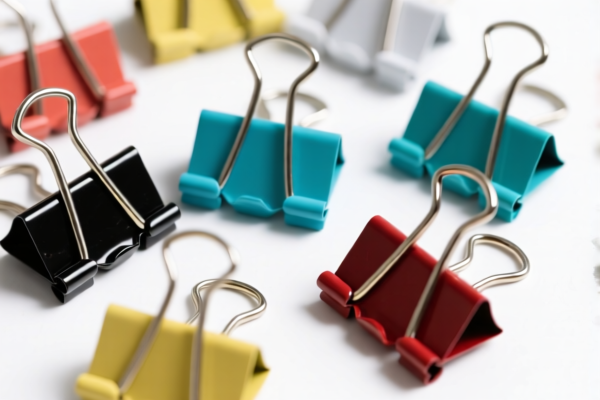
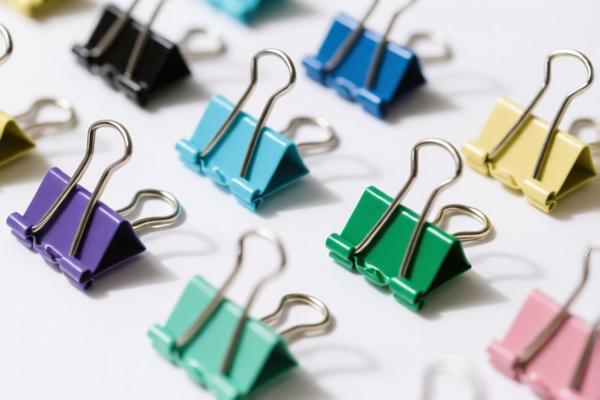
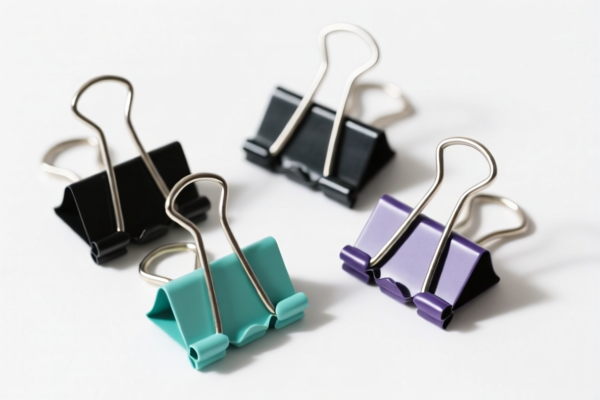

AI Analysis
📎 Office Clip (Metal Paper Clips & Fasteners)
🌐 HS Code Classification & Duty Guide | 2026 Tariff Deep Dive | Strategic Clearance Strategy
📌 I. Product Definition & Classification: Do You Know "Office Clips"?
Office Clips are essential stationery items used to hold sheets of paper together. In international trade, their classification depends entirely on material composition and manufacturing method. They generally fall into two distinct categories:
- Wire-Made Clips (Standard/Decorative): Clips formed primarily from metal wire, often including coated or painted varieties.
- Typical HS Code: 8305.90.30.10 (All made of metal wire).
- Other Iron/Steel Clips (Pressed/Stamped): Clips formed by pressing or stamping iron or steel sheets/wire, often used for heavy-duty binding or industrial applications.
- Typical HS Code: 7326.90.86.88 (Other articles of iron or steel).
- General Metal Fasteners (Mixed/Specific): Other metal office fasteners (like binder clips with metal frames) that don't fit the "wire" definition perfectly but are metal-based.
- Typical HS Code: 8305.90.60.00 (Other metal office supplies).
- Iron/Steel Wire Products: If the clip is made from a specific type of wire not covered under "office supplies" specifically, it may fall under general wire products.
- Typical HS Code: 7326.20.00.90 (Other articles of wire of iron or steel).
⚠️ Key Distinction Point:
- "All made of metal wire" (e.g., classic bent wire paperclips) → 8305.90.30.10 (Lowest Tax: 10.0%).
- "Pressed/Stamped/Other Iron/Steel" (e.g., large binder clips, heavy-duty clips) → 7326.90.86.88 (Highest Tax: 87.9% due to "Section 232" and "122" clauses).
- "Metal Substrate/General Office" → 8305.90.60.00 (Medium Tax: 23.2%).
📦 II. HS Code Classification Details (2026 Latest Tariff Authority)
| HS Code | Product Description | Application Scenario | Total Tax Rate |
|---|---|---|---|
| 8305.90.30.10 | All made of metal wire (e.g., Standard Paper Clips) | Classic office paper clips, decorative wire clips | 10.0% |
| 8305.90.60.00 | Metal Substrate Office Fasteners (e.g., Binder Clips) | Metal-based binder clips, staplers, similar office items | 23.2% |
| 7326.90.86.88 | Other Articles of Iron or Steel | Pressed clips, non-wire specific metal clips, heavy-duty fasteners | 87.9% |
| 7326.20.00.90 | Other Iron/Steel Wire Articles | Clips classified strictly as wire products under general steel section | 88.9% |
🔍 Critical Reminder:
- 8305.90.30.10 is the "Golden Code" for standard paper clips. If your product is purely bent metal wire, this is your target. - 7326.90.86.88 carries the "Pain Tax." If the product is considered "other iron/steel articles" (not specifically "wire"), it triggers massive Section 232 (25% + 50%) and Section 122 (10%) tariffs. - Misclassifying a standard wire clip as "Other Iron/Steel" can increase your duty from 10% to 87.9%.
💰 III. 2026 Latest Duty Rate Breakdown (Including Additional Taxes & Policies)
✅ Target Market: USA (US)
✅ Origin: China (CN)
✅ Effective Time: Current (Including Section 232 & 122 clauses)
🎯 1. 8305.90.30.10 — All Made of Metal Wire (The Sweet Spot)
| Item | Content |
|---|---|
| Base Duty Rate | 0.0% (ad valorem) |
| Section 232 (Steel/Aluminum) | 0.0% (Not applicable for this specific wire subheading in this context) |
| Section 122 (10% Steel/Al/Cu Clause) | +10.0% |
| Section 301 (Added Tariff) | 0.0% (Specific exclusions may apply for small stationery, check current list) |
| Total Tax Rate | 10.0% |
| Calculation | CIF Value × 10% |
| De Minimis Eligibility | ❌ No (Generally, standard duties apply) |
| Legal Basis Path | HTS: 8305.90.30.10 + Section 122: 10% surcharge on steel/aluminum/copper |
📌 Interpretation:
- This is the most favorable classification for standard paper clips. - The 10% comes solely from the "122 Clause" (steel/aluminum surcharge). - No Section 301 (25%) or Section 232 (25%+50%) applies here, saving you over 70% compared to other codes.
🎯 2. 8305.90.60.00 — Metal Office Supplies (Binder Clips, etc.)
| Item | Content |
|---|---|
| Base Duty Rate | 5.7% |
| Section 301 (Added Tariff) | +7.5% (Partial 301 listing) |
| Section 122 (10% Clause) | +10.0% |
| Total Tax Rate | 23.2% |
| Calculation | CIF Value × 23.2% |
| De Minimis Eligibility | ❌ No |
| Legal Basis Path | HTS: 8305.90.60.00 + Section 122 + Section 301 |
📌 Interpretation:
- Applies to binder clips with metal frames or non-wire office fasteners. - Includes a moderate 301 tariff (7.5%) and 122 clause (10%). - Avoid this code if your product is purely wire-based; try to qualify for 8305.90.30.10 instead.
🎯 3. 7326.90.86.88 — Other Iron/Steel Articles (High Risk)
| Item | Content |
|---|---|
| Base Duty Rate | 2.9% |
| Section 301 (Added Tariff) | +25.0% |
| Section 232 (Steel/Aluminum) | +50.0% (122 Clause for Steel/Al/Cu) |
| Section 122 (10% Clause) | +10.0% |
| Total Tax Rate | 87.9% |
| Calculation | CIF Value × 87.9% |
| De Minimis Eligibility | ❌ No (High risk of penalty) |
| Legal Basis Path | HTS: 7326.90.86.88 + Section 301 + Section 232 + Section 122 |
📌 Interpretation:
- DANGER ZONE. This code triggers all major tariffs. - 25% (Section 301) + 50% (Section 232 for Steel) + 10% (Section 122) + 2.9% (Base). - This classification is often applied when a clip is deemed "stamped" rather than "formed from wire," or if it's a complex non-wire assembly. - Result: Almost 9x the cost of the wire-based clip.
🎯 4. 7326.20.00.90 — Other Wire of Iron/Steel (Highest Risk)
| Item | Content |
|---|---|
| Base Duty Rate | 3.9% |
| Section 301 (Added Tariff) | +25.0% |
| Section 232 (Steel/Aluminum) | +50.0% (122 Clause for Steel/Al/Cu) |
| Section 122 (10% Clause) | +10.0% |
| Total Tax Rate | 88.9% |
| Calculation | CIF Value × 88.9% |
| De Minimis Eligibility | ❌ No |
| Legal Basis Path | HTS: 7326.20.00.90 + Section 301 + Section 232 + Section 122 |
📌 Interpretation:
- Similar to 7326.90.86.88 but under a different wire subheading. - The 50% Section 232 surcharge on steel/aluminum is the main culprit. - Conclusion: If your product can be classified under 8305, do not use 7326 codes.
🛠️ IV. Clearance Operational Advice (Pitfall Avoidance Guide)
✅ 1. Preparation Checklist (Must-Haves)
| Document | Required | Description |
|---|---|---|
| Product Specification Sheet | ✔️ | Clearly state "Made of Metal Wire" or "Wire-formed." |
| Construction Diagram | ✔️ | Show the wire bending process to prove it is "wire-formed" not "stamped." |
| Product Photos | ✔️ | Close-up of the wire ends and overall shape. |
| Material Certificates | ✔️ | Proof of steel/aluminum composition (to manage Section 232 if needed, or to avoid it). |
| Commercial Invoice | ✔️ | Use precise description: "All-Metal-Wire Paper Clips." |
| Packing List | ✔️ | Ensure no mixed shipments (e.g., don't pack binder clips with wire clips in one box without separation). |
✅ 2. Declaration Strategy (Key Rules)
🔥 "Wire Form = 8305, Stamped = 7326, Don't Guess, or You Pay Double!"
| Scenario | Correct Declaration | Wrong Action |
|---|---|---|
| Standard Paper Clip | 8305.90.30.10 (10% tax) | Declare as "Other Steel Article" → 87.9% |
| Binder Clip (Metal Frame) | 8305.90.60.00 (23.2% tax) | Declare as "Wire Clip" → Potential penalty for misclassification |
| Plastic-Handled Clip | 8305.90.60.00 (Metal part dominates) | Declare as "8305.90.30.10" (If plastic is significant, risk re-class) |
| Mixed Shipment | Separate Lines | Mix 8305 and 7326 in one line → All items taxed at highest rate |
✅ 3. Special Situations
| Situation | Handling Advice |
|---|---|
| OEM Custom Clips | Provide design drawings proving "wire bending" process to secure 8305.90.30.10. |
| Coated/Colored Clips | Still 8305.90.30.10 if the base is wire. Coating does not change the material nature. |
| Bulk Industrial Clips | If large, heavy-duty clips, check if they fall under 8305.90.60.00 (Binder Clip category). |
| Steel vs. Stainless | Both fall under 7326/8305, but Stainless Steel may have different Section 232 applicability (verify current rulings). |
🌍 V. Global Market Clearance Comparison (2026 Latest)
| Country/Region | Recommended HS Code | Duty Rate | Certification | Note |
|---|---|---|---|---|
| 🇺🇸 USA | 8305.90.30.10 |
10% (China) | FCC/ROHS (if electronic) | Avoid 7326 (87.9% tax) |
| 🇨🇳 China | 8305.90.30.10 |
5% | CCC | Lower base tax |
| 🇪🇺 EU | 8305.90.30.10 |
2.7% | CE | No Section 301/232 |
| 🇦🇺 Australia | 8305.90.30.10 |
5% | RCM | No heavy tariffs |
| 🇯🇵 Japan | 8305.90.30.10 |
0% | PSE | Duty-free for office supplies |
📌 Conclusion:
- USA is the only major market applying Section 301, 232, and 122 clauses simultaneously to steel products. - Correct classification is critical. A misclassification of a $1,000 shipment from8305to7326could cost you $779 in extra duties.
📌 VI. Common Mistakes & Pitfalls (Lessons Learned)
❌ Mistake 1: Describing "Paper Clips" as "Steel Articles" instead of "Wire Products."
👉 Consequence: Tax jumps from 10% to 87.9% → Profit loss!
❌ Mistake 2: Mixing "Binder Clips" (8305.90.60.00) with "Wire Clips" (8305.90.30.10) in one line item.
👉 Consequence: Customs may tax the entire shipment at the highest rate applicable (87.9%).
❌ Mistake 3: Not providing a "Wire-formed" diagram.
👉 Consequence: Customs cannot verify the "wire" nature → Delayed release or audit.
❌ Mistake 4: Assuming all metal clips are the same.
👉 Consequence: Ignoring the "Section 232 Steel Surcharge" (50%) for non-wire clips.
✅ Correct Approach:
"Metal Wire Paper Clips, Bent, Unpainted, for Office Use, HS Code 8305.90.30.10"
🎯 VII. Conclusion: Smart Classification, Lower Costs!
🎯 Remember the Mantra:
🔹 "Wire is 10%, Pressed is 88%. Choose Wisely, Save 78%!"
🔹 "HS Code is Life. A difference of 1 digit saves thousands."
📌 Pro Tip:
If your office clips are originated from Vietnam, Mexico, or Thailand, you might qualify for Section 301/232 exemptions or reduced rates.
Recommendation: Apply for a Binding Tariff Ruling (BTR) or Advance Ruling before shipping to ensure 100% compliance.
📣 Take Action Now:
📞 Contact a professional customs broker + Provide wire-bending photos + Verify HS Code
🚀 Ensure your Office Clips clear customs smoothly, efficiently, and profitably!
✨ Professional Clearance Starts with Accurate Classification!
💼 Every penny of your cost deserves precise calculation!
Customer Reviews
About HS Code Classification
The Harmonized System (HS) is an internationally standardized nomenclature developed by the World Customs Organization (WCO) to classify traded products. Over 200 countries use the HS system as the basis for customs tariffs, trade statistics, and import/export regulations.
Each HS code follows a hierarchical structure:
- Chapter (2 digits) — Broad category of goods (e.g., Chapter 84: Machinery and Mechanical Appliances)
- Heading (4 digits) — More specific grouping within the chapter
- Subheading (6 digits) — Internationally standardized breakdown, used by all WCO member countries
- National subdivisions (8-10 digits) — Country-specific extensions for further classification, such as US HTSUS 10-digit codes
Correct HS code classification is essential for smooth customs clearance, accurate duty payment, and compliance with trade regulations. Misclassification can lead to customs delays, overpayment of duties, or penalties.
When importing from CN to US, the applicable tariff rates may include:
- Most-Favored-Nation (MFN) rate — The standard duty rate applied to WTO members
- General rate — Applied to countries without trade agreements
- Trade remedy duties — Additional tariffs such as Section 301 (anti-dumping), Section 232 (national security), or countervailing duties
The information provided on this page is for reference purposes only. For official classification, please consult with your local customs authority or a licensed customs broker.