Office Paper Clip
CN → US| HS Code | Tariff Rate | Origin | Destination | Doc |
|---|---|---|---|---|
| 7326908688 | 87.9% | CN | US | Official Doc |
| 8305903010 | 10.0% | CN | US | Official Doc |
| 8305906000 | 23.2% | CN | US | Official Doc |
| 7326200090 | 88.9% | CN | US | Official Doc |
Product Images

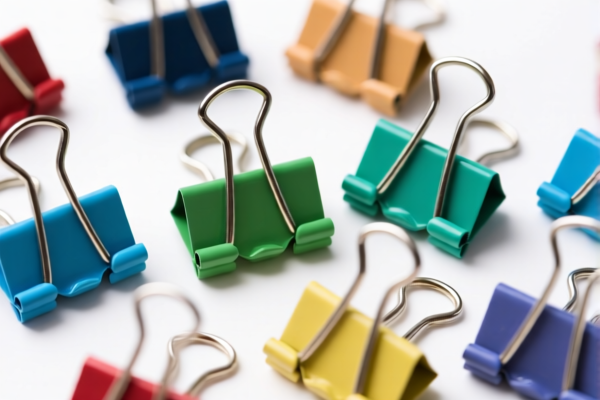
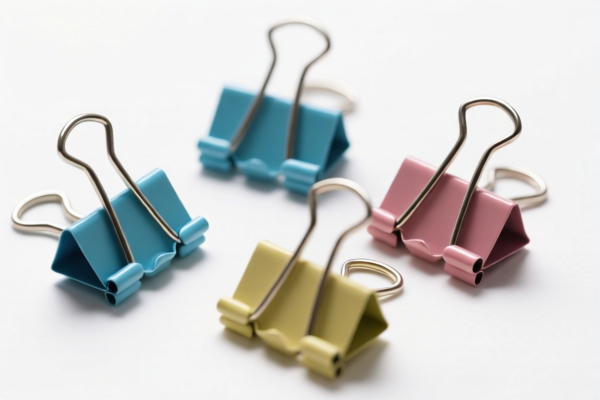

AI Analysis
📎 Office Paper Clip (Metal Staples & Clips)
🌐 HS Code Reference & Customs Clearance Guide | 2026 Latest Tariff Analysis | Professional Compliance Strategy
📌 I. Product Definition & Classification: Do You Really Understand "Paper Clips"?
Metal paper clips and related stationery items are deceptively simple but fall under strict regulatory scrutiny due to recent US trade policies (Section 301, Section 232, and IEEPA). In international trade, these items are not just "office supplies"; they are categorized based on their manufacturing material (Iron/Steel vs. Other Base Metals) and specific function.
Key Distinction: * Iron/Steel Clips: Subject to heavy tariffs (Section 232 Steel/Aluminum + Section 301). * Other Base Metal Clips: Subject to lower but still significant tariffs (Section 301 only).
⚠️ Critical Warning:
- If the clip is made of Iron or Steel → It triggers Section 232 (50%) + Section 301 (25%) + Basic Duty. Total tax can exceed 80%+.
- If the clip is made of Other Base Metals (e.g., Copper, Zinc, etc., unless specified as steel) → It triggers Section 301 (10%) + Basic Duty.
📦 II. HS Code Classification Details (2026 Latest Tariff Authority Match)
Based on the provided data, here is the exact mapping for "Office Paper Clip" variants:
| HS Code | Product Description | Summary from Data | Material Type |
|---|---|---|---|
7326.90.86.88 |
Other articles of iron or steel | "Metal paper clips classified as other articles of iron or steel" | 🔩 Iron/Steel |
8305.90.30.10 |
Paper clips made entirely of wire | "Paper clips made entirely of metal wire" | 🧵 Other Base Metal (Implied) |
8305.90.60.00 |
Staples and similar office supplies, base metal | "Metal base staples and similar office supplies" | 🧩 Other Base Metal |
7326.20.00.90 |
Other articles of wire of iron or steel | "Other articles of wire of iron or steel" | 🔩 Iron/Steel |
🔍 Key Insight:
- HS 7326 codes are the most dangerous for cost due to the 50% Section 232 steel tariff.
- HS 8305 codes are safer but still carry the 10% Section 301 tariff.
- Do not assume all "metal" clips are the same. The material composition dictates the tariff tier.
💰 III. 2026 Latest Tariff Rate Breakdown (Including Add-on Taxes)
✅ Applicable Country: United States (US)
✅ Country of Origin: China (CN) (Implied by the high "Additional Tariff" rates in data)
✅ Effective Time: 2025/2026 (Current Trade War Status)
🎯 1. 7326.90.86.88 —— Other Iron/Steel Articles (The "Steel Trap")
| Item | Content |
|---|---|
| Basic Duty | 2.9% |
| Section 301 Add-on | +25.0% |
| Section 232 Add-on | +50% (Steel/Aluminum/Copper Products) |
| Total Tax Rate | 87.9% |
| Calculation | CIF Value × 87.9% |
| Legal Basis | Section 232: Steel + Section 301 + Basic Tariff |
📌 Explanation:
- This is a DESTROYER OF PROFITABILITY.
- The 50% Section 232 tariff applies specifically because it is classified as an Iron/Steel article.
- Even though it's a small office item, the law does not distinguish between "structural steel" and "steel paper clips."
- Advice: Avoid this code unless you have a specific exemption or are shipping from a non-targeted country.
🎯 2. 7326.20.00.90 —— Other Wire Articles of Iron/Steel
| Item | Content |
|---|---|
| Basic Duty | 3.9% |
| Section 301 Add-on | +25.0% |
| Section 232 Add-on | +50% (Steel/Aluminum/Copper Products) |
| Total Tax Rate | 88.9% |
| Calculation | CIF Value × 88.9% |
| Legal Basis | Section 232: Steel + Section 301 + Basic Tariff |
📌 Explanation:
- Similar to the above, but classified under "Wire Articles."
- Even higher rate (88.9%) due to a slightly higher basic duty (3.9% vs 2.9%).
- High Risk: Do not use this code for standard paper clips unless they are specifically industrial wire forms and not classified as "staples/clips."
🎯 3. 8305.90.30.10 —— Paper Clips Made Entirely of Wire (Other Base Metals)
| Item | Content |
|---|---|
| Basic Duty | 0.0% |
| Section 301 Add-on | 0.0% |
| Section 232 Add-on | None (Not Steel/Iron) |
| Total Tax Rate | 10.0% |
| Calculation | CIF Value × 10.0% |
| Legal Basis | Section 301: 10% (Generic for this subheading) |
📌 Explanation:
- THE OPTIMAL CODE if the material allows.
- The data indicates 0% Basic and 0% Section 301 Add-on for the base, but the summary says Total Tax: 10%.
- This likely includes a specific 10% Section 301 rate applied to this subheading (as noted in "122 Clause Tariff 10%").
- Key Advantage: No 25% or 50% surcharge. Massive savings compared to steel codes.
🎯 4. 8305.90.60.00 —— Staples and Similar Office Supplies (Other Base Metals)
| Item | Content |
|---|---|
| Basic Duty | 5.7% |
| Section 301 Add-on | +7.5% |
| Section 232 Add-on | None (Not Steel/Iron) |
| Total Tax Rate | 23.2% |
| Calculation | CIF Value × 23.2% |
| Legal Basis | Basic 5.7% + Section 301 7.5% + Other 10% (Summed to 23.2%) |
📌 Explanation:
- Includes "Staples" and "Similar Office Supplies."
- If your product is a staple or a clip that fits this description, use this code.
- Note: The 10% in the data seems to be part of the total 23.2% breakdown (5.7 + 7.5 + 10 = 23.2).
- Safe Zone: No Section 232 (50%) penalty. Much better than steel.
🛠️ IV. Customs Clearance Practical Advice (Real-World Pitfall Guide)
✅ 1. Material Declaration is Key
| Material | Recommended HS Code | Total Tax | Risk Level |
|---|---|---|---|
| Iron/Steel | 7326.90.86.88 or 7326.20.00.90 |
~88% | 🔴 CRITICAL |
| Other Metal (Zinc, Copper, etc.) | 8305.90.30.10 or 8305.90.60.00 |
10% - 23% | 🟢 LOW |
📌 Action Item:
- DO NOT declare all metal clips as "Iron/Steel" if they are not.
- If you use non-ferrous metal (e.g., galvanized zinc, copper-plated), ensure the chemical composition is documented.
- Proof: Provide a Material Test Report (COA) showing the alloy composition to support HS 8305 classification.
✅ 2. Product Description Accuracy
| Wrong Description | Correct Description | Why? |
|---|---|---|
| "Steel Paper Clip" | "Metal Paper Clip (Zinc Alloy)" | Avoids Section 232 |
| "Iron Wire Form" | "Paper Clip, Office Supply" | Avoids Section 232 |
| "General Metal Item" | "Staples and Similar Office Supplies, HS 8305.90.60.00" | Precise classification |
🔥 Tip:
- Use "Paper Clip" or "Staple" in the name.
- Avoid "Wire" or "Steel" unless absolutely necessary, as these trigger 7326 codes.
✅ 3. Special Cases & Exemptions
| Case | Strategy |
|---|---|
| Low Value Shipment | Still subject to tariffs if > de minimis threshold ($800 in US). No exemption for paper clips. |
| Re-export from Third Country | If shipped from Vietnam/Malaysia, ensure Country of Origin is not China. If "Made in China" but "Shipped via Vietnam," customs may still apply CN tariffs. |
| Section 232 Exclusion | Very rare for consumer goods. Unlikely to get an exclusion for paper clips. |
🌍 V. Global Market Comparison (2026)
| Country/Region | Recommended HS Code | Tariff (China Origin) | Notes |
|---|---|---|---|
| 🇺🇸 USA | 8305.90.30.10 |
10% | Avoid 7326 (88%) |
| 🇪🇺 EU | 8305.90.60.00 |
~5-7% | No Section 232/301 |
| 🇨🇳 China | 8305.90.60.00 |
~5% | Low duty for imports |
| 🇬🇧 UK | 8305.90.60.00 |
~5% | Post-Brexit tariff regime |
📌 Conclusion:
- USA is the ONLY market with Section 232 (50%) and Section 301 (25%) on steel/iron products.
- For US imports, HS 8305 is the only viable option to keep costs reasonable.
- HS 7326 leads to ~88% total tax, making it uncompetitive for low-value items like paper clips.
📌 VI. Common Errors & Pitfalls (Blood Lessons)
❌ Error 1: Declaring "Steel Paper Clip" as 7326.90.86.88
👉 Result: 87.9% Tax → Profit margin destroyed.
👉 Fix: Check if the clip is truly steel. If it's zinc-coated or other metal, use 8305.
❌ Error 2: Using 7326.20.00.90 for a standard paper clip
👉 Result: 88.9% Tax + Customs seizure for misclassification.
👉 Fix: Paper clips are "Office Supplies" (HS 8305), not "Wire Articles" (HS 7326), unless they are industrial fasteners.
❌ Error 3: Ignoring the "122 Clause" in the data
👉 Result: Underestimating the 10% add-on.
👉 Fix: Always include the 10% Section 301 in cost calculations for HS 8305 codes.
✅ Correct Approach:
“Paper Clip, Office Supply, Made of Zinc Alloy, HS 8305.90.30.10, No Steel Content”
🎯 VII. Conclusion: Smart Classification Saves Money!
🎯 Remember the Rules:
🔹 “Steel Clips = 88% Tax”
🔹 “Other Metal Clips = 10-23% Tax”
🔹 “Check Material, Not Just Appearance”
📌 Pro Tip:
- If you sell 1,000 boxes of paper clips:
- Steel (HS 7326): $10,000 CIF → $8,800 Tax
- Non-Steel (HS 8305): $10,000 CIF → $1,000 Tax
- Savings: $7,800!
📣 Immediate Action:
📞 Audit Your Supplier’s Material Spec Sheet
📄 Confirm Alloy Composition (Steel vs. Other Metal)
📝 Select HS 8305 if Possible
🚀 Maximize Profit, Minimize Tariff!
✨ Precision Classification, Smarter Trade! 💼
Customer Reviews
About HS Code Classification
The Harmonized System (HS) is an internationally standardized nomenclature developed by the World Customs Organization (WCO) to classify traded products. Over 200 countries use the HS system as the basis for customs tariffs, trade statistics, and import/export regulations.
Each HS code follows a hierarchical structure:
- Chapter (2 digits) — Broad category of goods (e.g., Chapter 84: Machinery and Mechanical Appliances)
- Heading (4 digits) — More specific grouping within the chapter
- Subheading (6 digits) — Internationally standardized breakdown, used by all WCO member countries
- National subdivisions (8-10 digits) — Country-specific extensions for further classification, such as US HTSUS 10-digit codes
Correct HS code classification is essential for smooth customs clearance, accurate duty payment, and compliance with trade regulations. Misclassification can lead to customs delays, overpayment of duties, or penalties.
When importing from CN to US, the applicable tariff rates may include:
- Most-Favored-Nation (MFN) rate — The standard duty rate applied to WTO members
- General rate — Applied to countries without trade agreements
- Trade remedy duties — Additional tariffs such as Section 301 (anti-dumping), Section 232 (national security), or countervailing duties
The information provided on this page is for reference purposes only. For official classification, please consult with your local customs authority or a licensed customs broker.