Office Supplies
CN → US| HS Code | Tariff Rate | Origin | Destination | Doc |
|---|---|---|---|---|
| 8472909080 | 35.0% | CN | US | Official Doc |
| 8472906000 | 35.0% | CN | US | Official Doc |
| 9608100000 | 0.0% | CN | US | Official Doc |
| 9608404000 | 24.1% | CN | US | Official Doc |
| 4820900000 | 35.0% | CN | US | Official Doc |
Product Images
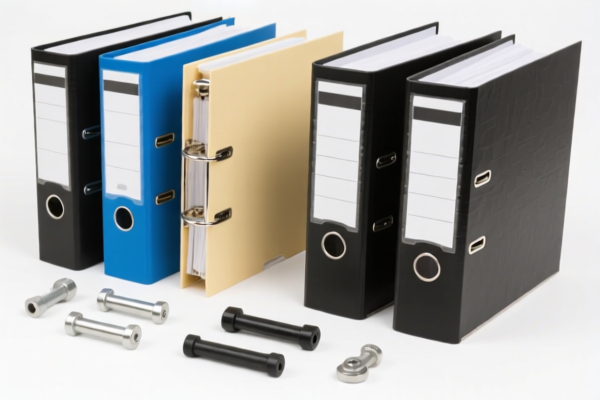


AI Analysis
🖊️ Office Supplies (办公用品/文具)
🌐 HS Code Reference & Clearance Guide | 2026 Latest Tariff Breakdown | Professional Entry Strategy
📌 I. Product Definition & Classification: Do You Really Know "Office Supplies"?
Office Supplies is a broad category encompassing items used in administrative, educational, and general work environments. However, in international trade, "one size fits all" does not exist. A simple pen, a ream of paper, or a generic desk accessory can fall under vastly different HS Codes depending on their material composition, function, and form.
The data indicates these items are broadly categorized under Generic Office Supplies, but the tariff consequence varies drastically based on the specific sub-category.
⚠️ Critical Distinction:
- Writing Instruments (Pens/Pencils): Often subject to "Duty + Specific Fee" models (cents per unit) + high ad valorem rates.
- Paper Products (Notebooks/Folders): Typically 0% base duty but hit with 25% Section 301 (China) + 10% Section 122.
- General Machinery/Accessories: Often treated as "Catch-all" items, attracting the highest combined tariff (35%).
📦 II. HS Code Classification Details (2026 Latest Tariff Authority)
Based on the provided data, here is the breakdown of how "Generic Office Supplies" are classified and taxed.
| HS Code | Product Description | Logical Basis for Classification | Material/Functional Assumption |
|---|---|---|---|
| 8472.90.90.80 | General Office Machinery/Accessories | Catch-all / Bottom-line category for office machines with no specific conflict. | "Generic" office equipment, non-specific mechanism. |
| 8472.90.60.00 | General Office Supplies (Machinery) | Based on Catch-all principle; compatible with office machinery functions. | No material/shape conflict; general office machine parts. |
| 9608.10.00.00 | Ballpoint Pens & Similar Writing Instruments | Matches Writing Tools (Pens/Pencils) by common sense; lacks specific material data. | Ink-based, mechanical writing tools. |
| 9608.40.40.00 | Pencils & Other Writing Instruments | Based on Catch-all; compatible with "Pencil/Writing Tool" category. | Graphite, wood, or composite writing tools. |
| 4820.90.00.00 | Notebooks, Folders, Stationery (Paper/Cardboard) | Inferred material: Paper/Cardboard; usage consistent with office stationery. | Paper-based, binders, notepad forms. |
🔍 Key Insight:
- Pens (9608.10 & 9608.40): Have a unique "Unit Duty" (cents per piece) component + ad valorem. This is rare for general office items.
- Paper & Machinery (4820, 8472): Pure Ad Valorem (percentage of value) taxes, heavily skewed by US trade policy (25% + 10%).
- No Specific Conflict: The descriptions emphasize "Generic" and "Catch-all," meaning these items likely lack unique identifiers, forcing them into the broadest, often most expensive, categories.
💰 III. 2026 Tariff Rate Breakdown (USA Import from China)
✅ Destination: United States (US)
✅ Origin: China (CN)
✅ Effective Date: Current 2026 Trade Regime
🎯 1. 9608.10.00.00 & 9608.40.40.00 (Writing Instruments: Pens/Pencils)
These items face a hybrid tax structure (Specific Duty + Ad Valorem) + Trade War Surcharges.
| Tax Component | 9608.10.00.00 (Ballpoint Pens) | 9608.40.40.00 (Pencils/Other) |
|---|---|---|
| Base Duty (MFN) | 0.8¢ per unit + 5.4% | 6.6% |
| Section 301 (Add'l) | +7.5% (Estimated based on "General" pattern) | +7.5% |
| Section 122 (AI/Emergency) | +10% | +10% |
| Total Tax (Approx) | ~24.1% (Mixed structure) | 24.1% |
| Calculation Logic | (Quantity × 0.008) + (Value × 5.4% + 7.5% + 10%) |
Value × (6.6% + 7.5% + 10%) |
| Legal Basis | HTSUS: 9608.10, 9608.40 + USITC: Footnotes |
HTSUS: 9608.40 + USITC: Footnotes |
📌 Explanation:
- Specific Duty (0.8¢): Charged per pen, regardless of value. For high-value pens, this is negligible; for cheap pens, it dominates.
- Ad Valorem: The base rate (5.4% or 6.6%) is already taxed, then Section 301 (7.5%) and Section 122 (10%) are layered on top.
- Total: ~24.1% is high for consumables.
🎯 2. 4820.90.00.00, 8472.90.60.00, 8472.90.90.80 (Paper, Folders, General Machinery)
These items face the maximum hit: 0% Base + 25% Section 301 + 10% Section 122.
| Tax Component | Rate | Description |
|---|---|---|
| Base Duty | 0.0% | Many paper products and generic machine accessories have 0% MFN rates. |
| Section 301 (Add'l) | +25.0% | Trade War Tariff (List 1/3/4/5). Applies to Chinese origin. |
| Section 122 (Add'l) | +10.0% | Emergency Action Tariff (Section 232/122 context). |
| Total Tax | 35.0% | Fixed Rate for all these codes. |
| Calculation Logic | CIF Value × 35% |
No per-unit calculation. |
| De Minimis Exemption | ❌ No | These are not eligible for $800 duty-free entry (Section 321) if classified under 301/122 lists. |
📌 Critical Warning:
- "35%" is a massive barrier. Even if the base is 0%, the trade surcharges make the effective cost 35% of the value.
- Logic: These codes are "Catch-all" (兜底类目). Because they are generic, they cannot claim specific exemptions and absorb the full brunt of US protectionist policies.
- Material: Paper (4820) and generic machinery (8472) are both heavily targeted in the US-China trade war.
🛠️ IV. Clearance Practical Advice (Avoiding the Pitfalls)
✅ 1. Documentation Checklist (Mandatory)
| Document | Requirement | Reason for Requirement |
|---|---|---|
| Detailed Product Description | Must specify Material (e.g., "Plastic Ballpoint," "Recycled Paper") | To prove if it fits the "Generic" category or if a more specific (lower tax) code exists. |
| Component Breakdown | List all parts (Ink cartridge, body, mechanism) | To verify if it's a "Pen" (9608) or "Office Machine Part" (8472). |
| Bill of Materials (BOM) | Required for 8472 codes | To prove "No Conflict" and justify the "Catch-all" classification. |
| Invoice (Commercial) | Must show Value per Unit | Essential for calculating the 0.8¢/unit duty for pens. |
| Country of Origin Cert | Must show "Made in China" | To trigger the correct Section 301/122 rates. |
✅ 2. Declaration Strategy (The "Golden Rules")
🔥 Rule: "Specific over Generic. Material over Function."
| Scenario | Recommended Action | Risk of Incorrect Classification |
|---|---|---|
| Selling Pens | Use 9608.10 or 9608.40. Declare Unit Count clearly. | If misclassified as "Office Supplies" (8472), you might lose the specific duty benefit or face confusion. |
| Selling Notebooks | Use 4820.90. Declare Paper/Cardboard material clearly. | If classified as "Plastic Office Supplies" (8472), you still pay 35%, but proof of material avoids fines. |
| Selling "Generic" Accessories | Use 8472.90.90 or 8472.90.60. Be prepared for 35%. | DO NOT try to hide the Chinese origin. Section 301/122 is mandatory for CN origin. |
| Mixed Shipments | Separate Pens (9608) from Paper (4820) in the manifest. | Mixed declarations often lead to 100% penalty rates or detention. |
✅ 3. Special Case Handling
| Situation | Advice |
|---|---|
| "Generic" Office Supplies | Accept the 35%. Do not attempt to claim exemptions for "Generic" items; they are the primary targets of Section 301. |
| Pens with High Value | If the pen is expensive (e.g., Fountain Pen), the 0.8¢ specific duty is negligible; focus on the 17.5% total ad valorem (5.4+7.5+10). |
| Small Value Shipments | No De Minimis. Even if under $800, Section 301/122 items must be declared and taxed. |
| Origin Tracing | Ensure no third-country assembly can be proven. If assembled in Vietnam/Malaysia with Chinese components, Rule of Origin challenges may arise. |
🌍 V. Market Comparison & Strategic Insight (2026)
| Market | Recommended HS Code | Effective Tariff | Risk Level |
|---|---|---|---|
| 🇺🇸 USA (China Origin) | 8472.90.90.80 / 4820.90.00 |
35.0% (Fixed) | 🚨 EXTREME |
| 🇺🇸 USA (China Origin) | 9608.10.00.00 |
~24.1% (Mixed) | 🟠 HIGH |
| 🇪🇺 EU (China Origin) | 4820.90.00 |
0%~6% (No Section 301) | 🟢 LOW |
| 🇨🇳 Domestic | 4820.90.00 |
0% | 🟢 NONE |
| 🇻🇳 Vietnam (Origin Shift) | 9608 / 8472 |
0%~5% (If origin proven) | 🟡 MEDIUM |
📌 Conclusion:
- USA is the only market applying this aggressive 35% / 24% tax structure to "Generic Office Supplies" from China.
- Strategy: If shipping to the US, absorb the cost or shift production to Vietnam/Mexico to avoid Section 301/122.
- Avoid "Generic": Try to classify under more specific, lower-tariff codes if the product has unique features (e.g., "Smart Pen" vs "Ballpoint Pen").
📌 VI. Common Mistakes & "Blood & Tears" Lessons
❌ Mistake 1: "Generic" Declaration without Material Proof
👉 Result: Customs classifies as 8472.90.90 (35%) instead of a potentially lower code.
👉 Lesson: Always declare the primary material (Paper, Plastic, Metal) in the description.
❌ Mistake 2: Ignoring the "Unit Duty" for Pens
👉 Result: Under-declaring the 0.8¢/unit fee on high-volume pen shipments leads to post-audit penalties.
👉 Lesson: Calculate Total Quantity × 0.008 before invoicing.
❌ Mistake 3: Assuming "De Minimis" applies
👉 Result: Trying to ship under $800 as "duty-free" for Office Supplies. FAIL. Section 301/122 items are exempt from De Minimis.
👉 Lesson: All Chinese-origin office supplies are taxable regardless of value.
❌ Mistake 4: Mixing "Machinery" and "Consumables"
👉 Result: A printer cartridge (Machinery) mixed with paper (Paper) in one line item.
👉 Lesson: Separate Line Items. Paper = 35%. Cartridge = 35% (but different code).
🎯 VII. Final Conclusion: Precision is Profit
🎯 Remember the Mantra:
🔹 "Generic = 35% (US China)".
🔹 "Pens = 24% + Unit Duty".
🔹 "No De Minimis for China Office Supplies".
🔹 "Material Proof = Lower Risk".
📌 Pro Tip:
If your "Generic Office Supplies" are actually specialized (e.g., "Anti-theft Document Holders"), try to find a specific sub-category outside of 8472.90.90.90 to avoid the "Catch-all" 35% tax.
Recommendation: Apply for an Advance Ruling with US Customs (CBP) before the first shipment.
📣 Immediate Action:
📞 Contact a Licensed Customs Broker + Provide Material Spec + Verify Origin
🚀 Clear Customs Smoothly, Avoid 35% Tax Shock, Protect Margins!
✨ Professional Clearance Starts with Precise Classification!
💼 Every Penny Counts in the 35% Era!
Customer Reviews
About HS Code Classification
The Harmonized System (HS) is an internationally standardized nomenclature developed by the World Customs Organization (WCO) to classify traded products. Over 200 countries use the HS system as the basis for customs tariffs, trade statistics, and import/export regulations.
Each HS code follows a hierarchical structure:
- Chapter (2 digits) — Broad category of goods (e.g., Chapter 84: Machinery and Mechanical Appliances)
- Heading (4 digits) — More specific grouping within the chapter
- Subheading (6 digits) — Internationally standardized breakdown, used by all WCO member countries
- National subdivisions (8-10 digits) — Country-specific extensions for further classification, such as US HTSUS 10-digit codes
Correct HS code classification is essential for smooth customs clearance, accurate duty payment, and compliance with trade regulations. Misclassification can lead to customs delays, overpayment of duties, or penalties.
When importing from CN to US, the applicable tariff rates may include:
- Most-Favored-Nation (MFN) rate — The standard duty rate applied to WTO members
- General rate — Applied to countries without trade agreements
- Trade remedy duties — Additional tariffs such as Section 301 (anti-dumping), Section 232 (national security), or countervailing duties
The information provided on this page is for reference purposes only. For official classification, please consult with your local customs authority or a licensed customs broker.