Office Tape
CN → US| HS Code | Tariff Rate | Origin | Destination | Doc |
|---|---|---|---|---|
| 3919102055 | 40.8% | CN | US | Official Doc |
| 3919905040 | 40.8% | CN | US | Official Doc |
| 3926100000 | 15.3% | CN | US | Official Doc |
| 3926901000 | 20.9% | CN | US | Official Doc |
Product Images
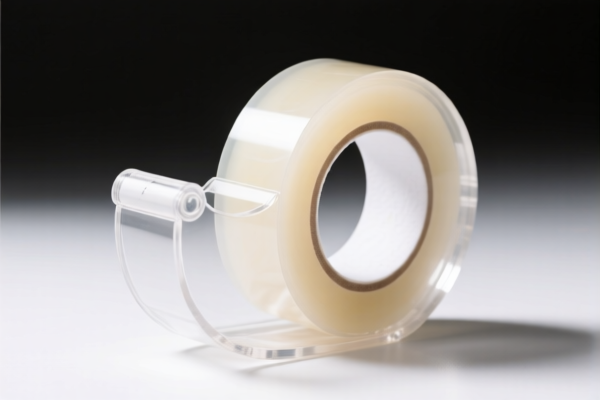
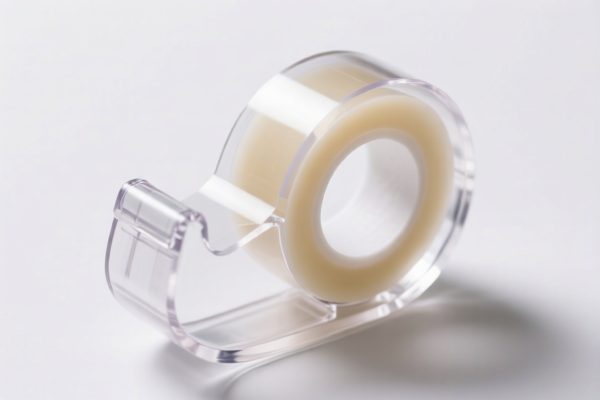
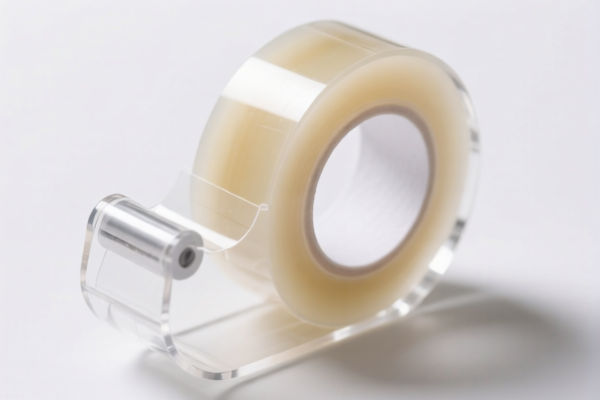
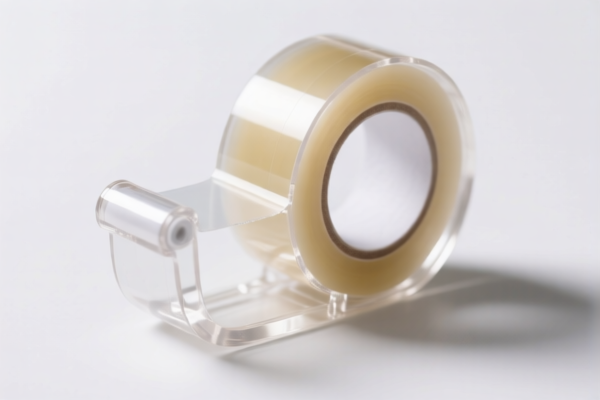
AI Analysis
🎗️ Office Tape (Office Supplies Tape)
🌐 HS Code Reference & Clearance Guide | 2026 Latest Tariff Analysis | Professional Customs Strategy
📌 I. Product Definition & Classification: Do You Really Understand "Office Tape"?
Office Tape, in international trade, refers primarily to adhesive tapes used for packaging, sealing, or office administrative purposes. The core determinant for classification is the material composition (primarily plastic/polymer) and physical form (flat, self-adhesive, width/thickness characteristics).
In the Harmonized System (HS), these items generally fall under Chapter 39 (Plastics and Articles Thereof), specifically Chapter 39, Section XI. The classification hinges on whether the tape is considered a primary adhesive roll (Heading 3919) or a general plastic office article (Heading 3926).
⚠️ Key Distinction Point:
- If the tape is self-adhesive, in rolls, of a width > 20cm, or cut to specific shapes primarily defined by its adhesive nature → Heading 3919.
- If the tape is a general plastic article for office use (e.g., small sticky notes tape, specific office accessories not strictly defined by roll width/quantity) → Heading 3926.
📦 II. HS Code Classification Details (2026 Latest Tariff Authority Comparison)
| HS Code | Product Description | Application Scenario | Key Characteristic |
|---|---|---|---|
3919.10.20.55 |
Office tape, plastic material, flat tape form, fits "other" residual category | Standard wide office packing tape, industrial-grade adhesive rolls | ✅ Self-adhesive plastic roll |
3919.90.50.40 |
Office tape, self-adhesive plastic, tape form, no obvious conflict | General purpose self-adhesive tapes not elsewhere specified | ✅ Self-adhesive plastic |
3926.10.00.00 |
Office tape, office use purpose, plastic/gel material, classified as plastic articles | Office accessories where adhesive function is secondary to general office use | ✅ Plastic office article |
3926.90.10.00 |
Office tape, plastic substrate base, common form in other articles | General plastic office supplies with adhesive properties but not standard rolls | ✅ Plastic substrate base |
🔍 Important Note:
- Heading 3919 applies to "Self-adhesive plates, sheets, film, foil, tape, strip and other shapes." This is the most common classification for standard office packing tape. - Heading 3926 applies to "Other articles of plastics and articles of other materials of headings 3901 to 3914." This may apply if the tape is considered a general office accessory rather than a pure adhesive product.
💰 III. 2026 Latest Tariff Rate Details (Including Additional Taxes & Policy Surcharges)
✅ Applicable Country: United States (US)
✅ Country of Origin: China (CN)
✅ Effective Time: 2025/2026 Import Period (Post-Section 301 & 122 Measures)
🎯 1. 3919.10.20.55 —— Office Tape (Plastic, Flat, Residual Category)
| Item | Detail |
|---|---|
| Base Tariff | 5.8% (Ad valorem) |
| Section 301 Surcharge | +25.0% |
| Section 122 Surcharge | +10.0% |
| Total Tariff Rate | 40.8% |
| Tax Calculation | CIF Value × 40.8% |
| De Minimis Exemption | ❌ Not Eligible (High tariff rate exceeds exemption thresholds) |
| Legal Basis Path | USITC:3919.10.20.55 → Section 301: Footnote 9903.88.01 → Section 122: IEEPA Authorities |
📌 Explanation:
- The 25% Section 301 tariff is the baseline for most Chinese plastic products under HTS 3919. - The 10% Section 122 tariff is an additional surcharge often applied to specific goods from China under emergency trade provisions. - Combined Rate: 40.8%. This is a high-cost item. Importers must budget significantly for duties.
🎯 2. 3919.90.50.40 —— Office Tape (Self-Adhesive Plastic, General)
| Item | Detail |
|---|---|
| Base Tariff | 5.8% (Ad valorem) |
| Section 301 Surcharge | +25.0% |
| Section 122 Surcharge | +10.0% |
| Total Tariff Rate | 40.8% |
| Tax Calculation | CIF Value × 40.8% |
| De Minimis Exemption | ❌ Not Eligible |
| Legal Basis Path | USITC:3919.90.50.40 → Section 301: Footnote 9903.88.01 → Section 122: IEEPA Authorities |
📌 Note:
- Similar to the previous code, this falls under the same high-tariff bracket for Chinese plastic tapes. - Even if classified as "other self-adhesive" (3919.90), the 301 and 122 surcharges apply equally.
🎯 3. 3926.10.00.00 —— Office Tape (Plastic Articles for Office Use)
| Item | Detail |
|---|---|
| Base Tariff | 5.3% (Ad valorem) |
| Section 301 Surcharge | +0.0% (Often exempt or lower rate for certain general articles) |
| Section 122 Surcharge | +10.0% |
| Total Tariff Rate | 15.3% |
| Tax Calculation | CIF Value × 15.3% |
| De Minimis Exemption | ⚠️ Check Eligibility (Lower base rate may allow for de minimis under certain conditions, but 301 exemption is unlikely) |
| Legal Basis Path | USITC:3926.10.00.00 → Section 301: Check Exclusion Lists → Section 122: IEEPA Authorities |
📌 Critical Insight:
- This code has a significantly lower total tariff (15.3%) compared to 3919 codes (40.8%). - The Section 301 surcharge is 0% in this specific listing, which is a major advantage. - Strategy: If the tape can be reasonably described as an "office article" rather than a pure "adhesive roll," this classification offers substantial cost savings. Consult customs broker for suitability.
🎯 4. 3926.90.10.00 —— Office Tape (Other Plastic Articles)
| Item | Detail |
|---|---|
| Base Tariff | 3.4% (Ad valorem) |
| Section 301 Surcharge | +7.5% |
| Section 122 Surcharge | +10.0% |
| Total Tariff Rate | 20.9% |
| Tax Calculation | CIF Value × 20.9% |
| De Minimis Exemption | ⚠️ Check Eligibility |
| Legal Basis Path | USITC:3926.90.10.00 → Section 301: Footnote 9903.88.01 → Section 122: IEEPA Authorities |
📌 Note:
- This is a "catch-all" for other plastic articles. The Section 301 surcharge is reduced to 7.5% (instead of 25%). - Total Rate: 20.9%. This is a middle-ground option. It is cheaper than 3919 but more expensive than 3926.10.
🛠️ IV. Clearance Practical Advice (Field Avoidance Guide)
✅ 1. Documentation Checklist (Mandatory)
| Document | Required? | Description |
|---|---|---|
| ✅ Product Specification | ✔️ | Must detail material (e.g., BOPP, PVC), adhesive type, width, length. |
| ✅ Product Photos | ✔️ | Clear images of the tape roll, core, and any office packaging. |
| ✅ Commercial Invoice | ✔️ | Must accurately describe the item (e.g., "Plastic Office Tape" vs. "Self-Adhesive Plastic Roll"). |
| ✅ Packing List | ✔️ | Weight, dimensions, quantity. |
| ✅ Origin Certificate | ✔️ | To prove China origin (triggering Section 301/122). |
✅ 2. Declaration Tips (Key Mantra)
🔥 "Material Defines Code, Usage Defines Category, Accurate Description Saves Money!"
| Scenario | Correct Declaration Strategy | Risk of Error |
|---|---|---|
| Standard Wide Packing Tape | Use 3919 codes (40.8% tariff). Be precise about width/material. | If misdeclared as 3926, you risk penalties and back-taxes. |
| Office Sticky Tape / Small Rolls | Consider 3926.10.00.00 (15.3% tariff) if it fits "office articles." | Must provide proof that it is primarily an "office article" not just adhesive. |
| Generic Plastic Tape | Use 3926.90.10.00 (20.9% tariff) if 3926.10 doesn't fit. | Ensure it is not misclassified as a pure adhesive roll. |
📌 Strategic Advice:
- Cost Optimization: If your product is truly an "office supply" (e.g., small, for stationery, not heavy-duty packing), try to justify 3926.10.00.00. The 25.5% tariff difference (40.8% vs 15.3%) is massive. - Risk Management: Do not force a 3926 classification if the product is clearly a standard adhesive tape roll. Customs may audit and reassess.
✅ 3. Special Circumstances Handling
| Situation | Handling Advice |
|---|---|
| OEM Private Label | Provide the client's label and design. It doesn't change the HS code, but helps prove it's for office/commercial use. |
| Mixed Shipments | If shipping with other plastics, ensure proper segregation in documentation. |
| De Minimis (Section 321) | Caution: With a 40.8% rate, de minimis is rarely beneficial for high-value shipments. For 15.3% (3926.10), it may be worth analyzing. |
🌍 V. Global Market Comparison (2026 Latest)
| Country/Region | Recommended HS Code | Tariff (China Origin) | Certification | Note |
|---|---|---|---|---|
| 🇺🇸 USA | 3926.10.00.00 |
15.3% | None Specific | Best Rate if eligible. |
| 🇺🇸 USA | 3919.10.20.55 |
40.8% | None Specific | Standard for packing tape. |
| 🇪🇺 EU | 3919.10 / 3926.10 |
6.5% - 6.8% | CE (if applicable) | No Section 301/122. |
| 🇨🇳 China | 3919.10 / 3926.10 |
5.3% - 5.8% | RoHS (if electronic) | No import tariffs for domestic. |
📌 Conclusion:
- USA is the most expensive market due to Section 301 and 122 tariffs. - Classification as "Office Article" (3926) vs. "Adhesive Roll" (3919) is the single biggest factor in cost reduction.
📌 VI. Common Mistakes & Pitfalls (Lessons Learned)
❌ Mistake 1: Calling all tape "3919" without checking if it qualifies as an office article.
👉 Consequence: Paying 40.8% when 15.3% was available.
❌ Mistake 2: Forgetting to account for Section 122 (10%).
👉 Consequence: Underestimating total landed cost by 10%.
❌ Mistake 3: Inconsistent description between Invoice and Packing List.
👉 Consequence: Customs hold, delays, and potential audits.
✅ Correct Practice:
"Plastic Self-Adhesive Office Tape, BOPP Material, 2 inch Width, for Stationery Use, Model ABC."
🎯 VII. Conclusion: Professional Declaration, Cost Savings, Efficiency!
🎯 Remember the Mantra:
🔹 "3919 is 40.8%, 3926 is 15.3%. One point of difference, thousands of dollars saved!"
🔹 "Section 301 hits hard, Section 122 adds more. Choose the right code to reduce the burden!"
📌 Pro Tip:
If your tape is not made in China (e.g., Vietnam, Thailand), Section 301 and 122 tariffs do not apply. Rates drop to Base Tariff only (5.3% - 5.8%).
Consider supply chain diversification to avoid the 25%+ surcharges.
📣 Immediate Action:
📞 Contact a licensed customs broker to review your product specifications.
📝 Request an Advance Ruling if shipping high volumes.
🚀 Optimize your HS Code to save up to 25.5% in duties!
✨ Professional Customs Clearance Starts with Accurate Classification!
💼 Every Cent of Duty is Worth Calculating Precisely!
Customer Reviews
About HS Code Classification
The Harmonized System (HS) is an internationally standardized nomenclature developed by the World Customs Organization (WCO) to classify traded products. Over 200 countries use the HS system as the basis for customs tariffs, trade statistics, and import/export regulations.
Each HS code follows a hierarchical structure:
- Chapter (2 digits) — Broad category of goods (e.g., Chapter 84: Machinery and Mechanical Appliances)
- Heading (4 digits) — More specific grouping within the chapter
- Subheading (6 digits) — Internationally standardized breakdown, used by all WCO member countries
- National subdivisions (8-10 digits) — Country-specific extensions for further classification, such as US HTSUS 10-digit codes
Correct HS code classification is essential for smooth customs clearance, accurate duty payment, and compliance with trade regulations. Misclassification can lead to customs delays, overpayment of duties, or penalties.
When importing from CN to US, the applicable tariff rates may include:
- Most-Favored-Nation (MFN) rate — The standard duty rate applied to WTO members
- General rate — Applied to countries without trade agreements
- Trade remedy duties — Additional tariffs such as Section 301 (anti-dumping), Section 232 (national security), or countervailing duties
The information provided on this page is for reference purposes only. For official classification, please consult with your local customs authority or a licensed customs broker.